Categories
Today

Tippecanoe (and, sadly, MLK, too)

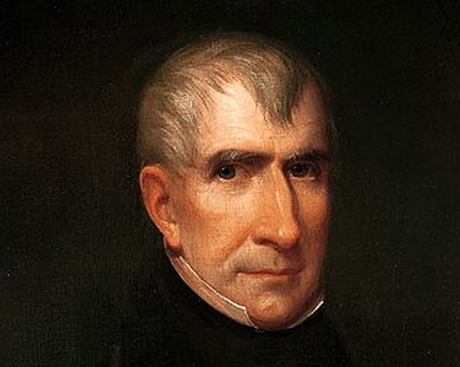
On April 4, 1841, William Henry Harrison died of pneumonia, becoming the first President of the United States to die in office and the one with the shortest term served (he died on his 32nd day as president). Renowned Indian killer (having risen to fame for his part in 1811’s Battle of Tippecanoe), a proponent of the expansion of slavery into Northwest Territories, and a Whig, Harrison won the presidency in part by turning the Democrats’ “log cabin and hard cider” aspersions on his character as the basic symbols of the campaign.

Though hardly a “limited government man,” some limited government history buffs proclaim him the Greatest President, on the ostensibly droll and possibly cynical grounds that he spent so little time in office.

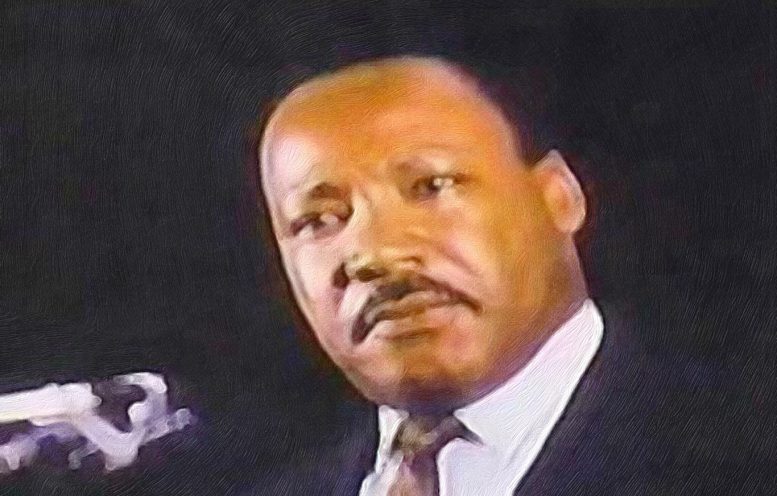
On a much sadder note, Martin Luther King, Jr., was assassinated on this day in 1968.
Categories
Today

Mountaintop

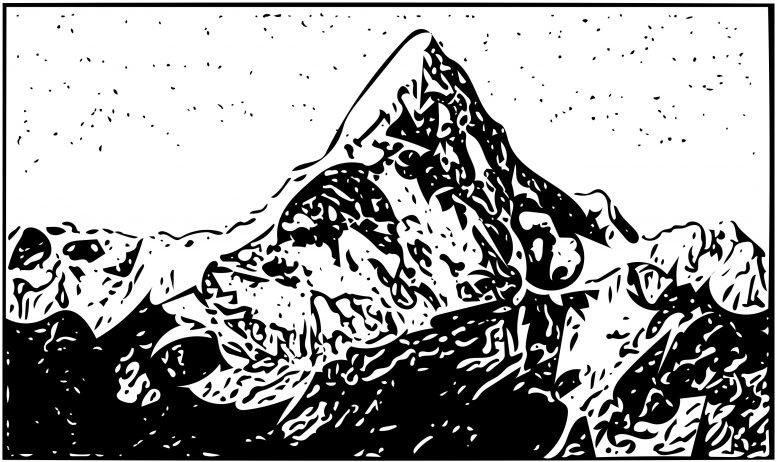
On April 3, 1968, Martin Luther King, Jr., delivered his “I’ve Been to the Mountaintop” speech.

Categories
Thought

Martin Luther King, Jr.

Well, I don’t know what will happen now. We’ve got some difficult days ahead. But it doesn’t matter with me now. Because I’ve been to the mountaintop. And I don’t mind. Like any man, I would like to live a long life. Longevity has its place. But I’m not concerned about that now. I just want to do God’s will. And He’s allowed me to go up to the mountain. And I’ve looked over. And I’ve seen the promised land. I may not get there with you. But I want you to know tonight, that we, as a people will get to the promised land. And I’m happy, tonight. I’m not worried about anything. I’m not fearing any man. Mine eyes have seen the glory of the coming of the Lord.


Martin Luther King, Jr., a day before his assassination, in a speech delivered at Bishop Charles Mason Temple in Memphis, Tennessee.

Categories
Today

Camille Paglia

American author, art critic, and commentator Camille Paglia was born April 2, 1947.

Categories
Thought

F. Marion Crawford

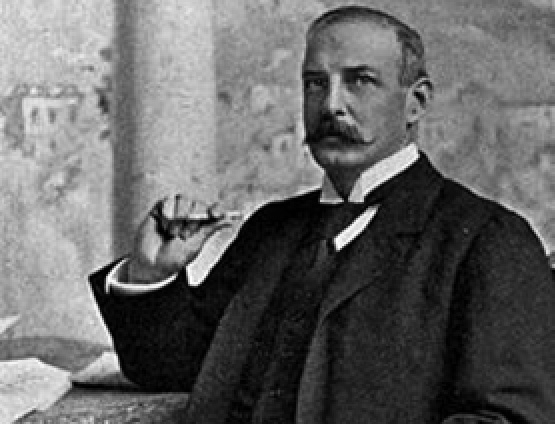
There is a scale in the meaning of the word socialist. In France it means about the same thing as a communist, when one uses plain language. When one uses the language of Monsieur Drumont, it means a Jew. In England a socialist is equal to a French conservative republican. In America it means a thief. In Germany it means an ingenious individual of restricted financial resources, who generally fails to blow up some important personage with wet dynamite. In Italy a socialist is an anarchist pure and simple, who wishes to destroy everything existing for the sake of dividing a wealth which does not exist at all. It also means a young man who orders a glass of water and a toothpick at a cafe, and is able to talk politics for a considerable time on this slender nourishment.

Categories
links

Townhall: Evil Weed or Good Cash Crop?

What a mess: the War on Drugs; marijuana legalization; the very words we use to talk about either or both. Click on over to Townhall.com for more clarification.

Then come back here to check the references — a few of which might clear up some of the confusions that may remain, especially botanical and chemical:

Categories
Today

April Fool’s Day

On April Fools’ Day, 1957, the BBC offered for viewers of the current affairs program “Panorama” the infamous spaghetti harvest report hoax. In the spirit of the day, Common Sense offers these “historic” events:

On April 1, 1787, James Madison, father of the Constitution, removed the General Welfare clause from his draft of the U.S. Constitution, telling friends that, “I fear future big-government-loving politicians will undoubtedly abuse the clause’s vague concept to drown the people in federal overreach.”

On April 1, 1918, Woodrow Wilson became the first and only President of the United States to be impeached and removed from office for lying about munitions being aboard the Lusitania in an effort to whip up war fever against Germany and push the nation into World War I.

On April 1, 2002, the U.S. Congress refused to grant President George W. Bush’s request for a declaration of war against Iraq.

On April 1, 2014, President Barack Obama admitted to being a Kenyan, er, Keynesian, but argued that the Constitution did not bar Keynesians from office.

As of April 1, 2018, President Donald Trump — often declared a fool or worse by the “Not My President” crowd — has proven himself foursquare for liberty, extolling the Freedom Caucus in Congress, and praising them from saving the nation from House Speaker Paul Ryan’s ObamaCare Lite plan. To prove this, nearly a year later he signed the 2018 Omnibus Spending Bill and appointed John Bolton as his National Security Advisor.

Alas, only the first paragraph, above, is completely true.

Categories
video

Arms Against Tyranny

For those who need to be reminded (or remind others) that government can be dangerous, and that this fact is relevant for discussions of citizen armament rights, this short video may help.

Caution: irony is part of the method to this vlogger’s very smart presentation. Do not give up on it right away.

Categories
Today

Bangorian Controversy

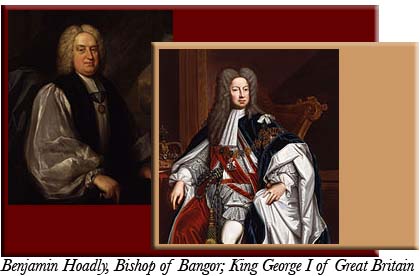
On March 31, 1717, a sermon on “The Nature of the Kingdom of Christ,” by Benjamin Hoadly, the Bishop of Bangor, provoked the Bangorian Controversy.

The sermon’s text was John 18:36, “My kingdom is not of this world,” and from that Hoadly deduced — supposedly at the request of King George I himself, who was present in the assembly — that there was no Biblical justification for any church government. Hoadly identified the church with the kingdom of Heaven, noting that Christ had not delegated His authority to any representative.

King George’s preference for the Whig Party, and for latitudinarianism in ecclesiastical policy, is widely thought to have been a strategic maneuver to degrade church power in political government.

Categories
Thought

Sen. Mitch McConnell

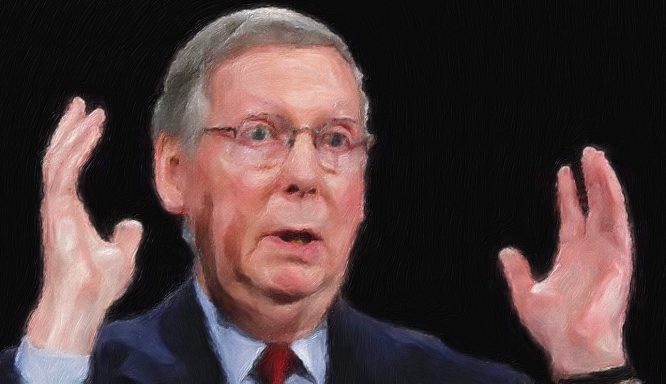
I think we’ve worked our way through the education process of making sure everybody understands this is really a different plant.