The artist may doubt his own work, but he is bitterly disappointed if other people doubt it also.
Categories
F. Marion Crawford
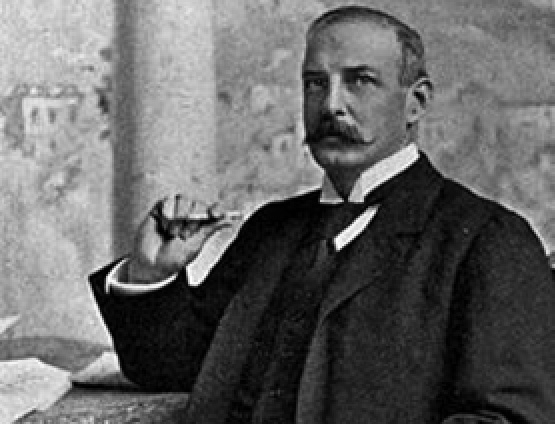
The artist may doubt his own work, but he is bitterly disappointed if other people doubt it also.

On April 8, 1913, the 17th amendment to the Constitution, providing for the popular election of U.S. senators, was ratified.
An interesting approach to reporting on American opinion:
https://youtu.be/ivDNsf4LcyY
The interviewer interviewed:

There cannot, I conceive, be any question that to the assumption of a Law Natural we owe the doctrine of the fundamental equality of human beings. That ‘all men are equal’ is one of a large number of legal propositions which, in progress of time, have become political.

On April 7, 1933, Prohibition in the United States was repealed for beer of no more than 3.2 percent alcohol by weight, eight months before the ratification of the XXI amendment.
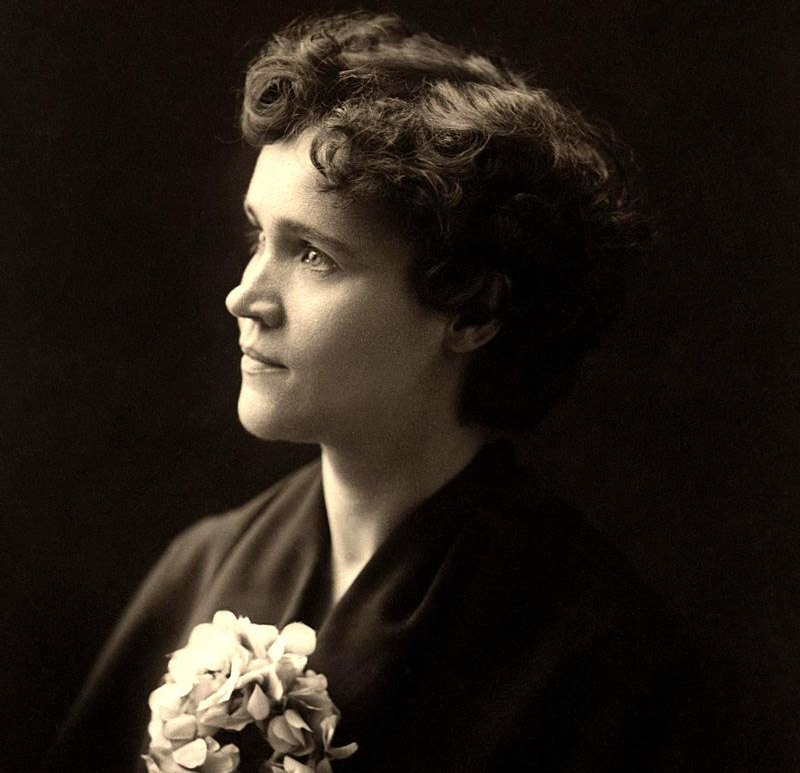
When I look at this poor, bleeding, wounded World, this world that has suffered so long, struggled so much, been scourged so fiercely, thorn-pierced so deeply, crucified so cruelly, I can only shake my head and remember: The giant is blind, but he’s thinking: and his locks are growing, fast.

On April 6, 1930, Mohandas K. Gandhi raised a lump of mud and salt, declaring, “With this, I am shaking the foundations of the British Empire.”
Thus began the Salt Satyagraha.
Our deepest fear is not that we are inadequate. Our deepest fear is that we are powerful beyond measure. It is our light, not our darkness that most frightens us. We ask ourselves, Who am I to be brilliant, gorgeous, talented, fabulous? Actually, who are you not to be? You are a child of God. Your playing small does not serve the world. There is nothing enlightened about shrinking so that other people won’t feel insecure around you. We are all meant to shine, as children do. We were born to make manifest the glory of God that is within us. It’s not just in some of us; it’s in everyone. And as we let our own light shine, we unconsciously give other people permission to do the same. As we are liberated from our own fear, our presence automatically liberates others.
Marianne Williamson, A Return to Love: Reflections on the Principles of “A Course in Miracles,” Ch. 7, Section 3 (1992), p. 190
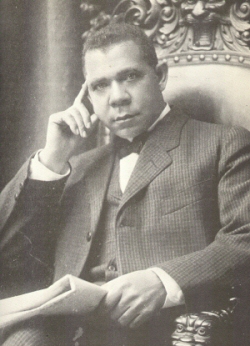
On April 5, 1792, George Washington exercised the first presidential veto of a congressional bill, a new plan for dividing seats in the House of Representatives, which would have increased the number of seats for northern states. Washington vetoed only one other bill during his two terms in office, an act that would have reduced the number of cavalry units in the army.
On April 5, 1856, Booker T. Washington, American educator, first leader of the Tuskegee Institute in Alabama, author of 14 books, including his autobiography, “Up From Slavery,” was born a slave in southwestern Virginia. Though Washington faced criticism from leaders of the new NAACP, especially W. E. B. Du Bois, for not protesting the lack of civil rights more strongly, he secretly funded litigation for civil rights cases, such as challenges to southern constitutions and laws that disfranchised blacks.
One of the rarest qualities of national character is the capacity for applying and working out the law, as such, at the cost of constant miscarriages of abstract justice, without at the same time losing the hope or the wish that law may be conformed to a higher ideal.