Categories
Today

Economic vs. Political Means

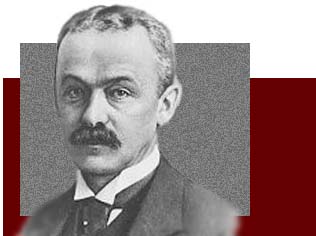
On March 30, 1864, German sociologist and economist Franz Oppenheimer was born. This sociologist is most famous for his 1908 book The State, in which he elaborated some consequences of two means for acquiring wealth, the “economic means,” by which he meant private production or by trade, and the “political means,” by which he meant forcible extraction from one group or person by another person or group. Oppenheimer taught in Palestine in the mid-1930s, and fled the Nazis to the United States, via Japan in 1938. In 1941 he became a founder of The American Journal of Economics and Sociology, and died two years later.

Categories
Thought

Sir Henry James Sumner Maine

The tendency to look not to the past but to the future for types of perfection was brought into the world by Christianity. Ancient literature gives few or no hints of a belief that the progress of society is necessarily from worse to better.

Categories
Today

Hyphen War

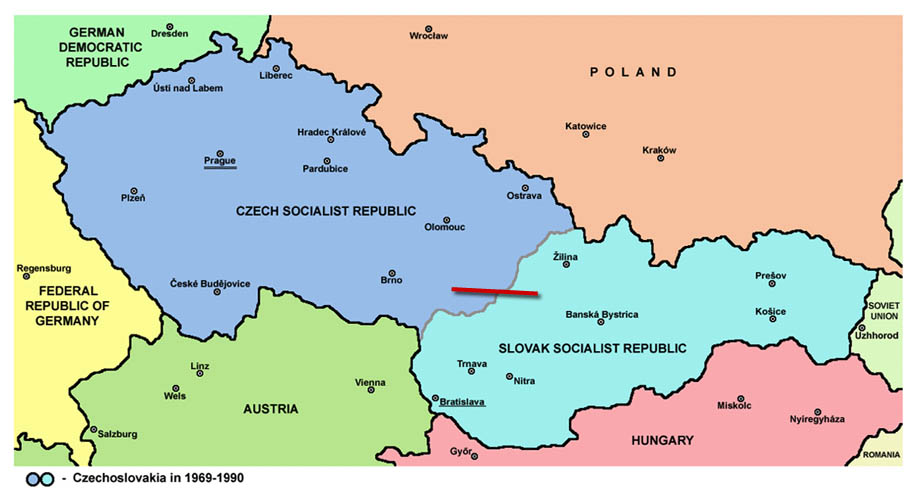
On March 29, 1990, the Czechoslovak parliament proved unable to reach an agreement on what to call the country after the “Velvet Revolution” — in which the Communist Party was booted from sole power. This sparked the “Hyphen War,” a tongue-in-cheek moniker for the dispute between Czechs and Slovaks about official recognition of the two nations’ equal status. (The Slovak representatives wanted to insert a hyphen into the name, to make the Slovak part stand out.) Eventually, the dispute was resolved with the “Velvet Divorce,” in which the two countries split up, on New Year’s Day, 1993.

Categories
Thought

Voltairine de Cleyre

Note the difference between a right and a privilege. A right, in the abstract, is a fact; it is not a thing to be given, established, or conferred; it is. Of the exercise of a right power may deprive me; of the right itself, never. Privilege, in the abstract, does not exist; there is no such thing. Rights recognized, privilege is destroyed.

Categories
Today

Vargas and Vaughn

On March 28, 1936, Peruvian author Mario Vargas Llosa was born. This recipient of the 2010 Nobel Prize in Literature ran, in 1990, for the presidency of Peru, but lost to Alberto Fujimori. His novels include La casa verde (The Green House), La guerra del fin del mundo (The War of the End of the World), La fiesta del chivo (The Feast of the Goat), and Aunt Julia and the Scriptwriter, which was filmed as Tune in Tomorrow.

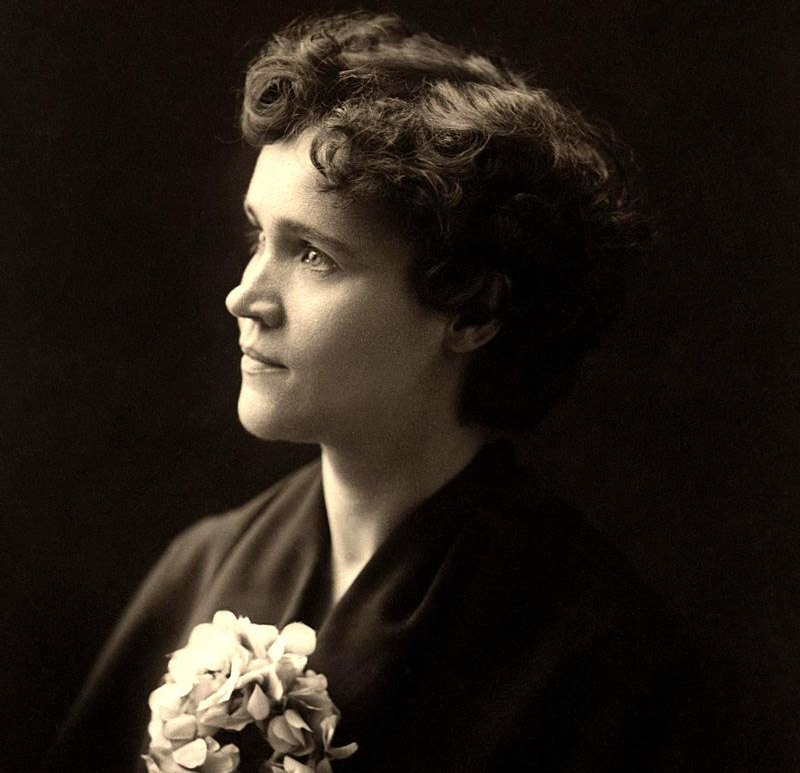
On the same date in 1970, Vince Vaughn, American actor, producer, and screenwriter, was born.VinceVaughn

Vaughn is one of a small minority of non-left-leaning Hollywood stars; his ideas on politics and economic policy were greatly influenced by Ron Paul.

Categories
Thought

Sen. Mitch McConnell

We all are so optimistic that industrial hemp can become sometime in the future what tobacco was in Kentucky’s past.

Categories
Today

Typhoid Mary

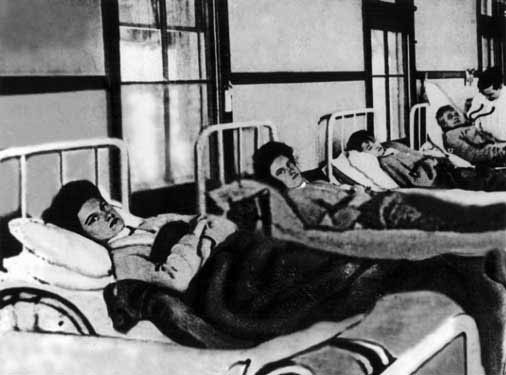
On March 27, 1915, Mary Mallon, popularly and scandalously known as “Typhoid Mary,” was put in quarantine, where she would remain for the rest of her life, over 23 years incarcerated.

Ms. Mallon was the first healthy carrier of disease ever identified in the United States. As an asymptomatic carrier of typhoid, she was a puzzle to science, and, once discovered, an apparent threat to those around her, with at least three deaths attributable to her presence. She did not co-operate with officials, and preferred to work as a cook, which paid higher wages than less dangerous-to-the-public occupations. She had been quarantined once before her final permanent quarantine in a hospital.

The civil liberties aspect to her incarceration loom large, and it is obvious that health officials of her time were not exactly any more respectful of her rights than she was with those of her clients and neighbors. The case was an obvious turning point in American legal practice, and can be categorized along with eugenics and “social hygiene” — along with prohibition regarding alcohol and recreational drugs — in the increasing illiberality of legal practice in America in the early part of the 20th century.

That being the case, Typhoid Mary was the very opposite of a heroine.

Categories
Thought

Sir Henry James Sumner Maine

[T]he stationary condition of the human race is the rule, the progressive the exception. . . . The Roman jurisprudence has the longest known history of any set of human institutions. The character of all the changes which it underwent is tolerably well ascertained. From its commencement to its close, it was progressively modified for the better, or for what the authors of the modification conceived to be the better, and the course of improvement was continued through periods at which all the rest of human thought and action materially slackened its pace, and repeatedly threatened to settle down into stagnation.

Categories
Today

South Korea

On March 26, 1991, local self-government in South Korea was restored after three decades of centralized control.

Categories
Thought

Thomas Jefferson

What country can preserve its liberties if their rulers are not warned from time to time that their people preserve the spirit of resistance. Let them take arms.