Categories
Accountability general freedom ideological culture porkbarrel politics responsibility too much government

Ask the Next Question

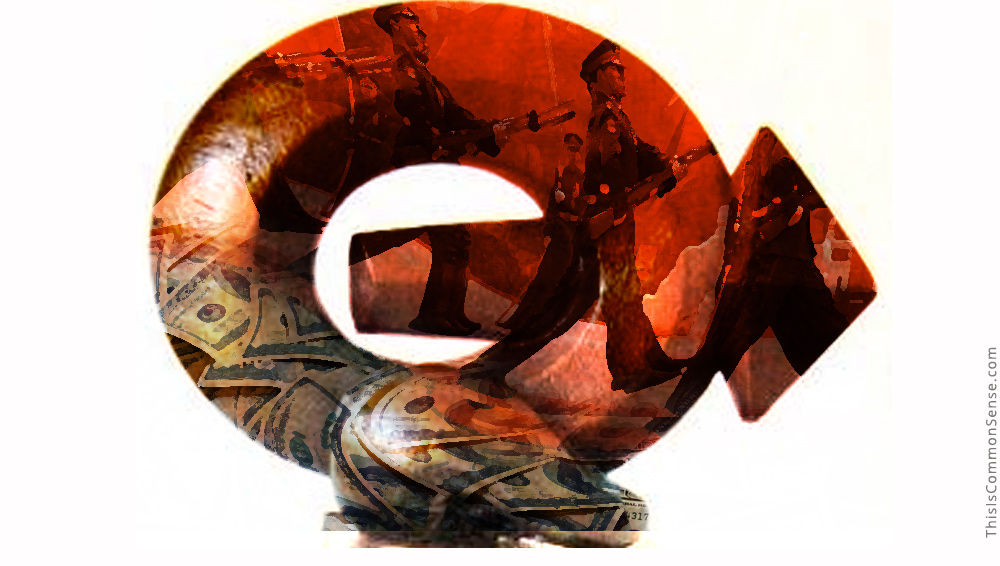
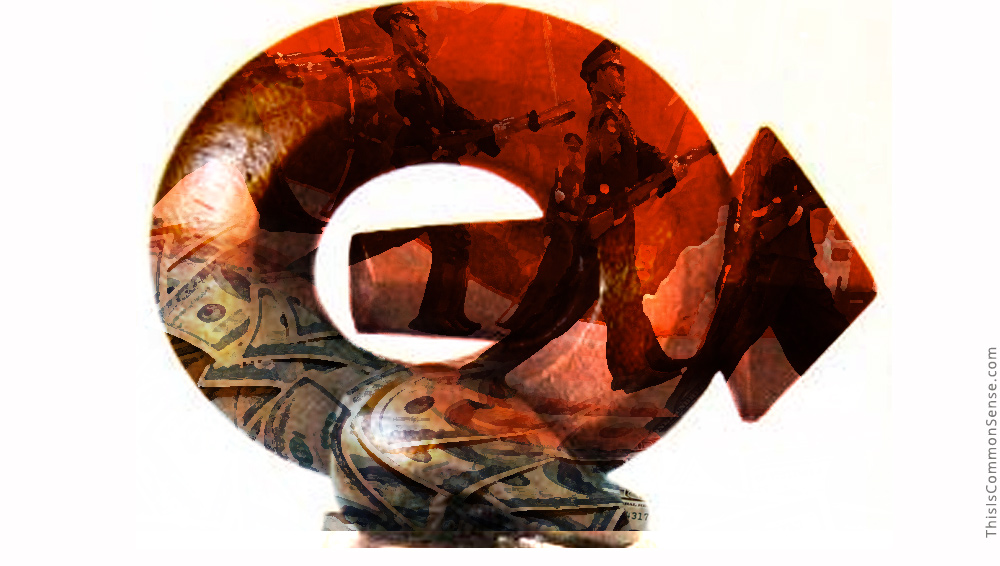
Republicans are very reliable. When given our system’s “Mandate of Heaven” — majorities in both houses of Congress and the Presidency — they can be relied upon to do one thing: add debt by piling up huge deficits.

It happened under George W. Bush, and it is happening under Donald J. Trump: “The Trump administration expects annual budget deficits to rise nearly $100 billion more than previously forecast in each of the next three years,” the Wall Street Journal tells us, “pushing the federal deficit above $1 trillion starting next year.”

Republicans should ask themselves why. And while they ask themselves that, everyone else should ask the next question: why do politicians who say they want one thing so often deliver its opposite?

This is not a mere “right-wing” phenomenon. Leftists say they want “democratic socialism,” but, as Irving Kristol noted, at some point not far down their road to Utopia, “democratic socialists” must choose between democracy and socialism.* By promising everybody everything, too quickly everybody gets shanghaied into service to produce that “everything,” finding themselves conscripts in socialism’s army.

The equation of socialism with regimentation and general un-freedom has been clear for over a century, explained carefully by sociologists, economists and even politicians.* And yet, increasingly, today’s Democrats are embracing a philosophy with proven anti-democratic features.

Could some deep principle be at play?

Probably. It is built into the very nature of state governance, of politics itself. It may be why republics metamorphose into empires, conservatives go radical and liberals become serviles.

Which is why effective democracy requires limited government. To minimize that boomerang effect.

We might start by limiting spending.

This is Common Sense. I’m Paul Jacob.


* Herbert Spencer’s writings on socialism include The Man versus the State (1884) and Industrial Institutions (1896, Principles of Sociology, Vol. III, Part VIII); German politician Eugene Richter’s satire Pictures of the Socialist Future (1896) is well worth reading; and economist Yves Guyot preceded Ludwig von Mises’ classic Die Gemeinwirtschaft (1922, translated as Socialism: An Economic and Sociological Analysis, 1950) with several books, including The Tyranny of Socialism (1893) and Socialistic Fallacies (1910).

PDF for printing


Categories
Today

B of E

July 27 births include that of Samuel Smith (1872; pictured), an American who served as a captain, major, and lieutenant colonel in the Continental Army, and later as a politician in several capacities in the state of Maryland; Hillaire Belloc (1870), author of a classic analysis of modern political governance, The Servile State; and American singer and songwriter Bobbie Gentry (1944).

On July 27, 1694, the Bank of England received a royal charter, beginning a long history of central banking in England. Subsequent inflationary booms and deflationary busts are usually considered “mysterious” by people connected with the bank.

Categories
Thought

Irving Kristol

Democratic socialism turns out to be an inherently unstable compound, a contradiction in terms. Every social-democratic party, once in power, soon finds itself choosing, at one point after another, between the socialist society it aspires to and the liberal society that lathered it.

Irving Kristol, as quoted in “Capitalism, Socialism, and Democracy: A Symposium,” edited by William Barrett, Commentary (1978).
Categories
free trade & free markets national politics & policies responsibility too much government

Trump’s Biggest Secret?

“This trade war is cutting the legs out from under farmers,” says Senator Ben Sasse (R-Neb.), “and White House’s ‘plan’ is to spend $12 billion on gold crutches.”

Referring to Donald Trump’s tariff brinksmanship with China, Sasse is decrying Trump’s request to Congress for compensatory farm subsidies. Sasse insists that “America’s farmers don’t want to be paid to lose” — but regardless of what farmers want, we should want free trade.

Tariffs are taxes. Consumers ultimately pay for them all.

Trump’s requested “crutches” is just another example of a bad government program leading to another, “compensatory” bad government program.

Old story. Too familiar.

The senator is right to be alarmed by the Trump “administration’s tariffs and bailouts,” for the president is playing a most dangerous game. Trade wars are not mutually beneficial. Trade is.  

Of course, if the ultimate result is an end to all trade barriers — as Trump himself demanded regarding the EU — then . . . could it be worth it?

One thing’s for certain: the history of protectionist brinksmanship is not pretty. Sasse himself predicts that Trump’s tariff hikes “aren’t going to make America great again, they’re just going to make it 1929 again.”

Sasse is referring to the passing of the Smoot-Hawley Tariff Act of 1929, which led not only to a spooked Wall Street, but to bank failures and retaliatory protectionism from other countries. 

And a worldwide depression. And world war.

But is Trump really a secret free trader,* using tariffs in a game of chicken with trading partners?

This just in, from The Guardian:Trump and EU officials agree to work toward ‘zero tariff’ deal.”

Stay tuned.

This is Common Sense. I’m Paul Jacob.


* We could be forgiven for thinking him an old-fashioned protectionist, considering his repeated insistence that “Tariffs are the greatest!” But with Trump, maybe we should never take him literally.

PDF for printing


Photo by Carlos Martinez


Categories
Thought

George Bernard Shaw

A government which robs Peter to pay Paul, can always count on the support of Paul.

Categories
Today

Atahualpa

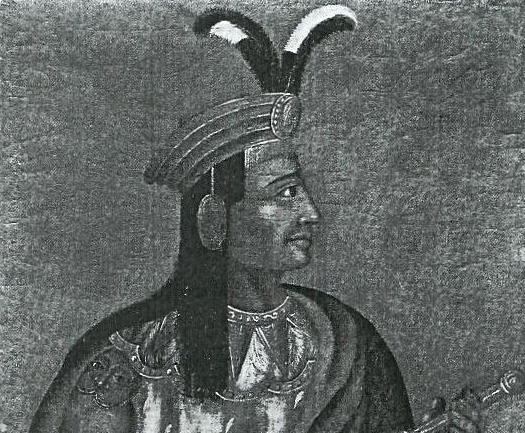
On July 26, 1533, Francisco Pizarro’s Spanish conquistadors strangled to death Atahualpa, the 13th and last emperor of the Incas, thereby ending 300 years of Inca civilization. The conquistadors were greedy and murderous, but the Inca civilization, arguably, was worse: totalitarian and radically inegalitarian. But they made great high-mountain roads. (Arguments about infrastructure promoted by Big Government continue to this very day.)

On this day in 1948, U.S. President Harry S. Truman signed Executive Order 9981 desegregating the U.S. military.

Categories
Today

A Fine Point of the War

On July 25, 1861, the U.S. Congress passed the Crittenden-Johnson Resolution, stating that the war with the seceded states of the Confederacy was being fought to preserve the Union, not to end slavery.

Categories
Thought

John Adams

Old minds are like old horses; you must exercise them if you wish to keep them in working order.

Categories
Thought

Albert Camus

The purpose of a writer is to keep civilization from destroying itself.

Categories
Today

Nixon Tapes

On July 24, 1487, citizens in Leeuwarden, Netherlands, went on strike against a ban on foreign beer.

On the same day of 1823’s calendar, slavery was abolished in Chile.

On this day in 1974, the U.S. Supreme Court told President Richard Nixon that he lacked constitutional authority to withhold the infamous “Nixon Tapes” from Congress.

July 24 serves as Pioneer Day in Utah and as Simón Bolívar Day in Bolivia, Ecuador, Colombia, and Venezuela.