On this day in 1829, American William Austin Burt patents the “typographer” — a precursor to the typewriter.
Categories
Typewriter
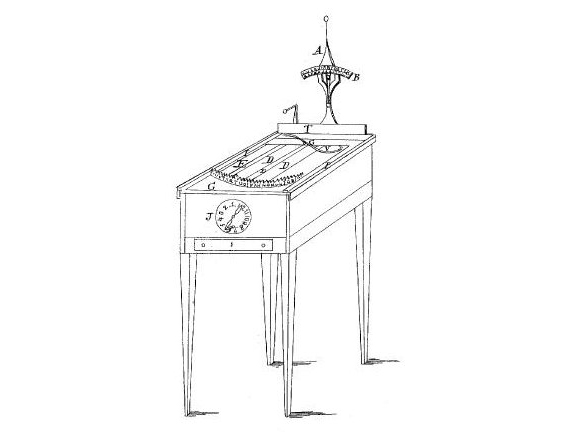
On this day in 1829, American William Austin Burt patents the “typographer” — a precursor to the typewriter.
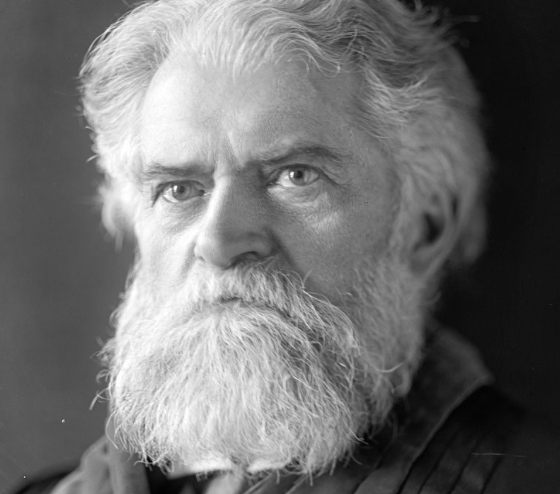
“Scientific method consists in applying to those subjects which lie without the range of our immediate experience those same common-sense methods of reasoning which successful men of the world apply in judging of matters which concern their own interests.”
Simon Newcomb, Principles of Political Economy, 1886, chapter III, “Of Scientific Method”

Would/wouldn’t and should/shouldn’t are in the news.
And we sing, once again, that most American tune, the blues.
Check out Townhall, why doncha?
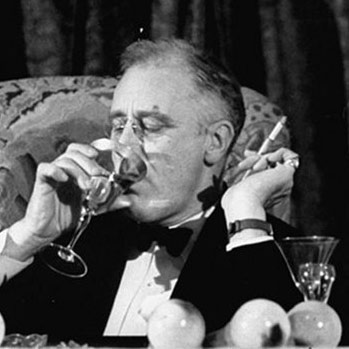
On July 22, 1937, the U.S. Senate voted down Franklin Delano Roosevelt’s court packing scheme.
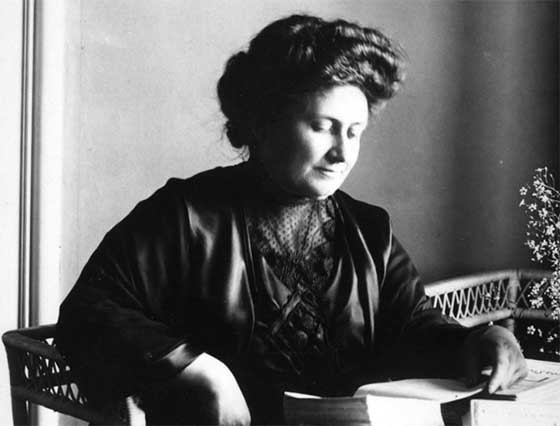
“The best instruction is that which uses the least words sufficient for the task.”
Maria Montessori, The Discovery of the Child, 1948

Something went down on The View. Here is one view of what happened (caution: it may be a tad hard to watch — if so, see below):
And now for a different view of The View debacle:
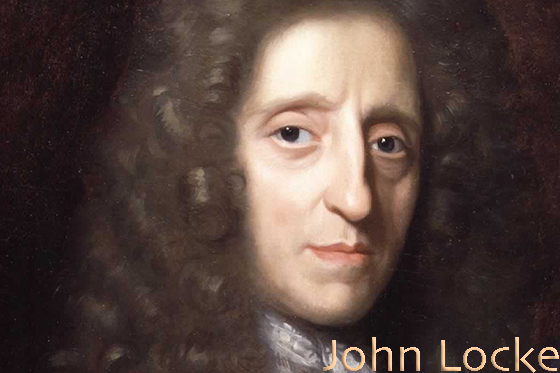
“The great question which, in all ages, has disturbed mankind, and brought on them the greatest part of their mischiefs … has been, not whether be power in the world, nor whence it came, but who should have it.”
John Locke, An Essay Concerning Human Understanding, 1689
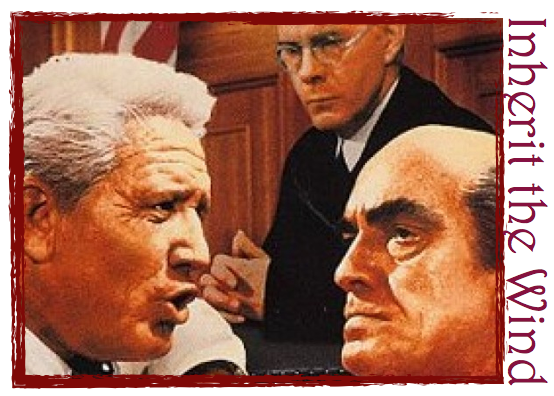
On July 21, 1925, in Dayton, Tennessee, high school biology teacher John T. Scopes was found guilty of teaching evolution in a public school classroom, and fined $100. The ambiguous legacy of the trial would continue — for decades, even to the present — to reveal the tensions inherent within a school system run by government and funded by taxpayers.
Pictured above, publicity for Inherit the Wind, a 1960 movie about the trial, but with the names changed, fictionalized. The movie starred Spencer Tracy in the Clarence Darrow (lawyer for the defense) role; Frederic March in the prosecutorial part, “Matthew Harrison Brady,” the pseudonymous name for politician William Jennings Bryan; Dick York as the defendant, Mr. Scopes; and Gene Kelly as the Baltimore journalist, a stand-in for H. L. Mencken, whose infamous coverage of the story shocked the nation almost as much as the trial itself.
At the end of the movie (spoiler alert!) the famous prosecutor dies in the courtroom. In the historical case, Bryan died five days after the verdict. The movie was based on the 1955 play of the same name, written by Jerome Lawrence and Robert Edwin Lee, directed by Stanley Kramer. The script was adapted by Nedrick Young (originally as Nathan E. Douglas) and Harold Jacob Smith.

[M]ay we not reasonably say that there lie before the legislator several open secrets, which yet are so open that they ought not to remain secrets to one who undertakes the vast and terrible responsibility of dealing with millions upon millions of human beings by measures which, if they do not conduce to their happiness, will increase their miseries and accelerate their deaths?
There is first of all the undeniable truth, conspicuous and yet absolutely ignored, that there are no phenomena which a society presents but what have their origins in the phenomena of individual human life, which again have their roots in vital phenomena at large. And there is the inevitable implication that unless these vital phenomena, bodily and mental, are chaotic in their relations (a supposition excluded by the very maintenance of life) the resulting phenomena can not be wholly chaotic: there must be some kind of order in the phenomena which grow out of them when associated human beings have to cooperate. Evidently, then, when one who has not studied such resulting phenomena of social order undertakes to regulate society he is pretty certain to work mischiefs.
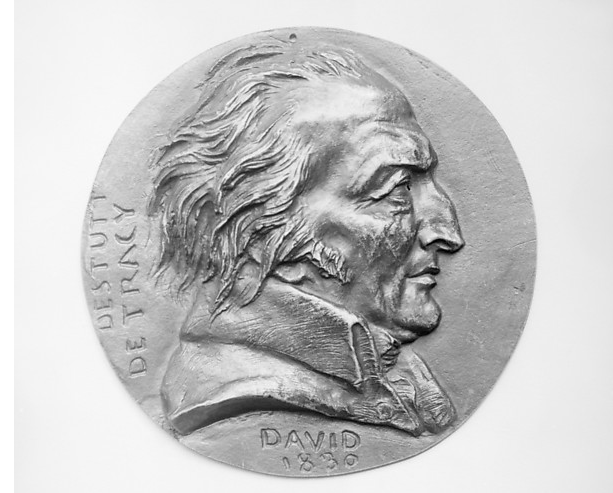
Born on July 20, 1754, Antoine Louis Claude Destutt, comte de Tracy, French philosopher and economist. Perhaps best remembered for coining the term “ideology,” he didn’t mean by that term what scornful Napoleon and communist Karl Marx later turned it into — for Destutt de Tracy ideology meant “the science of ideas,” a unified approach to all knowledge, from epistemology to social theory.
Though his family had been enobled twice, he renounced the title and entered the 1789 Estates General conference as a member of the Third Estate. During the Reign of Terror, he was imprisoned, and would have been executed had not Robespierre got to the scaffold ahead of him.
Two of his books became popular in early 19th century America, his commentaries on Montesquieu’s Spirit of the Laws, and his Traité de la volonté, which Thomas Jefferson, the editor of the American edition, retitled A Treatise on Political Economy. Tracy’s economics was of a deductivist stripe, familiar to readers of later economists such as Nassau Senior and Ludwig von Mises.
Destutt de Tracy’s political philosophy was republican, and his preferred economic policy was laissez-faire.