Categories
Thought

Haile Selassie

The progress of science can be said to be harmful to religion only in so far as it is used for evil aims and not because it claims a priority over religion in its revelation to man. It is important that spiritual advancement must keep pace with material advancement. When this comes to be realized man’s journey toward higher and more lasting values will show more marked progress while the evil in him recedes into the background. Knowing that material and spiritual progress are essential to man, we must ceaselessly work for the equal attainment of both. Only then shall we be able to acquire that absolute inner calm so necessary to our well-being.
It is only when a people strike an even balance between scientific progress and spiritual and moral advancement that it can be said to possess a wholly perfect and complete personality and not a lopsided one.

Categories
Today

Seneca Falls

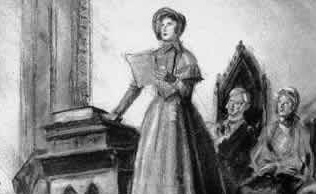
On July 19, 1848, a two-day Women’s Rights Convention opened in Seneca Falls, New York.

Categories
Thought

Seneca

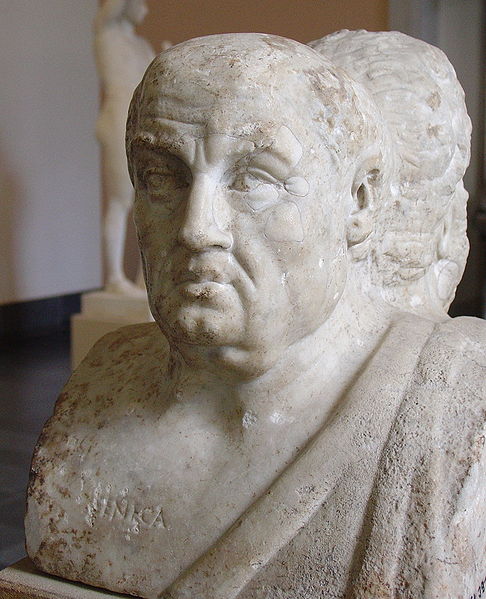
While we are postponing, life speeds by. Nothing is ours except time.

Categories
Thought

Herbert Spencer

The fact disclosed by a survey of the past that majorities have usually been wrong, must not blind us to the complementary fact that majorities have usually not been entirely wrong.

Categories
Today

Secret Ballot

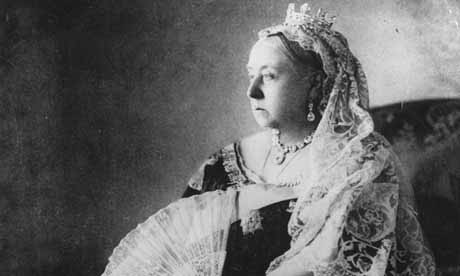
On July 18, 1872, Queen Victoria gave her “Royal Assent” to the Ballot Act, which established secret voting in Great Britain. The bill had been introduced by Prime Minister William Ewart Gladstone — one of the queen’s least favorite prime ministers.

Categories
Thought

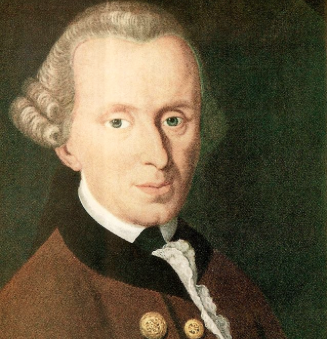
Immanuel Kant

The problem of establishing a perfect civic constitution is dependent upon the problem of a lawful external relation among states and cannot be solved without a solution of the latter problem.

Categories
Today

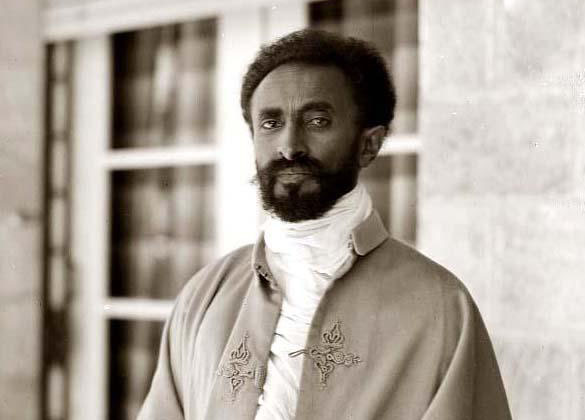
Ethiopia

On July 16, 1931, Ethiopia’s Emperor Haille Selassie I signed a new Constitution. Not exactly a model of limited government, the new document proved that the emperor was in keeping with the time, which was a period of weakening constitutional limits in America, Europe, and Britain. A flavor of the document can be gained by its most “rights-oriented” measures:

Art. 22. Within the limits laid down by the law, Ethiopian subjects have the right to pass freely from one place to the other.
Art. 23. No Ethiopian subject may be arrested, sentenced, or imprisoned except in pursuance of the law.
Art. 24. No Ethiopian subject may, against his will, be deprived of his right to be tried by a legally established court.
Art. 25. Except in cases provided for by law, no domiciliary searches may be made.
Art. 26. Except in cases provided by the law, no one shall have the right to violate the secrecy of the correspondence of Ethiopian subjects.
Art. 27. Except in cases of public necessity determined by the law, no one shall have the right to deprive an Ethiopian subject of any movable or landed property which he owns.
Art. 28. All Ethiopian subjects have the right to present to the Government petitions in legal form.
Art. 29. The provisions of the present chapter shall in no way limit the measures which the Emperor, by virtue of his supreme power, may take in the event of war or public misfortunes menacing the interests of the nation.

Categories
Thought

Haile Selassie

In the history of the human race, those periods which later appeared as great have been the periods when the men and the women belonging to them had transcended the differences that divided them and had recognized in their membership in the human race a common bond.

Categories
links

Townhall: The Dorky Idea Americans Deserve

Even our best and brightest minds can make elementary mistakes that normal Americans do not. Case in point: term limits. Consult Townhall this weekend. And come back here for a deeper consultancy list:

Categories
Today

“Malaise”

On July 15, 1976, Jimmy Carter accepted the nomination of the Democratic Party to run for the presidency.

Three years later, as president, he gave his infamous “malaise” speech, in which he focused on energy but did not mention the one thing that actually helped turn the ’70s’ energy crisis around: the phased deregulation of oil prices that had started three months earlier, under his own directive. Instead of touting this deregulatory effort, Carter did the usual politic thing and promised a number of new government programs, extensively ground home a “crisis of confidence” message, and vaguely talked of a spiritual challenge.

The deregulation was startlingly effective, in the long run — though the immediate effect was a rocketing of prices. These high prices presented profit opportunities, and (lo and behold!) domestic production greatly increased, allowing for many, many years of lower prices. Those high prices would have worked better as market signals had not Carter and Congress also established “windfall profits” taxes, to take away those temporary gains to existing business.

Had Carter deregulated prices earlier, he would probably have been re-elected president. Had he emphasized deregulation, he probably would have beat back Ronald Reagan’s free market rhetoric — with actual action.

The price controls had been put in place earlier in the decade by the Republican president at the time, Richard M. Nixon, with the great help of his aides Dick Cheney and Donald Rumsfeld.