The truth about the magical 1950s:

The truth about the magical 1950s:
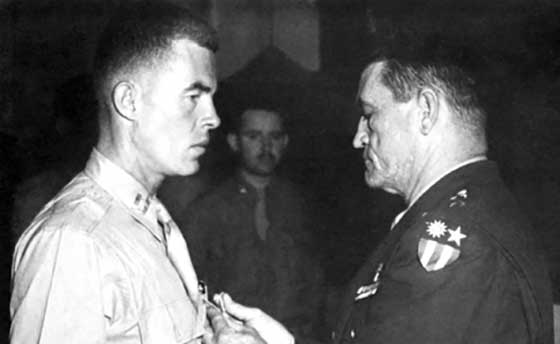
On August 25, 1945, the Cold War began (some say) when, ten days after World War II ended with the Japanese surrender, armed supporters of the Chinese Communist Party killed Baptist missionary Capt. John Birch (1918-1845).

“Think of the children!”
I have daughters. And neighbors, nephews, nieces, cousins, friends with children. And friends who used to be children. But when the command to “think of the children” is screamed out by freaked-out paranoiacs demanding more laws, more punishments, more prison time, more surveillance — and consequently less freedom — I try to think responsibly.
As did one Corey Widen, when she “let her 8-year-old do the most normal, cheerful thing in the world — walk the dog around the block.” Lenore Skenazy tells the tale in Reason. “After the girl returned home, the doorbell rang. It was the police.”
Someone in Widen’s Wilmette, Illinois, community had seen the child and dog walking around “unsupervised” and called 911.
The thing, there was no lack of supervision, here. The child was supervising the dog.
What could be more natural?
The neighbor could have walked outside and smiled at the kid and talked about the dog and, in general, been a good neighbor.
Think of it as a peaceful order of supervision.
Instead: in came the police.
Then, after the police let it go, the Department of Children and Family Services stepped in to “investigate.”
Because nothing says DANGER more than a kid walking a dog.
Skenazy notes that this attitude is commonly justified by crimes against kids. And yet, Ms. Skenazy notes, crime in Wilmette has gone down dramatically over the years. As it has most elsewhere.
The culture has become more paranoid.
Who is served by this?
Authoritarians. Haters of freedom. Demagogues.
Certainly not kids, for kids cloistered from simple responsibilities cannot grow up to take on real responsibilities.
Think of the . . . future adults.
This is Common Sense. I’m Paul Jacob.


On August 24, 1682, William Penn received an area of territory to add it to his colony of Pennsylvania. The area comprises, today, the state of Delaware.
In 1814 on this day, British forces burnt down the White House. Unlike audience reaction to the 1996 movie Independence Day (pictured), there was no widespread cheering among Americans for the building’s destruction.
One year later, the modern Constitution of the Netherlands received its empowering signatures.
August 24 birthdays include that of British anti-slavery activist William Wilberforce (1759-1833), Argentine literary genius Jorge Luis Borges (1899-1986), and French historian and author of a magisterial study of the rise of capitalism in Europe, Fernand Braudel (1902-1985),
The Ukraine celebrates its independence from the Soviet Union with a National Day on August 24.

Every cause produces more than one effect.
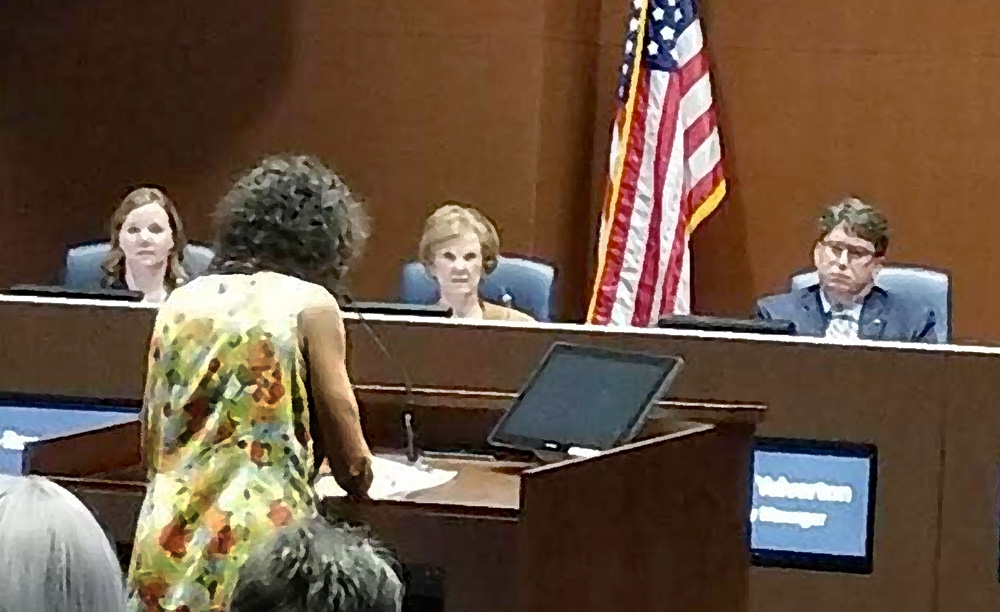
Strange for the Arlington, Texas, City Council to hold a meeting on a Sunday evening, much less one to “consider suspending the city charter.”
That is how the Fort Worth Star-Telegram reported “the latest twist in the term limit controversy that has engulfed the city with a lawsuit and competing ballot proposals.”
Led by Zack Maxwell, citizens in this Fort Worth adjacent community of 400,000 gathered 11,000 voter signatures to place a term limits charter amendment on the November ballot. It would limit councilmembers to three two-year terms. It also figures in past service, so five of the eight current councilmembers would be blocked from seeking re-election in the coming two years.
With swift legislative prowess, the council responded, passing its own competing “term limits” measure, which incidentally allows them to stay 50 percent longer in office.
But there’s one problem: the council did not follow the law, which requires multiple readings, with one at a regular meeting.
Actually, there’s a second problem: Mr. Maxwell challenged the council’s unlawful action in court.
The court blocked the council’s measure.
That left the council holding an unusual weekend meeting to suspend the rules and re-pass their fumbled alternative to the term limits voters really want. But news travels fast and city hall was “packed.”
“You’re suspending the rules because your jobs are in jeopardy,” charged one man.
A woman told the council, “You guys should be absolutely embarrassed about this.”
“After hearing from dozens of angry residents,” the paper explained, “[t]he council voted unanimously to not suspend the rules, finally killing its own term limit proposal.”
Politicians doing the right thing . . . having exhausted every other possibility.
This is Common Sense. I’m Paul Jacob.
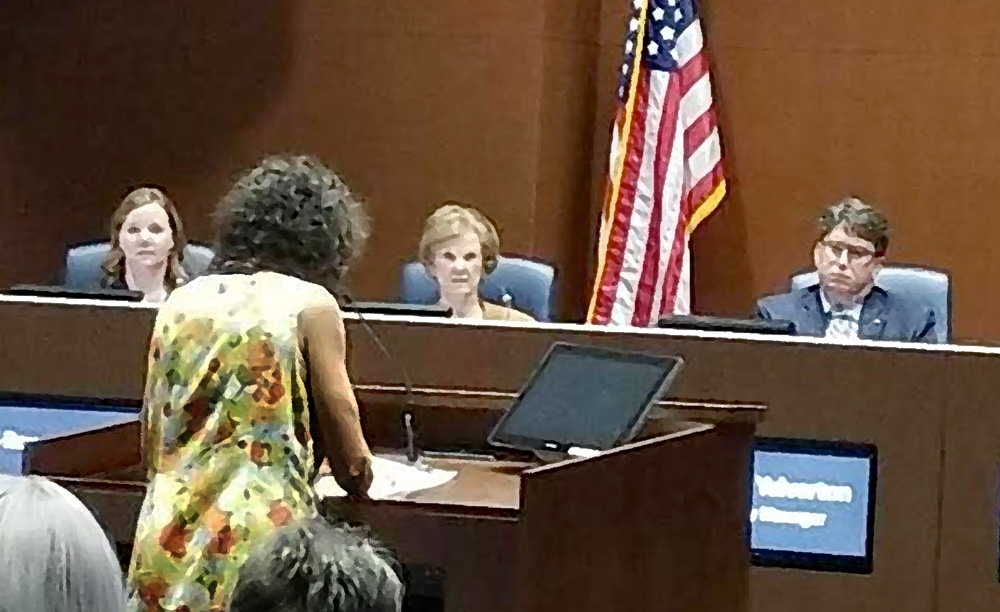
Photo from the Fort Worth Star-Telegram
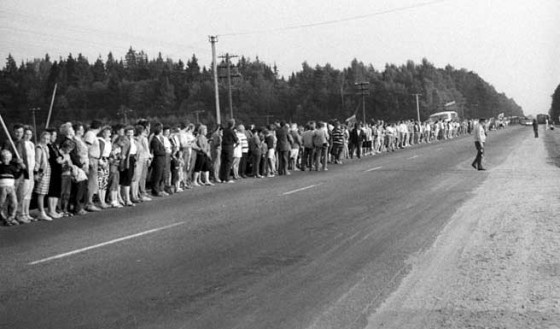
On August 23, 1989, two million people from Estonia, Latvia and Lithuania stood on the Vilnius-Tallinn road, holding hands, as part of the “Singing Revolution” that helped set the Soviet Union to its implosion.

If you see what is right and fail to act on it, you lack courage.

One of my more persistent critics on this site asked, last week, why I might believe anything the current president says — considering all the lies.
For reasons of decorum I won’t repeat his exact wording.
The odd thing about the comment was not the vulgarity, though (unfortunately). It was the idea that I was relying upon belief in Donald Trump’s veracity. The whole point of my commentary regarding Trump’s handling of trade and foreign policy was to read between some lines.
I try never to believe anything . . . er, everything . . . any politician says.
In Donald Trump’s case, though, there are lies and there are fictions and there are exaggerations. And corkers . . . and “negotiating gambits.” Separating the wheat from the chaff from the grindstone is not always easy.
Based not only on some of what he says, but also on results-thus-far from the EU negotiations, Trump’s idea of “fair trade” appears to be multilateral free trade. But he has chosen a bizarre method to get there: the threat of high-tariff protectionism — which in the past has led to multilateral protectionism, not free trade.
Trump sees everything as a contest. Trade isn’t a contest as such. It’s win-win. But trade negotiations are contests. And Trump’s game of chicken is dangerous.
Regarding foreign policy generally, though, he seems to be playing a more familiar game: we can outspend everybody. The recent increase in Pentagon spending is bigger than Russia’s annual military budget!
So, who pays? Americans in
That’s awfully daring of him. For us.
This is Common Sense. I’m Paul Jacob.

Photo from Max Pixel

On August 22, 1952, France closed its penal colony on Devil’s Island.
At first a leper colony, it had been transformed by the end of the 19th century into a prison tasked primarily with housing enemies of the French state.