Categories
Thought

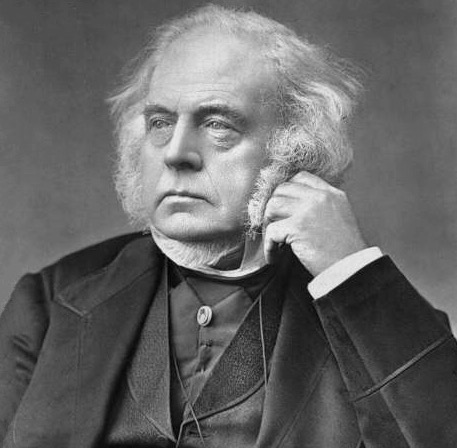
John Bright

I believe there is no permanent greatness to a nation except it be based upon morality. I do not care for military greatness or military renown. I care for the condition of the people among whom I live.

John Bright, from a speech in Birmingham (October 29, 1858), quoted in G. M. Trevelyan, The Life of John Bright (London: Constable, 1913), pp. 274-275.
Categories
Today

Will Rogers

On November 4, 1879, American humorist Will Rogers was born. Aside from his cowboy act, and his work as an actor in Hollywood, he gained much fame for being a topical comedian “just reporting what’s in the papers.” Among his most famous quips? “Be thankful we’re not getting all the government we’re paying for.”

Categories
video

Socialism Fails (and We Know Why Exactly)

Economists have long argued against socialism, with expert work from eminent figures such as Fredéric Bastiat, Eugen von Böhm-Bawerk, Yves Guyot, Ludwig von Mises and F. A. Hayek. But the meaning of that work has often been disputed. This tells an interesting story of keeping today’s economists’ feet to the fire:

https://youtu.be/7usXAX2aCqc


Categories
Today

Army Disbands

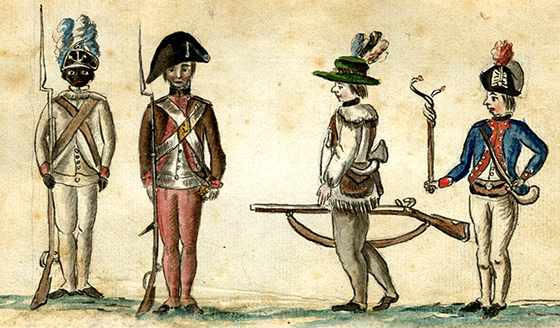
On November 3, 1783, the American Continental Army — its mission fulfilled — was disbanded.

On November 3, 1969, U.S. President Richard M. Nixon made a television and radio appearance, asking the “silent majority” to join him in solidarity on the Vietnam War effort.

Categories
Thought

Epictetus

There is only one way to happiness and that is to cease worrying about things which are beyond the power of our will.


Epictetus,

Categories
initiative, referendum, and recall tax policy

The Green in the Evergreen State

We’re told of the scientific consensus on global warming. Whatever you may say about that consensus (I’ve expressed extreme skepticism), no such consensus exists for what steps would be best to take to deal with the identified problem — which is usually understood in terms of the “carbon footprint,” of carbon put into the atmosphere in excess of what is taken out.

Most proposals for curbing carbon emissions have been shown to be far more costly than efficacious.

Nevertheless, without such a consensus, activists in Washington State are pushing Initiative 1631, a measure to tax carbon.

They had pushed a very similar measure two years ago, as science writer Ronald Bailey notes at Reason. The measure failed, however, because environmental lobbies opposed it. You see, the collected funds were given back to taxpayers. Environmental groups didn’t get a cut of the action.

This time that defect has been alleviated, and those groups are on board.

Ah, money, money, money! 

The Evergreen State, indeed.

Would the tax be effective? The goal of the measure is “to reduce, by 2035, [the state’s] emissions by 25 percent below their levels in 1990,” Bailey explains. The state had “emitted about 88 million metric tons that year, so that implies a reduction of around 22 million tons by 2035. Assuming today’s emissions, that would mean that Washington State’s planned reductions would amount to 0.42 percent and 0.06 percent of U.S. and global emissions respectively.”

Not much bang.

Sure, the measure may win on hope . . . and bucks.

But will it do any appreciable good? I mean, other than creating a constituency with the green of dollars.

This is Common Sense. I’m Paul Jacob.


PDF for printing


Categories
Today

Committee of Correspondence

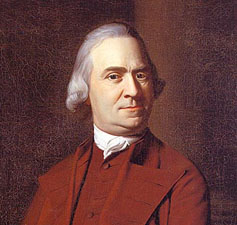
On November 2, 1772, Samuel Adams (pictured) and Joseph Warren formed the first Committee of Correspondence, which were instrumental in preparing the colonies from their 1776 breakaway from the British Empire of George III.

Categories
Thought

Isabel Paterson

Nothing increases the number of jobs so rapidly as labor-saving machinery, because it releases wants theretofore unknown, by permitting leisure.

Categories
crime and punishment Tenth Amendment federalism

Atrocity Meets the Commerce Clause

There may be no better example of an evil, real-world villain needing to get justice (good and hard) than the Pittsburgh synagogue shooter. 

Since he survived the shoot-out, he must now be put on trial.

But by whom?

In Allegheny County Court, Pittsburgh police filed a 34-count criminal complaint against the mass murderer. Meanwhile, the federal government has filed its own charges.

“The federal criminal complaint . . . charges him with 29 felonies, including 11 violations of 18 USC 247, which authorizes the death penalty for fatally obstructing any person’s ‘free exercise of religious beliefs,’” summarizes Jacob Sullum at Reason. “Such a crime can be prosecuted in federal court as long as it ‘is in or affects interstate or foreign commerce.’”

Yes, that’s the Constitution’s Commerce Clause being cited. You see, the guns used were — get this — not made in Pennsylvania.

Call it the insanity clause.

“There is no general, overarching federal police power,” Andrew C. McCarthy explains in National Review. “Under the Constitution, the states were supposed to handle virtually all law enforcement, and certainly all enforcement involving offenses committed wholly within their territories — common crimes of violence.”

Why flout this principle? Historian Brion McClanahan says the Republicans, in this case, just cannot help themselves — posing as the “law and order” party, they feel the need to be seen to “do something.” So Attorney General Jeff Sessions tortures the Constitution to intervene where the federal government does not belong.

Not only is the State of Pennsylvania constitutionally authorized to handle the Pittsburgh synagogue massacre, it is more than competent to do so.

The federal government should, for once, stick to its own constitutional business.

This is Common Sense. I’m Paul Jacob.


PDF for printing

 

Categories
Today

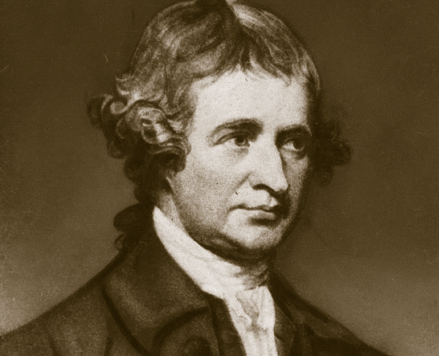
The French Revolution

On November 1, 1790, Edmund Burke published his Reflections on the Revolution in France, predicting that the French Revolution would end in disaster. Though many have disputed his premises and reasoning, few dispute his prophecy, which proved spot on.