Categories
Thought

Ubi libertas

Where liberty dwells, there is my country.


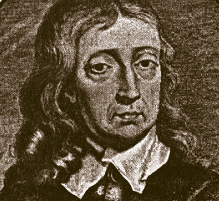
H.L. Mencken attributed this popular statement to Benjamin Franklin, written in a March 14, 1783 letter to Benjamin Vaughan. That letter, however, has not been located. Bartlett’s Familiar Quotations notes this was the motto of James Otis (Latin: Ubi libertas, ibi patria; the 1780 A Complete Book of Heraldry marks it as the motto of Daniel Huger, Esq. Many early biographies of Thomas Paine portray Ben Franklin mystically speaking these words to Paine. The slogan has also been attributed to Algernon Sidney, the forgotten founding father. In “Defining Liberty: An Analysis of Its Three Elements” (ABA Journal, April 1965), Wendell J. Brown identified John Milton as its author. Which is why we picture the great poet, above. Help in correctly citing priority for this great quotation would be greatly appreciated.

Categories
Thought

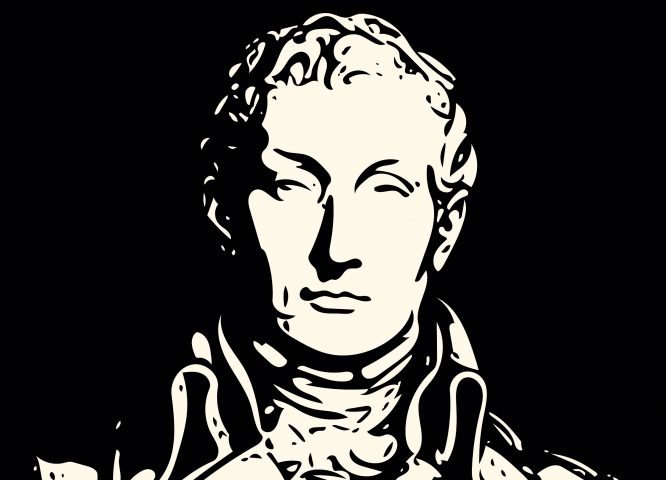
C.-F. Volney

The courageous and strong man repulses oppression, defends his life, his liberty, and his property; by his labor he procures himself an abundant subsistence, which he enjoys in tranquillity and peace of mind. If he falls into misfortunes, from which his prudence could not protect him, he supports them with fortitude and resignation; and it is for this reason that the ancient moralists have reckoned strength and courage among the four principal virtues.

Categories
Today

War Powers

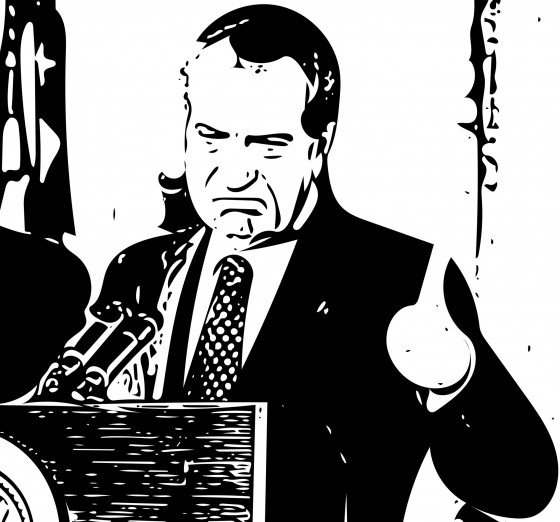
The U.S. Congress overrode President Richard M. Nixon’s veto of the War Powers Resolution on November 7, 1973. This resolution ostensibly limits presidential power to wage war without congressional approval, hence Nixon’s veto. Nowadays, however, it is often referred to as the expansive terms for the “Imperial President’s” license to engage in military conduct, and a dereliction of congressional duty to direct the United States’ foreign policy and warfare.

Categories
ideological culture media and media people national politics & policies

When Experts Are Wrong

Standard theory has it that “mid-term elections” serve as a “referendum on the President.”

In a typical article this weekend, a political scientist trotted out that common wisdom and then went on to say that “control of the referendum has shifted. It is now a referendum on leadership, on character . . . and that’s not good news for Donald Trump.”

My crystal ball is in the repair shop, but I have my doubts. The “experts” got the 2016 election so wrong in no small part because they were leveraging their expertise to influence the outcome more than understand the contest.

Academics, journalists and other Democrats want today’s votes to serve as a “referendum on leadership” because they yearn for their leaders and not Trump. 

In a Wall Street Journal op-ed and a Slate follow-up interview, Yale computer scientist David Gelernter explored the lack of “rapport between the left and what I consider the average American.” He also dismissed as absurd the idea that Donald Trump is racist — a mainstay of the Democratic critique of the president. What Trump is, instead, is “the average American in exaggerated form — blunt, simple, willing to fight, mistrustful of intellectuals” but completely without “constraints to cramp his style except the ones he himself invents.”

The Democrats, meanwhile, “have no issues” — except their hatred of Trump, argues Gelernter.

Thankfully, the mid-terms often serve as a check on the power of sitting presidents. But if “average Americans” hear the reasons to vote for the opposition party as all about how racist and xenophobic Trump is, it may work no better than in the last election.

Prophecy’s a tricky business.

This is Common Sense. I’m Paul Jacob.


PDF for printing


Categories
Thought

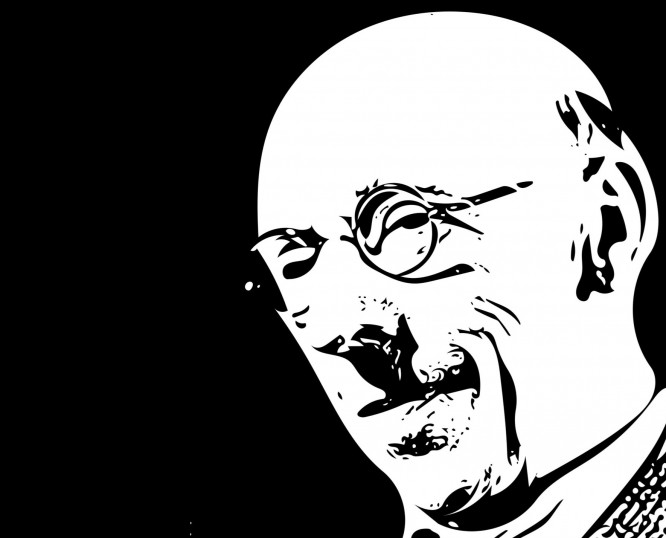
Ernest Bramah

Better a dish of husks to the accompaniment of a muted lute than to be satiated with stewed shark’s fin and rich spiced wine of which the cost is frequently mentioned by the provider.

Ernest Bramah, Kai Lung Beneath the Mulberry Tree, “The Story of the Poet Lao Ping, Chun Shin’s Daughter Fa, and the Fighting Crickets” (1940).

Categories
Today

Gandhi Arrested

On November 6, 1913, Mohandes K. Gandhi was arrested for participating in a march of Indian miners in South Africa.

Categories
initiative, referendum, and recall term limits

Seventh Time’s the Charm?

“You have to give the public something,” explained termed-out former Councilperson Emily Evans, a few years ago. She was referring to a 2015 initiative she had pushed. The unsuccessful measure had tempted voters with a smaller council in exchange for weakened term limits.

On Tuesday’s ballot, voters find lame attempt number seven by Metro Nashville Council’s to weaken or repeal their own term limits. As I told readers of the Wall Street Journal over the weekend, that makes for a council-forced do-over on term limits every 3.4 years for the last 24 years — since 1994, when greater than 76 percent of Nashville-Davidson County voters passed a consecutive two-term limit on councilmembers.

Voters have repeatedly said no to the council. 

But this time there is a twist, an incredibly enticing enticement having been carefully coupled with the undercutting of term limits. Only totally sexist male Nashvillian Neanderthals could possibly ignore this special offer. (And perhaps, too, the poor women they purportedly tell how to vote.)

Amendment 5 not only guts term limits, it also installs much-needed gender neutral language into the term limits section of the charter. In practical terms, it changes wording from “councilmen” to “councilmembers.”

How to choose? 

Keep term limits by voting NO? Or accept weak limits but fasten onto the freedom to stand on your own two feet and proudly say, “councilmember”? 

I tremble at the tendered trade-off.

Turns out, luckily, that Nashville voters can keep their term limits and use gender neutral terms too. The following ballot measure, Amendment 6, updates the entire charter with gender-neutral language. 

NO on Amendment 5, YES on Amendment 6.

Whew! 

That was close.

This is Common Sense. I’m Paul Jacob. 


PDF for printing

 

Categories
Thought

Will Rogers

Always drink upstream from the herd.

Will Rogers, in The Friars Club Bible of Jokes, Pokes, Roasts, and Toasts (2001), by Nina Colman, p. 316
Categories
Today

Second Congress of the Confederation

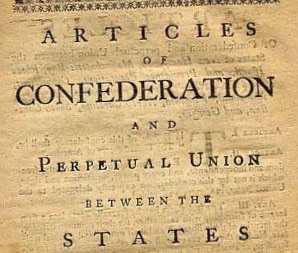
On November 5, 1781, the second session of the United States in Congress Assembled began, in Philadelphia, Pennsylvania. This “Second Confederation Congress,” as it is popularly known, ended on November 2, 1782.

And on that Fifth of November, 1781, John Hanson of Maryland was elected to serve as president of the United States in Congress Assembled. He would become the first president of Congress to serve a full one-year term as specified under the Articles of Confederation, for the second session of the Confederation Congress. Of course, this presidency was nothing like the presidencies under the Constitution. Hanson merely presided over Congress.


On November 5, 1872, Susan B. Anthony defied the law to vote, and was later fined $100.

Categories
Common Sense

Townhall: Don’t Let Politicians Hit the Mute Button

This weekend at Townhall.com — how to vote to protect one’s state from the meddling hands of insiders and politicians.

Click on over to Townhall. Then come back here for more reading:

This column will appear on this site on voting day.

Paul Jacob