Science and mathematics
Run parallel to reality, they symbolize it, they squint at it, They never touch it: consider what an explosion
Would rock the bones of men into little white fragments and unsky the world
If any mind for a moment touch truth.
The federal government “shutdown” — now on reprieve — has been and continues to be a rather strange charade. Various political players make motions towards one another, and we, the people, are supposed to guess the real meaning.
Which is usually conceived as
All about President Trump’s “Wall”;
All about the Pelosi-Schumer commitment to never letting Trump get away with his Evil Agenda; or
The great huge, honking divide in America that grows every day.
I suspect it is about all these things and more — which is easy to say, since these three issues are intimately related.
And as if playing a subtle joke on us all, the standoff that appears as obstructionism is about a proposed obstruction at the southern border: literally a “Mexican standoff.”
Meanwhile, a different security measure has received attention.
Congress could, of course, take this opportunity to disband this airport security worker agency. If managed by the airlines or any entity but the federal government, TSA wouldn’t have suffered through the shutdown.
Tragically, Congress long ago ceased being functional, responsible, or even the eensiest, teensiest bit respectable. And a divided public stands little chance of forcing a change.
These associations, or political parties, are actual armies which have been trained to pursue power; their immediate objective is to so increase the number of their adherents as to control an electoral majority. Influential electors are for this purpose promised such or such share in the profits which will follow success, but such promises — generally place or privilege — are redeemable only by a multiplication of ‘places,’ which involves a corresponding increase of national enterprises, whether of war or of peace. It is nothing to a politician that the result is increased charges and heavier drains on the vital energy of the people. The unceasing competition under which they labour, first in their efforts to secure office, and next to maintain their position, compels them to make party interest their sole care, and they are in no position to consider whether this personal and immediate interest is in harmony with the general and permanent good of the nation.
Gustave de Molinari, The Society of To-morrow (1904).
On Jan. 28, 1981, President Ronald Reagan lifted the federal government’s remaining domestic petroleum price and allocation controls in the United States, helping to end the 1970s energy crisis and begin the 1980s’ oil glut.
The deregulatory move had been begun by Democrats in Congress, particularly Sen. Ted Kennedy, but had been placed on a gradual schedule, and the whole effort clouded with talk of “windfall profits” and a tax on those allegedly unfair returns on investment.
On January 28, 1912, Belgian economist Gustave de Molinari died. Molinari was one of the last major economists of the French Liberal School, heir to Frederic Bastiat, and a prominent advocate of free trade. His last book, The Society of To-morrow (the only one of his many books to be translated into English in his day) envisioned a future of extremely limited government, and argued against the growing tide of socialism and war that was becoming all too apparent as the future of Europe.
Indeed, the old liberal order of Europe ended with the beginning of the Great War, exactly two and one half years after Molinari’s demise.
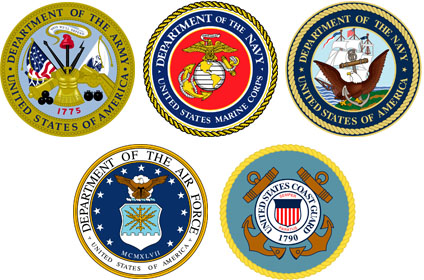
On Jan. 27, 1973, President Richard Nixon’s Secretary of Defense, Melvin R. Laird, announced an end to the military draft in favor of a system of voluntary enlistment. Since 1973, the United States armed forces have been known as the All-Volunteer Force.
The Selective Service System, the federal agency that would administer a military draft, continues to be funded, however. Furthermore, American males continue to be forced to register for the draft.
“A personal commitment of time, energy and talent to a mission that contributes to the public good by protecting the nation and its citizens, strengthening communities or promoting the general welfare.” That’s how the National Commission on Military, National and Public Service (NCMNPS) officially defines service.
“It’s time to talk about a culture of service,” Commission Chairman Joe Hecktold reporters Wednesday at the release of an interim report, “where Americans not only aspire to serve, but face no barriers.”
Remove the impediments where possible, sure.
But the Commission, as created by Congress, is primarily charged with looking into whether draft registration should continue, and if so, whether to expand it to women.*
Face it, military conscription doesn’t have anything at all to do with “service.” Not by the NCMNPS’s own definition — or any reasonable one. Surely the commissioners weren’t thinking that “personal commitment” could simply be coerced.
The NCMNPS is also “exploring what a program that requires every American to complete a dedicated period of military, national, or public service might look like.”
Stop. It won’t resemble freedom.
Why even consider coercing young people? The All-Volunteer Force is working well and creating a massive civilian chain-gang will be expensive.
“There is an overwhelming desire to serve,” Chairman Heck confirmed. But he explained that while young people “want to do it. They just don’t want to be told to do it.”
* Nearly four decades ago, the U.S. Supreme Court upheld the current male-only registration program specifically predicated on women being blocked from combat roles. All those roles are now open to women. Eventually, a case will get back to the High Court, which will very, very likely strike down a registration program that does not include young women.
You can share your own opinion with the Commission here.
The early Thomas Jefferson had a dream: a society of honest yeomen, engaged in agricultural pursuits, without large cities, heavy industry, banks, military pretensions. The early (and the late) Alexander Hamilton wanted industry, banks, cities, and a military force capable of making itself felt in world politics. It is a nice irony that so many of today’s laissez-faire conservatives think that they descend from Hamilton, the proponent of a strong federal government, and that so many liberals believe themselves to be the heirs of the early Jefferson, who wanted little more than a police force and a judiciary.