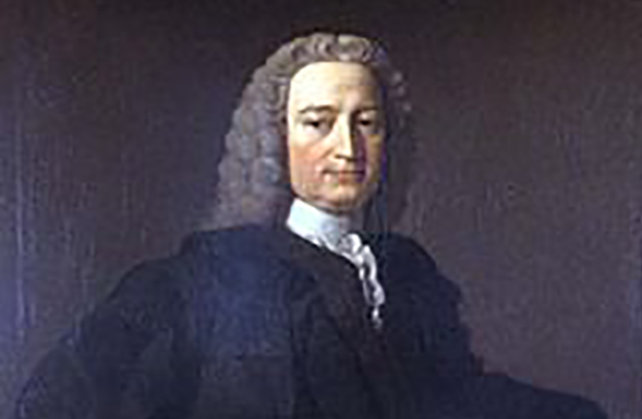
Francis Hutcheson, philosopher of the Scottish Enlightenment and a great influence on David Hume and Adam Smith, was born in Ireland on August 8, 1694. He died on his birthday in 1746.
Followers of Mahatma Gandhi launched the Quit India Movement against the British rule on August 8, 1942.
On the same day in 1974, President Richard M. Nixon resigned.
It is not, then, chiefly in the interests of the employing classes that socialism is to be resisted, but much more in the interests of the employed classes. In one way or other production must be regulated; and the regulators, in the nature of things, must always be a small class as compared with the actual producers. Under voluntary co-operation as at present carried on, the regulators, pursuing their personal interests, take as large a share of the produce as they can get; but, as we are daily shown by Trades Union successes, are restrained in the selfish pursuit of their ends. Under that compulsory co-operation which socialism would necessitate, the regulators, pursuing their personal interests with no less selfishness, could not be met by the combined resistance of free workers; and their power, unchecked as now by refusals to work save on prescribed terms, would grow and ramify and consolidate till it became irresistible. The ultimate result, as I have before pointed out, must be a society like that of ancient Peru, dreadful to contemplate, in which the mass of the people, elaborately regimented in groups of 10, 50, 100, 500, and 1000, ruled by officers of corresponding grades, and tied to their districts, were superintended in their private lives as well as in their industries, and toiled hopelessly for the support of the governmental organization.
Herbert Spencer, ”From Freedom to Bondage,” in Thomas Mackay, ed., A Plea for Liberty (1891).
President Donald Trump responded to the weekend’s two shooting atrocities by decrying hatred and making five substantive proposals.
“They include tools to identify early warning signs in mass shooters, reducing the glorification of violence, reforming mental health laws, enacting ‘red flag’ laws to stop dangerous individuals from gaining access to firearms, and enacting the death penalty for mass murderers,” the Epoch Times summarizes.
But how useful are these?
The “early warning signs” of a criminal are often identical to grumpiness and even righteous indignation in others — “tools to identify” could easily serve as excuses for unwarranted meddling and worse.
Who would enforce lessening the “glorification of violence”? The federal government that is always at war?
Is it mental health laws that should be reformed, or the practice of putting whole generations of boys on Ritalin and worse . . . made especially ominous by the percentage of shooters on such drugs?
Denying “dangerous individuals . . . access to firearms” remains problematic under any semblance of due process and the ‘innocent until proven guilty’ principle.
Since “death by cop” is often one of the apparent goals of many would-be shooters, how much of a deterrent could death by sterile procedure actually be?
But if you are looking for even worse reactions, look beyond Trump. The Democrats took the occasion to raise funds.
And complain to the New York Times, which“changed a headline on its front page because it presented Trump in a neutral light,” reports independent journalist Tim Poole. “This was in response to far left activists and Democrats expressing shock and outrage and demanding everyone cancel their subscriptions to NYT over it.”
Ideological bias or old-fashioned market pressure?
If it is in tragedy that we find our greatest tests of courage and wisdom, the weekend’s shootings show a lot of political and media failure.
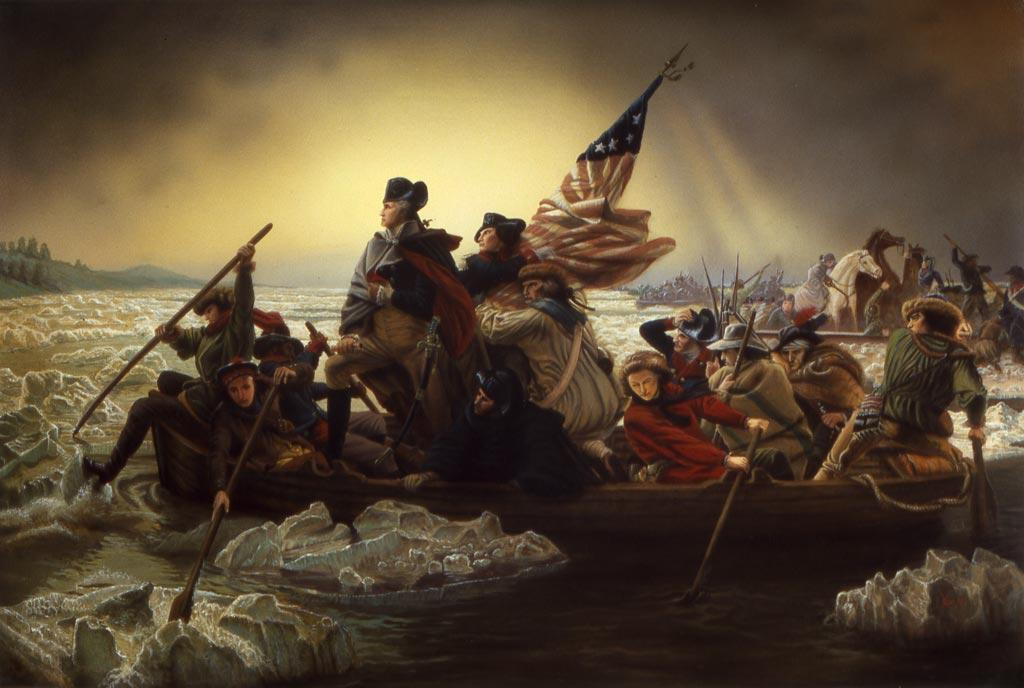
On August 7, 1782, George Washington instituted the Badge of Military Merit to honor soldiers wounded in battle, an award later renamed “the Purple Heart.”
Illustration: “Washington Crossing the Delaware,” Emanuel Leutze, 1851, Oil on canvas (Metropolitan Museum of Art, New York City), depicting an event in 1776, not 1782.
If mind is common to us, then also the reason, whereby we are reasoning beings, is common. If this be so, then also the reason which enjoins what is to be done or left undone is common. If this be so, law also is common; if this be so, we are citizens; if this be so, we are partakers in one constitution; if this be so, the Universe is a kind of Commonwealth.
Imperator and Pontifex Maximus Marcus Aurelius, Meditations
News commentary can seem like a race, commentators reacting as if to the crack of the starting-gun, scrambling to make sure they do not come in last.
Yet, in stories like this weekend’s round of mass shootings, being last to comment might be something to aspire towards.
As I have argued before, mentioning perps’ names has a tendency to encourage further mass murders, spree murders. But in cases of outright terrorism — as the El Paso shooting was immediately classified — the frenzy to comment is pretty much the same thing as using names.
How?
Well, terrorism is the use of violence to effect political change. The old anarchists and syndicalists called it “propaganda by the deed.” And, in a mass- and alt-media drenched democratic society, the aim is to get people to go into alarm, in part by getting tongues tapping and keyboards clattering.
Focusing on terrorist murders does feed the idea that terrorism somehow works.
So, when Democrats immediately talk about racism and the need for gun confiscation (both seen on Twitter immediately after the El Paso event, of course) and Republicans leap to the “mental health” issue and . . . video games (as I saw inching across the news chyrons) . . . my urge to comment dissipates dramatically.
But here I am.
Politicians can demand new laws to restrict firearms, or video games, but those laws won’t prevent future mass shootings.
I do not pretend to understand the moral universe; the arc is a long one, my eye reaches but little ways; I cannot calculate the curve and complete the figure by the experience of sight; I can divine it by conscience. And from what I see I am sure it bends towards justice.
On August 6, 1962, Jamaica became independent of Great Britain.
In 1991, on this date, Tim Berners-Lee released files describing his idea for the World Wide Web, and put up the first website, running on a NeXT computer at CERN, in France.
Tim Berners-Lee, pioneer of the World Wide Web, c 1990s.
“FirstEnergy Solutions might not want to spend its bailout money just yet,” warns a story in Crain’s Cleveland Business.
At issue? A possible statewide referendum on House Bill 6.
HB6 would, according to the Cleveland Plain Dealer, “gut Ohio’s green-energy mandates and set up customer-funded subsidies to nuclear and coal power plants.” It passed the majority Republican state House “thanks to key support from several House Democrats.”
Passage of HB6 through both houses of the Ohio Legislature and its signature by Governor Mike DeWine would force Ohio ratepayers to fork over roughly $150 million in subsidies to FirstEnergy Solutions for its two nuclear power plants.
Except for one thing — in Ohio, voters possess a powerful political weapon: the referendum.
Already a diverse coalition of opponents to the bill has formed Ohioans Against Corporate Bailouts, filed a referendum and kicked off a petition drive that has “until October 21, 2019, to collect the 265,774 required signatures.”
“HB6 has created some strange bedfellows,” the Plain Dealernotices, including bringing together “environmental groups, the fossil-fuel industry, renewable energy companies, and some small-government activists” in opposition.
“Many of the forces that fueled the Trump presidency, before 2016 — I’m talking the Tea Party and others — could be supportive in undoing this bill,” explains Paul Beck, former chair of Ohio State University’s political science department. “And so could people on the left. You may find an incredible divergent group of people aligned with each other.”
“Liberals hate that it subsidizes dirty coal plants,” reports Crain’s. “Many conservatives hate that it picks winners and losers by subsidizing one industry over another.”
Thankfully, the fate of the giveaway rests in the hands of Ohioans, not their subsidy-loving representatives.
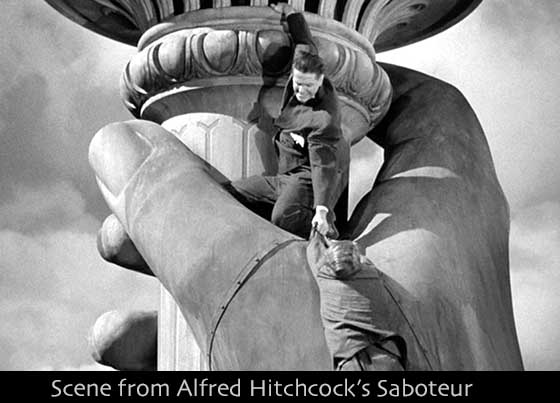
On August 5, 1861, the U.S. Army abolished flogging. The same day 23 years later, Bedloe’s Island in New York Harbor received the foundation stone for the Statue of Liberty (which was featured in the rousing conclusion to Alfred Hitchcock’s wartime picture, Saboteur). The island was later renamed Liberty Island.
President Ronald Reagan fired 11,359 striking air-traffic controllers (who had ignored his order for them to return to work) on August 5, 1981.