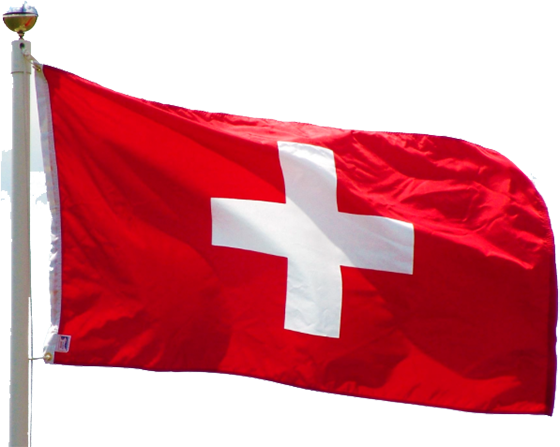
On September 12, 1848, Switzerland became a unified federal state with a constitution limiting central government powers and providing decentralized state (canton) power patterned on the U.S. Constitution.
In 1880 on this date, H.L. Mencken was born. One of his earliest books was a debate with a socialist, The Men versus The Man (1910); his greatest lasting contribution was probably The American Language (1919) and its supplements (1945, 1948). His work has been collected in numerous anthologies, such as Alistair Cooke’s Vintage Mencken (1955) and the author’s own Mencken Chrestomathy.
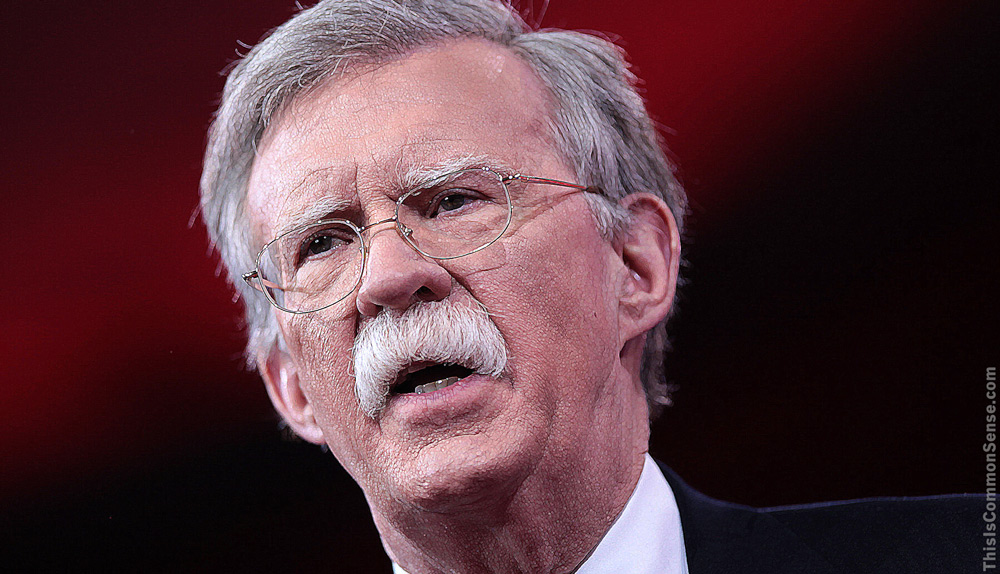
At long last, John Bolton’s 17 month tenure in the Trump Administration isover.
I won’t pretend not to be pleased. Yet I also do not pretend this national security advisor was always and completely on the wrong side. He has consistently claimed to have an ulterior motive for his favored never-ending war footing: “Individual liberty is the whole purpose of political life, and I thought it was threatened then” — when he was a teenager and exposed to the ideas of Barry Goldwater — “and I think it’s threatened now.”
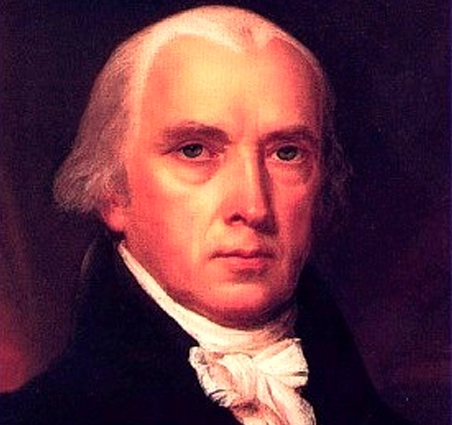
Unfortunately, he rejected the lesson that our Founders knew all too well: constant war-making doesn’t yield freedom. “Of all the enemies to public liberty,” James Madison wrote, it is war that “comprises and develops the germ of every other.” Madison’s list of reasons for war’s dangers include
Debts and taxes;
Rule of the many by the few;
Discretionary executive power;
Special favors greed economy;
Propaganda; etc.
Nevertheless, folks like John Bolton continue to think that we can be free while our military micromanages the “resolution” of every conflict across the globe.
Meanwhile, Donald Trump, who often comes off like a war skeptic, continues to side with the interventionists.
“We’re going to keep a presence” in Afghanistan, Trump said the other day. “We’re reducing that presence very substantially. We’re not fighting a war over there. We’re just policemen.”
Of all the enemies to public liberty war is, perhaps, the most to be dreaded, because it comprises and develops the germ of every other. War is the parent of armies; from these proceed debts and taxes; and armies, and debts, and taxes are the known instruments for bringing the many under the domination of the few. In war, too, the discretionary power of the Executive is extended; its influence in dealing out offices, honors, and emoluments is multiplied; and all the means of seducing the minds, are added to those of subduing the force, of the people. The same malignant aspect in republicanism may be traced in the inequality of fortunes, and the opportunities of fraud, growing out of a state of war, and in the degeneracy of manners and of morals engendered by both. No nation could preserve its freedom in the midst of continual warfare.
James Madison, “Political Observations,” Apr. 20, 1795 in Letters and Other Writings of James Madison, vol. 4, p. 491 (1865).
The date is known for some famous and not-so-famous wars and massacres and atrocities. So maybe, for once, we recognize some birthdays . . . literary:
Juhani Aho, originally Johannes Brofeldt (1861 – August 8, 1921), Finnish author and journalist. “It’s having hope which requires having guts. So wear your heart on your sleeve and if it bleeds, let it, so long as it still beats.”
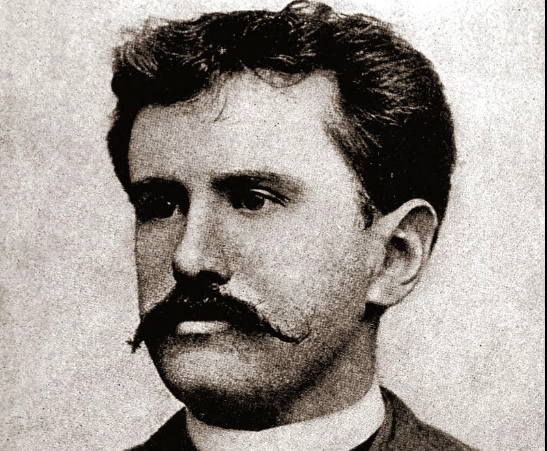
William Sydney Porter (1862 – June 5, 1910 — pictured), who under his pen name O. Henry earned fame for being the master of the American “surprise ending” short story writer. “A straw vote only shows which way the hot air blows.”
David Herbert Lawrence (1885 – March 2, 1930), an English writer and poet. “Men fight for liberty and win it with hard knocks. Their children, brought up easy, let it slip away again, poor fools. And their grandchildren are once more slaves.”
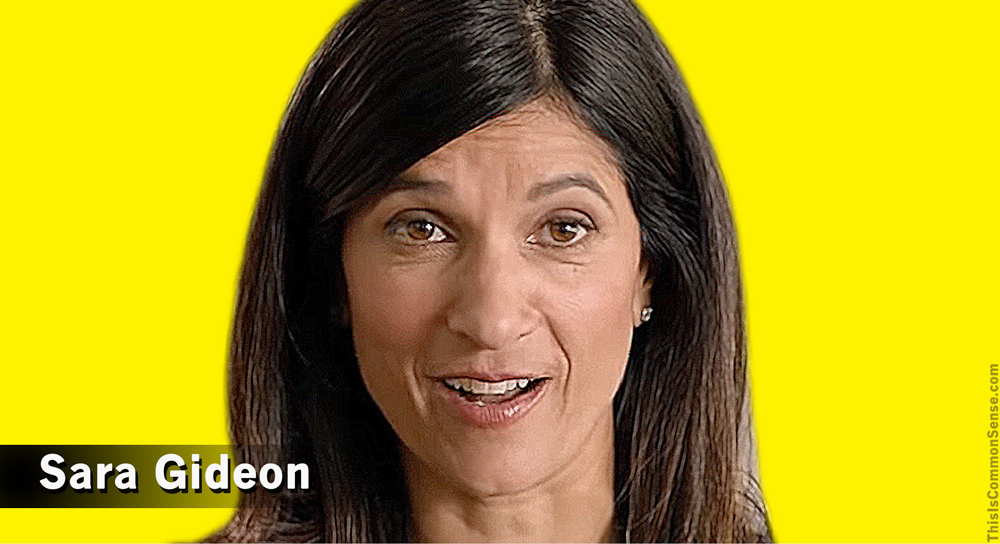
“No Corporate PACs,” says a Facebook ad by the Sara Gideon for U.S. Senate campaign, “Just You.”
“Gideon is running to unseat Republican Sen. Susan Collins in 2020,” the Portland Press Heraldreports, noting that “fighting corporate money in politics” has been a prime “focus of her campaign.”
Yet,as Democratic Speaker of the Maine House, the challenger ran something called the Gideon Leadership PAC that raked in a majority of its funds from corporations such as Aetna, American Express, AT&T, Comcast, Eli Lilly, Time Warner, Verizon, Visa, and Walmart. The Maine Examinerinforms that “records from the Maine Ethics Commission show she has built her career, and funded efforts to boost her statewide support, with contributions from large corporations.”
Last month, Gideon was slapped with a Federal Election Commission complaint for violating campaign finance law forbidding one person or entity from making contributions that are reimbursed by another. Gideon made numerous personal contributions to Democrats running for federal office only to turn around and have her leadership PAC reimburse her for the expense.
Her PAC being the true donor, Speaker Gideon is what’s known as a straw donor.
But it gets worse, explains Erin Chlopak, a former FEC official and currently with the Campaign Legal Center. “Corporations cannot make contributions to a federal campaign, and you can’t circumvent that ban by using a straw donor to funnel money originally from a company to a federal candidate.”
A spokesperson for Gideon’s campaign blamed “incorrect advice.”
At her level of corporate involvement, I’d say the “incorrect advice” was to emphasize the anti-corporate money pledge.
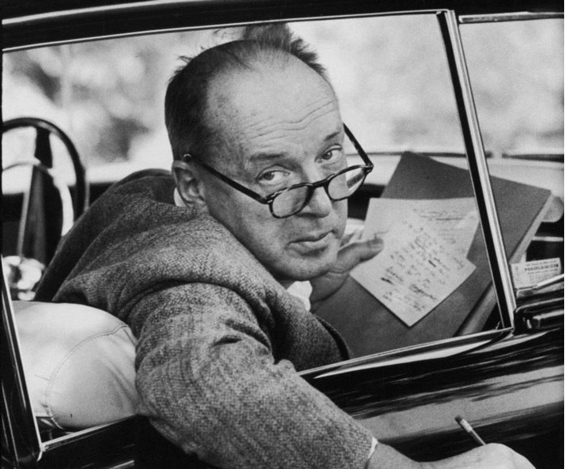
Literature was not born the day when a boy crying ‘wolf, wolf’ came running out of the Neanderthal valley with a big gray wolf at his heels; literature was born on the day when a boy came crying ‘wolf, wolf’ and there was no wolf behind him.
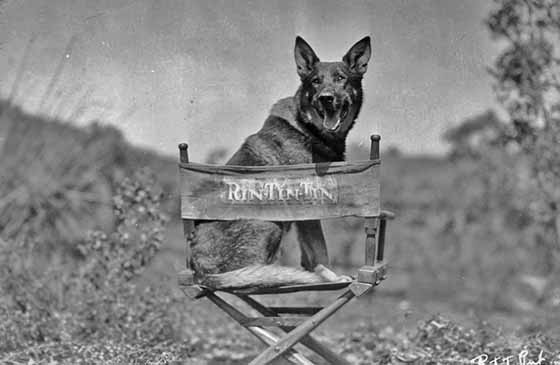
September 10, 1918, is the estimated date of birth for Rin Tin Tin, one of a litter of shell-shocked puppies found by an American serviceman in a bombed-out kennel in Lorraine, less than two months before the end of World War I. The dog went on to become the lead actor in a number of very popular films, and one of the great celebrities of his age.
If, like me, you expect people to bear the bulk of the brunt of their own decisions, big ticket court rulings often strike you as bizarre.
Case in point? “Drugmaker Johnson & Johnson must pay $572m (£468m) for its part in fuelling Oklahoma’s opioid addiction crisis, a judge in the US state has ruled,” reads a BBC report.
“During Oklahoma’s seven-week non-jury trial,” the BBC informs, “lawyers for the state argued that Johnson & Johnson carried out a years-long marketing campaign that minimised the addictive painkillers’ risks and promoted their benefits.”
A certain credulity boundary has been stretched, here:
Don’t all ads stress selling points over . . . non-selling points?
Doesn’t everyone know this, and, therefore,
Shouldn’t they be expected to adjust — caveat emptor-wise — accordingly?
And doesn’t everyone know painkillers are dangerous, and opiates notoriously so?
“The state’s lawyers had called Johnson & Johnson an opioid ‘kingpin,’” the report continues, “and argued that its marketing efforts created a public nuisance as doctors over-prescribed the drugs, leading to a surge in overdose deaths in Oklahoma.”
The public nuisance biz is idiotic, of course. If the company had been slipping its drugs to kids on a playground, something like this would have some plausibility. But the actual situation? Nope.*
Shifting responsibility from self to others, especially deeply pocketed others, has many bad consequences . . . not least of which is deflection of our attention away from why opioid use is up. Which is something we should be looking into for our friends’, families’, and neighbors’ sakes.
Lawyers are our tempters, in such cases.
And monetary awards can sure be addicting.
This is Common Sense. I’m Paul Jacob.
* Johnson & Johnson is appealing the decision, of course.
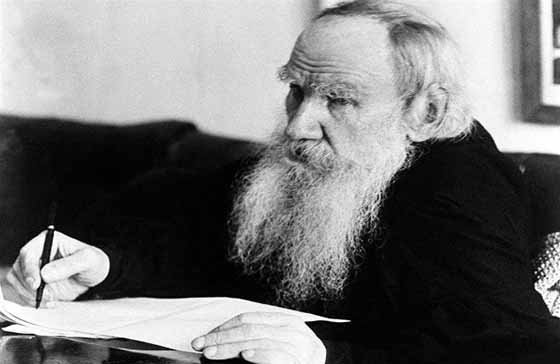
On September 9, 1828, Count Lev Nikolayevich Tolstoy was born. Known most commonly in the English-speaking world as Leo Tolstoy, he became the celebrated author of the novels Anna Karenina and War and Peace, as well as the novellas and short stories entitled “Family Happiness,” “The Death of Ivan Ilyich,” and “The Kreutzer Sonata.”
His political and religious ideas heavily influenced Gandhi and Martin Luther King, Jr.