Categories
Money from Maine

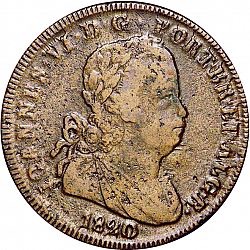
On September 15, 1820, an uprising occurred in Lisbon, Portugal, following similar insurrection in Porto the previous month. This was no bloodthirsty mob, but, instead, a popular demand for constitutional government. Unfortunately, the country was beset with imperial and monarchical problems for some time to come.
The United Nations established September 15 as International Day of Democracy, in 2007. An Independence Day is celebrated on this date in Guatemala (a Patriotic Day), El Salvador, Honduras, Nicaragua, and Costa Rica, commemorating independence from Spain in 1821.
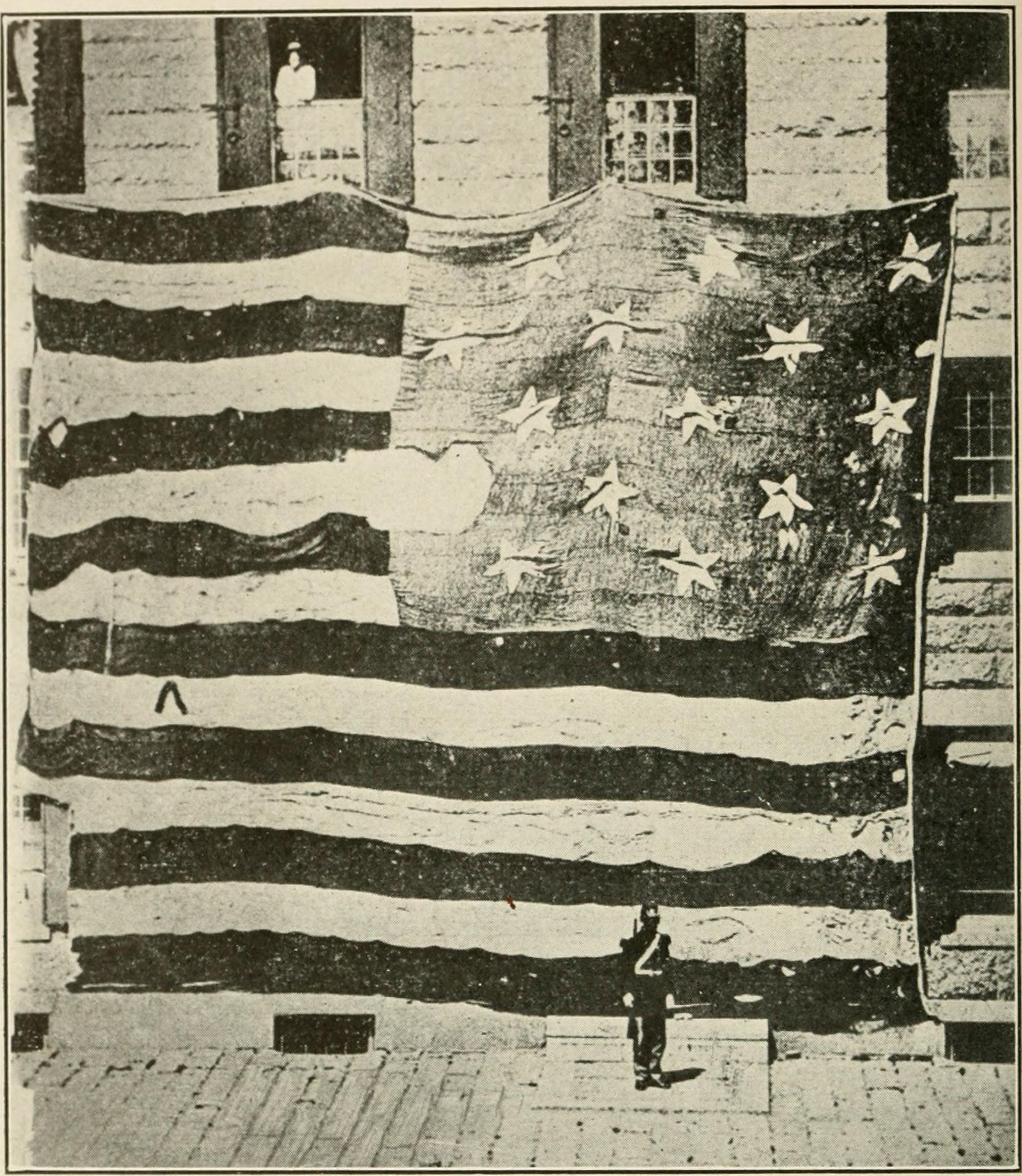
O say can you see, by the dawn’s early light,
What so proudly we hailed at the twilight’s last gleaming,
Whose broad stripes and bright stars through the perilous fight,
O’er the ramparts we watched, were so gallantly streaming?
And the rockets’ red glare, the bombs bursting in air,
Gave proof through the night that our flag was still there;
O say does that star-spangled banner yet wave
O’er the land of the free and the home of the brave?

On the shore dimly seen through the mists of the deep,
Where the foe’s haughty host in dread silence reposes,
What is that which the breeze, o’er the towering steep,
As it fitfully blows, half conceals, half discloses?
Now it catches the gleam of the morning’s first beam,
In full glory reflected now shines in the stream:
’Tis the star-spangled banner, O long may it wave
O’er the land of the free and the home of the brave.

And where is that band who so vauntingly swore
That the havoc of war and the battle’s confusion,
A home and a country, should leave us no more?
Their blood has washed out their foul footsteps’ pollution.
No refuge could save the hireling and slave
From the terror of flight, or the gloom of the grave:
And the star-spangled banner in triumph doth wave,
O’er the land of the free and the home of the brave.

O thus be it ever, when freemen shall stand
Between their loved homes and the war’s desolation.
Blest with vict’ry and peace, may the Heav’n rescued land
Praise the Power that hath made and preserved us a nation!
Then conquer we must, when our cause it is just,
And this be our motto: ‘In God is our trust.’
And the star-spangled banner in triumph shall wave
O’er the land of the free and the home of the brave!
* Poem composed by Francis Scott Key on September 14, 1815, later known as “The Star-Spangled Banner.”
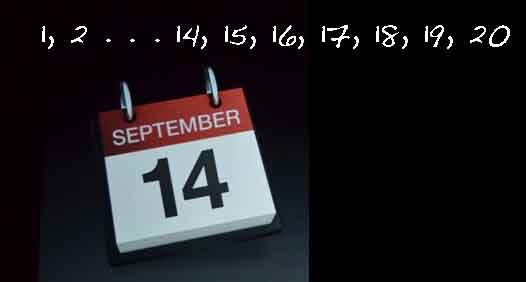
In 1752, throughout the British Empire, September 2 was followed, the next day, by September 14, as the government adopted the Gregorian calendar, skipping eleven days.
On September 14, 1944, Maastricht becomes the first Dutch city to be liberated by allied forces.
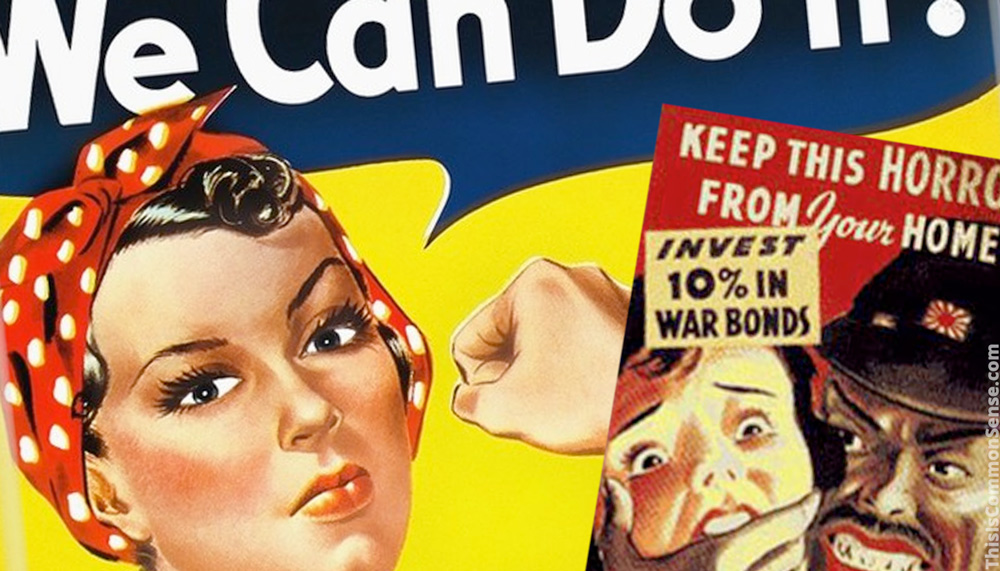
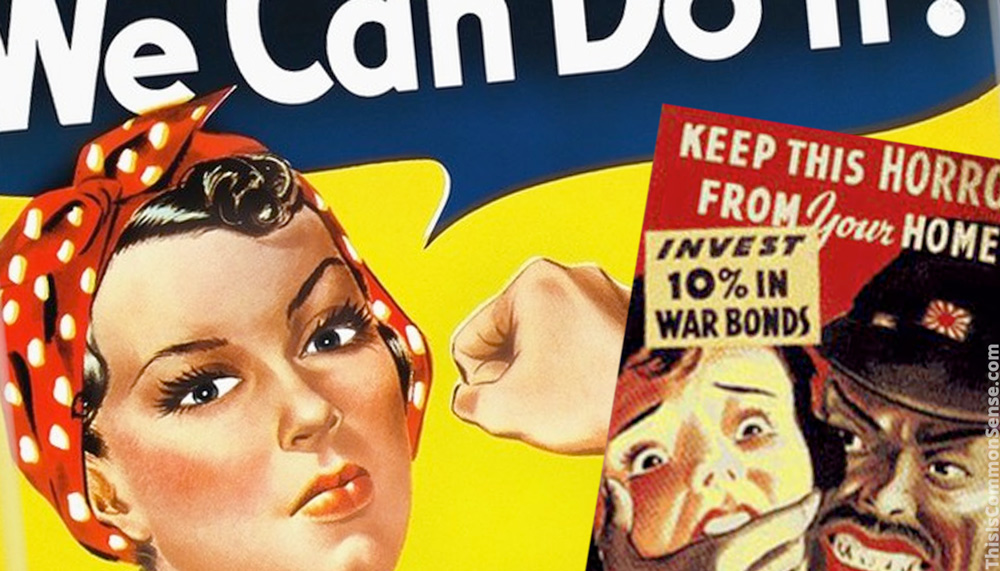
“We just marked the anniversary of 9/11.”
That’s what Democratic presidential aspirant and South Bend, Indiana, Mayor Pete Buttigieg reminded last night’s debate audience. “All day today, I’ve been thinking about September 12th, the way it felt when for a moment we came together as a country.”
The terrorist attacks in New York City and at the Pentagon, and the attempt foiled by brave citizens who were killed in the crash of their airliner in Shanksville, Pennsylvania, did indeed result in a wonderful bond of unity throughout our country.
Having lost more than 3,000 citizens, we came together.
“Imagine,” instructs Buttigieg, “if we had been able to sustain that unity.”
Before we all sing along with John Lennon, though, consider: (1) It is not so easy for government to re-create the sort of public horror, fear, grief, etc., necessary to ensure maximum national unity, and (2) please don’t try.
The purpose of government is not to produce a pressure-cooker society where we forever exist on a wartime footing.
Do you miss the good old days of World War II? Totalitarianism threatened much of the globe; 70 million people died in the war. But it unified our country, which defeated Nazism, fascism, and a murderous empire.
We must memorialize the victory, not repeat it . . . just for unity’s sake.
Yet the Green New Deal resolution introduced by Rep. Alexandria Ocosio-Cortez (D-NY) states that “the House of Representatives recognizes that a new national, social, industrial, and economic mobilization on a scale not seen since World War II and the New Deal is a historic opportunity. . . .”
Opportunity?
Our motto should be ‘Liberty’ — not ‘never let a crisis go to waste.’
This is Common Sense. I’m Paul Jacob.
See all recent commentary
(simplified and organized)
See recent popular posts
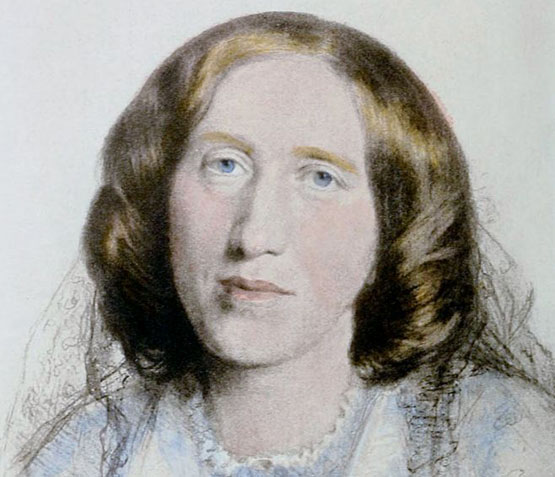
It is doubtful whether our soldiers would be maintained if there were not pacific people at home who like to fancy themselves soldiers. War, like other dramatic spectacles, might possibly cease for want of a “public.”
Mary Ann Evans (1819–1880), writing as George Eliot, The Mill on the Floss (1860)
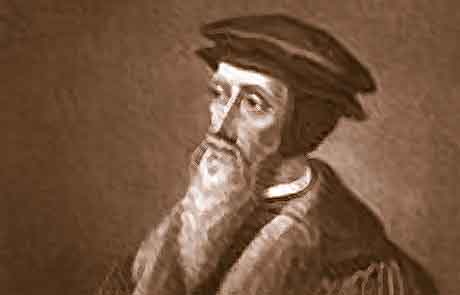
John Calvin [pictured above] returned to Geneva on September 13, 1541, after three years of exile. His subsequent work in church reform and theology became known as Calvinism, and profoundly influenced the course of European and (eventually) American civilization, including several concepts of servitude and liberty.
On the same date in 1989, Desmond Tutu led South Africa’s largest march aganst Apartheid.
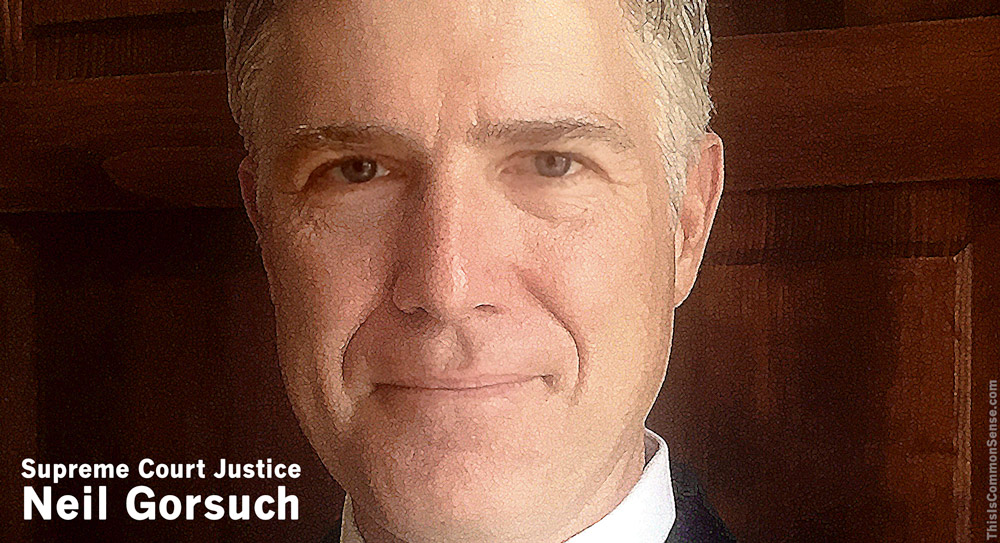
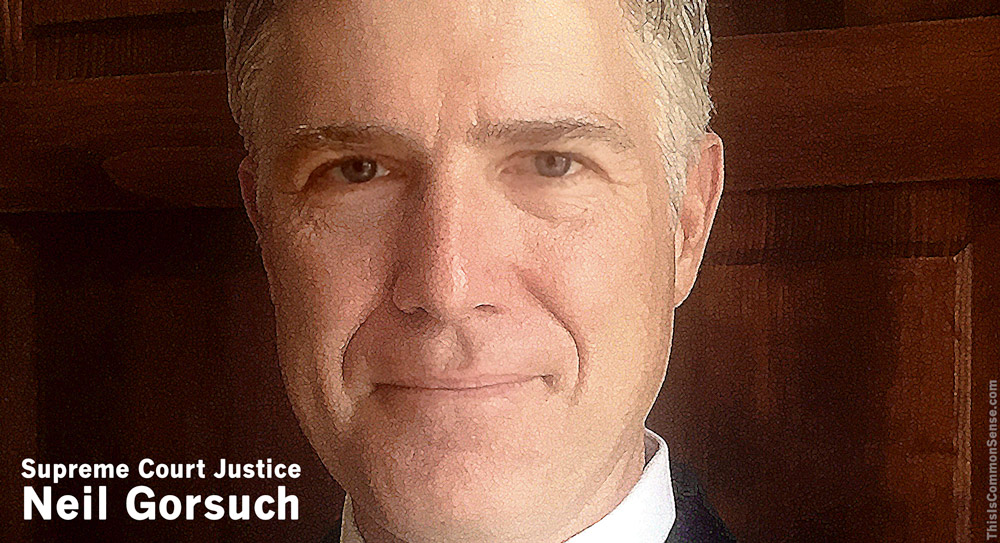
“Do you really want me to rule the country?” Supreme Court Justice Neil Gorsuch pointedly asked CNN’s Ariane de Vogue.
“It is not a judge’s job to do whatever he or she thinks is good,” Gorsuch added, in response to her concern that judicial activism might sometimes be “needed.”
“We wrote a Constitution; we put down what we wanted to put in it,” explained President Trump’s first SCOTUS pick. “We can amend it when we wish, and it is not up to nine people to tell 330 million Americans how to live.”
Gorsuch is making the media rounds promoting his new book, A Republic, If You Can Keep It — borrowing Ben Franklin’s famous quip when asked about what form of government the delegates at the 1787 Constitutional Convention had produced.
Gorsuch follows the judicial philosophy of originalism, criticizing interpretations that jigger the Constitution with the times. “You know, the living Constitution is going to take your rights away,” the justice argues, “and it’s going to add ones that aren’t there.”
And defending the rights actually in the Constitution means, Gorsuch believes, that judges must enforce limits on government. Last weekend in The Wall Street Journal, Kyle Peterson noted that Gorsuch has been true to that mission, pushing back against the High Court’s longtime deference to the administrative state.
This philosophy puts him beyond partisanship. “Gorsuch voted with liberal justices on important decisions on surveillance and sentencing,” Jonathan Turley writes in The Hill. “He also joined in key decisions supporting free speech against the government. . . .”
All this makes Neil Gorsuch the best justice on the Supreme Court. Perhaps the best in my lifetime.
And surely Exhibit A in Mr. Trump’s case for reelection.
This is Common Sense. I’m Paul Jacob.
See all recent commentary
(simplified and organized)
See recent popular posts
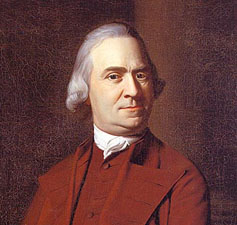
The natural liberty of man is to be free from any superior power on Earth, and not to be under the will or legislative authority of man, but only to have the law of nature for his rule.