Categories
national politics & policies Popular

After Them, the Deluge

One might be forgiven for finding Sen. Kamala Harris the perfect presidential candidate for Democrats after the Hillary Clinton debacle. Adding Harris’s skin color to her status as a woman, she had the intersectionalist angle covered. And for the power elite, she offered a ruthless, moraline-free ambition.

But no, her candidacy never really took off. She has dropped out, for lack of funds.

Her exit leaves a full field, however, including two billionaires — one unelectable (Bloomberg), the other mostly undetectable (Steyer).

Joe Biden has become a living, breathing Mr. Magoo, having just playfully bitten his wife’s finger while she was making a public speech. And his ridiculous ‘hairy legs’ rant just resurfaced for universal ridicule.

Yet some polls say he’s still leading the pack.

How?

This is how:

Bernie Sanders, a self-proclaim “democratic socialist,” is, like Biden, too old to be a Boomer, and is “recovering” from a recent heart attack, giving his future all the promise of Venezuelan socialism — which he has in the past praised.

Seems Sen. Elizabeth Warren’s star is falling. It may be the result of floating a multi-trillion-dollar healthcare plan that didn’t add up . . . or for backing away from that bold mistake . . . or the combination. 

Pete Buttigieg’s star is now ascendent, in Iowa and New Hampshire. Which is ominous, for the silver-tongued mayor of South Bend, Indiana, sports at least one badge of official disadvantage — he’s gay — and has that uncertain magic that suggests having been anointed by whichever fallen angel selects future tyrants. The millennial embraces “national service” and big government.

But fear not: there’s still Hillary Clinton who, reports The Epoch Times, “says she’s ‘deluged’ with requests to run for the presidency for the third time and declined to rule out a bid for 2020.”

This is Common Sense. I’m Paul Jacob. 


PDF for printing

Hillary Clinton, deluge,

See all recent commentary
(simplified and organized)
See recent popular posts


Categories
Thought

Epictetus

Reason is not measured by size or height, but by principle.

Categories
Today

A Farewell to Arms

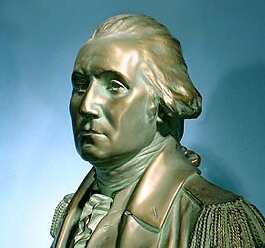
On December 4, 1783, at Fraunces Tavern in New York City, General George Washington formally bade his officers farewell.

Categories
term limits

Legislators Turned Lobbyists Turned Altruists

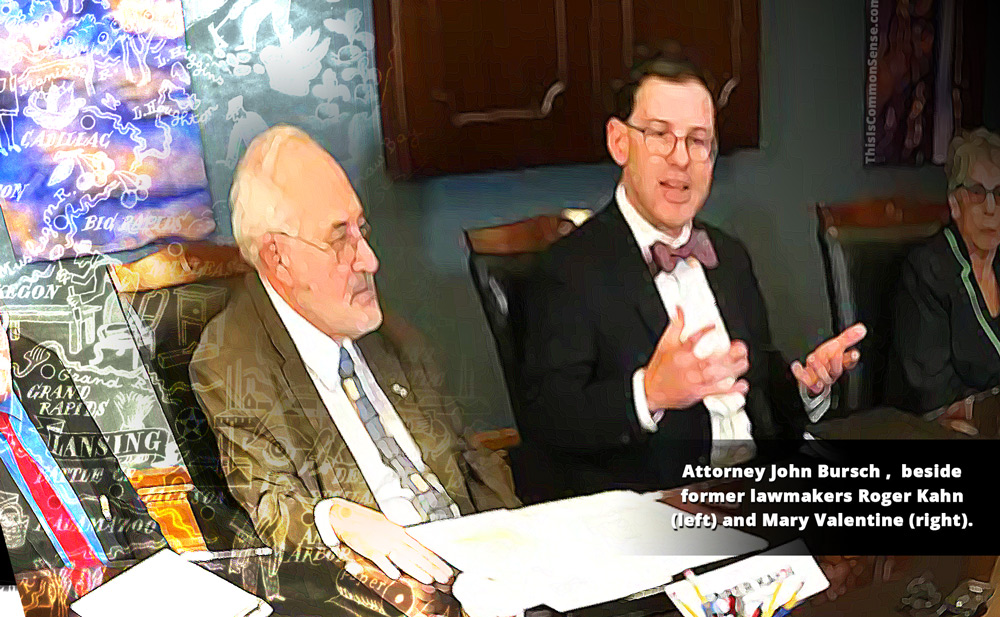
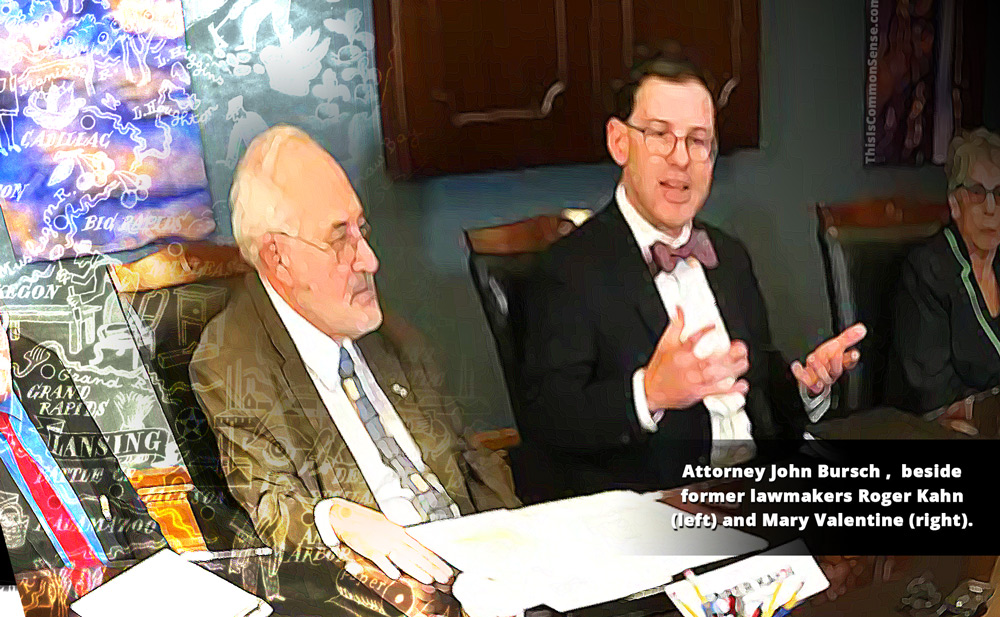
Legislative bosses, the state’s most powerful special interests and a fake grassroots organization teamed up a month ago to figure out how best to attack Michigan’s popular term limits law. 

Now comes a lawsuit demanding that a federal court overturn these 27-year-old voter-enacted limits.

“I’m just sitting here watching five former legislators, who are now lobbyists, sitting in the conference [room] of another lobbyist in Lansing talking about how the courts should rescue them from the voters,” Patrick Anderson, author of the 1992 term limits law, told MIRS.* 

Self-serving? Not at ALL. “When you take the most experienced people out of government,” asserted John Bursch, the legislator-lobbyists’ attorney, “it shifts the balance of power to career bureaucrats and to lobbyists.”

So, clearly, these kind, meek, caring lobbyists are altruistically rejecting more power and influence for themselves and, instead, working selflessly for the greater good. No wonder everyone loves lobbyists.

In pursuing the legal approach, Bursch did acknowledge, “We think it would be very difficult to put anything on the ballot that would be successful.”

Their legal rationale is as implausible as their putative public-spiritedness. The lawsuit contends that term limits deny legislators the opportunity to gain law-making competence while also listing all the wonderful legislation these legislators-turned-lobbyists once passed . . . when working under term limits. 

It’s not a legal argument, either way, but which is it?

“I’m having trouble,” offered Rina Baker with Don’t Touch Term Limits, “remembering a single moment when I wished any of the plaintiffs were still in office.”

This is Common Sense. I’m Paul Jacob.


* Unfortunately, this capitol insider publication is behind a paywall, so no link is available.

Michigan, term limits,

from photo by Beth LeBlanc/The Detroit News

PDF for printing

See all recent commentary
(simplified and organized)
See recent popular posts
Categories
Today

Cold War Ends

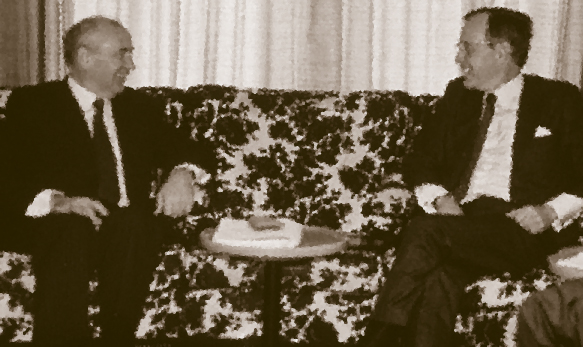
On December 3, 1989, the leaders of the two world superpowers, the United States of America and the Union of Soviet Socialist Republics, declared an end to the Cold War, at a summit in Malta. A little over two years later not only had the Cold War ended, the Soviet Union was itself dissolved.

Categories
Thought

H. L. Mencken

The strange American ardor for passing laws, the insane belief in regulation and punishment, plays into the hands of the reformers, most of them quacks themselves. Their efforts, even when honest, seldom accomplish any appreciable good. The Harrison Act, despite its cruel provisions, has not diminished drug addiction in the slightest. The Mormons, after years of persecution, are still Mormons, and one of them is now a power in the Senate. Socialism in the United States was not laid by the Espionage Act; it was laid by the fact that the socialists, during the war, got their fair share of the loot. Nor was the stately progress of osteopathy and chiropractic halted by the early efforts to put them down. Oppressive laws do not destroy minorities; they simply make bootleggers.

Editorial in The American Mercury (May 1924), p. 26
Categories
international affairs national politics & policies too much government

The New Arms Race

We who grew up in the time of the Apollo missions are more than aware of the arms-race angle to the Soviet and American forays into Earth orbit and beyond. 

Now, we must recognize that the space race is no longer mere ornamentation over earthly military competition.

“The United States and China are rapidly building space warfare capabilities,” writes Bill Gertz in the Washington Examiner, “as part of a race to dominate the zone outside Earth’s atmosphere.”

Of course, much of this remains ground support. WHNT News 19 in Alabama quotes the Commander of the U.S. Space and Missile Defense Command at Redstone Arsenal — a Lieutenant General who “will soon become Deputy Commander of the U.S. Space Command in Colorado” — explaining that current space resources must be ever-ready in support of “the war fighter, the soldier on the ground.”

But the “satellites in space” he refers to, the ones with “very unique capabilities,” are not just about ground support. For when Donald Trump proposed a new Space Force military division last year, he wasn’t blowing smoke.

Billions of future dollars, maybe, but not smoke. 

In the works?

  • “AI for space war to stop anti-satellite weapons”;
  • Capabilities to treat “Space [a]s a warfighting domain similar to air, land and sea”;
  • Space planes, such as the in-dev X-37B;

and much more.

The Chinese are looking for “space superiority,” says American intelligence, and of course “you know what this means,” as Bugs Bunny liked to say.

War?

At least war profits.

Even France is talking about militarizing space.

Brave new world? Or more of the same, just higher up?

This is Common Sense. I’m Paul Jacob.


PDF for printing

Space Force, war, foreign policy,

See all recent commentary
(simplified and organized)
See recent popular posts

Categories
Today

Monroe Doctrine

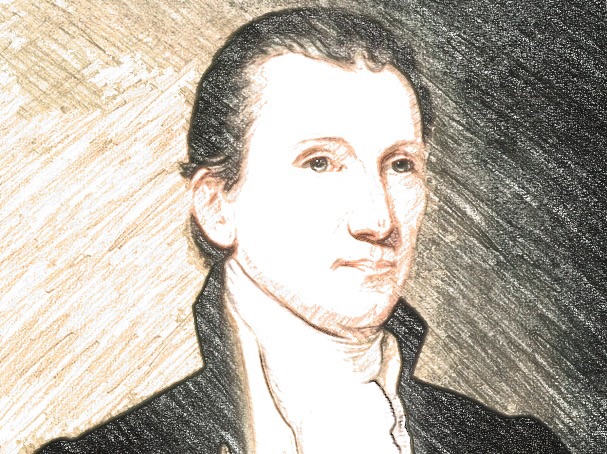
On December 2, 1823, U.S. President James Monroe delivered a speech establishing American neutrality in future European conflicts. The policy became known as the Monroe Doctrine.

Though a much-discussed principle of American foreign policy, it was undermined by the Spanish-American War and proved a dead letter as the U. S. entered World War I.

Categories
Thought

Arthur Latham Perry

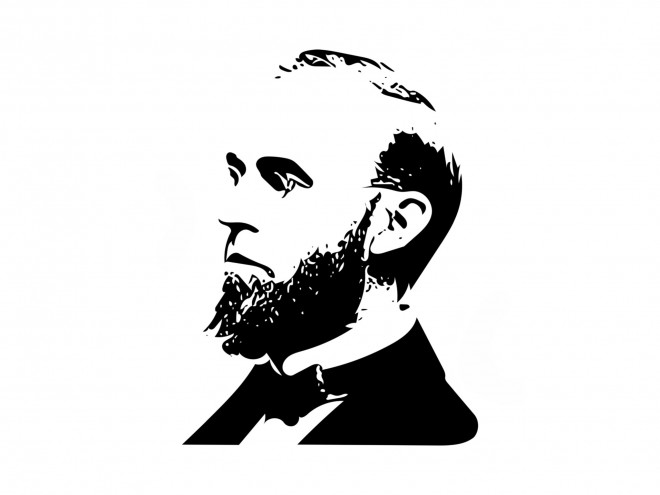
A theory that does not work well in practice is a bad theory. The way to tell whether a theory is good or bad is to test it by practice. Everything that is done at all, unless by mere chance, is done on some theory; and it is certainly better that things should be done on a good theory than on a bad one. What makes a theory good? Simply because it corresponds with and explains the facts.

Arthur Latham Perry, Elements of Political Economy (1869).

Categories
audio podcast

Paul on Paul Harvey (and Politicians and Other)

The weekend podcast starts light and gets deadly serious: