Categories
Thought

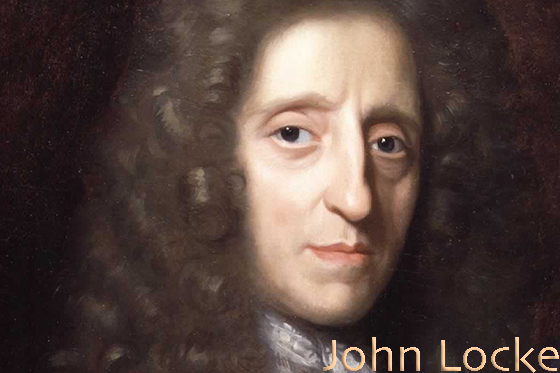
John Locke

Men living together according to reason, without a common superior on earth, with authority to judge between them, is properly the state of nature. But force, or a declared design of force, upon the person of another, where there is no common superior on earth to appeal to for relief, is the state of war: and it is the want of such an appeal gives a man the right of war even against an aggressor, tho’ he be in society and a fellow subject. Thus a thief, whom I cannot harm, but by appeal to the law, for having stolen all that I am worth, I may kill, when he sets on me to rob me but of my horse or coat; because the law, which was made for my preservation, where it cannot interpose to secure my life from present force, which, if lost, is capable of no reparation, permits me my own defence, and the right of war, a liberty to kill the aggressor, because the aggressor allows not time to appeal to our common judge, nor the decision of the law, for remedy in a case where the mischief may be irreparable. Want of a common judge with authority, puts all men in a state of nature: force without right, upon a man’s person, makes a state of war, both where there is, and is not, a common judge.

John Locke, Second Treatise on Government, ch. 3
Categories
national politics & policies partisanship Popular

Between the Devil and the Deep State, See?

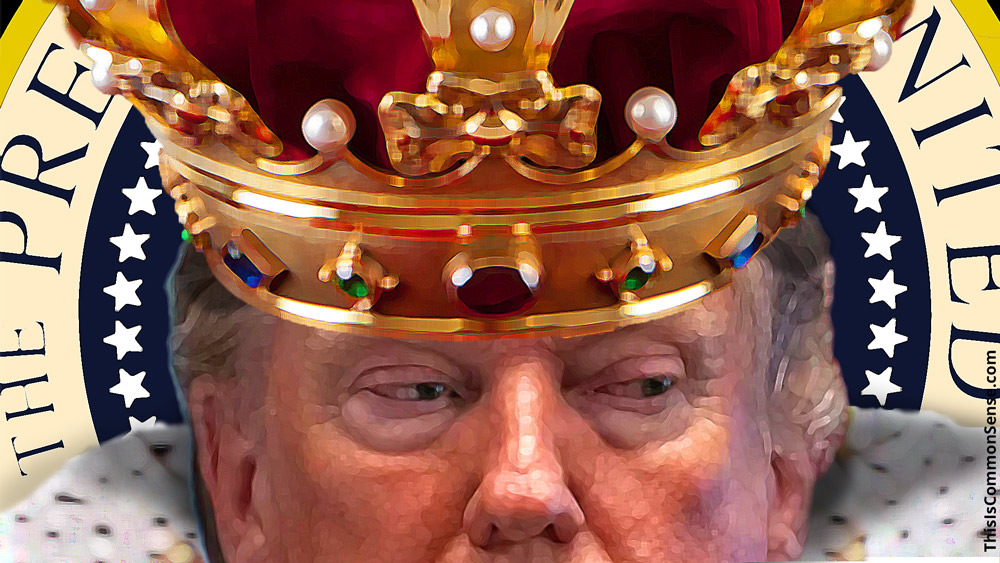
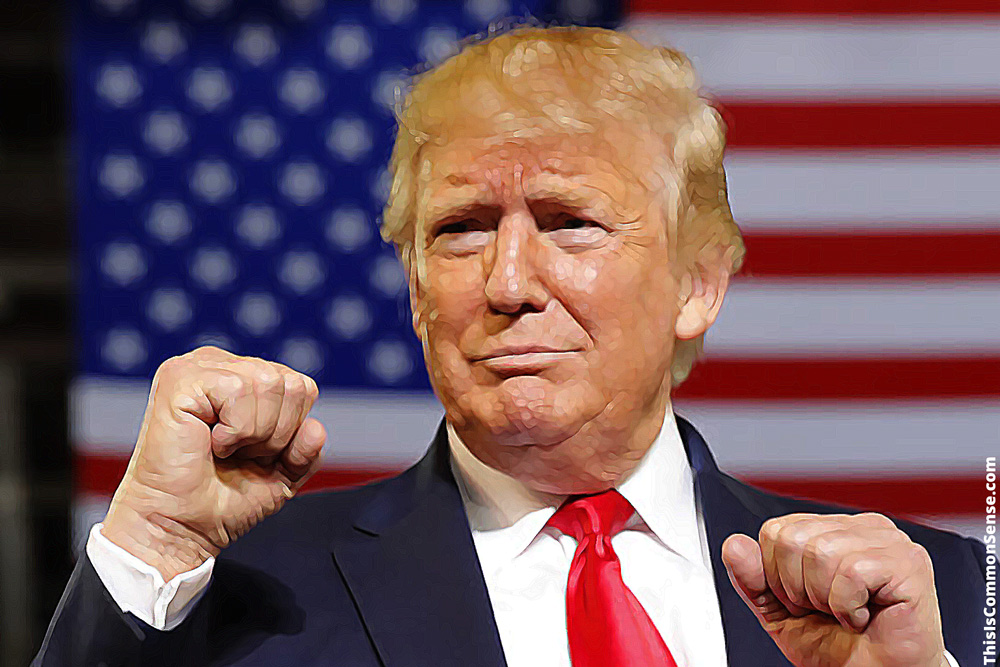
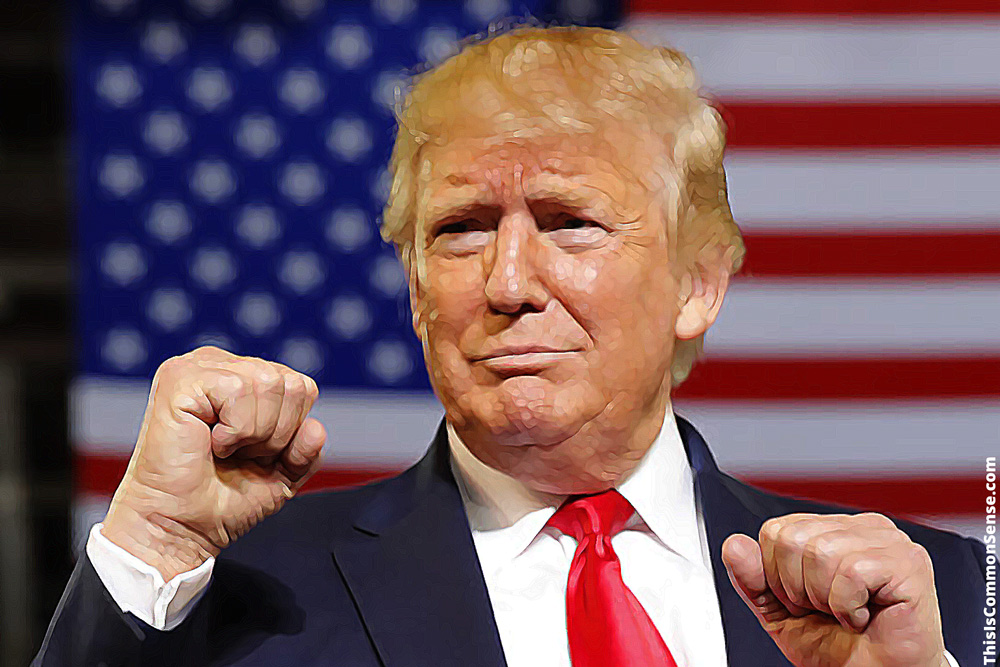
“If it turns out that impeachment has no sting, has no bite,” exasperated Princeton University professor Eddie Glaude, Jr., speculated on Meet the Press, “and we are in the aftermath, what it will mean is that there will be an unlimited, an imperial, executive branch that can do whatever it wants to do.”*

Per the “imperial presidency, actually, that ship sailed a while ago,” the American Enterprise Institute’s Danielle Pletka quickly responded. 

“I mean, it was a problem under George W. Bush. It was a growing problem under Obama. And it has come to its apotheosis under Donald Trump.”

There appears a left-right consensus among TV chatterers that, a Constitution of enumerated federal powers notwithstanding, the president can “do whatever [he] wants to do.” 

But considering what we are learning about “the interagency” machinations to take down the current imperator, the imperial guard may be as big a problem. 

Last week, Justice Department Inspector General Michael Horowitz released his report on the FBI’s investigation of the Trump campaign, code-named “Crossfire Hurricane.” Though the IG did not find conclusive evidence that political bias inspired the launch of the investigation, he did detail “many basic and fundamental errors” that “raised significant questions” . . . adding portentously, “we also did not receive satisfactory explanations for the errors or problems we identified.”

“[A]s as the probe went on,” reported The Washington Post, “FBI officials repeatedly decided to emphasize damaging information they heard about Trump associates, and play down exculpatory evidence they found.”

The evidence piles up: Washington is dangerously out of control, and our career-politician Congress can only muster to provide a constitutional check on the flimsiest grounds and partisan manner.

This is Common Sense. I’m Paul Jacob.


* Somehow Professor Glaude seems to have forgotten President Bill Clinton, who reached his highest ever public approval rating — 73 percent — in the aftermath of his 1998 impeachment by the then-Republican-controlled House. Been there, done that.

PDF for printing

Donald Trump, Imperial Presidency, President, crown,

See all recent commentary
(simplified and organized)
See recent popular posts


Categories
Thought

C. S. Lewis

The task of the modern educator is not to cut down jungles, but to irrigate deserts.

Categories
Today

Thanksgiving in December

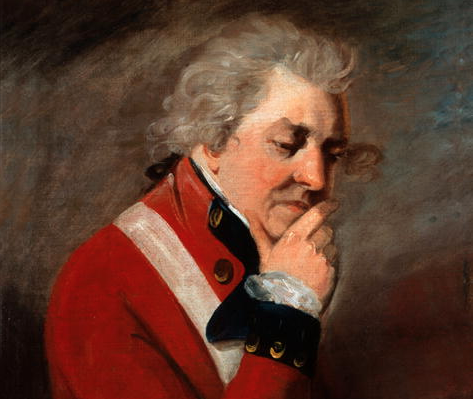
On December 18, 1777, the United States celebrated its first official Thanksgiving, marking the then-recent October victory by the Americans over General John Burgoyne [pictured, above] in the Battle of Saratoga.

Categories
Popular too much government

Gloating Time?

“The freak-out was something to behold,” I wrote two years ago.

Newly appointed chair of Federal Communications Commission, Ajit Pai, had just nixed ‘net neutrality,’ and reactions from the left end of the political spectrum were overwhelmingly negative.

I, on the other hand, prophesied good times ahead. But we free-market folks were outshouted.

At least on Twitter. 

Now, two years later, with something like a free market returned to Internet regulation, Casey Given at the Washington Examiner urges us not to “forget how the Left cried wolf.”

Contrary to doomsayers — whose alarm was that, sans net neutrality, we would experience “the End of the Internet as We Know It” — things are turning out pretty well. Mr. Given tells us that “since the repeal of net neutrality, more than 6 million people have gained access to the internet. Internet speeds have increased as well.”

Which shouldn’t shock. After all, the whole net neutrality mania was fear-based anti-capitalist prejudice. 

“The Internet had stumbled along just fine until 2015, when President Barack Obama’s FCC put ‘net neutrality’ in place — a point Ajit Pai ably makes in his defense,” I argued two orbits ago. “Do the doom-sayers really believe that a set of regulations that had been in place just a few years was going to ‘ruin the Internet’ and unleash Big Corporations upon the world to the detriment of regular consumers and start-up service providers?”

What most net neutrality advocates wouldn’t acknowledge, at the time, was that net neutrality was supported by key telecom corporations. This should have given them a hint that net neutrality itself was the thing to be most feared: a rigged system for a few at the expense of the many.

This is Common Sense. I’m Paul Jacob.


PDF for printing

net neutrality, censorship, control, FCC,

See all recent commentary
(simplified and organized)
See recent popular posts


Categories
Thought

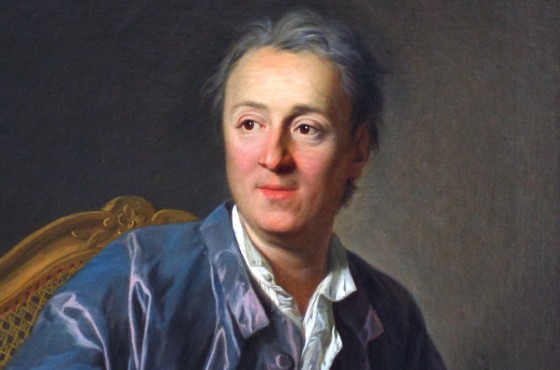
Denis Diderot

The arbitrary rule of a just and enlightened prince is always bad. His virtues are the most dangerous and the surest form of seduction: they lull a people imperceptibly into the habit of loving, respecting, and serving his successor, whoever that successor may be, no matter how wicked or stupid.

Denis Diderot, “Refutation of Helvétius” (written 1773-76, published 1875).
Categories
Today

Official Recognition

On December 17, 1777, France formally recognized the United States of America.

The 17th of December, 1819, was the day Simon Bolivar declared the independence of the Republic of Gran Colombia in Angostura.

Categories
insider corruption

Another Impeachable Offense?

“Do me a favor: start buying agriculture.” 

That’s what President Donald J. Trump says he said to the Chinese in agreeing to Phase One of a U.S.-China trade deal.

Now, if China starts buying more American agricultural products, Trump might be aided in defeating his Democratic opponents next November.

“The biggest winners in the China trade deal announced Friday appear to be a key part of President Trump’s voter base: U.S. farmers,” Jon Healey wrote in the Los Angeles Times. “There’s nothing wrong with that, because Trump’s political interests coincide with U.S. national interests.”

But when President Trump asked Ukrainian President Volodymyr Zelensky for a favor, back during the now-infamous July phone call, a whole lot of people concluded that Trump’s desire to “get to the bottom” of the Bidens’ pungent possible corruption in Ukraine was not a harmony of interests between Trump and Americans.

Last week, his biggest critics on the House Judiciary Committee passed two articles of impeachment against him, alleging (1) that he abused his power in delaying the aid Congress had appropriated for Ukraine in order to push the Ukrainians to open up an investigation of Hunter Biden and Burisma, the Ukrainian energy company that hired him, and (2) obstruction of Congress, for refusing to adequately respond to congressional subpoenas.

An investigation launched by Ukraine into former Vice-President Joe Biden’s son would certainly be news — bad for Biden, currently the leading Democratic rival to the president; good for Trump.

But is such an investigation warranted

Surely Americans who voted for Trump to “drain the Swamp” would think corruption is always worth investigating. 

The Swamp — along with many good Americans — disagrees.

This is Common Sense. I’m Paul Jacob.


PDF for printing

Donald Trump, impeachment, swamp,

See all recent commentary
(simplified and organized)
See recent popular posts


Categories
Thought

Herbert Spencer

In judging of political good and evil, the average legislator thinks much after the manner of the mother with the spoiled child: if a course is productive of immediate benefit, that is considered sufficient justification.

Herbert Spencer, The Study of Sociology (1873; 1891), pp. 102-103.
Categories
Today

The Convention Parliament

On December 16, 1689, England’s Convention Parliament began, not only transferring power from one king to another, but establishing procedures and rights into the British Constitution, both of which were copied in the United States of America a century later, with the Constitution’s Bill of Rights.