People speak of ‘the public interest.’ But what is the public interest? Strictly speaking, there is no such thing. There is only the interest of each individual human being. There are interests that many or all people share, but these are still the interests of individuals. When politicians say that something is ‘in the public interest,’ they usually mean it serves the interests of some people but goes against the interests of others — and usually the interests of the people with the most political pull win out.
On Friday, the talking heads and Twitterati excoriating Rep. Thomas Massie (R-Kent.) were so scandalized that they couldn’t quite get to telling us what terrible thing he had done.
“GOP’s Massie outrages House,” screamedThe Washington Post headline. The paper informed that “the Republican from northern Kentucky has frequently voted no on issues large and small, even against the wishes of GOP leaders.”
Wow, is that allowed?
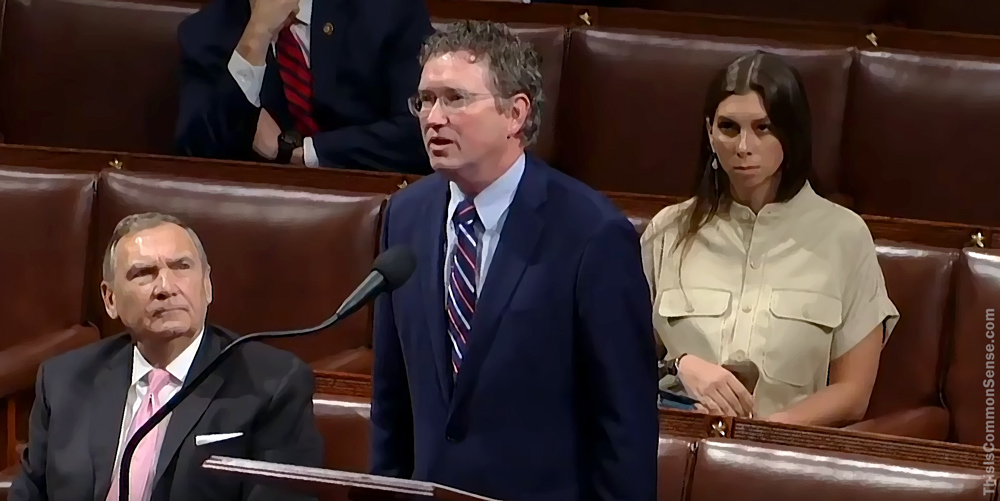
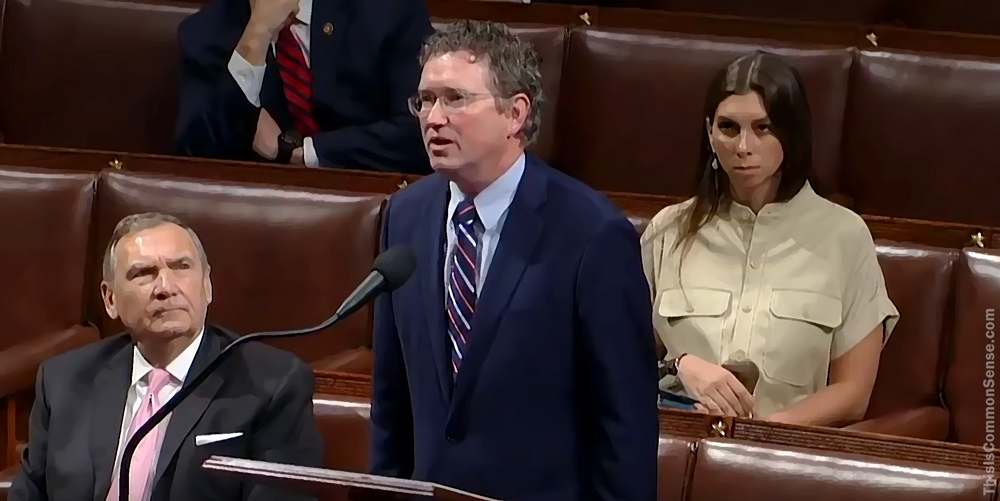
With Congress poised to shovel $2.2 trillion to citizens and businesses by unanimous consent, i.e., without a recorded roll call vote, Mr. Massie balked, thereby requiring a quorum to physically come to the capitol to vote on the relief package.
“I came here to make sure our Republic doesn’t die by unanimous consent in an empty chamber,” Massie declared on the House floor, “and I request a recorded vote.”
President Trump urged the “third rate Grandstander” be tossed out of the Grand Old Party. And former U.S. Senator and 2004 Democratic presidential candidate John Kerry noted — of all things — his complete agreement with Trump, tweeting that “Massie has tested positive for being an a**hole. He must be quarantined to prevent the spread of his massive stupidity.”
Rep. Max Rose (D-N.Y.) offered that Massie was “disgusting” and “inhumane,” and that if the vote was pushed “back 24 hours there will be blood on [his] hands.”
Speaker of the House Nancy Pelosi (D-Calif.) boasted of having asked the congressman, “Why don’t you just back off?”
Facing the biggest spending bill of all time, Massie’s notion of Congresspeople voting on the record? Hardly radical. But in the face of the COVID-19 threat, bringing legislators back to the capitol entailed real risk.
Yet come back they did. And just to show Massie how wrong he was in alleging a cover-up, they agreed to a roll-call vote so that there was full accountability.
Take THAT, Massie!
Wait . . . Congress didn’t go on the record?!
They came back and yet, as Massie pointed out, “they still refused to have a recorded vote.”
This is Common Sense. I’m Paul Jacob.
Note: One spending item, which Massie had specifically complained about, was $25 million for the Kennedy Center. Then, mere hours after President Trump signed the legislation, the Kennedy Center honchos fired the National Symphony Orchestra, informing them “that paychecks would end this week.”
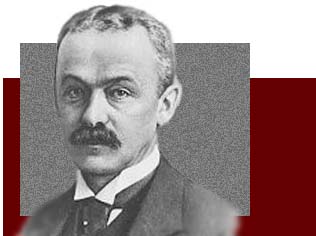
On March 30, 1864, German sociologist and economist Franz Oppenheimer was born. This sociologist is most famous for his 1908 book The State, in which he elaborated some consequences of two means for acquiring wealth, the “economic means,” by which he meant private production or by trade, and the “political means,” by which he meant forcible extraction from one group or person by another person or group. Oppenheimer taught in Palestine in the mid-1930s, and fled the Nazis to the United States, via Japan in 1938. In 1941 he became a founder of The American Journal of Economics and Sociology, and died two years later.
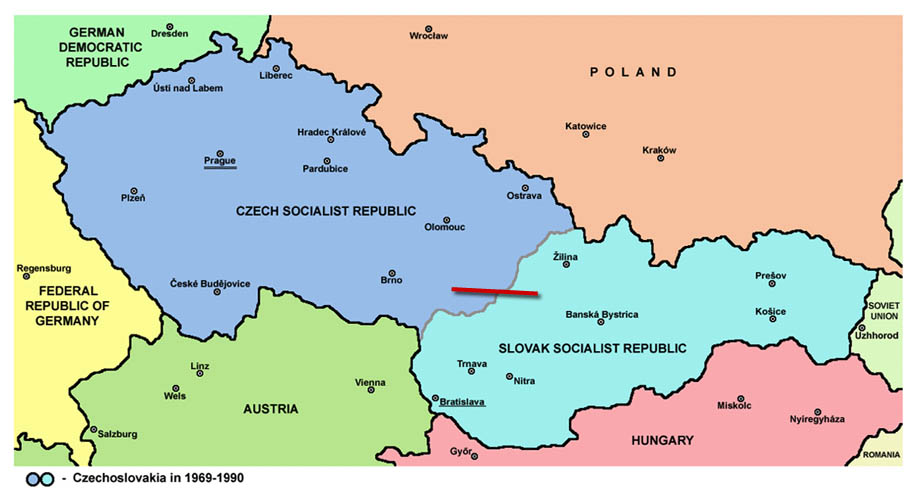
On March 29, 1990, the Czechoslovak parliament proved unable to reach an agreement on what to call the country after the “Velvet Revolution” — in which the Communist Party was booted from sole power. This sparked the “Hyphen War,” a tongue-in-cheek moniker for the dispute between Czechs and Slovaks about official recognition of the two nations’ equal status. (The Slovak representatives wanted to insert a hyphen into the name, to make the Slovak part stand out.) Eventually, the dispute was resolved with the “Velvet Divorce,” in which the two countries split up, on New Year’s Day, 1993.
On March 28, 1936, Peruvian author Mario Vargas Llosa was born. This recipient of the 2010 Nobel Prize in Literature ran, in 1990, for the presidency of Peru, but lost to Alberto Fujimori. His novels include La casa verde (The Green House), La guerra del fin del mundo (The War of the End of the World), La fiesta del chivo (The Feast of the Goat), and Aunt Julia and the Scriptwriter, which was filmed as Tune in Tomorrow.
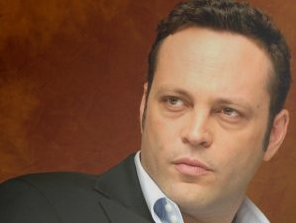
On the same date in 1970, Vince Vaughn, American actor, producer, and screenwriter, was born.
Vaughn is one of a small minority of non-left-leaning Hollywood stars; his ideas on politics and economic policy were greatly influenced by Ron Paul.
Which country has handled this worldwide pandemic best?
The question was asked on Facebook, by one friend, and answered this way by another:
“Government: South Korea; People: Japan.”
My response?
“Combo of people and government: Taiwan.”
There is a lot in the Taiwanese response to explore.
“The first cause of Taiwan’s success,” write Javier Caramés Sanchez and William Hongsong Wang on Mises Wire, “is the transparency of information, which stopped the rapid growth of infection.” While on Mainland China the corrupt government was no more transparent than the very murky Yellow River, in the Republic of China (commonly called Taiwan, and once listed on the globe as “Formosa”) the Ministry of Health and Welfare began informing the public as early as December 31.
The second reason? “The type of quarantines established by the Taiwanese government are mostly self-quarantines. The Taiwanese government acknowledges that it is crucial to rely on people’s voluntary actions to resist the pandemic.” In Japan the people regularly don masks when sick. That kind of compliance is cultural there. In Taiwan, there has been a lot of spontaneous and “all you need to ask” compliance with social distancing and the like.
“The key is that the Taiwanese government and the Taiwanese people understand that the individual’s own responsibility and actions are essential to suppressing the coronavirus pandemic, not a mandatory massive shutdown,” the authors conclude. “This is what the world needs to learn.”
Responsibility is what a free people practice. And learn to master.