A man cannot govern a nation if he cannot govern a city; he cannot govern a city if he cannot govern a family; he cannot govern a family unless he can govern himself; and he cannot govern himself unless his passions are subject to reason.
The Times’s economist Paul Krugman has a new book out, Arguing with Zombies, and, if I ever had the tiniest margin of utility nudging me towards reading it, John Goodman’s review in Forbes has dissuaded me. For Krugman doesn’t argue with anyone — he argues against economists whom he mischaracterizes.
No, that’s apparently too kind. He argues against, says Goodman, economists who don’t exist. “Zombies are economists who believe that every tax cut pays for itself with increased revenue,” Goodman explains. “They hate the poor. They are closet racists. They do the bidding of billionaire puppet masters who pay their salaries and fund their research. Their goal in life is to make the rich richer and the poor poorer.”
Goodman concludes by noting that Krugman knows better, for “if you are thinking that Krugman has never met a Republican, you might be inclined to cut him some slack.” But no, “it turns out Krugman actually worked in the White House during the Reagan administration. That means he knows the tax cuts weren’t devised by economists whose motivation was to make the rich richer. He knows his fellow economic advisors to the president weren’t puppets, doing the bidding of billionaires. He knows they weren’t closet racists. He knows they didn’t hate the poor.”
Krugman — a Nobel Laureate — calls his enemies the worst names imaginable. Yet, Krugman the Zombie Hunter is one reason our political culture is so monstrous right now.
Not zombie-monstrous, partisan-monstrous.
Meanwhile, the two sides that hate each other are united at least in one way, in creating another monster: the $2.2 trillion bailout, and the record new deficit.
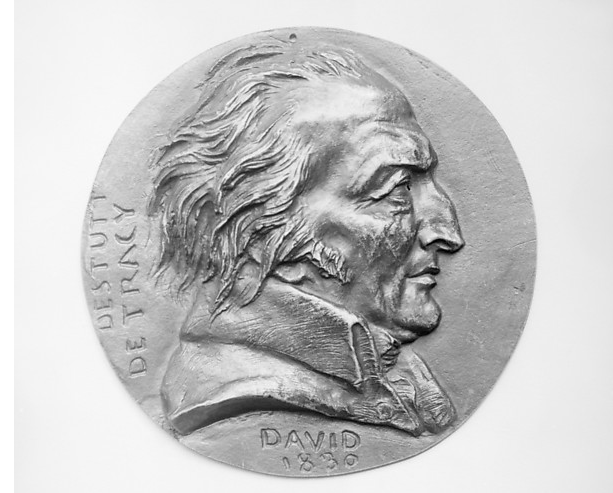
With the Acte de déchéance de l’Empereur (“Emperor’s Demise Act”) of April 2, 1814, France’s Sénat conservateur officially recognized the downfall of Napoléon I of France. The original resolution to remove the Emperor was moved on the legislative body’s floor, by Thomas Jefferson’s friend Destutt de Tracy (according to Tracy himself — official records do not name the member), and was drawn up by Charles Lambrechts. The final paragraph summarized the new reality concisely:
The Senate declares and decrees as follows: 1. Napoleon Buonaparte is cast down from the throne, and the right of succession in his family is abolished. 2. The French people and army are absolved from their oath of fidelity to him. 3. The present decree shall be transmitted to the departments and armies, and proclaimed immediately in all the quarters of the capital.
Nine days later, after attempting to put his son on the throne, Napoléon abdicated unconditionally. The Allies exiled him to Elba, which was to be the whole extent of this reign as “Emperor.”
This arrangement proved unstable, with Napoléon staging a comeback, eventually leading to more war, his defeat at Waterloo, and his exile to an island in the South Atlantic.
American author, art critic, and commentator Camille Paglia was born April 2, 1947.
It is . . . as erroneous to believe that the loans of government are not hurtful to national industry, as it is to suppose that the funds which they produce, are not taken from any individual involuntarily. In truth these are not the real reasons which cause so much importance to be attached to the possibility of borrowing. The great advantage of loans, in the eyes of their partisans, is that they furnish in a moment enormous sums, which could only have been very slowly procured by means of taxes, even the most overwhelming. Now I do not hesitate to declare that I regard this pretended advantage as the greatest of all evils.
The coronavirus pandemic is proving very hard to stop.
But one good guy with a gun and presence of mind can stop a different kind of would-be killer — an active shooter — instantly. This is what happened last week outside of a Tulsa marijuana dispensary.
Apparently angered by some earlier altercation with somebody, a woman started shooting at customers. By the time the Tulsa Police arrived, she was dead. A bystander with a concealed carry permit had returned fire, stopping her before she could hurt anyone. He was questioned and released by police, who reviewed video of the scene.
At BearingArms.com, Cam Edwards decries the under-reporting of the story. One local news station even “completely miss[ed] the fact that an armed citizen saved lives,” instead making it sound as if the guy just walked up to the woman at random and shot her.
It’s easy to see why a story like this might get lost in the shuffle given everything else that’s going on now. But even in (relatively) normal times, many in the media tend to strenuously ignore — sometimes even willfully distort — the facts about how persons bearing arms have used deadly force to stop others wielding deadly force from killing innocent people.
What we always hear is true: guns are not independent agents.
Persons wield weapons for good or ill.
And it is decidedly good when an armed civilian draws and fires a weapon to stop an evil shooter from doing criminal harm.
Mr. Chairman — A worthy member has asked, who are the militia, if they be not the people, of this country, and if we are not to be protected from the fate of the Germans, Prussians, &c. by our representation? I ask who are the militia? They consist now of the whole people, except a few public officers.
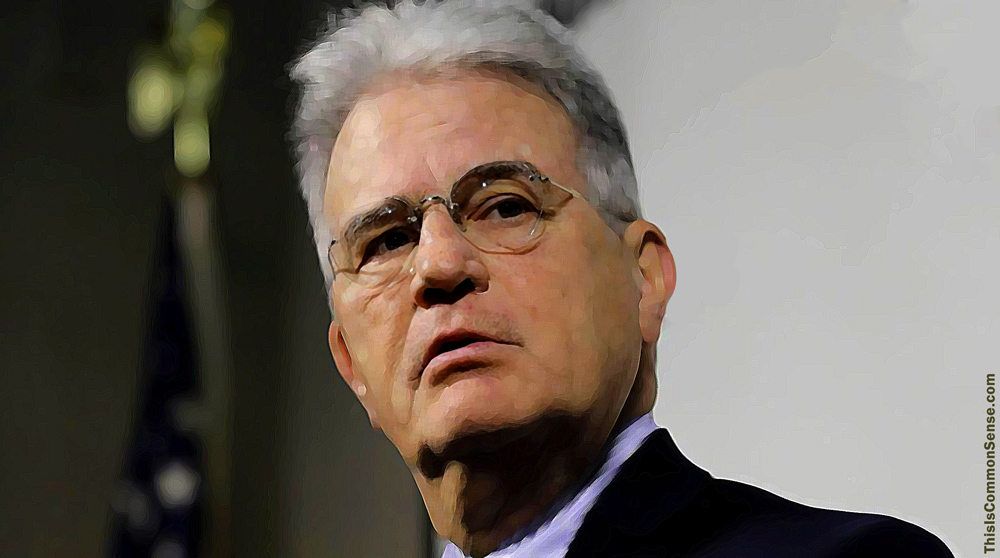
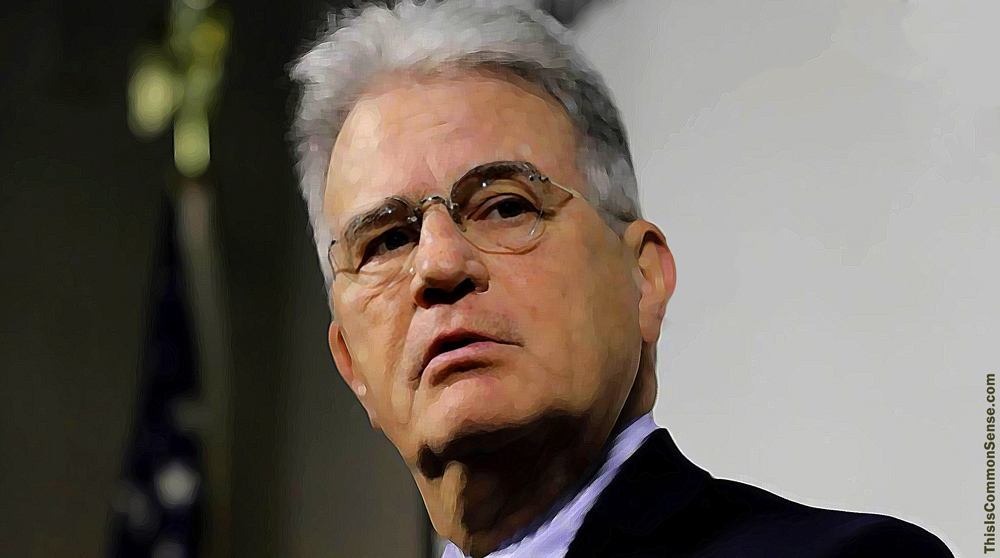
Over the weekend, as Rep. Thomas Massie (R-Kent.) was single-handedly battling the entire Congress, another fighter with the inner courage to stand up against the Washington mob was sadly losing his battle with cancer. On Saturday, Dr. Tom Coburn passed away at age 72.
Honored in his day with the sobriquet “Dr. No,” Coburn the obstetrician had delivered 4,000 babies; Coburn the congressman had “frustrated Democrats and Republicans alike,” The New York Timesexplained, “with his propensity for blocking bills.”
When Coburn successfully blocked $150,000,000 in proposed new government spending, the Washington Post derisively called it “chicken feed.” In this space, we used this term: priceless.
“His contempt for [career politicians] is genuine, bipartisan and in many cases mutual,” noted The Times, adding that Coburn “once prescribed a ‘spinal transplant’ for 70 percent of the Senate.”
Dr. Coburn challenged the House rule prohibiting him from continuing to practice medicine while in office. “They’re really killing any idea for representation outside the clique of good old boys,” he argued. “It suggests people can’t believe in term limits and serve in Congress.”
He won.
Tom Coburn pledged to serve no more than three House terms and kept his word. Four years later, he ran for and won a U.S. Senate seat, likewise pledging a two-term self-limit* — becoming “The Conscience of the Senate.”
“One of the reasons I’ve been such a pain in the neck up [in Washington],” offered Coburn, “is because I knew I was leaving.”
Dr. Tom Coburn was one of us — a representative, and not a politician. He will long be remembered by those who love our Republic.
This is Common Sense. I’m Paul Jacob.
* “I believe more than ever,” Coburn said in keeping his self-imposed three-term House limit, “that our nation’s problems have been created because career politicians have set themselves apart as an elite class of people trying to dictate to us how we run our lives.”
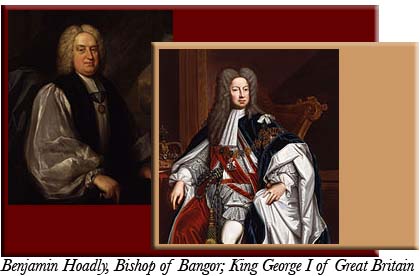
On March 31, 1717, a sermon on “The Nature of the Kingdom of Christ,” by Benjamin Hoadly, the Bishop of Bangor, provoked the Bangorian Controversy.
The sermon’s text was John 18:36, “My kingdom is not of this world,” and from that Hoadly deduced — supposedly at the request of King George I himself, who was present in the assembly — that there was no Biblical justification for any church government. Hoadly identified the church with the kingdom of Heaven, noting that Christ had not delegated His authority to any representative.
King George’s preference for the Whig Party, and for latitudinarianism in ecclesiastical policy, is widely thought to have been a strategic maneuver to degrade church power in political government.