American life is a powerful solvent. As it stamps the immigrant, almost before he can speak English, with an unmistakable muscular tension, cheery self-confidence and habitual challenge in the voice and eyes, so it seems to neutralize every intellectual element, however tough and alien it may be, and to fuse it in the native good-will, complacency, thoughtlessness, and optimism.
George Santayana, Character and Opinion in the United States (1920).
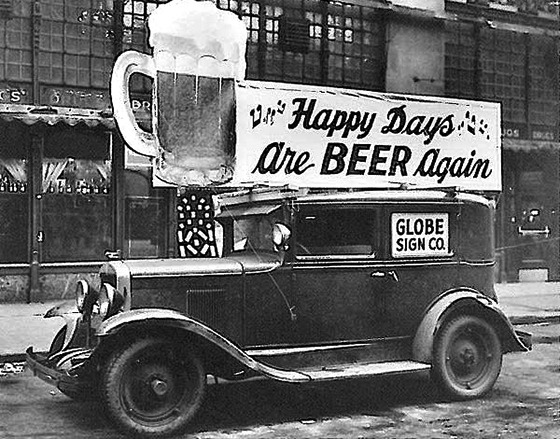
On April 7, 1933, Prohibition in the United States was repealed for beer of no more than 3.2 percent alcohol by weight, eight months before the ratification of the XXI amendment.
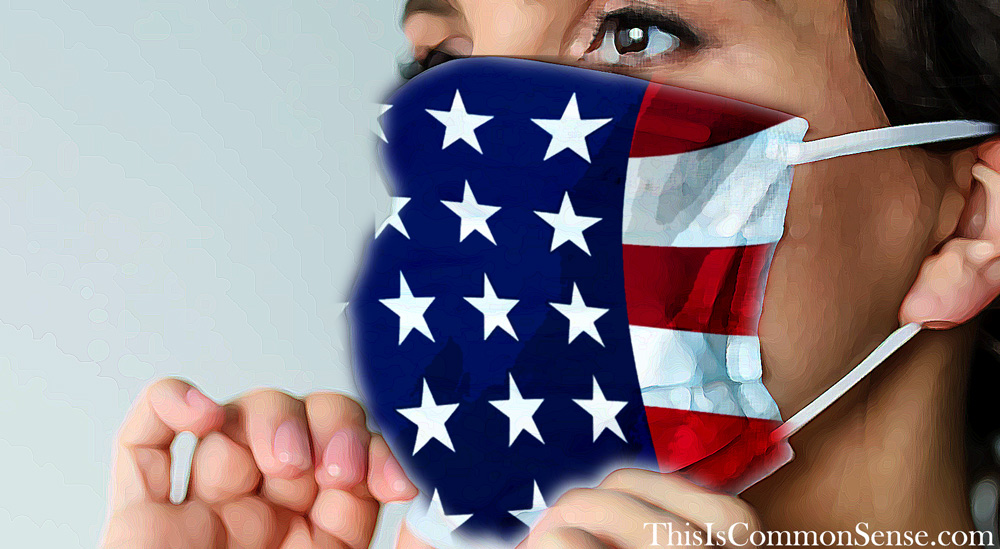
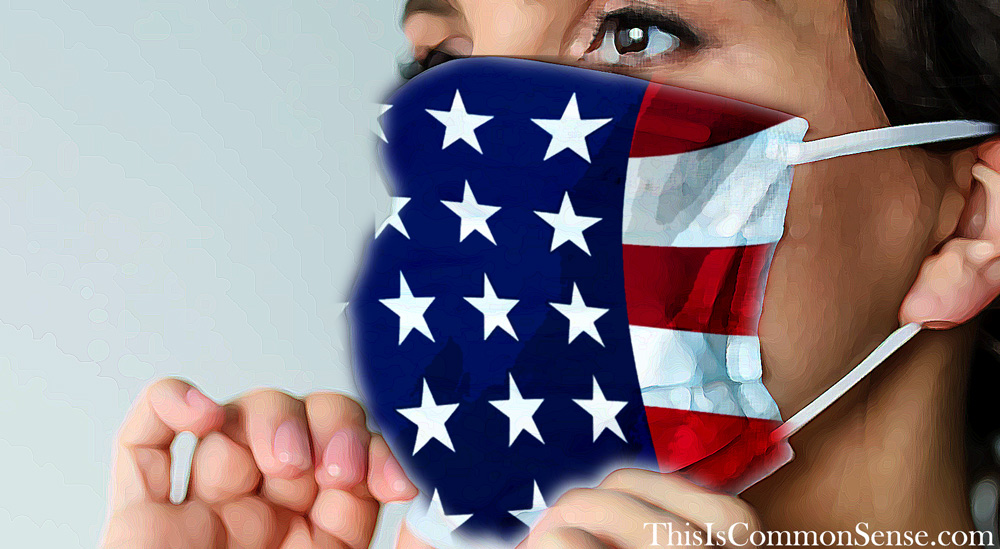
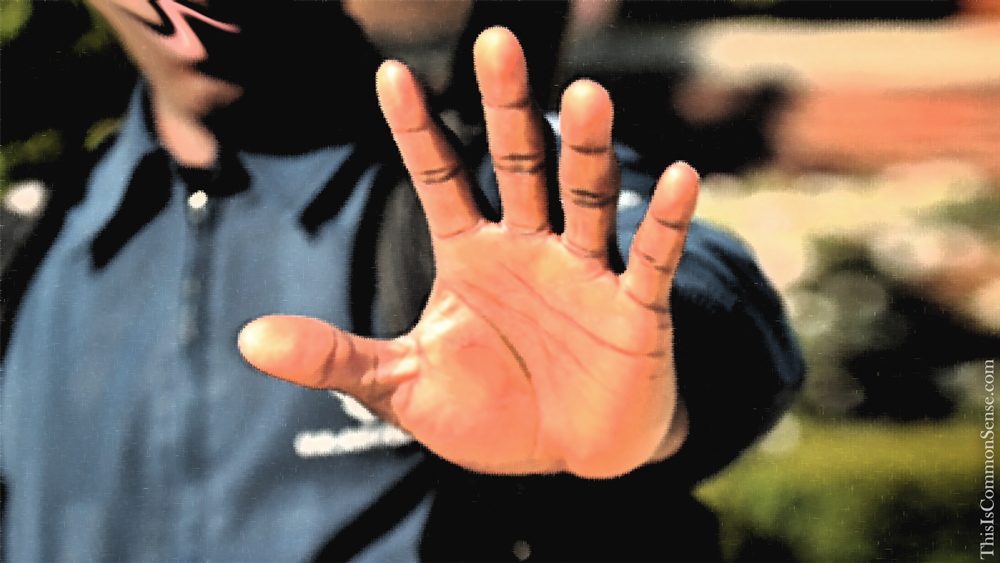
For weeks, the Centers for Disease Control and Prevention and the Department of Health and Human Services told us not to wear face masks. The Surgeon General even warned that mass use of masks could “increase the spread of the coronavirus.”
“My nose tells me,” I posted on Facebook weeks ago, “that all the info about how we don’t need face-masks is to cover up for the lack of face-masks.”
My family is very grateful to a Taiwanese friend, who mailed me masks — not the N95 masks, which the Taiwanese government is donating in large quantities, but masks of excellent non-medical quality.
Last Wednesday, CBS News anchor Norah O’Donnell noted that a large percentage of people spreading the virus are asymptomatic, meaning they don’t know they have it. She askedDr. Anthony Fauci with the White House Coronavirus Taskforce: “Should we be advising people to wear masks?”
“The primary people who need masks are healthcare workers,” the doctor replied, before admitting that if supplies weren’t so limited, wearing a mask was “a potentially good way . . . you could have an impact with preventing transmission.”
Days later, President Trump passed on a CDC advisory to the same effect.
Americans had figured out the initial lie, and were already making their own and posting how to do so on social media. Now that’ll ramp up.
Initially, our leaders didn’t level with us. They could have. Americans seem amazingly cooperative, to say the least.
Government folks need to stop masking the truth from the public. That way they might earn more public trust.
There are revulsions in nature, and we cannot expect that there should be none in trade. The political circumstances of nations, the instability of seasons, war, pestilence, and famine, are all causes which may jar the great machine of commerce, and throw some of its parts into extreme disorder. But these revulsions would be lighter and less frequent than those which happen under the bad system of exclusively privileged banking, which is wholly artificial, and at utter variance with the natural mechanism of trade. The revulsions of a free trade system would not be political revulsions, they would not provoke to such mad exasperation the bad passions of men, and set a whole people in the deplorable attitude of two opposing parties, surveying each other with the scowl of mutual hatred, instead of the glances of fraternal kindness.
William Leggett, “The Divorce of Politicks and Banking,” The Plaindealer (September 2, 1837).
By far the most numerous and most flagrant violations of personal liberty and individual rights are performed by governments. The major crimes throughout history, the ones executed on the largest scale, have been committed not by individuals or bands of individuals but by governments, as a deliberate policy of those governments, that is, by the official representatives of governments, acting in their official capacity.
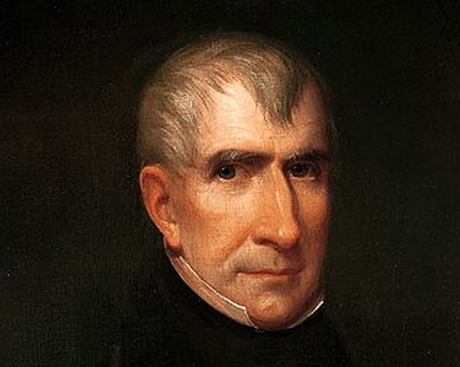
On April 4, 1841, William Henry Harrison died of pneumonia, becoming the first President of the United States to die in office and the one with the shortest term served (he died on his 32nd day as president). A renowned Indian killer (having risen to fame for his part in 1811’s Battle of Tippecanoe), a proponent of the expansion of slavery into Northwest Territories, and a Whig, Harrison won the presidency in part by turning the Democrats’ “log cabin and hard cider” aspersions on his character as the basic symbols of the campaign.
Though hardly a “limited government man,” some limited government history buffs proclaim him the Greatest President, on the ostensibly droll and possibly cynical grounds that he spent so little time in office.
On a much sadder note, Martin Luther King, Jr., was assassinated on this day in 1968.
We’re dealing with a pandemic, here, and the Food and Drug Administration insists upon poisoning us.
Or, more accurately, the FDA sticks to Prohibition-Era poisoning schemes, no matter how unreasonable or counter-productive.
Private enterprise is stepping up to the plate. “Local distilleries like Restorative Republic and rum-maker Cotton & Reed are making artisanal hand cleaner, the primary ingredient in which is high-proof alcohol,” writes Peter Suderman at Reason. “And anyone who buys a bottle of their booze also gets a small bottle of what you might call hipster Purell.”
This should be a feel-good story. But government regulators are not in the feel-good biz.
What is the FDA saying to the 500 or so distilleries across the country who want to pitch in, making up for the supply crunch?
The regulatory agency insists that they denature the alcohol in the sanitizer.
Denatured alcohol is, Wikipedia succinctly states, “ethanol that has additives to make it poisonous, bad-tasting, foul-smelling, or nauseating to discourage recreational consumption.”
The feds thus carry on the old prohibitionists’ tradition of poisoning products to discourage drinking.
It’s an idiotic practice: Preventing children from destroying themselves with alcohol by making the easiest-to-access alcohol unpalatable. But kids have been known to sneak drinks even those they find disgusting and vile, just to get the alcohol buzz. So: let’s kill the kids! That’ll teach ’em.
And insisting that distilleries denature their alcohol means that distilleries would ruin their equipment for making drinkable alcohol.
Though some liquor distillers are trying to up hand sanitizer production, ten times more could be produced were the FDA to change its rules, Suderman explains.