For human nature is strange: the less we are inclined to self-sacrifice, the more we insist on it in others.
Categories
Bolesław Prus
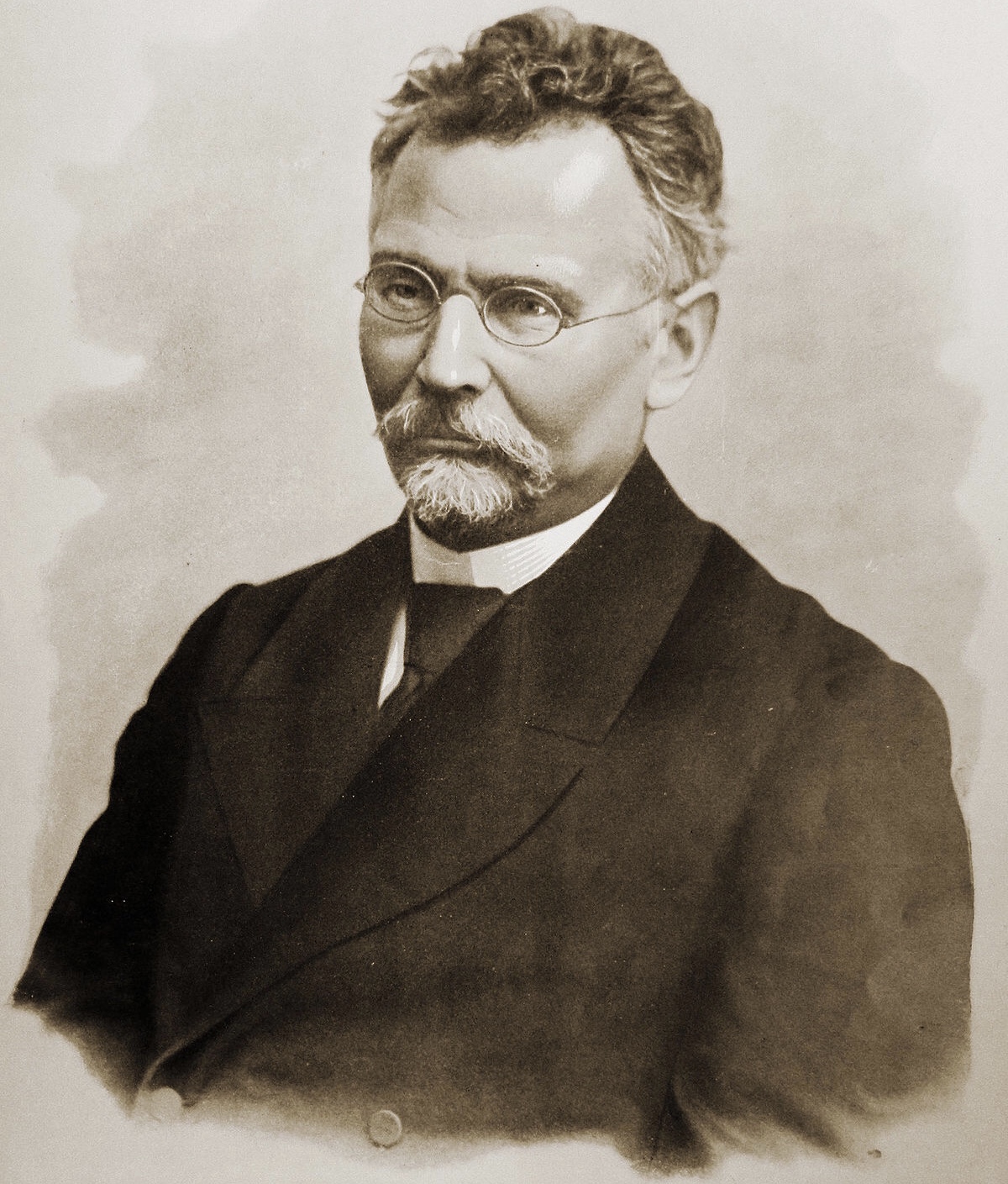
For human nature is strange: the less we are inclined to self-sacrifice, the more we insist on it in others.
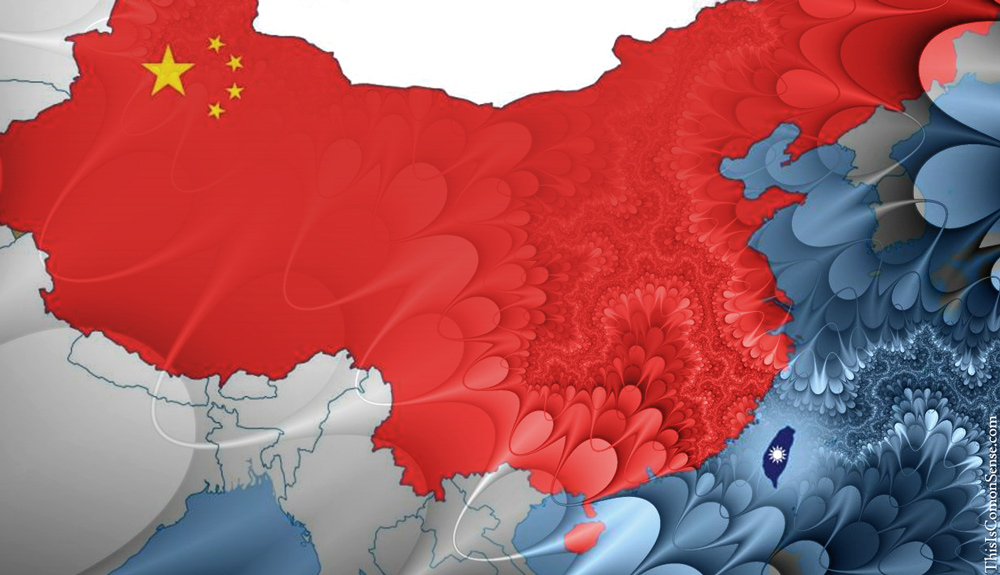
When times get tough, you learn who your friends are.
Take the United States’ relationships with Taiwan and the People’s Republic of China. The island nation sports a population roughly the size of Australia’s, about 24 million; just across the Taiwan Strait, what we used to call “Red China” holds the world’s largest number of people.
Like the United States, Taiwan has a democratically elected government that recognizes basic human rights such as freedom of speech. What do the Taiwanese want from us? They’re hoping for a military ally, one capable of deterring the free-speech-squelching, democracy-detesting Chinese communist state from making war on them.
In this pandemic, already nearly 24,000 Americans have died from COVID-19 and over half a million have tested positive for the virus that appears to have originated in Wuhan, China. Worldwide, nearly 2 million souls have contracted it and, by the time you read this, more than 120,000 of them will have perished.
Excluded from the World Health Organization (WHO) at China’s insistence, Taiwanese medical professionals nevertheless managed to warn the international community on December 31, reports the Financial Times, that “its doctors had heard from mainland [Chinese] colleagues that medical staff were getting ill — a sign of human-to-human transmission.”
Yet, on January 14, the WHO tweeted that “Chinese authorities have found no clear evidence of human-to-human transmission.” Six days later China publicly informed the world that this virus could be spread from human contact.
“A study published in March indicated that if Chinese authorities had acted three weeks earlier than they did,” notes Axios, “the number of coronavirus cases could have been reduced by 95% and its geographic spread limited.”
Thanks for the warning, Taiwan. Thanks for nothing, China.*
This is Common Sense. I’m Paul Jacob.
* Taiwan has also generously provided N95 face masks to the U.S., Europe and elsewhere, even while facing continued military provocations from China.
See all recent commentary
(simplified and organized)
See recent popular posts
On April 14, 1775, the Society for the Relief of Free Negroes Unlawfully Held in Bondage, the first American organization committed to the abolition of slavery, was formed in Philadelphia.
On April 14, 1818, Noah Webster published his American Dictionary of the English Language, one of the first lexicons to include distinctly American words. The dictionary, which took him more than two decades to complete, introduced more than 10,000 “Americanisms.”
On April 14, 1988, representatives of the Soviet Union, Afghanistan, the United States, and Pakistan signed an agreement calling for the withdrawal of Soviet forces from Afghanistan. In exchange for an end to the disputed Soviet occupation, the United States agreed to end its arms support for the Afghan anti-Soviet factions, and Afghanistan and Pakistan agreed not to interfere in each other’s affairs.

Right after 9/11, much overkill was directed at the unsuspecting.
Friends of the Dumb Joke Brigade told dumb jokes when everybody was On Edge. It soon became clear that tasteless jocularity had morphed into an actionable offense.
And should anyone on September 12 have had the temerity to sit in a theater studying credits when all others had filed out? Heaven forfend! What schemes might the nonconforming cinephile be plotting alone in the dark?
Twenty years later, we’re at it again.
We can argue (we do) about which social-distancing strictures are properly enforceable in our efforts to slow the pandemic.
But surely some lines inarguably should not be crossed.
I don’t refer to the lone paddle-boarder or to the man who played catch with his kid in a park. I refer to parishioners who attended worship services at King James Bible Baptist Church in Greenville, Mississippi in their cars. Listened to the sermon on the radio in their cars. If the metal-and-glass shells in which attendees were encased couldn’t block the corona-fumes, what the heck could?
Nonetheless, eight Greenville police officers showed up to distribute $500 fines.
The state’s governor discourages but has not banned drive-in church services. It was Greenville Mayor Errick Simmons who has banned them.
The church is suing. Its lawyer, Jeremy Dys, says, “Americans can tolerate a lot if it means demonstrating love for their fellow man, but they will not . . . tolerate churchgoers being ticketed by the police for following CDC guidelines at church. This has to stop now.”
Beyond violating fundamental human rights, the city’s position also makes no sense.
Unfortunately, nonsense is, in these days of panic, not uncommon.
This is Common Sense. I’m Paul Jacob.

Photo from Joel Bradshaw
See all recent commentary
(simplified and organized)
See recent popular posts
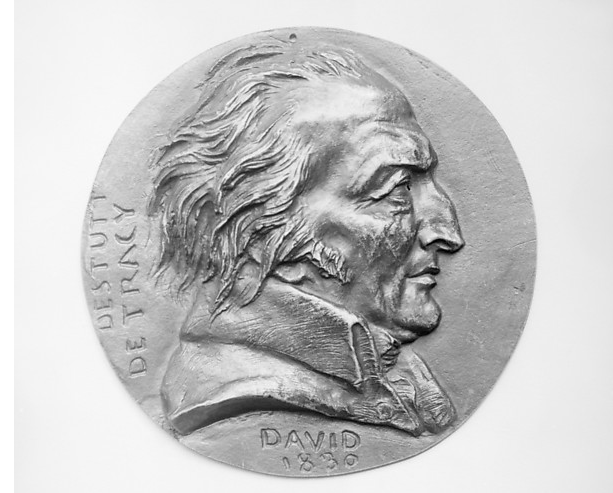
We can scarcely conceive at first that the great effects . . . have no other cause than the sole reciprocity of services and the multiplicity of exchanges. However this continual succession of exchanges has three very remarkable advantages.
Antoine Louis Claude Destutt, comte de Tracy, A Treatise on Political Economy (Georgetown, D.C.: Joseph Mulligan, publisher; W. A. Rind & Co., printer, 1817) Thomas Jefferson, ed. of translation, from the section entitled “The First Part of the Treatise on the Will and Its Effects: Of Our Action,” chapter one, “Of Society.”
First, the labour of several men united is more productive, than that of the same men acting separately. . . .
Secondly, our knowledge is our most precious acquisition, since it is this that directs the employment of our force, and renders it more fruitful, in proportion to its greater soundness and extent. . . .
Thirdly, and this still merits attention: when several men labour reciprocally for one another every one can devote himself exclusively to the occupation for which is fittest, whether from his natural dispositions or from fortuitous circumstances; and thus he will succeed better. . . .
Concurrence of force, increase and preservation of knowledge, and division of labour, — these are the three great benefits of society. They cause themselves to be felt from the first by men the most rude; but they augment in an incalculable ratio, in proportion as they are perfected, — and every degree of amelioration, in the social order, adds still to the possibility of increasing and better using them.
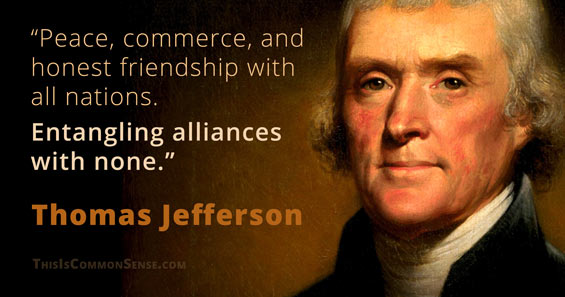
On April 13, 1743, Thomas Jefferson was born. Author of Notes on the State of Virginia and the first draft of the United States’ Declaration of Independence, Jefferson was also a scientist, philosopher, inventor, diplomat, and American politician. He also composed music, designed buildings, and translated works from his favorite French writers, whom he had met in his diplomatic missions to Paris: Volney and de Tracy.

This weekend, the podcast covers not only last week but foreshadows next week:
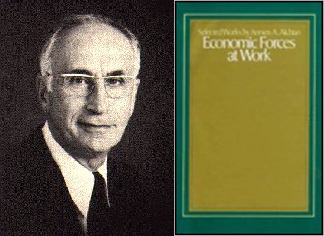
On April 12, 1914, American economist Armen Alchian was born. His contributions to economic theory and teaching were many and varied — his textbook, co-authored with William R. Allen, University Economics (also titled Exchange and Production), was widely considered one of the finest intermediate texts in microeconomics — but he remains perhaps best known for his work on property rights.
Alchian died in 2014, in late February, at the age of 99.

This week’s stories expanded, ruminated, and expounded upon:
This podcast is available on Stitcher and other podcatchers.
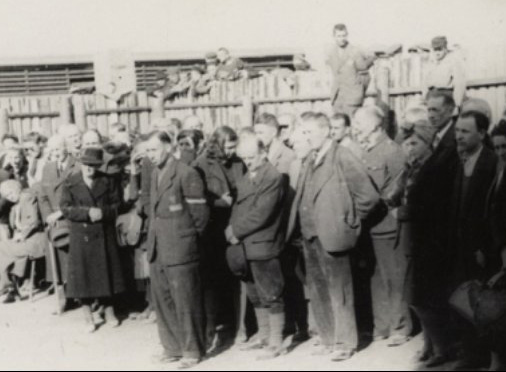
On April 11, 1945, the American Third Army liberated the Buchenwald concentration camp, near Weimar, Germany, a camp that would later be judged second only to Auschwitz in the horrors it imposed on its prisoners.
Among those in the camp saved by the American soldiers was Elie Wiesel, who would go on to win the Nobel Peace Prize in 1986.
Shown in photograph: German citizens ushered to the camp by American soldiers, post-conquest.