Categories
Thought

Thomas Jefferson

No man has a natural right to commit aggression on the equal rights of another; and this is all from which the laws ought to restrain him: every man is under the natural duty of contributing to the necessities of the society; and this is all the laws should enforce on him: and, no man having a natural right to be the judge between himself and another, it is his natural duty to submit to the umpirage of an impartial third. [W]hen the laws have declared and enforced all this, they have fulfilled their functions, and the idea is quite unfounded that on entering into society we give up any natural right.

Thomas Jefferson to Francis W. Gilmore, June 7, 1816.
Categories
Thought

Thomas Jefferson

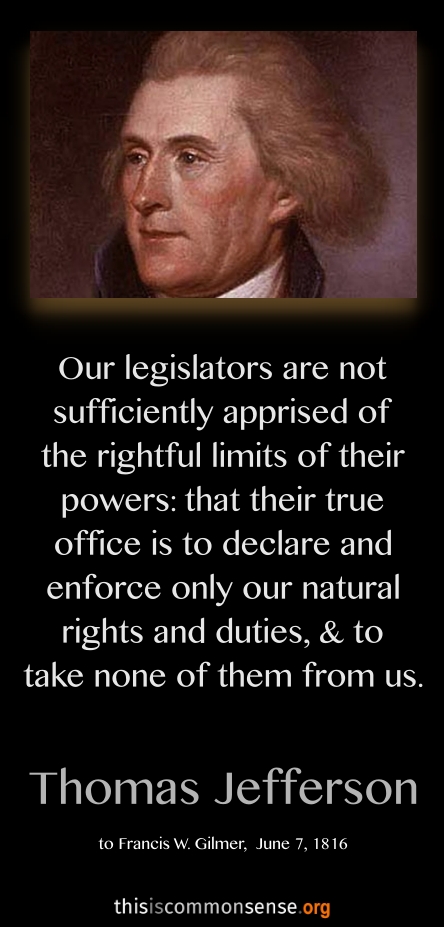
[O]ur legislators are not sufficiently apprised of the rightful limits of their powers: that their true office is to declare and enforce only our natural rights and duties, & to take none of them from us.

Thomas Jefferson to Francis W. Gilmore, June 7, 1816.
Categories
Today

Voltaire’s Dictionary

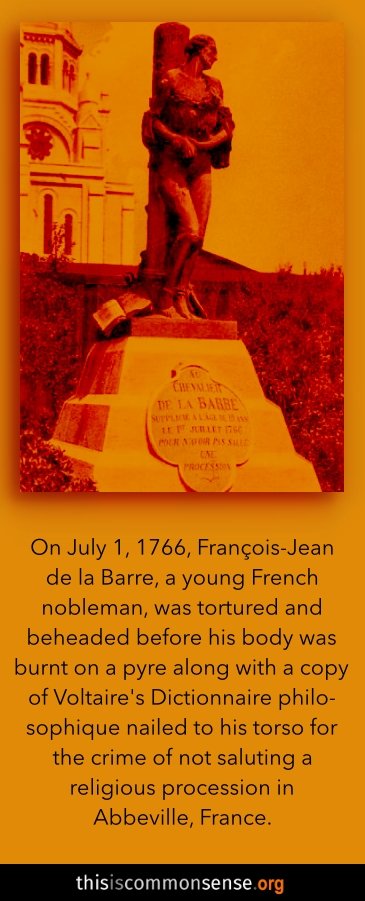
On July 1, 1766, François-Jean de la Barre, a young French nobleman, was tortured and beheaded before his body was burnt on a pyre along with a copy of Voltaire’s Dictionnaire philosophique nailed to his torso for the crime of not saluting a Roman Catholic religious procession in Abbeville, France.

Categories
Thought

Lucretius

Scilicet et fluvius qui visus maximus ei,
Qui non ante aliquem majorem vidit; et ingens
Arbor, homoque videtur, et omnia de genere omni
Maxima quae vidit quisque, haec ingentia fingit.

Titus Lucretius Carus, De rerum natura, Book VI.

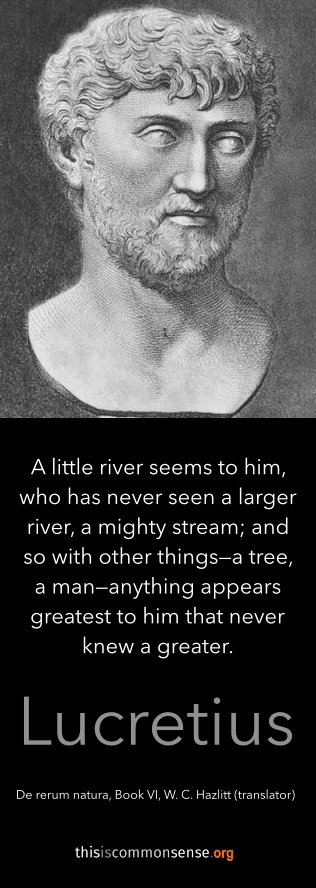
A little river seems to him, who has never seen a larger river, a mighty stream; and so with other things — a tree, a man — anything appears greatest to him that never knew a greater.
Lucretius, On the Nature of Things, Book VI (quoted in The Essays of Michel de Montaigne, tr. W. C. Hazlitt)

Categories
audio podcast

Listen: Against Ochlocracy!

Paul doesn’t use this big word in his weekend wrap-up of the big stories this last week. But he uses the concept!

This Week in Common Sense, June 22 – 26, 2020.
Categories
Thought

Rose Wilder Lane

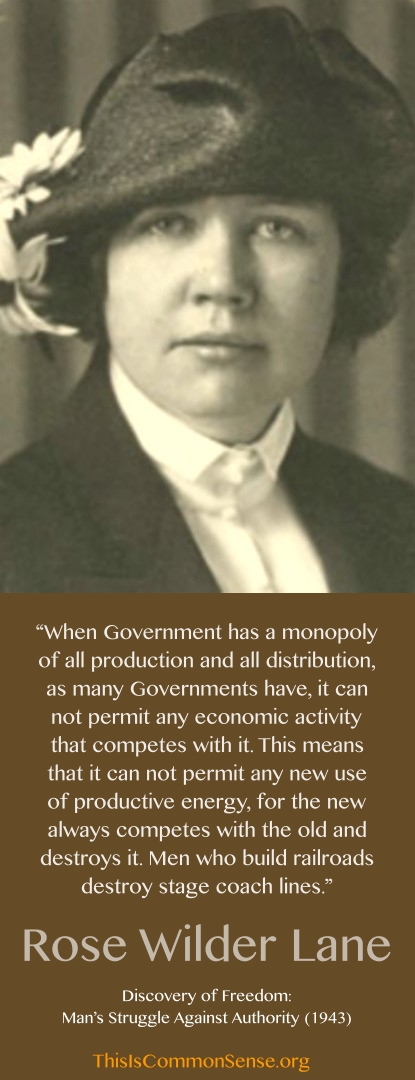
When Government has a monopoly of all production and all distribution, as many Governments have, it can not permit any economic activity that competes with it. This means that it can not permit any new use of productive energy, for the new always competes with the old and destroys it. Men who build railroads destroy stage coach lines.

Rose Wilder Lane, The Discovery of Freedom: Man’s Struggle Against Authority (1943), p. 32.
Categories
Thought

Aldous Huxley

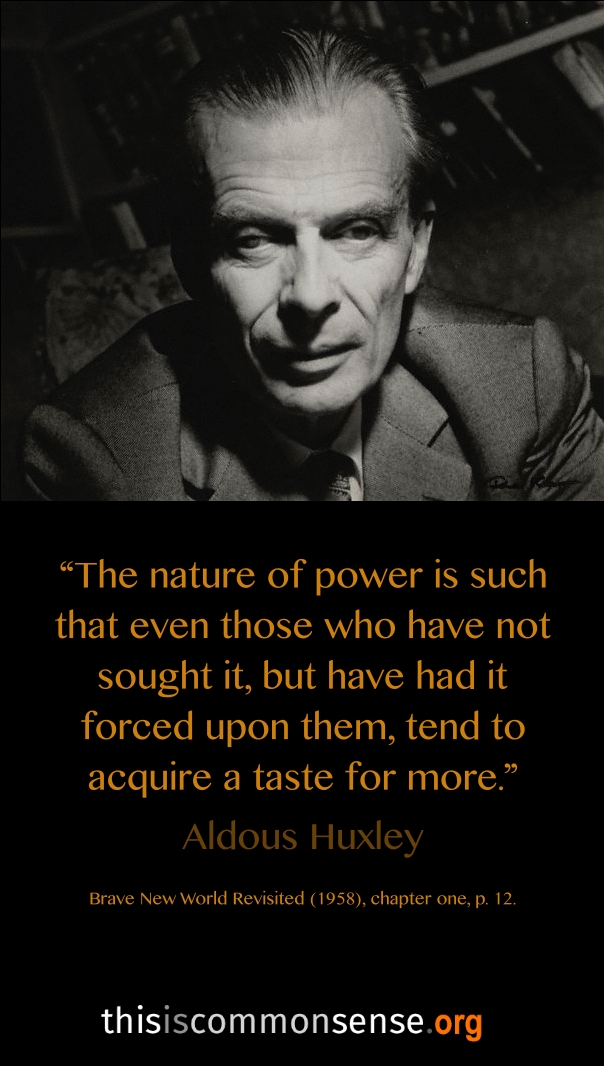
The nature of power is such that even those who have not sought it, but have had it forced upon them, tend to acquire a taste for more.

Aldous Huxley, Brave New World Revisited (1958), chapter one, p. 12.

Categories
ideological culture Regulating Protest

The Coming Backlash

The George Floyd protests and subsequent riots, along with calls for “Defund the police,” are changing political opinions, and not in the way the most in-our-faces activists want.

At Reason, J. D. Tuccille declares 2020 to be the year “gun control died,” arguing that “to push gun control proposals” amounts to advocating “that the likes of Derek Chauvin — the Minneapolis cop who killed George Floyd — should be armed, while the communities they terrorize should be helpless.”

As movements like “defund the police” make headway, gun control seems increasingly bootless. It is wrong “to insist that when police fail at their supposedly core task of protecting the public, people should be deprived of the means for defending themselves”; it is even worse after woke leftists take police off the streets.

As I noted weeks ago, violence in the wake of (or surrounding) protests causes a backlash. 

To which even cancel culture is not immune. 

Take the case of David Shor, a social democrat who was not allowed to get away with merely relaying the uncomfortable truth just stated above. On Twitter, he synopsized a study that found that “Post-MLK-assasination [sic] race riots reduced Democratic vote share in surrounding counties by 2%, which was enough to tip the 1968 election to Nixon. Non-violent protests *increase* Dem vote, mainly by encouraging warm elite discourse and media coverage.”

For daring to tell a truth that protesters did not want to hear, he was fired from his job as a data analyst.

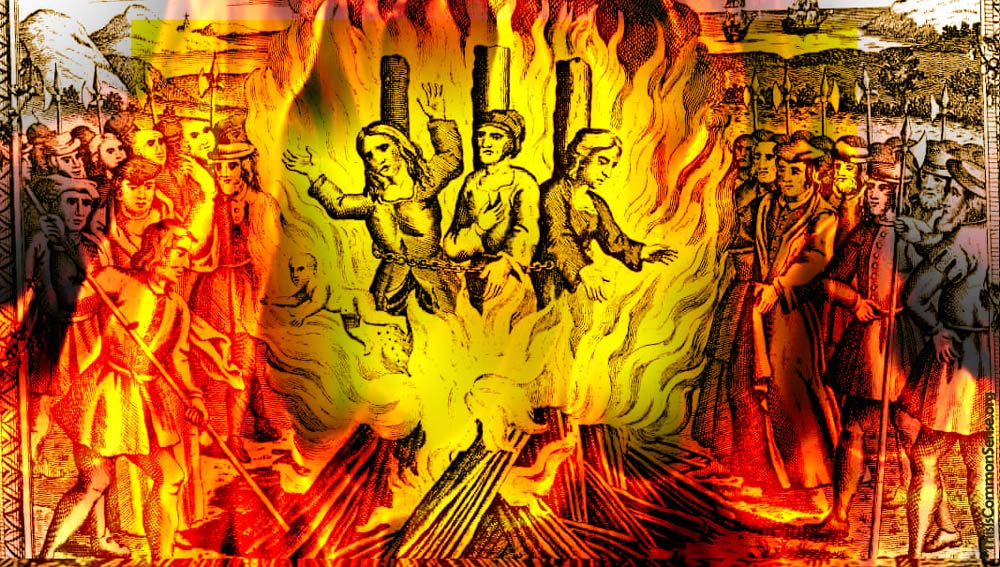
As happened in Salem in 1692, this mania will implode, unacceptable in America’s free and open society.

Even witch hunts burn out. 

This is Common Sense. I’m Paul Jacob.


PDF for printing

See all recent commentary
(simplified and organized)
See recent popular posts

Categories
media and media people

Wrong Field for You

“If you’re an emotionally unstable baby who regards disagreement as ‘violence,’” tweeted “roving journalist” Michael Tracey, “journalism is probably the wrong field for you.”

Only half-right. Given their goals, filling jobs that would otherwise be filled by journalists is indeed the right thing for hysterico-new-new-Left activists — just as bank-tellering is right for inside men helping bank robbers rob banks.

Tracey is commenting on how New York Times “journalists” — and others — apoplexed over the Times’ sin of permitting unqualified disapproval of mass rioting to grace its editorial pages. In his June Third op-ed, U.S. Senator Tom Cotton argued that the rioters, “if not subdued, not only will destroy the livelihoods of law-abiding citizens but will also take more innocent lives.” He recommended invoking the Insurrection Act in order to deploy the military.

One can argue about whether invoking the Act would be a good idea. 

Or one could, even in the Times . . . if one weren’t thereby invading the “safe space” of pseudo-journalists who had supposed that they need never face the hazards of fundamental debate within its pages.

An abject but vague apology now prefaces the op-ed. 

The Times has also fired the editor who let it be published. 

After all, by the time it reached print, Cotton’s piece did continue to contain evaluations with which someone might disagree.

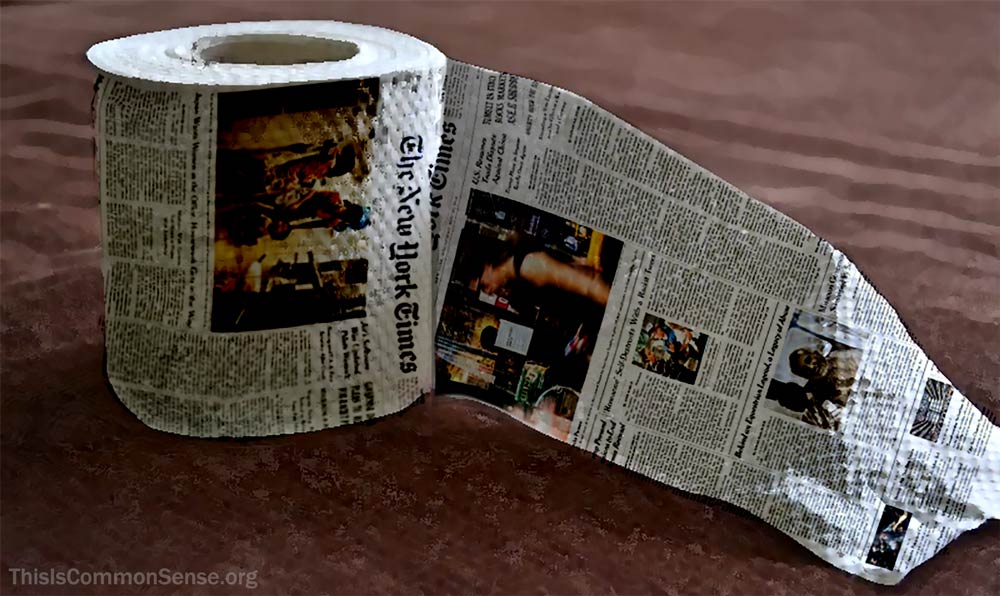
This is a new low for the Times, which continues its downward spiral. The rest of us, I trust, will escape that vortex, resisting the great flush down to the sewer at civilization’s end.

This is Common Sense. I’m Paul Jacob.


PDF for printing

See all recent commentary
(simplified and organized)
See recent popular posts
Categories
Thought

George Orwell

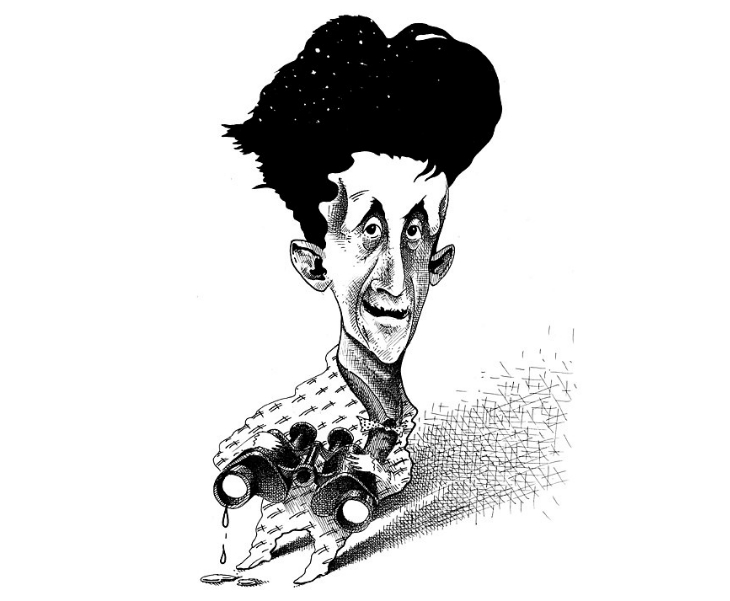
That was the ultimate subtlety: consciously to induce unconsciousness, and then, once again, to become unconscious of the act of hypnosis you had just performed. Even to understand the word ‘doublethink’ involved the use of doublethink.

George Orwell, Nineteen Eighty-four (1949), chapter 3.

Note: illustration by Bernd Pohlenz — CC BY-SA 3.0.