Categories
national politics & policies

Unity Means Not Dividing

Today, Joseph Robinette Biden Jr., the former Vice-President and longtime U.S. Senator from Delaware will become the 46th president of these United States. Speaking of being united, or getting united, that’s something the 78-year-old Biden, with 43-years of Washington experience, wants to work on.

Good luck. Let me offer some advice: Recognize when the country is already united, then play into it by advancing policies supported by overwhelming majorities.

Term limits come to my mind, as does another issue, popular left to right: criminal justice reform. Americans are solidly for that . . . but instead of political action, we got a lousy summer of double-digit deaths by riot. And, as civil disorders go, last summer’s unrest was the most expensive destruction ever — over $1 billion in senseless damage.  

Unity also suggests not needlessly dividing folks. 

Which makes me wonder why, the day after the capitol riot, Biden characterized the police response as “a clear failure to carry out equal justice.” 

A woman was shot dead within the capitol building; I’m only glad more people weren’t killed. 

Aren’t you, Joe? 

“No one can tell me,” Biden argued, “that if it had been a group of Black Lives Matter protesting yesterday, they wouldn’t have been treated very, very differently than the mob of thugs that stormed the capitol. We all know that’s true, and it is unacceptable.”

Well, at Reason/The Volokh Conspiracy, David Bernstein calls that gaslighting, rattling off the reality of stand-down orders for police in Minneapolis, Chicago, Indianapolis, Columbus, Louisville, Portland, Denver and elsewhere — not to mention demonstrators setting up a Seattle “autonomous zone” treated to weeks of hands-off non-policing. 

Americans, black and white, liberal and conservative, are united against violence, at the U.S. Capitol or anywhere else. 

Don’t divide us, Joe. 

This is Common Sense. I’m Paul Jacob.


PDF for printing

See all recent commentary
(simplified and organized)
See recent popular posts
Categories
Thought

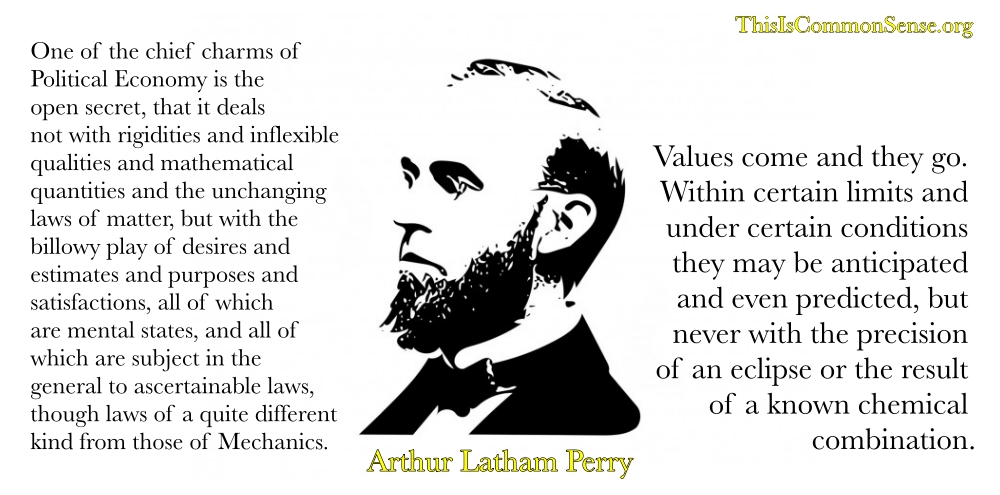
Arthur Latham Perry

One of the chief charms of Political Economy is the open secret, that it deals not with rigidities and inflexible qualities and mathematical quantities and the unchanging laws of matter, but with the billowy play of desires and estimates and purposes and satisfactions, all of which are mental states, and all of which are subject in the general to ascertainable laws, though laws of a quite different kind from those of Mechanics. Values come and they go. Within certain limits and under certain conditions they may be anticipated and even predicted, but never with the precision of an eclipse or the result of a known chemical combination.

Categories
Thought

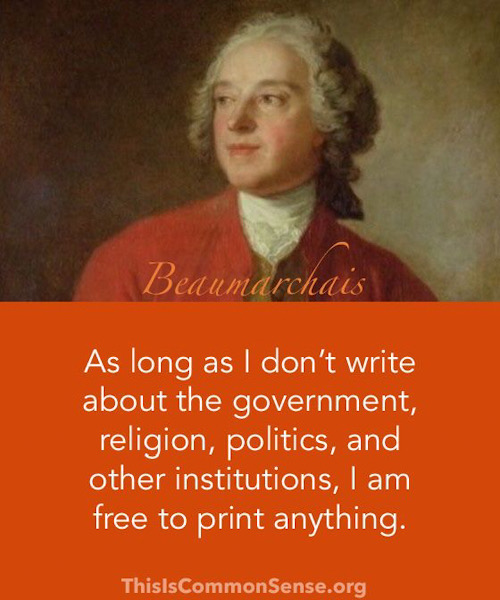
Beaumarchais

As long as I don’t write about the government, religion, politics, and other institutions, I am free to print anything.

Categories
Today

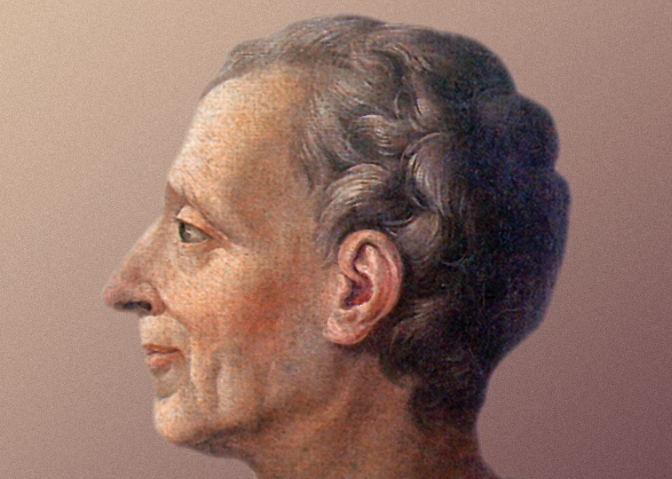
Montesquieu

On January 18, 1689, Charles-Louis de Secondat, Baron de La Brède et de Montesquieu, French satirist and philosopher, was born.

His treatise The Spirit of the Laws was a major influence upon America’s founding generation. He is famous for his articulation of the theory of separation of powers, which is implemented in many constitutions throughout the world. He did more than any other author to secure the place of the word despotism in the political lexicon.

In 1811, former U.S. President Thomas Jefferson translated and published Destutt de Tracy’s Commentary and Review of Montesquieu’s ‘Spirit of Laws,’ a very popular review of republican principles — which helps demonstrate how important these French writers were to the American form of government.

Montesquieu died on February 10, 1755.

Categories
Today

Religious Freedom

On January 16, 1786, Virginia enacted the Statute for Religious Freedom authored by Thomas Jefferson.

Categories
media and media people

The Uninvestigated

We have long relied upon journalists in major media to cover actual news. And investigate leads to juicy stories of major import to clear up confusion.

But the mainstream media has become mainly propagandistic: “journalists” today rarely “report,” they propound and pontificate. And help spread disinformation for major political factions.

Is it really that bad?

Well, one way to test how bad is to track juicy news leads that get left unexplored.

In June I commented on Harvard’s Dr. Charles Lieber, arrested and charged with not reporting his activities with the Chinese at the Wuhan labs — which have been associated with SARS-CoV-2. In October, Lieber sued Harvard for not backing him up in his legal troubles with the U.S. Government.

There could be a huge story here. Or maybe a mere bureaucratic snafu.

But it is not “in” the news; I cannot find any decent reporting on it.

From the beginning, the idea that the virus could have been grown in a lab “to help discover new vaccines” (or even as a cultivated bioweapon) has been a real possibility.

A year after its public acknowledgment, there is still disagreement.

While we expect reporters to dig deep, instead we see a plethora of premature declarations — as at egregious “fact-checking” sites — that the matter is settled. “Leading researchers have debunked this notion,” as Snopes confidently stated in February. But since then, the origins of the pandemic have remained murky. And allegations of bioweaponry keep re-appearing.

The World Health Organization is on the ground in Wuhan now, investigating.

Belatedly.

Long past time for American reporters to get on the beat.

This is Common Sense. I’m Paul Jacob.


PDF for printing

See all recent commentary
(simplified and organized)
See recent popular posts
Categories
Today

New Connecticut?

On January 15, 1777, New Connecticut declared independence from the crown of Great Britain and the colony of New York.

Delegates first named the independent state New Connecticut and, in June 1777, finally settled on the name Vermaont, an imperfect translation of the French for Green Mountain.

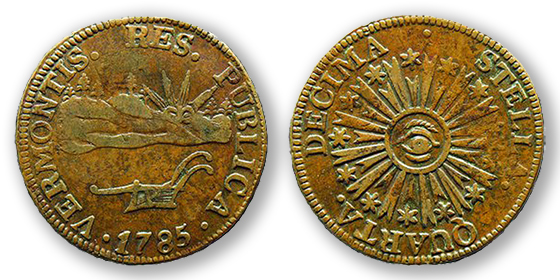
This new “Vermont Republic” minted copper coins (see above), first struck in 1785. The people of Vermont took part in the American Revolution although the Continental Congress did not recognize the jurisdiction, because of vehement objections from New York, which had conflicting property claims.

In 1791, Vermont was admitted to the United States as the 14th state, upon which its minting of coins ceased.

Categories
Today

Against Slavery

On January 14, 1514, Pope Leo X issued a papal bull against slavery.

On the same date in 1639, the first written constitution to create a government, the “Fundamental Orders,” was adopted in Connecticut.

Categories
ideological culture responsibility social media

Realtor Group Gag

The U.S. President, along with his most influential followers, has been banned from Twitter and from other social media while also facing yet another impeachment effort.

So who cares whether some silly realtor group imposes an anti-“hate speech” code on members?

Us. 

We had better care.

Why?

Bureaucrats and politicians don’t act alone. 

They are empowered by individuals who consent to, cheer for, do whatever they can to promote and enable repression. And by all the private organizations and institutions who do the same kind of enabling of repression.

The “hate speech” ban just imposed by the National Association of Realtors on its members to govern their conduct 24/7 (a “blacklisting,” says Reason’s Eugene Volokh) could impose fines up to $15,000 for violations. (I assume NAR would be unable to collect from members who don’t stick around to pay.) 

The goal is to make at least the most submissive members struggle never to say anything that could offend some anti-speech client.

If you are a realtor with NAR: quit. Don’t cooperate. Don’t fund and don’t sanction these aspiring tyrants. You can find client leads another way. Join a competing organization that doesn’t ban speech. Or work with other realtors to form one.

Governments do not tyrannize in a social and cultural vacuum. 

Do we want a world in which everyone who values freedom is silent — even “voluntarily” — for fear of “hatefully” offending the infinitely tender sensibilities of those who hate freedom of speech and any fundamental disagreement?

This is Common Sense. I’m Paul Jacob.


PDF for printing

See all recent commentary
(simplified and organized)
See recent popular posts
Categories
Today

Nullification?

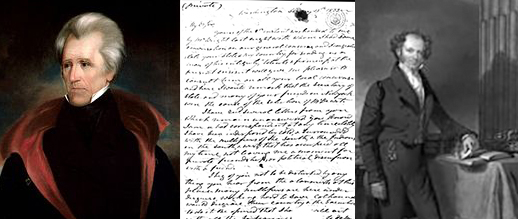
On January 13, 1833, United States President Andrew Jackson (pictured, top left) wrote to Vice President Martin Van Buren (pictured, top right) expressing his opposition to South Carolina’s defiance of federal authority in the Nullification Crisis. Jackson insisted that “the crisis must be now met with firmness” and “the modern doctrine of nullification & succession put down forever.”

South Carolina had blamed protectionist high tariffs for the severity of the economic slump of the time, and Andrew Jackson’s compromise Tariff of 1832 was still too much special-interest “protectionism” for South Carolina, which threatened to nullify the law as unconstitutional. Jackson, a nationalist at heart, had no sympathy for dissidents in the southern states. (The tariffs were designed by northern politicians to encourage the growth of industry. The belief among most economists of that time was that such high “protective” tariffs favored certain businesses at the expense of the general consumer, particularly farmers and agricultural producers.) After the crisis subsided, tariffs were further reduced from the 1832 level, much lower than of 1828’s “Tariff of Abominations,” which had been signed into law by President John Quincy Adams — and written mainly by Martin Van Buren as a way to precipitate the election of Jackson.

Since the somewhat ambiguous end to the Nullification Crisis, the doctrine of state prerogatives — “states’ rights” — has been asserted by opponents of the Fugitive Slave Act of 1850, proponents of California’s Specific Contract Act of 1863 (which nullified the Legal Tender Act of 1862), opponents of Federal acts prohibiting the sale and possession of marijuana in the first decade of the 21st century, and opponents of implementation of laws and regulations pertaining to firearms from the late 1900s up to 2013. State opposition to ObamaCare has also recently conjured up the issue.


On January 13, 1898, Émile Zola’s J’accuse exposed the Dreyfus affair.