The liberty of the individual must be thus far limited; he must not make himself a nuisance to other people.
John Stuart Mill, On Liberty (1859) ch. 3.
Categories
J. S. Mill
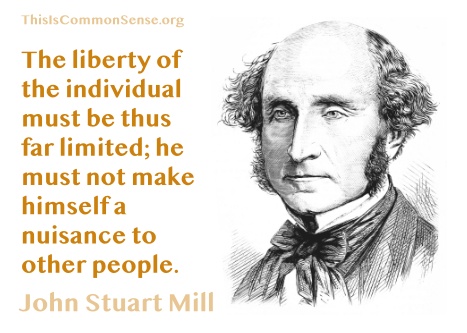
The liberty of the individual must be thus far limited; he must not make himself a nuisance to other people.
John Stuart Mill, On Liberty (1859) ch. 3.
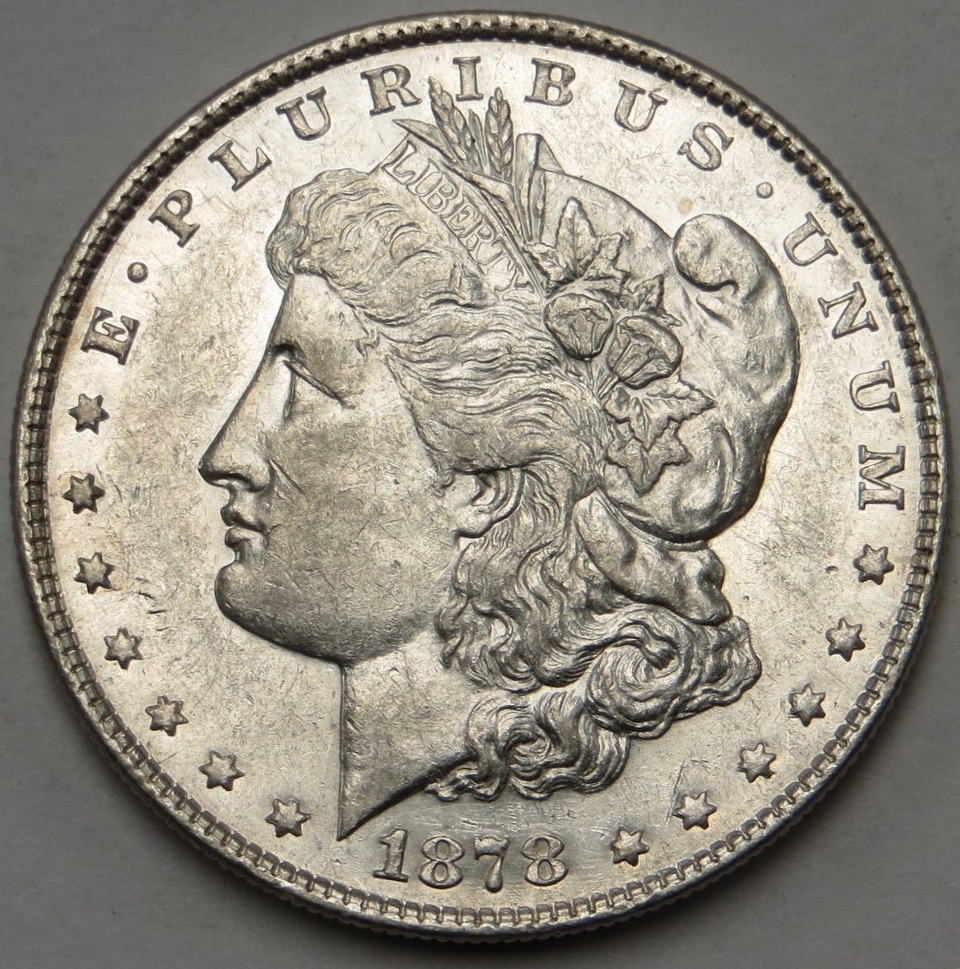
On February 16, 1878, the Bland-Allison Act, which provided for a return to the minting of silver coins, became U.S. law. Today, the value of American money is secured only by public faith in the stability of the government, but during the 19th Century, money was backed by actual deposits of silver and gold.
That is, money was silver and gold. But that did not mean that all was right with the monetary system.
Five years earlier, when Congress had stopped buying silver and minting silver coins — following the lead of European nations — a financial panic ensued. Reasons for the suspension lay in the fact that the exchange value of silver and gold had retained an old, out-moded fixed ratio that favored silver producers. Had the United States Treasury let the two standards freely float, making a distinction between silver dollars and gold dollars, none of the political strife over bimetallism would have occurred.
As it was, with silver over-valued, the silver coins increasingly “drove” gold out of circulation, as well as out of the Treasury and into private hands.
In 1893, in the midst of another financial panic, this time as a result of depletion of gold reserves in the U.S. Treasury, President Grover Cleveland called a special session of Congress to repeal the bimetallic standard. He was successful, though agrarian inflationists took over the Democratic Party and offered up, for the next election, William Jennings “Cross of Gold” Bryan as a counter to Cleveland’s old-fashioned fiscal conservative/social liberalism.
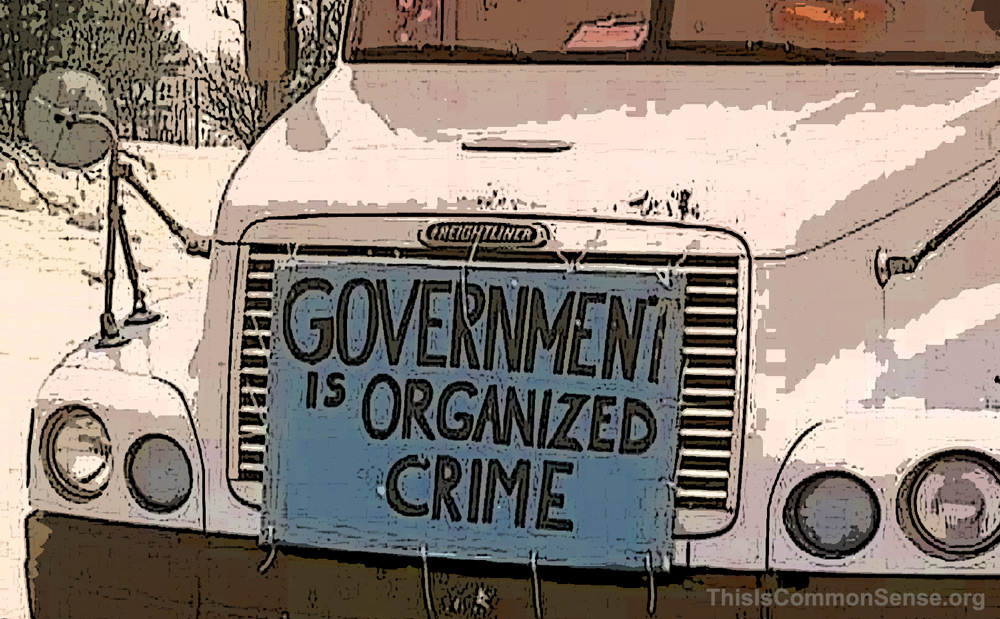
In a nation of laws, not of men — as the old phrase puts it — we may not fight our ideological fights “by any means necessary.” People have rights. Governments and civil opponents have to follow the rules to contest others’ actions.
Yesterday, in “#GoPoundSand,” I re-told the tale of GiveSendGo, the “Christian crowd-funding site,” and how it stepped up to the plate and took off where GoFundMe failed — and how the Canadian government was still trying to censor its ability to facilitate giving and receiving money online.
No sooner was it up here at ThisIsCommonSense.org and the story ramped up another level. A group of online saboteurs took it offline and redirected site travelers to GiveSendGone.wtf.
Called “hackers” by the major media, that’s not exactly right. But close enough for non-specialists. I’ve been lectured on the difference between hacking and “cracking” and other malicious Internet sabotage by tech-savvy friends in the past. But I’m not the person to engage in pedantry on this subject.
Worse — and more malicious — was the collecting of the names of the donors with an aim to leaking the list. “The unidentified hackers condemned GiveSendGo for allowing users to fundraise legal fees for those involved in the Jan. 6 riots and for platforming the Freedom Convoys,” explains Christopher Hutton at the Washington Examiner, “noting that an Ontario court had frozen the entire endeavor.”
Once upon a time, hacker culture was the realm of “anarchists” and “dissidents” etc. Nowadays? Not so much: this effort was squarely on the side of establishment institutions and narratives.
It is almost as if the “hackers” were paid government agents.
They certainly aren’t pro-protest rebels.
The GiveSendGo site was offline as of the evening of the 14th, when this report was being finalized.
This is Common Sense. I’m Paul Jacob.
See all recent commentary
(simplified and organized)
See recent popular posts
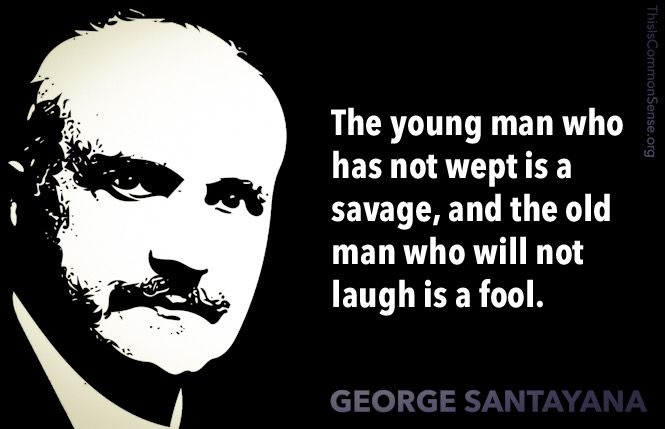
The young man who has not wept is a savage, and the old man who will not laugh is a fool.
George Santayana, Dialogues in Limbo (1925).
On Feb. 15, 1898, the USS Maine, a battleship, exploded in the Cuba’s Havana harbor, killing 260 American sailors. An official U.S. Naval Court of Inquiry ruled in March 1898 that the ship was blown up by a mine, without directly blaming Spain. Nonetheless, Congress declared war and, within three months, the U.S. had decisively defeated Spanish forces. On December 12, 1898, the Treaty of Paris was signed between the U.S. and Spain, granting the United States its first overseas empire with the ceding of such former Spanish possessions as Puerto Rico, Guam, and the Philippines.
In 1976, a team of American naval investigators concluded that the Maine explosion was likely caused by a fire that ignited its ammunition stocks, not by a Spanish mine or act of sabotage.
“Know this! Canada has absolutely ZERO jurisdiction over how we manage our funds here at GiveSendGo. All funds for EVERY campaign on GiveSendGo flow directly to the recipients of those campaigns, not least of which is The Freedom Convoy campaign.”
Just the attitude one would hope for.
This wonderful statement is in response to assertions by the government of Ontario that they’re preventing the Freedom Convoy from getting the funds via GiveSendGo that truckers need to eat, gas up after police steal their gas, etc. All the standard expenses involved in being a national (and now international) trucker convey fighting tyranny.
Compare the inspiring policies of the folks at GiveSendGo with the dreary interventionism of the pinch-mouthed overlords at GoFundMe.
In addition to shutting down the Freedom Convoy campaign, GoFundMe briefly but seriously planned to steal some of the donations that had already been made.
GoFundMe has also shut down other fundraising campaigns to oppose mask and vaccine mandates, campaigns to help Kyle Rittenhouse and to help conservative students harassed at Arizona State University, a campaign to investigate voter fraud, etc.
We have to think long and hard. If we need to raise money for a purpose the tyrannical left would disapprove, are we better off going with new-kid-on-the-block GiveSendGo or better-established GoFundMe?
I hope that you ponder this question for the same full millisecond that I did.
This is Common Sense. I’m Paul Jacob.
See all recent commentary
(simplified and organized)
See recent popular posts
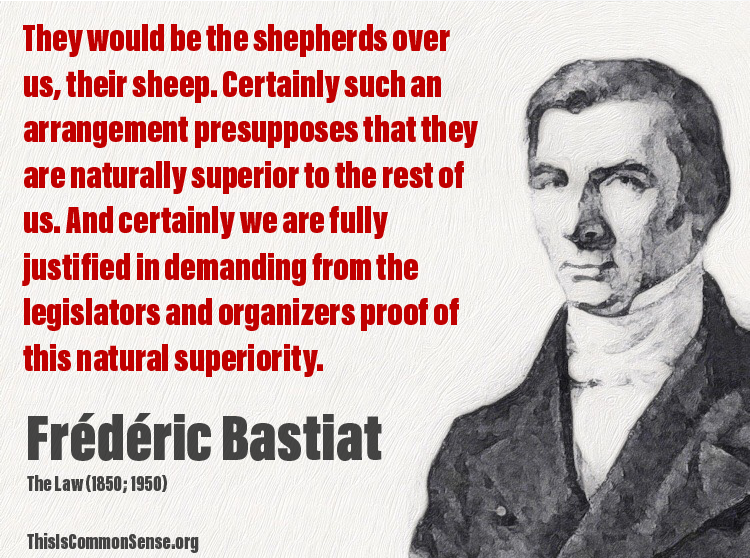
They would be the shepherds over us, their sheep. Certainly such an arrangement presupposes that they are naturally superior to the rest of us. And certainly we are fully justified in demanding from the legislators and organizers proof of this natural superiority.
Frédéric Bastiat, The Law (June 1850; Dean Russell, trans., 1950).

On Feb. 14, 278 A.D., Valentine, a priest in Rome during the reign of Emperor Claudius II, was executed. In order to facilitate the raising of an army for his unpopular military campaigns, the emperor outlawed all marriages and engagements. Valentine defied Claudius’s order and continued to perform marriages for young lovers in secret. Once discovered, Valentine was arrested and condemned by the Prefect of Rome to be beaten to death with clubs and to have his head cut off. The sentence was carried out on February 14. Valentine was named a saint by the Roman Catholic Church after his death.
Though February 14th is celebrated as “St. Valentine’s Day,” in today’s vernacular, the 14th of February, 278, was, ahem, “not his day.”

In the best schools, almost all school time is wasted. Now and then something is learned that sticks fast; for the rest the boys are merely given time to grow and are kept from too much mischief.
George Santayana, Persons and Places (1944).

On Feb. 13, 1633, Italian philosopher, astronomer and mathematician Galileo Galilei arrived in Rome to face charges of heresy for advocating Polish astronomer Nicolaus Copernicus’s theory that the Earth revolves around the Sun. In April, Galileo pled guilty before the Roman Inquisition in exchange for a lighter sentence. Put under house arrest indefinitely by Pope Urban VIII, Galileo spent the rest of his life at his villa in Arcetri, near Florence, dying in 1642.