Categories
defense & war general freedom international affairs

Does China Want War?

“WARNING,” it began, “THIS VIDEO MAY BE UPSETTING TO SOME VIEWERS.”

Just the all-caps was upsetting, I thought to myself.

Still, I was all ears and eyes for Johnny Harris’s “Here’s What Happens If China Invades Taiwan,” which garnered seven million views since February. 

Harris was “a little bit conflicted making this video,” because he “feels very against the machismo fascination with conflict,” telling viewers that “we’re talking about people’s lives” and “entire societies being ripped about by a power struggle.”

Declaring that “China doesn’t want war,” Harris hazards that Mainland China “will probably try much less violent ways to try to force Taiwan to the negotiating table before resorting to all-out invasion.” 

Masters of benevolence, the Chinese Communist Party (CCP) will . . . accept surrender!

Mr. Harris points out that the CCP has passed a law saying they “must” invade Taiwan if peaceful reunification is not possible. Explaining the dearth of support in Taiwan for joining their totalitarian neighbors, he notes “the interpretation of this law [is] more and more on the side of China should do this forcibly.”

Why, it’s “a legal imperative.”

And protecting “this far away island,” asserts Harris, “is something the American public broadly would not be into.” (Though, ahem, recent polling says otherwise.)

“I really hope that we are past needing to resort to this version of conflict to settle our disputes at this time in our history,” he concludes. “But I’m not totally convinced that we are yet.”

The CCP part of “we” is clearly not there. 

“We can talk about it,” explains Harris. “We can find creative ways to solve this.”

My take? Don’t expect too much creativity from the CCP. 

This is Common Sense. I’m Paul Jacob.


PDF for printing

See all recent commentary
(simplified and organized)
See recent popular posts
Categories
Today

Tocqueville

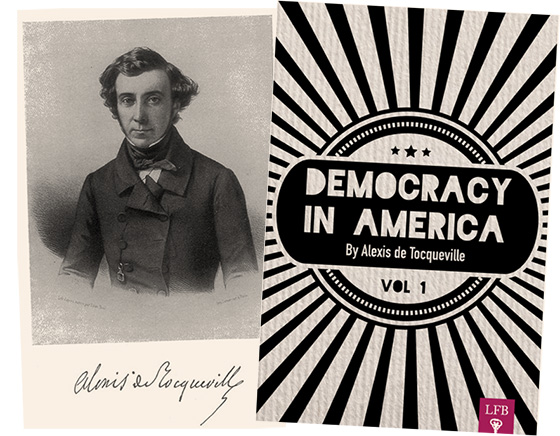
On July 29, 1805, Alexis de Tocqueville was born. His most famous book, Democracy in America (two volumes: 1835, 1840), quickly became a classic of social and political research and analysis, and remains the most important early book about the United States of America. He is often referred to as a founder of sociology as well as a major figure in the development of classical liberalism.

Categories
Thought

Samuel Butler

The most important service rendered by the press and the magazines is that of educating people to approach printed matter with distrust.

Samuel Butler, Notebooks (1951).
Categories
crime and punishment local leaders Second Amendment rights

A Constitutional Sheriff

For residents of Klickitat County, Washington, it’s an easy two-step process. 

Well, optimally, one step. Two only if necessary.

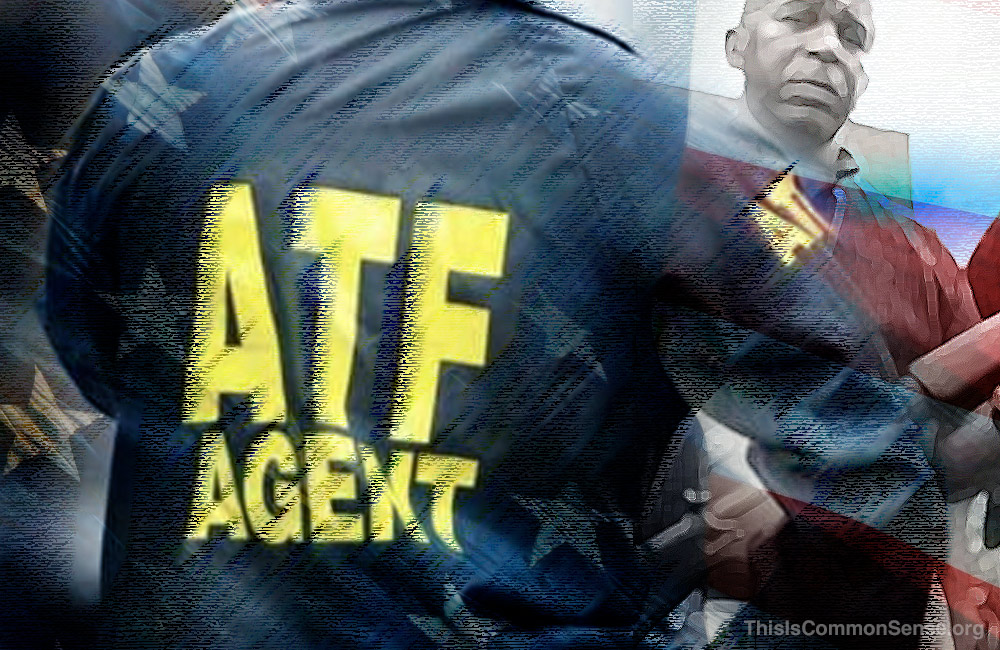
County Sheriff Bob Songer tells gun-owning constituents that if agents from the Bureau of Alcohol, Tobacco, Firearms and Explosives come to their door wanting to inspect their guns but have no warrant, they should tell the agents to go away.

ATF agents have started to make “surprise home visits of persons who have purchased two or more firearms at one time.” The sheriff was alerted by video of such a visit to a home in Delaware.

Republican Congressman Matt Rosendale of Montana has called for an investigation into the intimidatory practice.

Although Sheriff Songer knows of no such incidents yet occurring in the Evergreen State, he wants his county to be prepared. So he also provides a second step: if the agents don’t leave when asked, the resident should call Songer. He will then “make contact with the agents. If they still refuse to leave, I will personally arrest the ATF agents for Criminal Trespass and book them into the Klickitat County Jail.”

All other sheriffs, please make the same announcement.

Songer belongs to the Constitutional Sheriffs and Peace Officers Association and regards protecting the constitutional rights of his constituents as part of the job.

When it comes to respect for the Constitution, there really shouldn’t be more than one type of sheriff. But if there are going to be more than one, “constitutional sheriff” is the type you want to be.

This is Common Sense. I’m Paul Jacob.


PDF for printing

See all recent commentary
(simplified and organized)
See recent popular posts

Categories
Thought

C. S. Peirce

Consider what effects, that might conceivably have practical bearings, we conceive the object of our conception to have. Then, our conception of these effects is the whole of our conception of the object.

The first formulation of “the pragmatic maxim,” by C.S. Peirce, “How to Make Our Ideas Clear,” Popular Science Monthly, v. 12 (January 1878), pp. 286-302.
Categories
First Amendment rights Internet controversy

Democrats Protest a “Dangerous Path”

“Hulu’s censorship of the truth is outrageous, offensive, and another step down a dangerous path for our country.”

While social media’s partisanship and Big Brotherish thought control have been on all our minds in recent years, the current Internet controversy has a slightly different slant:

  1. This time it is Democrats complaining. We’re used to having Republicans and other non-Democrats grumbling about having their accounts shadow-banned, frozen or closed, their posts taken down, and worse.
  2. This time it’s Hulu — a video entertainment streaming service, not a social media company or banking service — taking “the wrong side.”
  3. And now it’s not about the standards for regular services, but about accepting, or not, advertising.

“The Disney-backed streaming service Hulu is refusing to run political ads on central themes of Democratic midterm campaigns,” writes Michael Scherer for The Washington Post, “including abortion and guns, prompting fury from the party’s candidates and leaders.”

The ads are almost innocuous. Tame stuff. So what is Hulu up to?

Suraj Patel, a Democratic candidate for Congress in New York City, protested the service’s refusal to run his ads. Then, after some back-and-forth — and editing — his ad was allowed to run: he had to replace the “climate change” with “democracy” and, The Post relates, swap “the footage of violence at the U.S. Capitol with footage of former president Donald Trump.”

This is irksome. Hardly a matter of The Truth, as “three executive directors of Democratic committees” put it, quoted at top. It shows how normal business advertising (on an unregulated entertainment service, not a normal news network) is a tricky biz, considering the unwillingness of the programmers to tick off viewers, who probably turn to Hulu for a respite from politics.

Yet, it would be better if Hulu didn’t allow any political advertising rather than some . . . and then only after editing. Who do the folks at Hulu think they are? Twitter executives? Zuckerberg?

I wonder if my Democratic friends will remind me that Hulu is a private company that can do as it wishes.

This is Common Sense. I’m Paul Jacob.


PDF for printing

See all recent commentary
(simplified and organized)
See recent popular posts
Categories
Thought

Aristotle

One swallow does not a summer make, nor one fine day; similarly one day or brief time of happiness does not make a person entirely happy.

Aristotle, Nichomachean Ethics.
Categories
education and schooling First Amendment rights

A Lesson for the Board

Shawn McBreairty has the right to speak at public school board meetings in Maine.

That may not sound like the most controversial of contentions, but many school boards and even the Justice Department have been treating parents as criminals for publicly objecting when schools 

  1. teach kids to feel racially guilty, 
  2. unlearn the biologically obvious about sex, and in general 
  3. engage in radical indoctrination at the expense of education.

The parents’ sin in such cases is that of nettling board members and others who want a free hand to inflict such policies.

Mr. McBreairty has gotten in hot water with more than one school board in Maine. The recent court ruling that he has the right to speak at board meetings was occasioned by the actions of the RSU 22 school district, which barred McBreairty from its own board meetings.

When he tried to attend one in June, the board used local police to stop him.

The judge in the case, Nancy Torreson, has no sympathy for the board’s antics, characterizing its rationale for trying to muzzle McBreairty as “evolving, ad hoc, and unsupported.”

Judge Torreson concludes that McBreairty’s expression of “school-related concerns at the podium during the public comment period of School Board meetings constitutes speech that is protected under the First Amendment.” Her ruling grants the motion for an order temporarily restraining the school board from stopping McBreairty from attending and speaking at its meetings.

Even if board members disagree with him.

McBreairty and the school board are in America, after all.

This is Common Sense. I’m Paul Jacob.


PDF for printing

Photo credit

See all recent commentary
(simplified and organized)
See recent popular posts

Categories
Today

B of E

July 27 births include that of Samuel Smith (1752), an American who served as a captain, major, and lieutenant colonel in the Continental Army, and later as a politician in several capacities in the state of Maryland; Hilaire Belloc (1870), author of a classic analysis of modern political governance, The Servile State; and American singer and songwriter Bobbie Gentry (1944).

On July 27, 1694, the Bank of England received a royal charter, beginning a long history of central banking in England. Subsequent inflationary booms and deflationary busts are usually considered “mysterious” by people connected with the bank.

Categories
Thought

C. S. Peirce

In all the works on pedagogy that ever I read — and they have been many, big, and heavy — I don’t remember that any one has advocated a system of teaching by practical jokes, mostly cruel. That, however, describes the method of our great teacher, Experience.

C.S. Peirce, “Pragmatism and Pragmaticism” (1903).