Never gallop Pegasus to death.
Alexander Pope, Imitations of Horace (1733–1738), Epistle I, Book I, line 14.
Categories
Alexander Pope
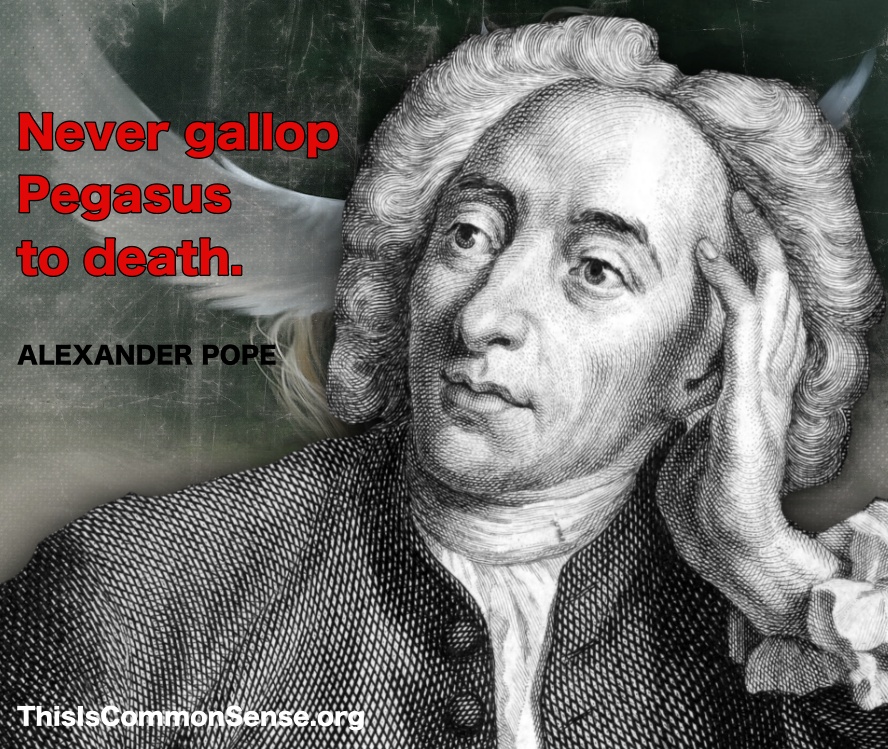
Never gallop Pegasus to death.
Alexander Pope, Imitations of Horace (1733–1738), Epistle I, Book I, line 14.
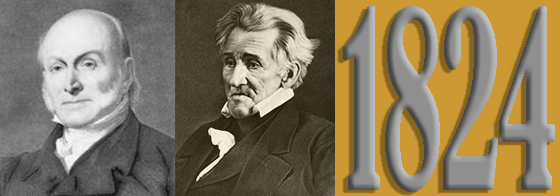
On December 1, 1824, with neither John Quincy Adams nor Andrew Jackson receiving a majority of votes in the Electoral College, the United States House of Representatives was given the task of deciding the winner in accordance with the Twelfth Amendment to the United States Constitution.
The House selected Adams. Jackson and his supporters felt deeply aggrieved, and immediately set about preparing for the next election, which Jackson won handily. Jacksonian supporters referred to the election of 1824 as “the Stolen Election,” in no small part because Jackson had received more popular votes.
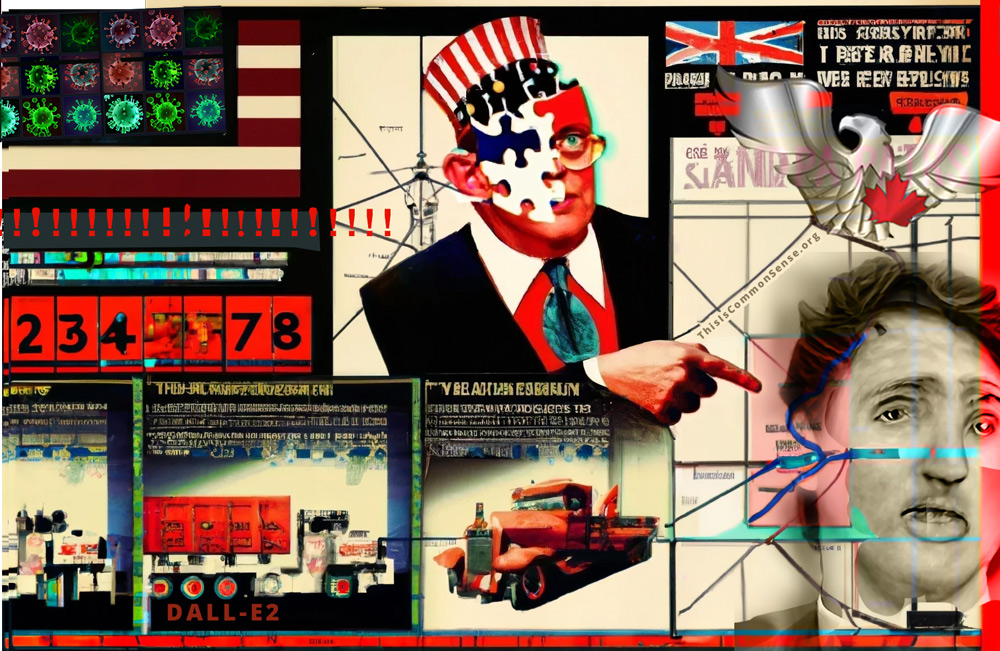
The truckers objected to being forced to accept experimental non-vaccines in order to go back and forth across the Canada-U.S. border.
The Canadian government could have instantly solved the problem by rescinding the nonsensical travel ban and letting truckers truck freely.
Instead, Prime Minister Justin Trudeau deployed a dormant triple-the-tyranny measure called the Emergencies Act to make the truckers regret that they had ever dared lift a pinky in protest against the assault on their lives and livelihoods. The insanity included imposing freezes on their bank accounts and suspending their vehicle insurance.
Now Trudeau’s actions are being investigated in the Canadian parliament.
And guess what’s come to light? You’ll get a kick out of this if you’re one of my United States readers: Trudeau was urged to do something about those darn truckers by none other than the Biden administration.
February 10: the director of the U.S. National Economic Council spoke to Canadian officials.
Same day: U.S. Transportation Boss Pete Buttigieg asked the Canadian Transportation Boss about Canada’s plan to cure the protests.
February 11: President Biden and Prime Minister Trudeau spoke.
Don’t worry, Trudeau told Biden. He had a plan to end the protests. Somehow I doubt that Biden said “Fine, so long as it’s not about stomping the truckers even harder.”
Three days later, Trudeau invoked the Emergencies Act.
Correlation ain’t causation, but a schedule of influence indicates . . . almost . . . a conspiracy.
This is Common Sense. I’m Paul Jacob.
Illustration created with DALL-E2
See all recent commentary
(simplified and organized)
See recent popular posts
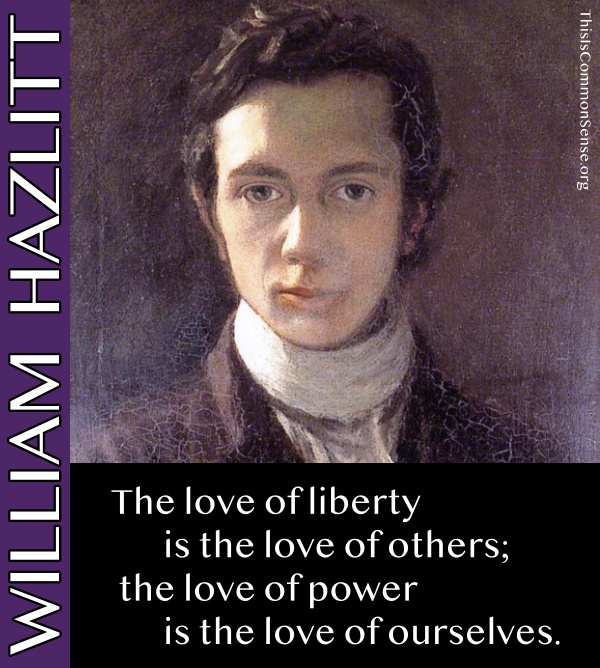
The love of liberty is the love of others; the love of power is the love of ourselves.
William Hazlitt, from ”The Times Newspaper,” in Political Essays (1819).
On November 30, 1804, the United States House of Representatives began impeachment hearings against Supreme Court Justice Samuel Chase. The House thought he was too partisan, too “Federalist.”
The Senate later acquitted Chase.
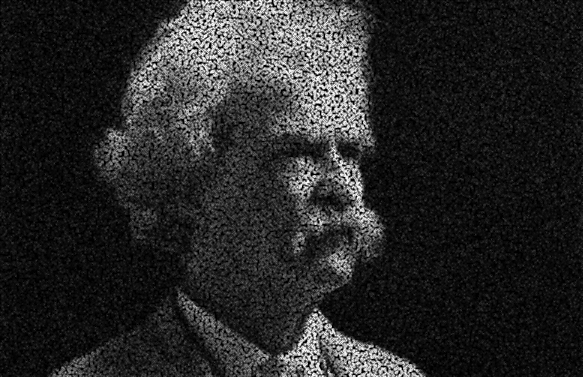
On 1835 on this date, Samuel Clemens was born, later to achieve world fame as author and humorist Mark Twain (pictured above). His most beloved books include The Adventures of Tom Sawyer (1876) and his masterpiece, Adventures of Huckleberry Finn (1885). He died in 1910.
It is perhaps worth noting that Mark Twain did write about impeachment:
I have been here a matter of ten days, but I do not know much about the place yet. There is too much weather. There is too much of it, and yet that is not the principal trouble. It is the quality rather than the quantity of it that I complain of; and more than against its quantity and its quality combined am I embittered against its character. It is tricky, it is changeable, it is to the last degree unreliable. It has catered for a political atmosphere so long that it has come at last to be thoroughly imbued with the political nature.
As politics go, so goes the weather. It trims to suit every phase of sentiment, and is always ready. To-day it is a Democrat, to-morrow a Radical, the next day neither one thing nor the other. If a Johnson man goes over to the other side, it rains; if a Radical deserts to the Administration, it snows; if New York goes Democratic, it blows—naturally enough; if Grant expresses an opinion between two whiffs of smoke, it spits a little sleet uneasily; if all is quiet on the Potomac of politics, one sees only the soft haze of Indian summer from the Capitol windows; if the President is quiet, the sun comes out; if he touches the tender gold market, it turns up cold and freezes out the speculators; if he hints at foreign troubles, it hails; if he threatens Congress, it thunders; if treason and impeachment are broached, lo, there is an earthquake!
If you are posted on politics, you are posted on the weather.
Mark Twain, The Territorial Enterprise, December 4, 1867.

The University of Oklahoma and other universities are cosponsors of the Oklahoma Louis Stokes Alliance for Minority Participation, a program funded by the National Science Foundation that requires beneficiaries be members of certain minority groups: “African American, Hispanic, Native American, Native Hawaiian or Pacific Islander.”
The Alliance’s goal is to “increase recruitment, enrollment, and retention of minority students in STEM [science, technology, engineering, and math] programs.”
Because of the program’s discriminatory criteria, the group Do No Harm has filed civil rights complaints against a dozen Oklahoma universities. Its leader, Dr. Stanley Goldfarb, points out that the terms of the federally funded program “specifically exclude white students, students from middle eastern countries, and Asian students. . . . [B]ut it is illegal to engage in such discrimination based on race.”
When first asked about the complaint, the University of Oklahoma declined comment. But after The College Fix site reported on the matter, OU spokesman Jacob Guthrie said that the university’s site had been amended to reflect the fact that any student may apply, insisting also that the program “has never been restricted by race.”
It sure looks to me as if OU officials, like those of Ithaca College (subject to a similar federal complaint in October), are now suddenly worried about legal consequences.
Anyway, Do No Harm’s filing is already doing good, helping to re-establish that old liberal idea that governments must not discriminate on grounds of race.
This is Common Sense. I’m Paul Jacob.
Illustration created with DALL-E 2
See all recent commentary
(simplified and organized)
See recent popular posts
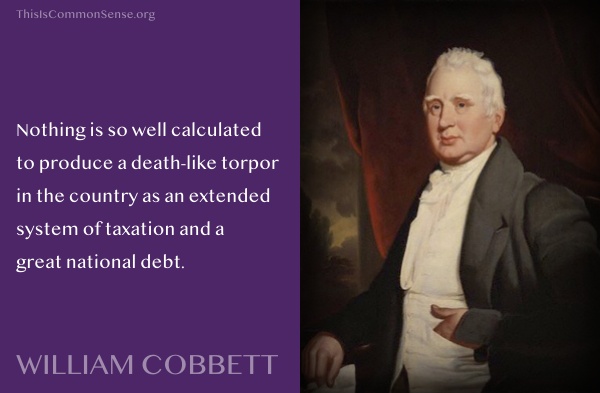
Nothing is so well calculated to produce a death-like torpor in the country as an extended system of taxation and a great national debt.
William Cobbett, Letter (February 10, 1804).
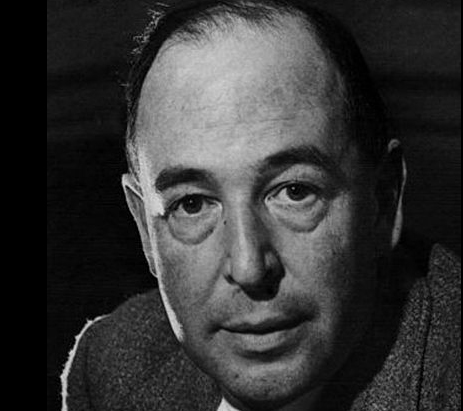
Irish-English medievalist, theologian, and novelist Clive Staples Lewis was born on November 29, 1898. Among his best known works are Out of the Silent Planet, The Problem of Pain, Miracles, and the “Narnia” fantasies for children. His novelistic retelling of the Psyche myth, Till We Have Faces, and political essays such as “The Humanitarian Theory of Punishment” and The Abolition of Man, will almost certainly stand the test of time.

The slaves of power mind the cause they have to serve, because their own interest is concerned; but the friends of liberty always sacrifice their cause, which is only the cause of humanity, to their own spleen, vanity, and self-opinion.
William Hazlitt, from a review of Lord Byron’s Childe Harold in Yellow Dwarf (May 2, 1818).

In 1894, on November 28, economics journalist Henry Hazlitt was born. Hazlitt went on to write numerous books, including Economics in One Lesson, Time Will Run Back, and several works criticizing Keynesianism. He was the main proponent of the work of Ludwig von Mises and F.A. Hayek in America during the 1940s and 1950s.
Exactly one year earlier, women voted in a national election for the first time . . . in New Zealand. On the same date in 1917, the Estonian Provincial Assembly declared itself the sovereign power of Estonia. November 28 also marks the independence of Mauritania from France (1960), and East Timor from Portugal.