Categories
Thought

Voltairine de Cleyre

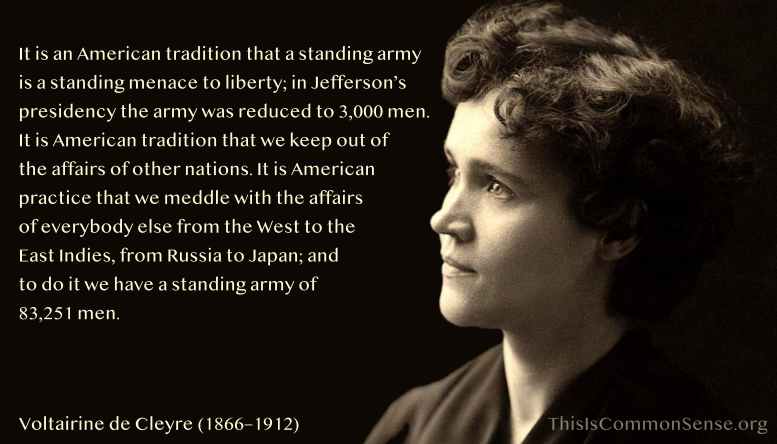
It is an American tradition that a standing army is a standing menace to liberty; in Jefferson’s presidency the army was reduced to 3,000 men. It is American tradition that we keep out of the affairs of other nations. It is American practice that we meddle with the affairs of everybody else from the West to the East Indies, from Russia to Japan; and to do it we have a standing army of 83,251 men.

Alexander Berkman, editor, Selected works of Voltairine de Cleyre (1914), p. 130.
Categories
Today

At Harpers Ferry

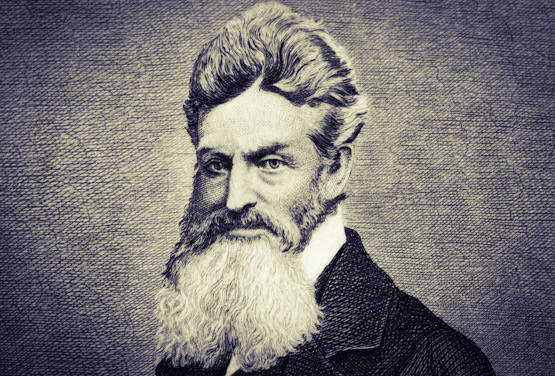
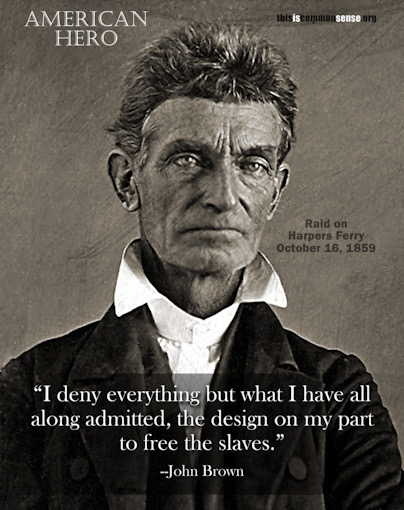
On this day in 1859, abolitionist John Brown led a group of 21 men — 14 white, seven black — on a raid of the federal armory at Harpers Ferry, Virginia (then; since 1863, West Virginia), to capture weapons and initiate a slave revolt in southern states.

Brown’s forces initially captured the armory, which had only one guard on duty that night, but the expected uprising did not occur. Soon the raiders were blocked from any escape by townspeople and local militiamen and then overwhelmed by federal troops sent into the town (commanded by Colonel Robert E. Lee, who would later lead the Confederate armies).

Ten of Brown’s men were killed during the incident; seven were captured, tried, convicted and executed, including John Brown; and five escaped. Two enslaved African-Americans joined Brown’s cause and also died in the fighting. Battling against Brown’s raiders, a Marine and four townspeople lost their lives, including the town’s mayor and a free African-American. 

Though the raid on Harpers Ferry was a failure, it set the states on the road to disunion, war, and the eventual end of slavery. 

“John Brown began the war that ended American slavery and made this a free Republic,” Frederick Douglass would write in remembrance of this event. “Until this blow was struck, the prospect for freedom was dim, shadowy and uncertain. The irrepressible conflict was one of words, votes and compromises. When John Brown stretched forth his arm the sky was cleared. The time for compromises was gone — the armed hosts of freedom stood face to face over the chasm of a broken Union — and the clash of arms was at hand.”


Print out a commemorative poster:

Categories
by Paul Jacob video

Watch: Insane in the Hillary Brain

Paul covers the big stories of the week, not excluding Hillary’s sad, sad memeplex-infested mind.

Categories
Thought

Yves Guyot

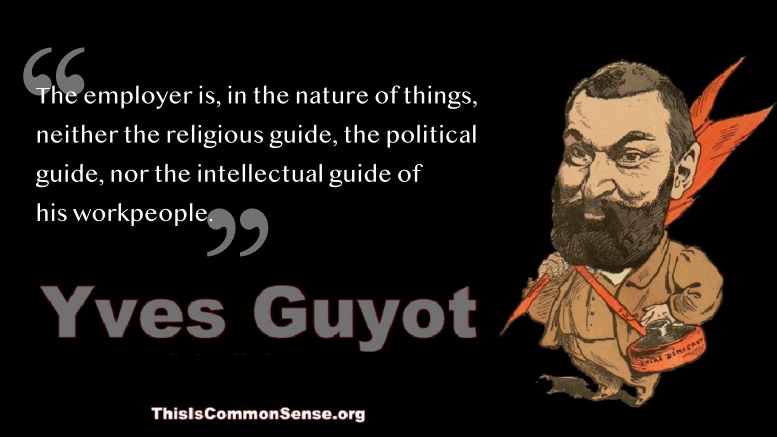
The employer is, in the nature of things, neither the religious guide, the political guide, nor the intellectual guide of his workpeople. . . .
The workmen are under only one obligation with regard to their employer, and this is the performance of the productive labour for which they receive their wages. If the employer wishes to exact anything beyond this, he is guilty of an error. He invites servility, revolt, or hypocrisy; and is preparing for himself a terrible return.

Yves Guyot, “The Socialism of Employers,” The Tyranny of Socialism (1894), p. 229-230.
Categories
Today

The Dreyfus Affair

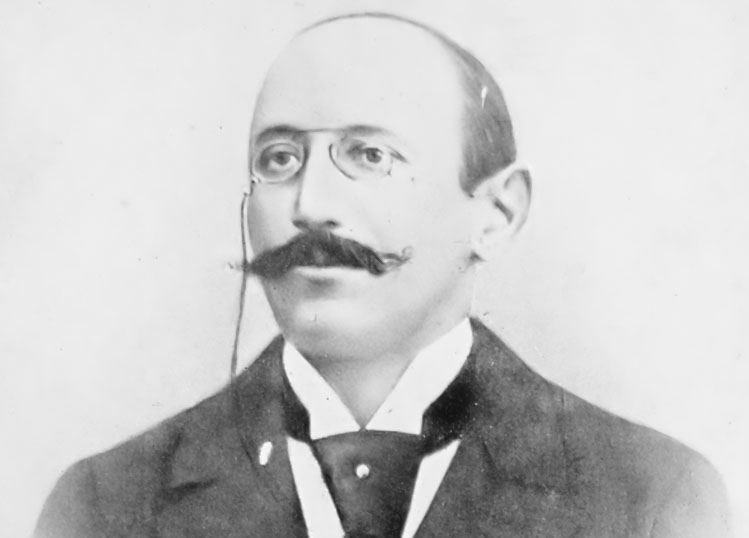
On October 15, 1894, Alfred Dreyfus (1859 – 1935) was arrested for spying: The Dreyfus Affair began. And thus began a scandal that brought anti-Semitism into the cultural center.

Categories
audio podcast

Listen: Inside Hillary’s Brain

While Trump lives, proverbially, rent-free inside Hillary Clinton’s head, that is not all. Her mind’s a memeplex of totalitarian ideas, too. And a strange circular logic:

Categories
Thought

Black Elk

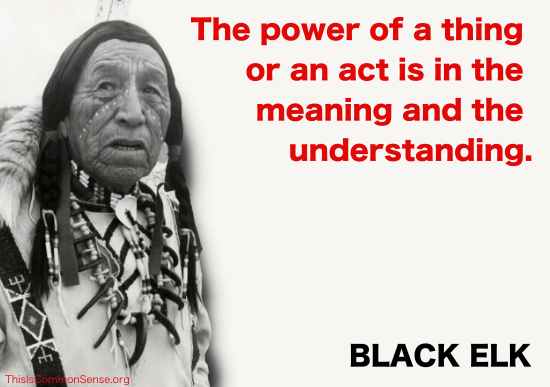
The power of a thing or an act is in the meaning and the understanding.

Nicholas Black Elk [Hehaka Sapa], The Sacred Pipe : Black Elk’s Account of the Seven Rites of the Oglala Sioux (1953), as told to Joseph Epes Brown.
Categories
Today

William Penn

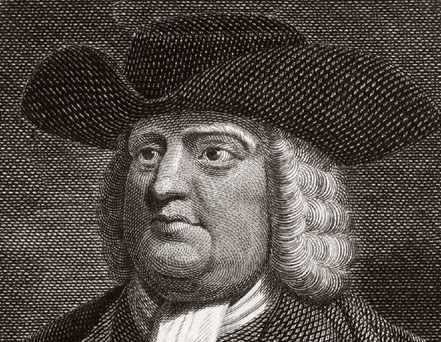
On October 14, 1644, Willliam Penn was born.

An English real estate entrepreneur, philosopher, and founder of the Province of Pennsylvania (the English North American colony and future Commonwealth of Pennsylvania), he was an early champion of democracy and religious freedom, notable for his good relations and successful treaties with the Lenape Indians. Penn died in 1718.

Categories
national politics & policies

Leverage & Resistance

“Let’s be clear,” said Representative Thomas Massie (R-Ky.) yesterday, speaking of the difficulty Republicans in the House of Representatives have in finding a new Speaker, “January was a coronation, and it was difficult; this is a competition, and it’s going to be even more difficult.”

Asked about the Steve Scalise (R-La.) candidacy, Rep. Massie replied that at least 20 Republicans would never vote for Scalise as Speaker.

Wednesday, Scalise expressed his honor to have been nominated for the position. Thursday he withdrew his nomination. “There are still some people that have their own agendas. And I was very clear we have to have everybody put their agendas on the side and focus on what this country needs.”

This begs the question. What does the country need? Bad-mouthing the dozen or so who would not support his compromising techniques as pushing “their own agenda” is a rhetorical move, but it is by no means demonstrated. 

Massie made the point that the recently ousted Speaker (whose ouster he did not support) had negotiated a significant concession from the Biden Administration — a one percent reduction in spending for a debt limit increase — and that no candidate for Speaker who would not press this advantage further could be accepted.

The collapse of the Scalise campaign leaves only Rep. Jim Jordan (R-Oh.) in the offing. A far better option. As of this writing, on Thursday night, no one else has thrown a hat into the ring.

It’s a pretty contentious ring, with elbows getting thrown by the Republican Freedom Caucus types leveraging the power they have. The establishment GOP is reeling.

Which is not always a good thing.

And Democrats? Appalled.

Which is not necessarily a bad thing. With a $33 trillion debt and growing fast, should everyone blithely march towards oblivion, meekly following the leader in Washington’s favorite version of Kick the Can?

This is Common Sense. I’m Paul Jacob.


PDF for printing

Illustration created with PicFinder

See all recent commentary
(simplified and organized)
See recent popular posts
Categories
Thought

Ayn Rand

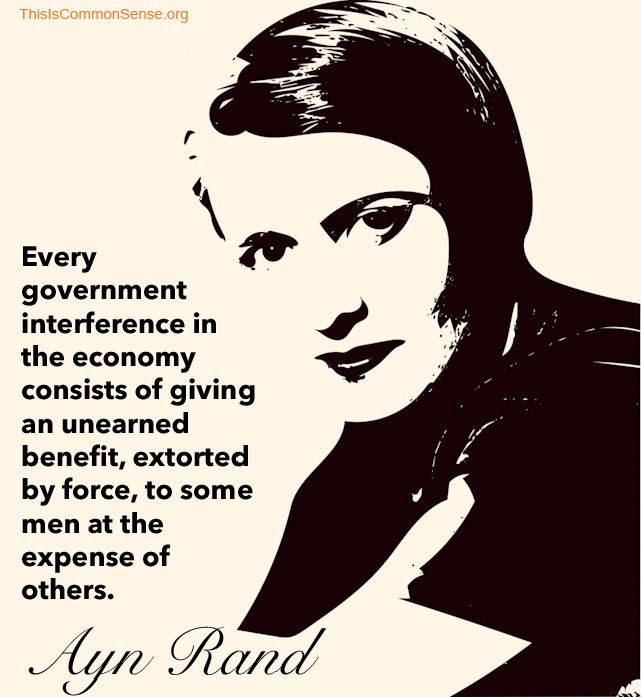
Every government interference in the economy consists of giving an unearned benefit, extorted by force, to some men at the expense of others.

Ayn Rand, Capitalism: The Unknown Ideal (1966).