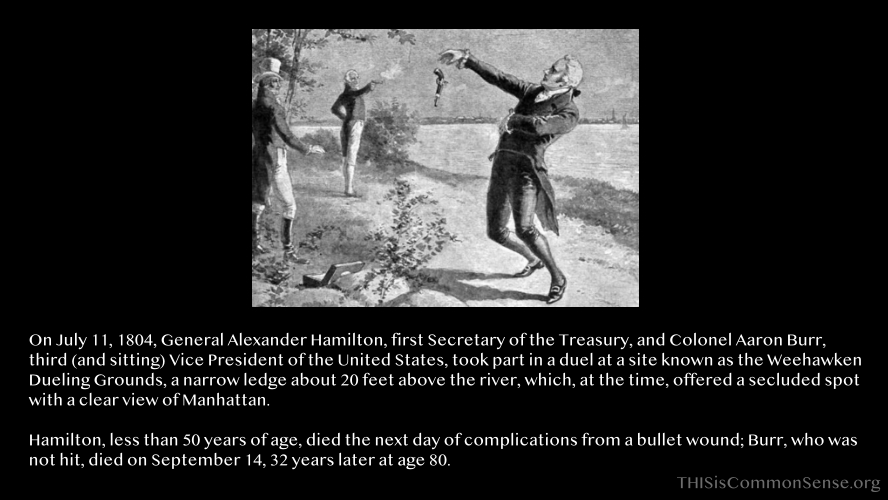
On July 11, 1804, General Alexander Hamilton, first Secretary of the Treasury, and Colonel Aaron Burr, third (and sitting) Vice President of the United States, took part in a duel at a site known as the Weehawken Dueling Grounds, a narrow ledge about 20 feet above the river, which, at the time, offered a secluded spot with a clear view of Manhattan.
Hamilton, less than 50 years of age, died the next day of complications from a bullet wound; Burr, who was not hit, died on September 14, 32 years later at age 80.
The ledge eroded away later, as has the practice of dueling.
On July 11, 1804, General Alexander Hamilton, first Secretary of the Treasury, and Colonel Aaron Burr, third (and sitting) Vice President of the United States, took part in a duel at a site known as the Weehawken Dueling Grounds, a narrow ledge about 20 feet above the river, which, at the time, offered a secluded spot with a clear view of Manhattan.
Hamilton, less than 50 years of age, died the next day of complications from a bullet wound; Burr, who was not hit, died on September 14, 32 years later at age 80.
Is it possible to discriminate against a Jew for being a Jew without knowing that this is what one is doing?
Yoni Birnbaum, a Jewish man and rabbi, reports on what happened after he reserved a vacation rental in France.
The property owner emailed to say that he had noticed the word “rabbi” in Birnbaum’s email address and therefore felt it necessary to inquire whether Birnbaum was sufficiently critical of Israel before letting the booking stand. If not, the reservation would be cancelled.
This wasn’t a litmus test to which all prospective renters of the property were being routinely subjected. The owner acknowledged that only because he had noticed that Birnbaum was Jewish was he demanding to know his views on Israel.
Birnbaum replied, in part: “No doubt, you wrote your email to me out of some kind of twisted sense of virtue. But it seems clear to me that what lies at the heart of your demand for me to declare my views on the conflict in the Middle East, is that to you, before anything else, I am a Jew. Therefore, at the very least, you feel you have to test me and family. . . .
“In other words, you wished to subject me to a purity test. Am I one of the ‘good Jews’ or one of the ‘bad Jews’?”
Not the worst thing that can happen to somebody. But it has something in common with the very worst that can happen.
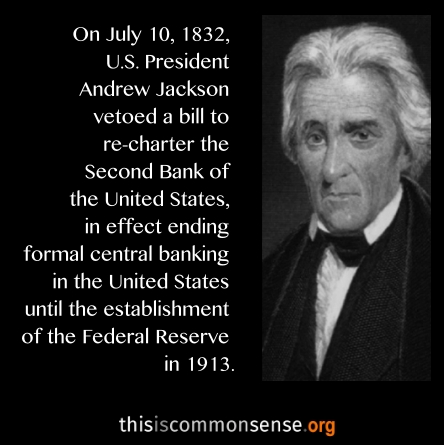
On July 10, 1832, U.S. President Andrew Jackson vetoed a bill to re-charter the Second Bank of the United States, in effect ending formal central banking in the United States until the establishment of the Federal Reserve in 1913.
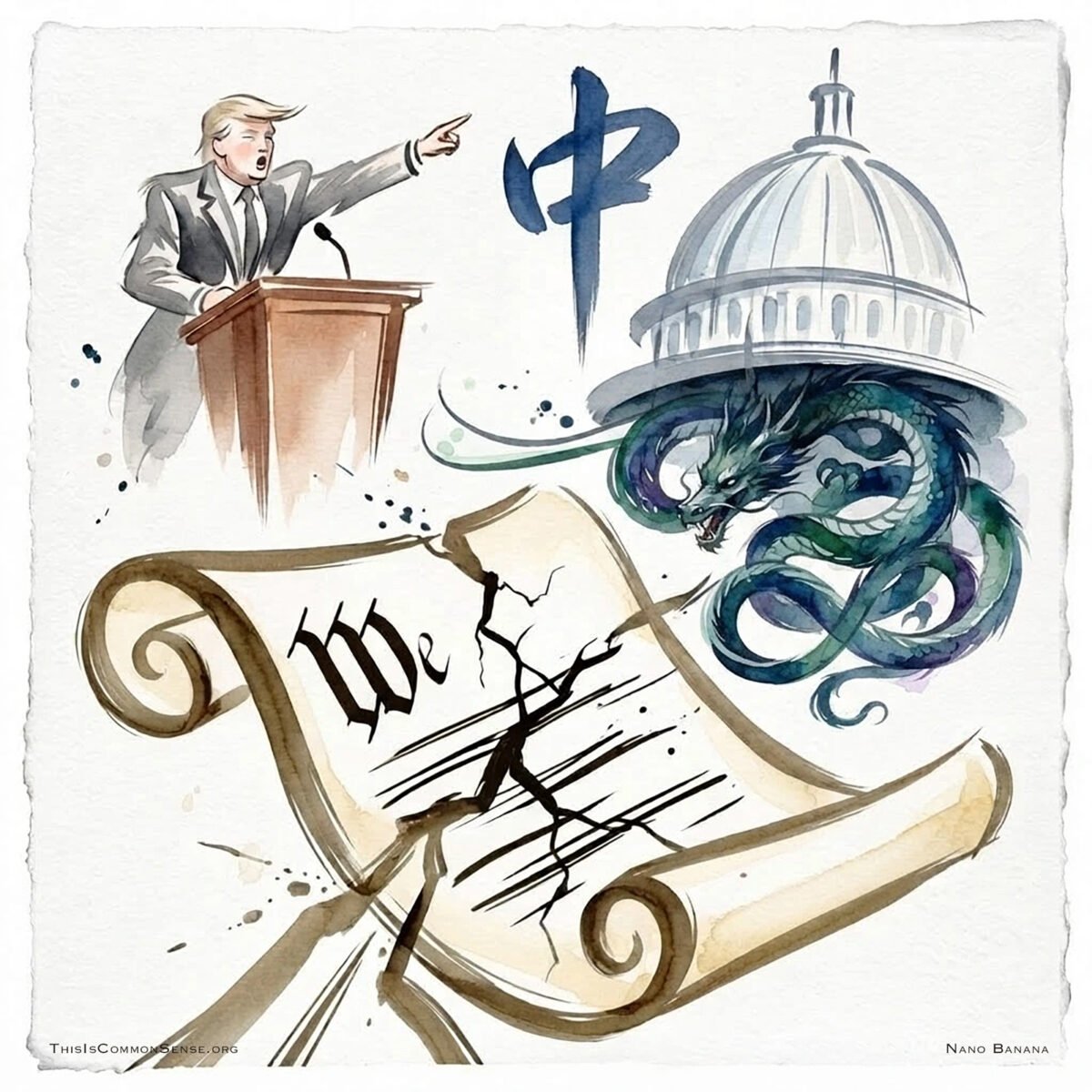
“I would like to congratulate President Xi, and the Great Country of China, on their massive Birthright Citizenship WIN!” President Donald Trump posted on Truth Social last week, after the Supreme Court struck down his executive order, which declared that children born of mothers in the country illegally or on a temporary visa were not covered by the “birthright citizenship” clause of the 14th Amendment.
Mr. Trump was referring to “birthright tourism,” pregnant women traveling to this country with the sole purpose of giving their child automatic U.S. citizenship. In his new book, The Invisible Coup: How American Elites and Foreign Powers Use Immigration as a Weapon, Peter Schweizer charges that the Chinese government has “created a system whereby it’s happening on an industrial scale,” that in the last decade more than a million Chinese mothers have traveled to America to give birth.
How can we be untroubled that more than a million kids growing up in Communist China today have a legal right to come to the United States at any time?
In his concurring opinion, Justice Brett Kavanaugh argued that, “consistent with the Fourteenth Amendment,” Congress could “enact new legislation establishing exceptions to birthright citizenship . . .”
The president cheered the idea: “No long and unwieldy Constitutional Amendment is necessary!”
Yet, none of the other five justices in the majority left that statutory door open; it likely will require a constitutional amendment. And that should not be impossible, but in the last half-century not even one has been both introduced and ratified.
Sen. Rand Paul introduced an amendmentback in April on birthright citizenship. Sen. Tom Cotton has one, too.
Constitutions exist to keep government under citizen control. If we can never alter a word in that compact, we lose that control.
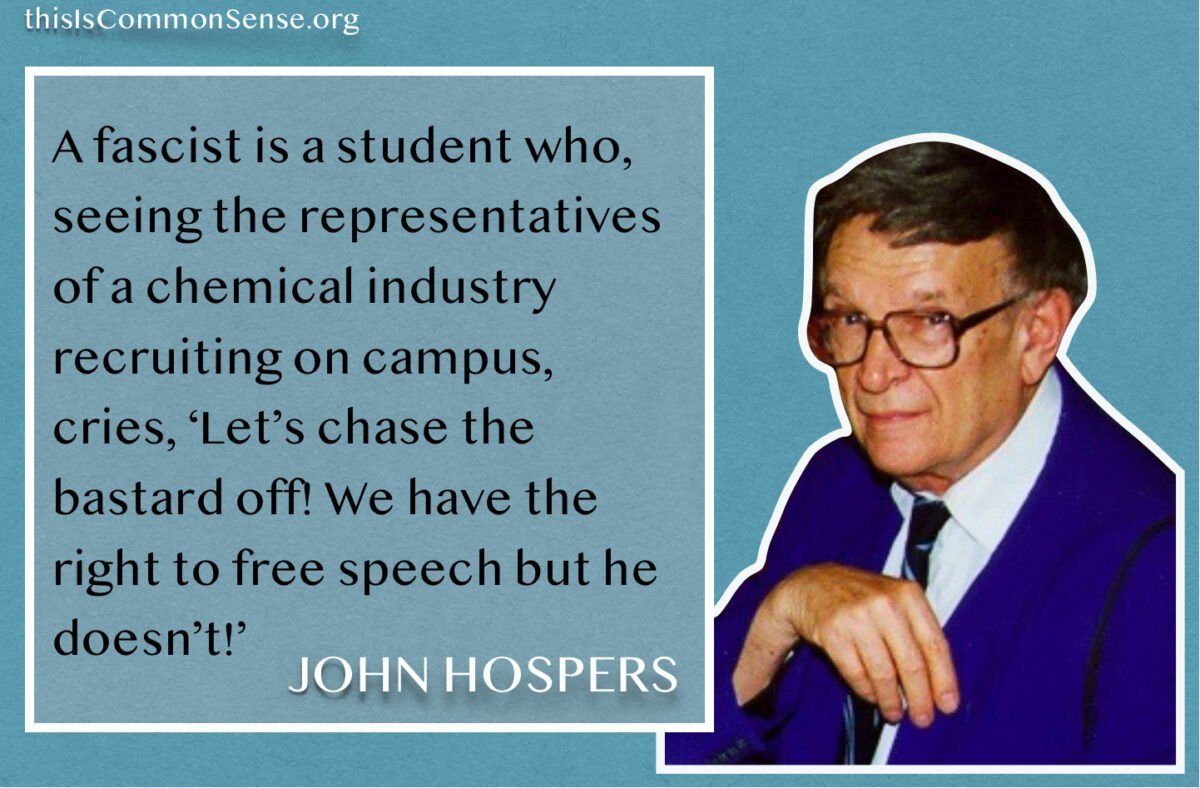
A fascist is a student who, seeing the representatives of a chemical industry recruiting on campus, cries, ‘Let’s chase the bastard off! We have the right to free speech but he doesn’t!’
John Hospers, Libertarianism: A Political Philosophy for Tomorrow (1971), p. 39.
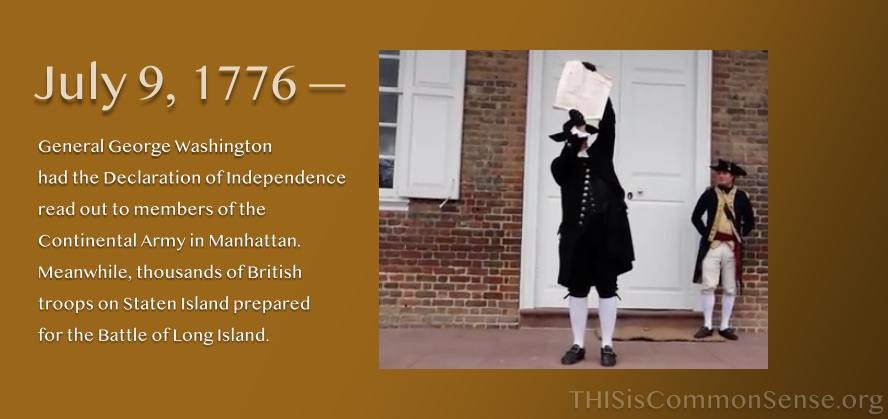
On July 9, 1776, General George Washington had the Declaration of Independence read out to members of the Continental Army in Manhattan. Meanwhile, thousands of British troops on Staten Island prepared for the Battle of Long Island.
I’m usually suspicious of business-government partnerships. But some occasional and low-level efforts are inevitable and at worst anodyne.
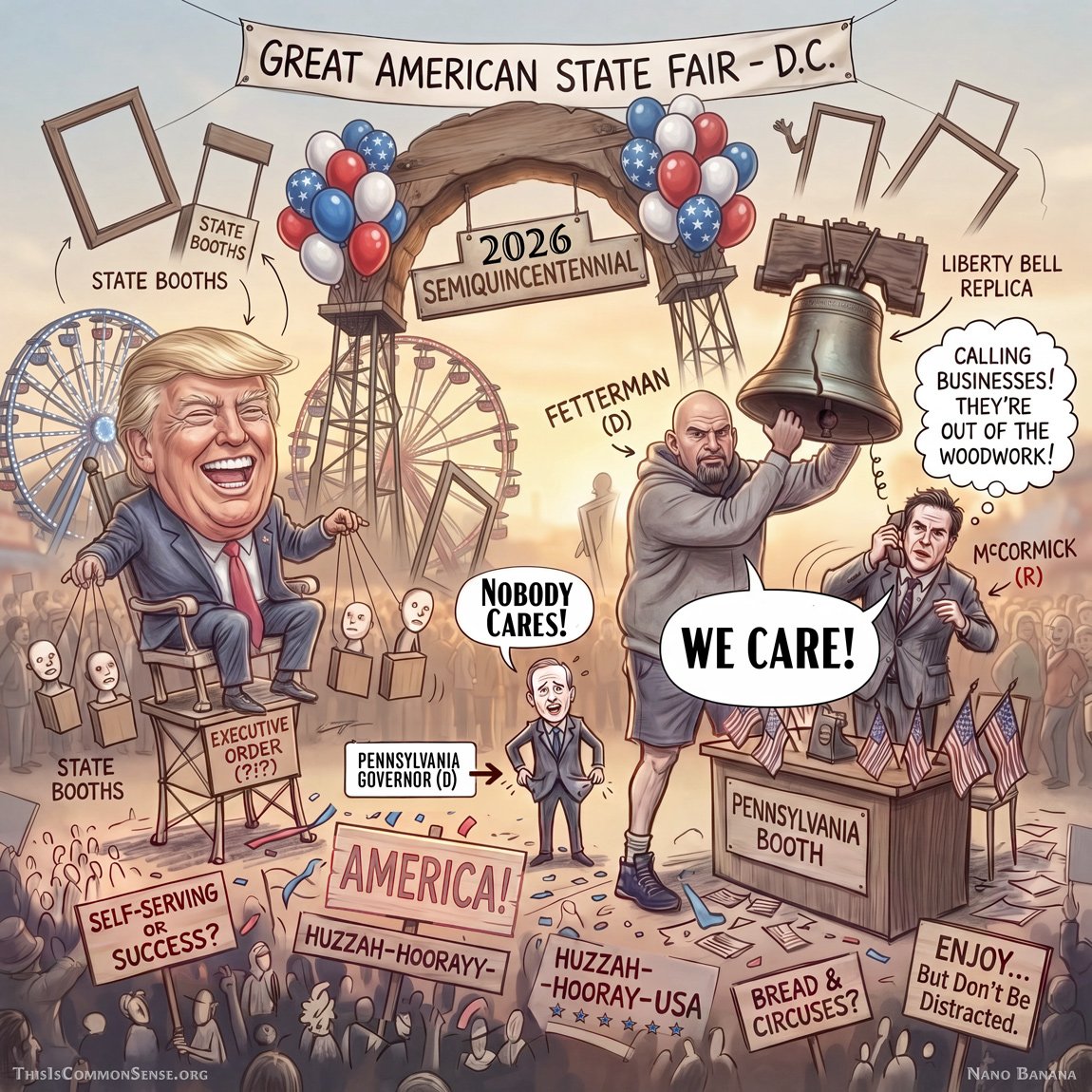
Take the Great American State Fair in the District of Columbia. This was an effort conceived by Donald Trump in 2023, and “enacted” (?!?!) by the president’s executive order once he resumed office in 2025. The idea was to celebrate the semiquincentennial in the capital with booths from each state. It was all very huzzah-hooray-USA-oriented, and sounds like good clean fun.
I did not attend, and it reached its natural conclusion without me last Saturday, on the Fourth of July.
Interestingly, a number of states pointedly did not participate. One gets the feeling that this was all about hating on Trump, but maybe not. Be that as it may, Pennsylvania’s Democratic governor wouldn’t fund or organize the Pennsylvania booth, saying that he couldn’t whip up any business sponsors.
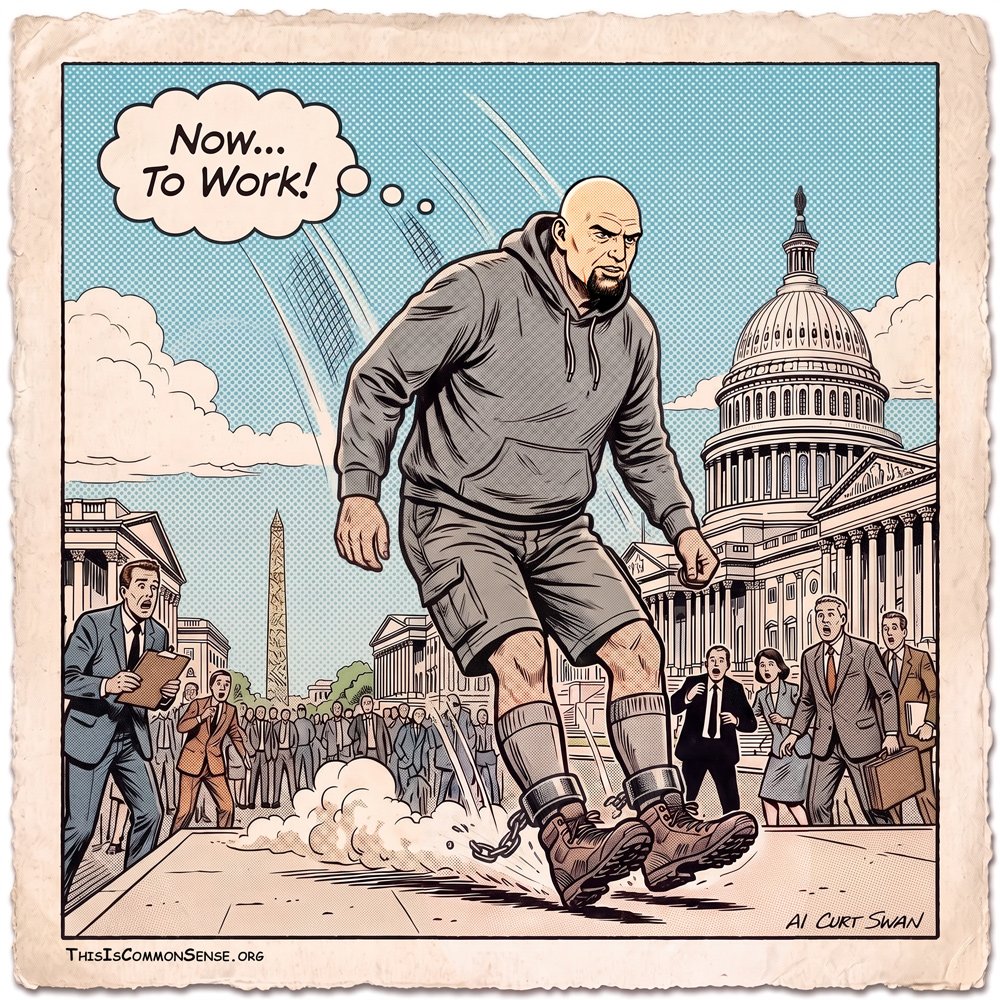
That is unlikely, for when Pennsylvania’s Republican senator, Dave McCormick, heard about it, he called his state’s senator from across the aisle, John Fetterman, and the two decided to do it all themselves. “I started to call businesses, and they came out of the woodwork,” said the Republican.
From the accounts I’ve read, the event was either a self-serving (Trump-o-centric) failure or a moderate success — not a blowout — with the Pennsylvania booth standing out, featuring antique flags and a replica of the Liberty Bell.
This is old-time patriotic fun, a way of celebrating the good stuff of our states and the union.
A cynic might say it’s all bread-and-circuses, a distraction, but the answer to that is: enjoy but don’t be distracted.