Categories
Thought

Charles Sumner

Slavery is in itself an arrogant denial of human rights, and by no human reason can the power to establish such a wrong be placed among the attributes of any just sovereignty.

Senator Charles Sumner, in his “The Crime Against Kansas” speech (May 19-20, 1856).
Categories
Today

Not a Nation

On the 20th of June in 1787, at the Constitutional Convention in Philadelphia, Oliver Ellsworth moved to confine legislative powers to two distinct congressional bodies, and to strike the word “national” from the document. Edmund Randolph of Virginia had previously moved successfully to call the government the National Government of United States. Ellsworth moved that the government should continue to be called, simply, the United States of America.

The final wording eventually became “All legislative powers herein granted shall be vested in a Congress of the United States, which shall consist of a Senate and House of Representatives.”

The words “nation” and “national” do not occur anywhere in the Constitution as ratified by the original set of states, or as amended.


John F. Kennedy authored the Encyclopædia Britannica’s article on Ellsworth. This was Kennedy’s only contribution to the encyclopedia.


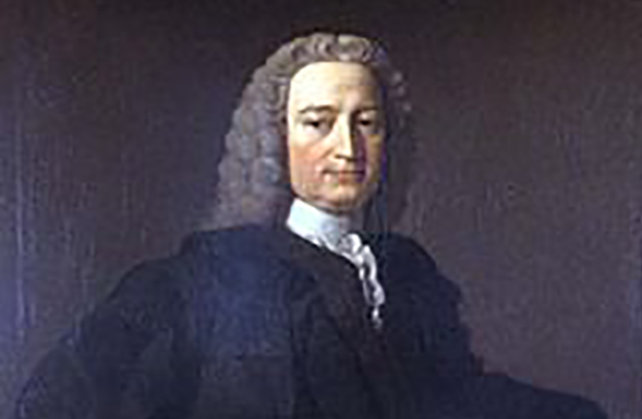
The image, above, is of a portrait of Oliver Ellsworth by Ralph Earl (1785); it is housed, perhaps with a tinge of irony, in the National Portrait Gallery.

Categories
initiative, referendum, and recall judiciary term limits

A Second Life for Limits

Will the Supreme Court let states impose limits on the representatives and senators they send to Washington, D.C.?

Thanks to events in North Dakota, there’s a good chance this question is about to asked again

And get a different answer.

The first time was thirty years ago. The case: U.S. Term Limits v. Thornton.

In May 1995, the U.S. Supreme Court held, in a 5-4 decision, that states cannot impose restrictions like term limits on their congressional delegations.

But: “Nothing in the Constitution deprives the people of each State of the power to prescribe eligibility requirements for the candidates who seek to represent them in Congress,” observed Justice Clarence Thomas in his dissent. “And where the Constitution is silent, it raises no bar to action by the States or the people.”

Now 61 percent of North Dakota voters have passed a ballot measure to impose an age limit on their congressmen. The 1995 Supreme Court would have ruled it unconstitutional. The only justice serving on the high court then who is still there is Thomas.

Everybody thinks that North Dakota’s outlawing of ancient candidates will be challenged in court. In a June 17 podcast for U.S. Term Limits, its president, Philip Blumel, says that USTL would welcome such a challenge.

“Surely, U.S. Term Limits versus Thornton would be the basis” for the challenge and would thus “provide an opportunity for the U.S. Supreme Court to revisit the issue.”

Moreover, a case brought in federal court won’t necessarily take years to decide, because “sometimes the [Supreme Court] expedites election-related cases.”

Fingers crossed, everybody.

This is Common Sense. I’m Paul Jacob.


NOTE: Paul Jacob is a former president of U.S. Term Limits and continues to serve on its board of directors. Paul is currently the president of Liberty Initiative Fund, which made significant contributions to North Dakota’s age limits initiative.

PDF for printing

Illustration created with PicFinder and Firefly

See all recent commentary
(simplified and organized)
See recent popular posts

Categories
Thought

John Quincy Adams

The first steps of the slaveholder to justify by argument the peculiar institutions is to deny the self-evident truths of the Declaration of Independence. He denies that all men are created equal. He denies that he has inalienable rights.

John Quincy Adams, “Letter to the 12th Congressional District” (June 29, 1839).
Categories
Today

Juneteenth

“Juneteenth” (a portmanteau of June and nineteenth) also known as Freedom Day, Jubilee Day, Liberation Day and Emancipation Day, is a holiday celebrating the emancipation of those held as chattel slaves in the United States. Originating in Galveston, Texas, it has been celebrated annually on June 19 throughout the United States, and on June 17, 2021, it was made into an official national holiday when President Joe Biden signed the Juneteenth National Independence Day Act into law. It is commemorated on the anniversary date of the June 19, 1865, announcement of General Order No. 3 by Union Army general Gordon Granger, proclaiming freedom from slavery in Texas.


In June, 1941, Czech economist and politician Václav Klaus was born on the 19th (he died in 2011); other June 19 births include Salman Rushdie in 1947, Kathleen Turner in 1954, and Laura Ingraham in 1964.

Categories
free trade & free markets general freedom regulation

Leave Us Alone to Do Our Work

Drearily, an appeals court has dismissed Uber’s challenge to California’s anti-gig-work law.

According to the 9th Circuit, the ride-sharing company couldn’t show that the California anti-freelancer law AB5, which took effect in 2020, unfairly targeted Uber while allowing other types of contract work to continue unhindered.

In fact, the many exceptions to AB5 — determined by abundance or lack of political pull of various groups — mean that Uber is hardly alone in suffering from uneven application of the law.

But suppose AB5 had in fact been evenly imposed on everybody. Suppose every single gig worker in California, without exception, had been forced to become a regular employee of all of his clients — with all the additional costs for employers that this entails — or else lose all work altogether.

This would be worse, not better. 

Inconsistent tyranny is bad for the victims. Absolutely consistent and uniform tyranny is bad for the victims — which would be greater in number.

Maybe the 9th’s misjudgment won’t stand. If the case makes its way to the U.S. Supreme Court, maybe the high court will unambiguously affirm our right to contract with each other in order to make a living and get stuff done.

Meanwhile, the fate of Uber also hinges on another court case, one determining the fate of Proposition 22, a 2020 California initiative affirming Uber’s right to contract with drivers.* A labor union says Prop 22 is unconstitutional. The state supreme court is deciding whether this is so. 

It is not so.

This is Common Sense. I’m Paul Jacob.


* Citizens in Charge, a pro-initiative and referendum group, for whom I serve as president, filed an amicus or friend of the court brief with the California Supreme Court in this case.

PDF for printing

Illustration created with Midjourney and Firefly

See all recent commentary
(simplified and organized)
See recent popular posts
Categories
Thought

John Adams

Every measure of prudence, therefore, ought to be assumed for the eventual total extirpation of slavery.

John Adams, as quoted in letter to Robert J. Evans (June 8, 1819).
Categories
Today

Auberon Herbert

On June 18, 1838, Auberon Edward William Molyneux Herbert was born.

Auberon Herbert was a Liberal Member of Parliament who, after reading the writings of Herbert Spencer, became a radical individualist, authoring essays such as “The Ethics of Dynamite,” “A Politician in Trouble About His Soul,” and “The Right and Wrong of Compulsion by the State.” He termed his version of the political philosophy of liberty “voluntaryism.”

Categories
ideological culture national politics & policies regulation

DEI Virally Decoded

Is “Didn’t Earn It” — the latest scam-decoding translation of officialdom’s acronymic jargon for race-conscious and gender-conscious affirmative-action policies, DEI — really catching on?

If so, maybe we’ll get back all the sooner to sanity. 

That is, in universities, workplaces, and other hunting grounds of the DEI dictators who have inherited the mantle of reverse discrimination first inflicted on Americans via the affirmative-action quota policies of the 1970s.

John Tierney suggests that the popularizers of the apt “Didn’t Earn It” meme may well help rid us of “today’s most egregiously indefensible phrase: ‘Diversity, Equity and Inclusion.’”

These woozy words are supposed to divert our attention from what DEI policies really mean: systematic discrimination against academic, professional, and other merit in favor of typically irrelevant physical characteristics like skin color and gender.

DEI discrimination is being imposed on ever more of our institutions, even at the cost of risking our lives. If unqualified applicants are being admitted into UCLA Medical School in order to appease the arbiters of DEI, then failing basic tests of medical knowledge after they get in — what happens if and when they start treating patients?

A single telling phrase (Tierney credits journalist Ian Cheong and cartoonist Scott Adams) can’t shoulder the whole burden of stopping DEI. True enough.

Fortunately, it’s got help. 

In Congress, Republicans have introduced legislation to shut down DEI offices and forbid federal contractors from imposing the ugly indoctrination of DEI training and DEI statements.

We can all pitch in.

This is Common Sense. I’m Paul Jacob.


PDF for printing

See all recent commentary
(simplified and organized)
See recent popular posts
Categories
Thought

John Locke

[B]etween an executive power in being, with such a prerogative, and a legislative that depends upon his will for their convening, there can be no judge on earth; as there can be none between the legislative and the people, should either the executive, or the legislative, when they have got the power in their hands, design, or go about to enslave or destroy them. The people have no other remedy in this, as in all other cases where they have no judge on earth, but to appeal to heaven: for the rulers, in such attempts, exercising a power the people never put into their hands, (who can never be supposed to consent that any body should rule over them for their harm) do that which they have not a right to do. And where the body of the people, or any single man, is deprived of their right, or is under the exercise of a power without right, and have no appeal on earth, then they have a liberty to appeal to heaven, whenever they judge the cause of sufficient moment. And therefore, though the people cannot be judge, so as to have, by the constitution of that society, any superior power, to determine and give effective sentence in the case; yet they have, by a law antecedent and paramount to all positive laws of men, reserved that ultimate determination to themselves which belongs to all mankind, where there lies no appeal on earth, viz. to judge, whether they have just cause to make their appeal to heaven.

John Locke, Second Treatise of Government, Sec. 168.