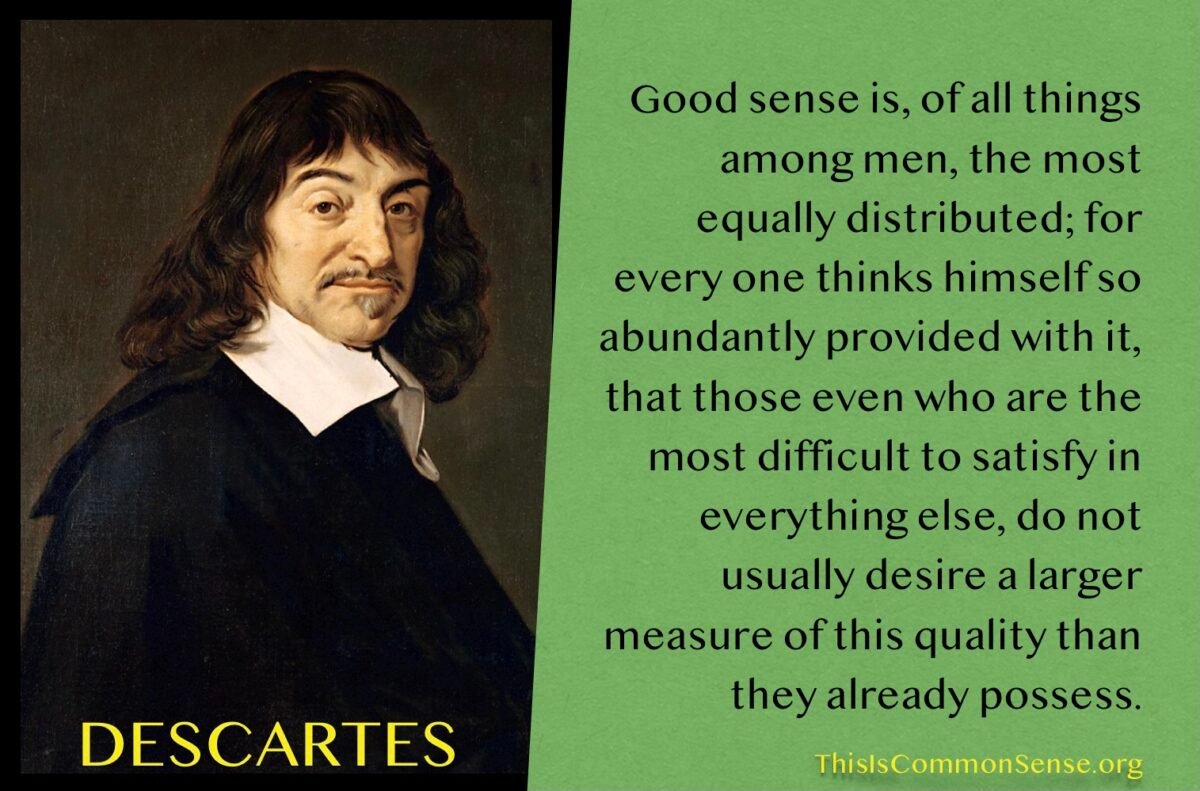
Good sense is, of all things among men, the most equally distributed; for every one thinks himself so abundantly provided with it, that those even who are the most difficult to satisfy in everything else, do not usually desire a larger measure of this quality than they already possess.
On April 5, 1792, George Washington exercised the first presidential veto of a congressional bill, a new plan for dividing seats in the House of Representatives, which would have increased the number of seats for northern states.
Washington vetoed only one other bill during his two terms in office, an act that would have reduced the number of cavalry units in the army.
UFOs exist. Not just hearsay or fuzzy photos of unidentified, apparent aerial phenomena — and not mere testimony from government officials, as in the case of but actual scientific evidence of artificial shiny objects in orbit around Earth.
In the 1950s. Before Sputnik.
So, more accurately, it appears that, at the very least, UFOs existed!
In orbit, before the Soviets sent up the first satellite (as we have read in the history books and what some of us remember from the news when we were young).
“The studies by Dr. Beatriz Villarroel and her colleagues have identified bright ‘transient’ objects that appeared in photographs but were not present in photographs taken soon thereafter,” explainsThe Washington Examiner. “The transient nature of these lights strongly suggests they are not stars.” Indeed, Dr. Villarroel and her colleagues go much further, weeding out any natural explanations. Hundreds, perhaps thousands of examples of these transients not only appear on photographic plates from the 1950s taken from the Palomar Observatory.
Since these studies hit the news a few years ago, we haven’t heard much on it from major news sources despite its obvious news value and historic importance. But Dr. Villarroel has not stopped working on the project, and has maintained a fairly heavy podcast presence.
Now a new paper from Ivo Busko, late of NASA, appears to confirm Villarroel’s results, using plates from a different astronomical observatory.
Meanwhile, Representatives Anna Paulina Luna (R-Fla.) and Tim Burchett (R-Tenn.) have made news regarding their work in Congress investigating UFOs (the Deep State calls them “UAPs” now). When Rep. Luna called for defunding AARO, the All-domain Anomaly Resolution Office, because she says it keeps lying to Congress, Burchett leaped quickly on board.
I’ve been briefed by just about every alphabet agency there is, and I’ll just tell you this: if they would release the things that I’ve seen, you would stay up — you’d be up at night worrying about or thinking about this stuff.
We just need to disclose it all. I’m sick of it. Well, I was briefed — I’ll just tell you this — I was briefed last week on an issue, or excuse me, two weeks ago, and it would have set the earth on fire.
This country would have come unglued, I think, if they would have heard all that I heard. They would demand answers.
And we need to — but you know, it’s never going to get — unfortunately, it just keeps getting covered up and covered up, and the people that know are dying or disappearing, as the case may be.
Paul Jacob has been covering the ongoing UFO disclosure story for some time, demanding transparency:
On April 4, 1841, William Henry Harrison died of pneumonia, becoming the first President of the United States to die in office and the one with the shortest term served (he died on his 32nd day as president). A renowned Indian killer (having risen to fame for his part in 1811’s Battle of Tippecanoe), a proponent of the expansion of slavery into Northwest Territories, and a Whig, Harrison won the presidency in part by turning the Democrats’ “log cabin and hard cider” aspersions on his character as the basic symbols of the campaign.
Though hardly a “limited government man,” some libertarian history buffs proclaim him the Greatest President, on the ostensibly droll and possibly cynical grounds that he spent so little time in office.
The campaign slogan of 1840, “Tippecanoe and Tyler Too,” proved an actual campaign promise, as Vice President John Tyler took over the job of the presidency, establishing a precedent on presidential succession that would later be enshrined into constitutional law, in the form of the Twenty-fifth Amendment.
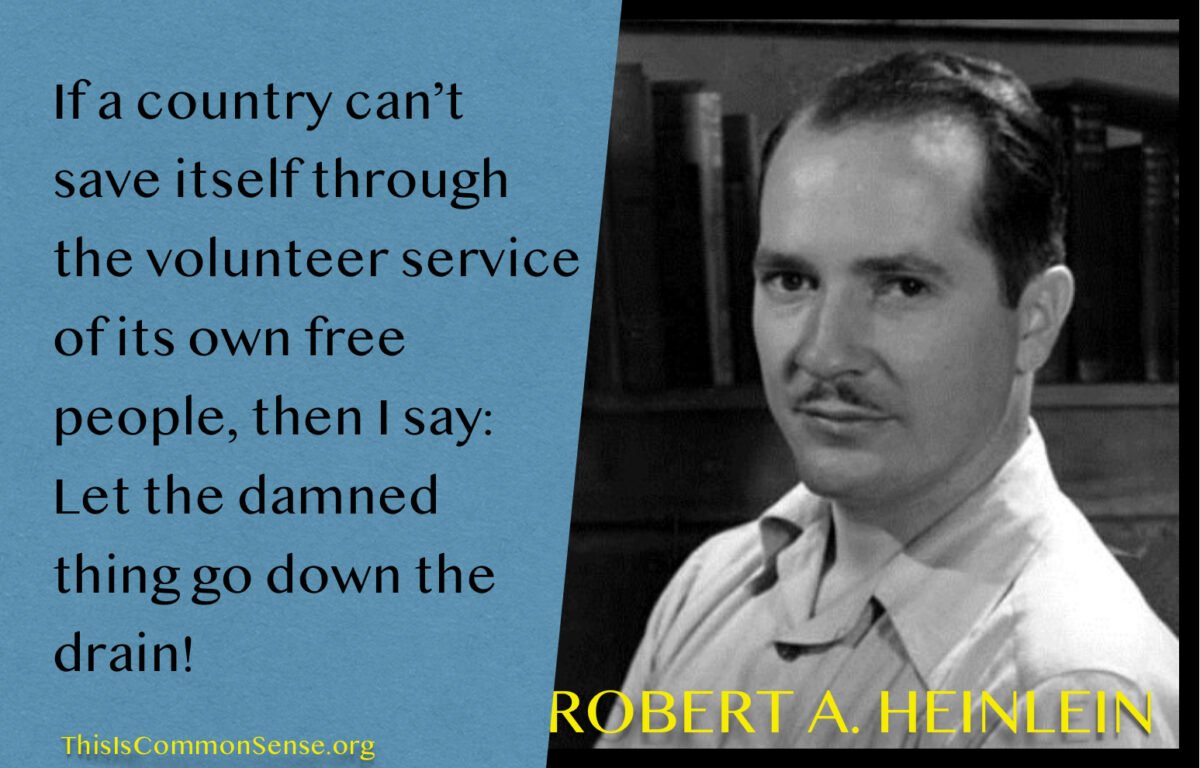
Americans have not endured a military draft since the 1970s. Our bodies and very lives aren’t conscript. Just our fortunes.
Not perfect, true, but as political trades go it’s better for equal freedom than slightly lower taxes and a return of the draft, which conscripts some* to benefit (the story runs) “all.”
The all-volunteer force has produced the world’s best military . . . without “slave” labor.
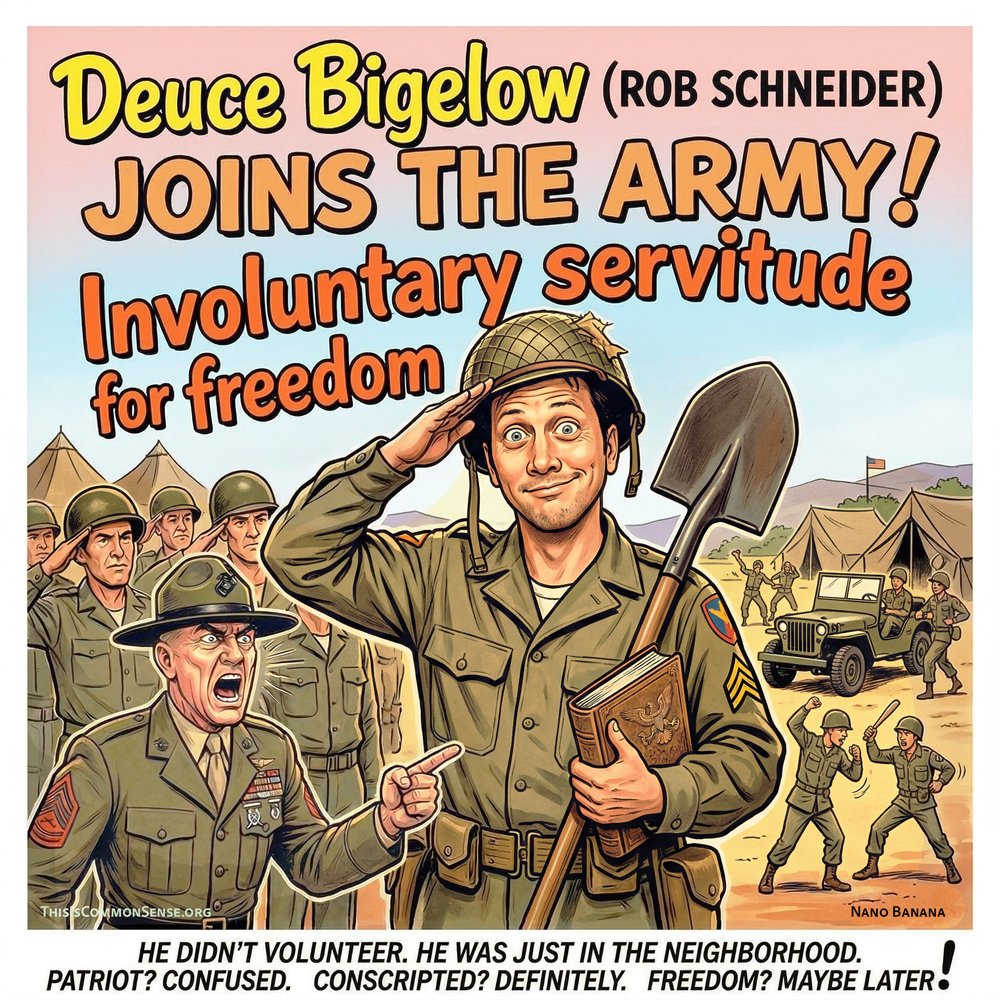
Comedian Rob Schneider thinks differently.
“We must once again recommit ourselves to one Nation under God, indivisible,” he posted to X recently. “Therefore, we must restore the military draft for our Nation’s young people.
“Each and every American, at eighteen years of age, must serve two years of military service. They could also choose to serve part of that time overseas or in country in a volunteer capacity,” he went on.
“Unlike in today’s Universities, our young people will learn how truly great their country is and how unique and incredible are the Freedoms that this Nation bestows upon them.” But wouldn’t the best place to learn of American freedoms be living free in America?
Other criticism leaned to mockery, such as the parody movie poster of Deuce Bigelow Joins the Army.
Schneider later clarified that he aims for less military action: “A military with EVERY SEGMENT OF SOCIETY REPRESENTED would make the DEPLOYMENT of TROOPS and foreign wars LESS likely as there would be MORE accountability at the highest levels of power.”
This notion is, explainsThe Epoch Times, “part of a public appeal for Americans to return to traditional values.”
But surely the all-volunteer service is more traditional, the norm for most of our history, and, especiallyin the sense that freedom to join, or not, embodies liberty better than coercion does.
This is Common Sense. I’m Paul Jacob.
* The all-volunteer force is admittedly not an exact replica of our society, representing “every segment.” It is better than that. Better educated. Better motivated. In better shape. Consider that the military cannot use at least 12 percent of the population for any purpose.
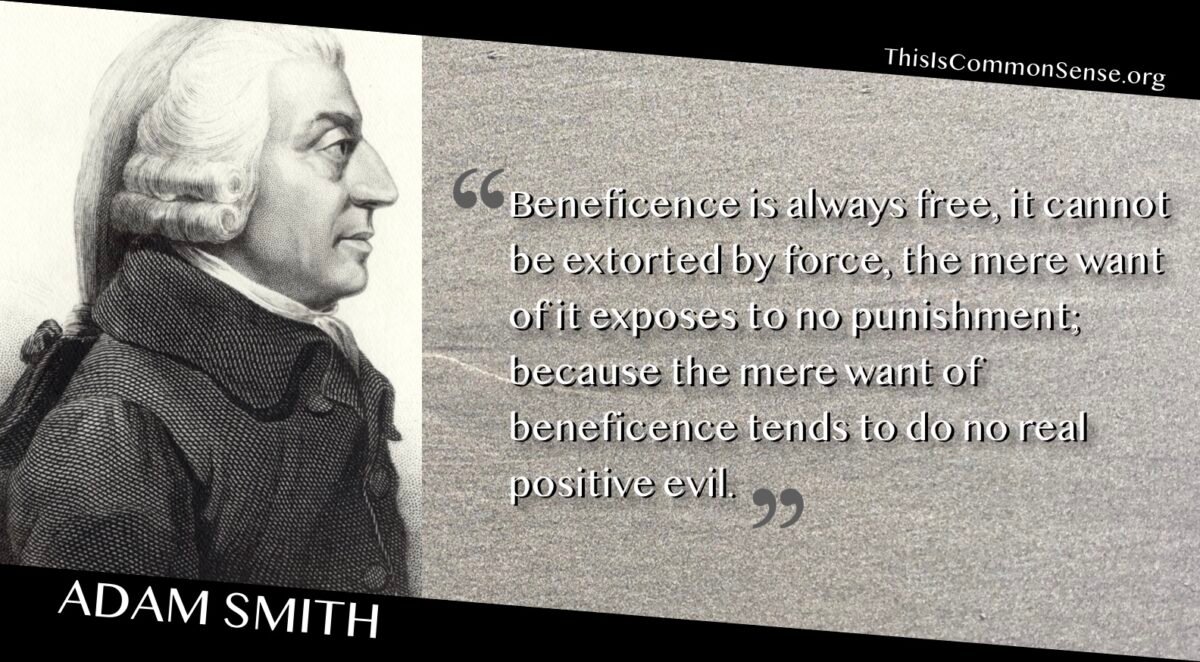
Beneficence is always free, it cannot be extorted by force, the mere want of it exposes to no punishment; because the mere want of beneficence tends to do no real positive evil.
Adam Smith, The Theory of Moral Sentiments (1776), § II, Ch. I.
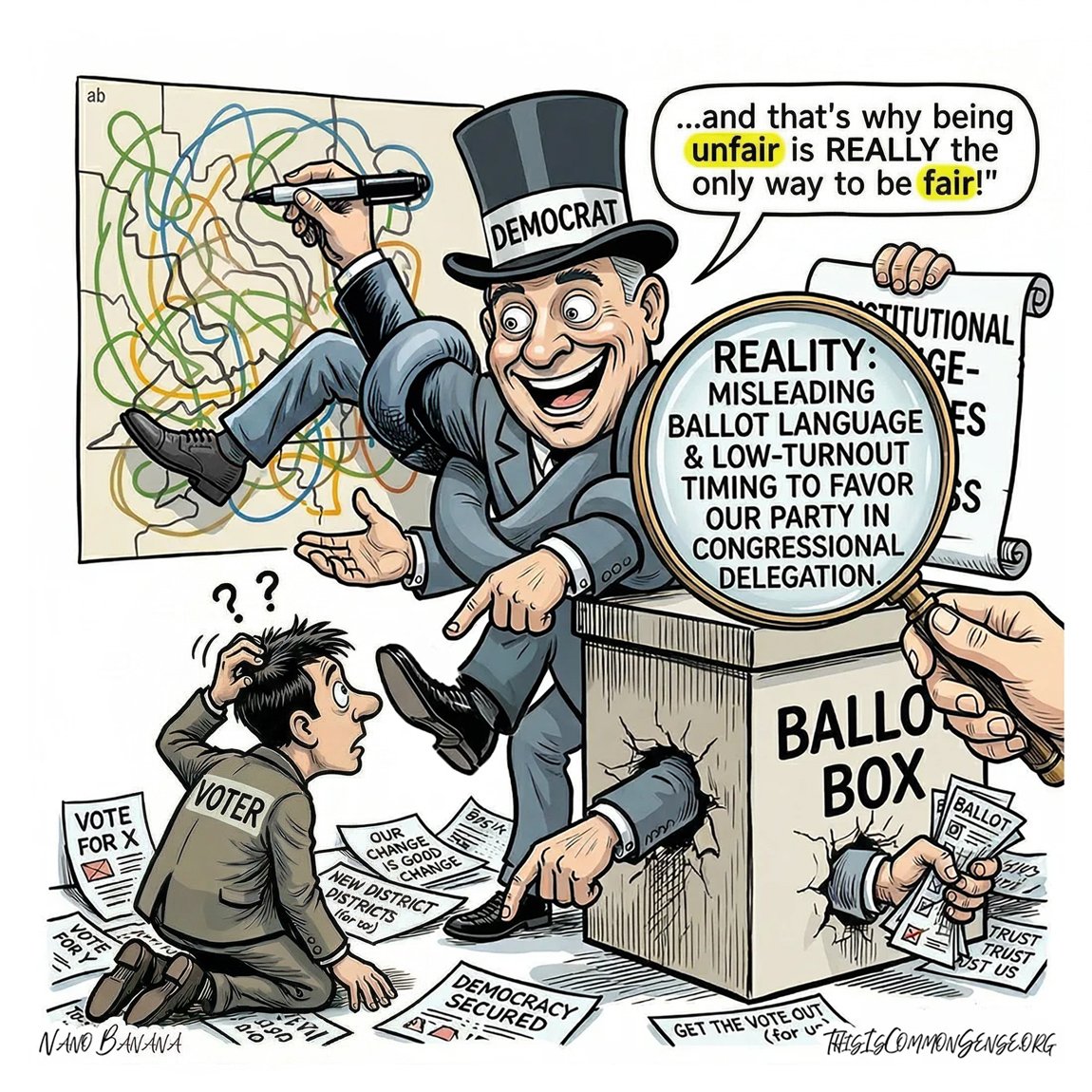
Nah, it’s just Democrats who think that, because I won’t vote for their proposed constitutional amendment allowing the legislature to redraw my state’s congressional districts.
The official question on the April 21 ballot reads: “Should the Constitution of Virginia be amended to allow the General Assembly to temporarily adopt new congressional districts to restore fairness in the upcoming elections, while ensuring Virginia’s standard redistricting process resumes for all future redistricting after the 2030 census?”
What, exactly, is “fair” about this amendment?
“If approved, Virginia’s 11 districts would likely go from six Democratic to five Republican leaning seats to 10 Democratic seats and one Republican seat,” explainsWJLA, ABC’s Washington, D.C., affiliate. “The new map would draw heavily blue urban areas in Northern Virginia, with rural Republican areas far away.”
Democrat House Speaker Don Scott argues that “levels the playing field.”
Well, it would be a fairer mapif the commonwealth’s electorate were comprised of 90 percent Democrats and less than 10 percent Republican voters. Yet, in 2024, Democrat Kamala Harris garnered just 51 percent of Virginia’s vote for president. Even in last year’s blowout gubernatorial election, Democrat Abigail Spanberger won only 58 percent. During that campaign, Spanberger expressed skepticism of this district map . . . but then, as governor, signed on.
Democrats, always selective in applying “fairness,” are outspending Republicans “by about 14 to 1 on advertising” and holding the vote for this constitutional question early, in April, with low voter turnout expected — for the first time in state history.
In the minds of Democrats, this maneuver is fair because President Trump has urged Republican states to engage is such partisan redistricting. That’s their case.
But arguments in favor of a measure do not belong in the wording voters see on their ballot as they make their decision.
That’s unfair.
This is Common Sense. I’m Paul Jacob.
Note: In the quoted ballot question, emphasis added.
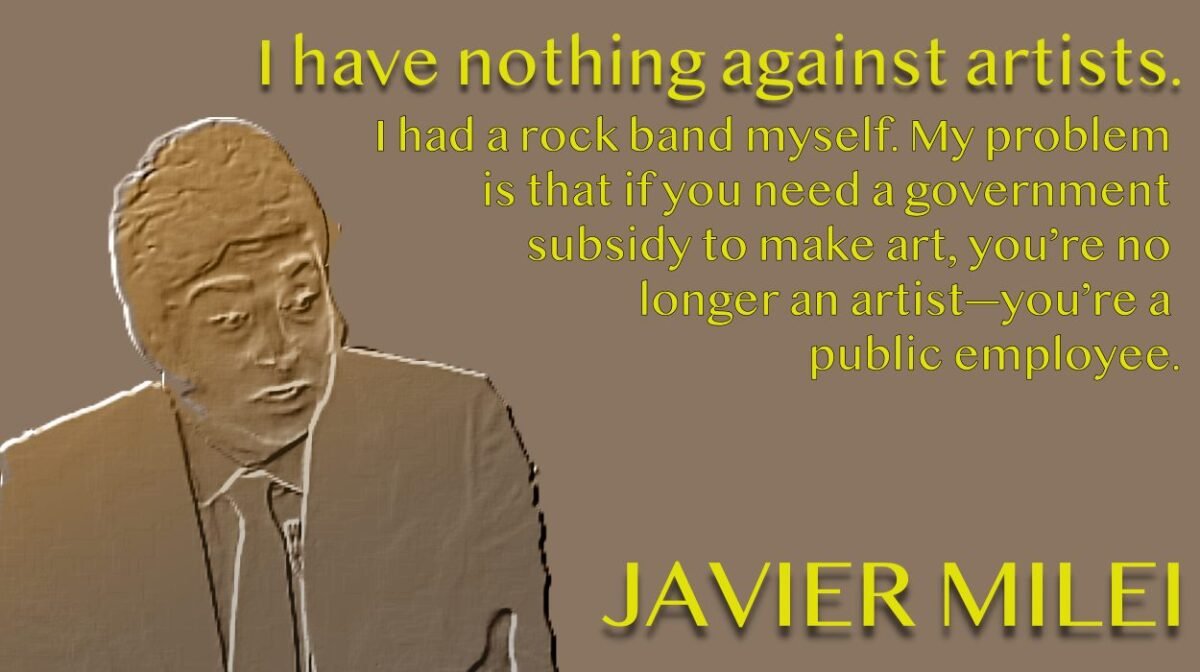
I have nothing against artists. I had a rock band myself. My problem is that if you need a government subsidy to make art, you’re no longer an artist — you’re a public employee.
Javier Milei, president of Argentina, in conversation.