Too many pieces of music finish too long after the end.
Categories
Igor Stravinsky

Too many pieces of music finish too long after the end.
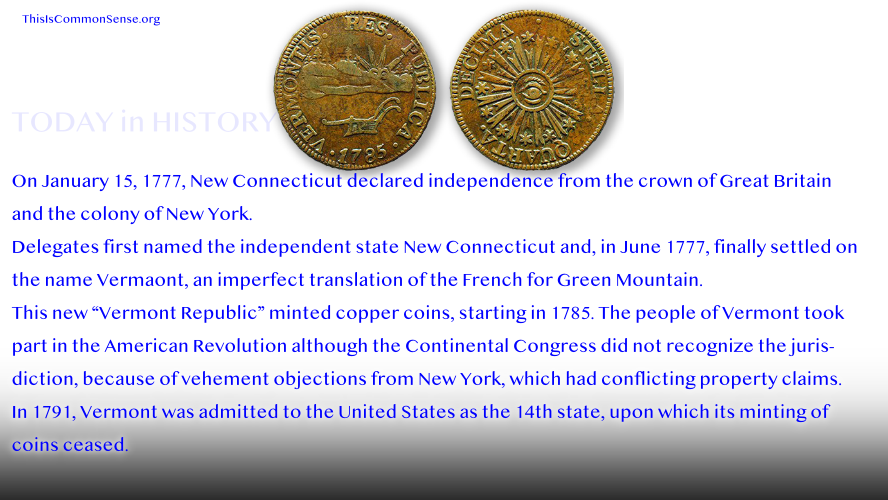
On January 15, 1777, New Connecticut declared independence from the crown of Great Britain and the colony of New York.
Delegates first named the independent state New Connecticut and, in June 1777, finally settled on the name Vermaont, an imperfect translation of the French for Green Mountain.
This new “Vermont Republic” minted copper coins, starting in 1785. The people of Vermont took part in the American Revolution although the Continental Congress did not recognize the jurisdiction, because of vehement objections from New York, which had conflicting property claims.
In 1791, Vermont was admitted to the United States as the 14th state, upon which its minting of coins ceased.
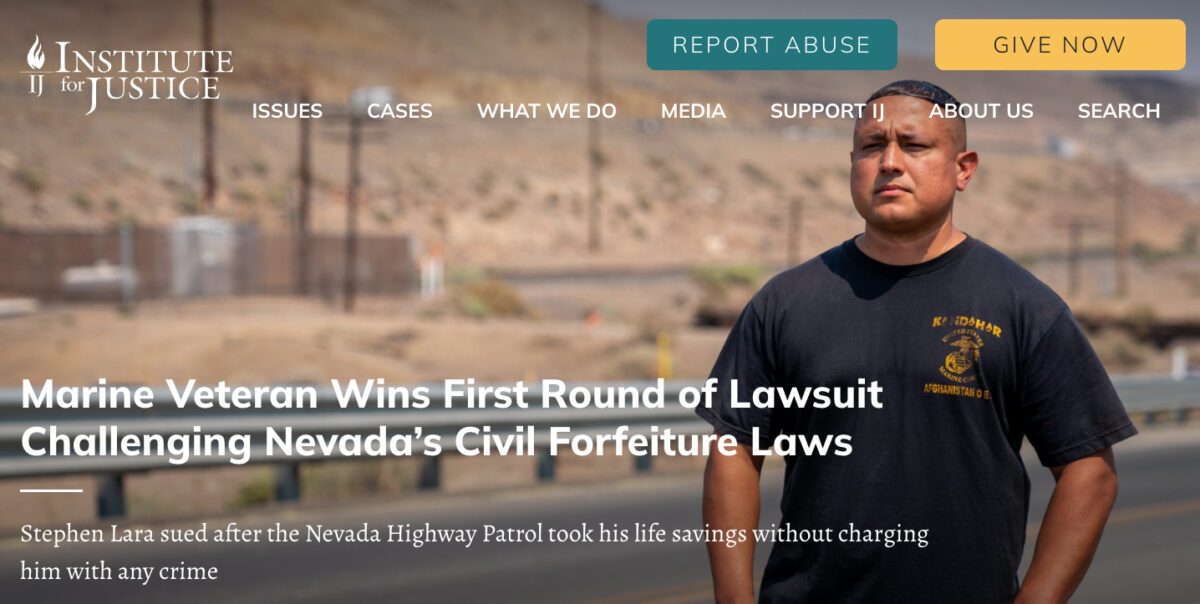
A district court ruled that the Nevada Highway Patrol — which had grabbed a man’s life savings despite no legitimate suspicion of wrongdoing — can’t try to circumvent state law against arbitrary civil forfeiture (stealing) via a loophole called “federal equitable sharing.”
Even when states reform their laws to prevent police from robbing innocent people, the “equitable sharing” program often “lets them give the forfeiture to a federal agency in exchange for a kickback,” IJ reports.
Gangsterish.
The victim in the present case was Stephen Lara. In February 2021, officers pulled Lara over, detained him for more than an hour, then confiscated the $86,900 in life savings that he happened to have with him, cash that he had saved to buy a house. (He didn’t trust banks.) The Patrol never accused him of any crime. But they tried to keep his money.
With the help of Institute for Justice, Lara got it back — six months later, soon after his case received major publicity. But he and IJ continued to pursue the case, hoping to obtain a ruling that the state constitution prohibits anyone from using the federal program to evade state law.
They have now obtained such a ruling.
If it is allowed to stand, the nightmare of civil forfeiture is over for innocent Nevadans. But the state may appeal. Then it’s up to the Nevada Supreme Court to affirm the obvious.
This is Common Sense. I’m Paul Jacob.
See all recent commentary
(simplified and organized)
See recent popular posts
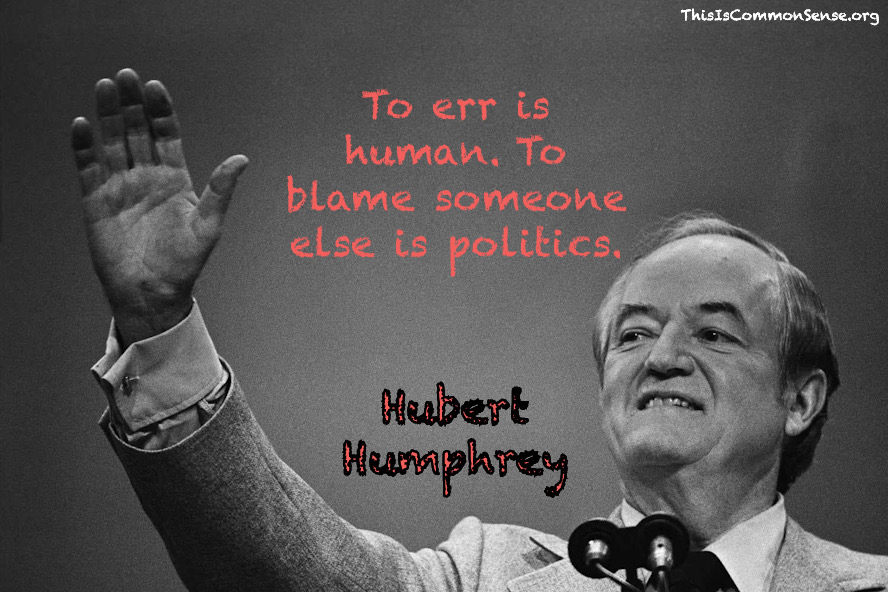
To err is human. To blame someone else is politics.
Oft attributed to Hubert Horatio Humphrey, Jr., 38th Vice President of the United States.
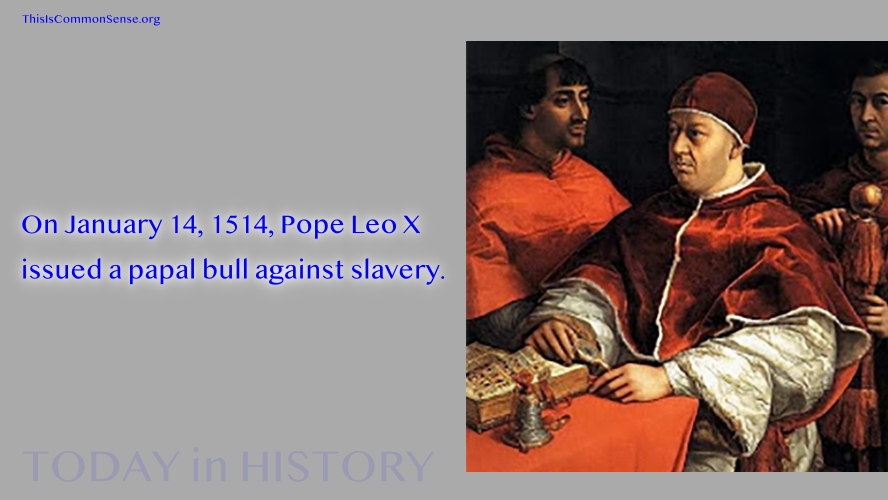
On January 14, 1514, Pope Leo X issued a papal bull against slavery.
On the same date in 1639, the first written constitution to create a government, the “Fundamental Orders,” was adopted in Connecticut.
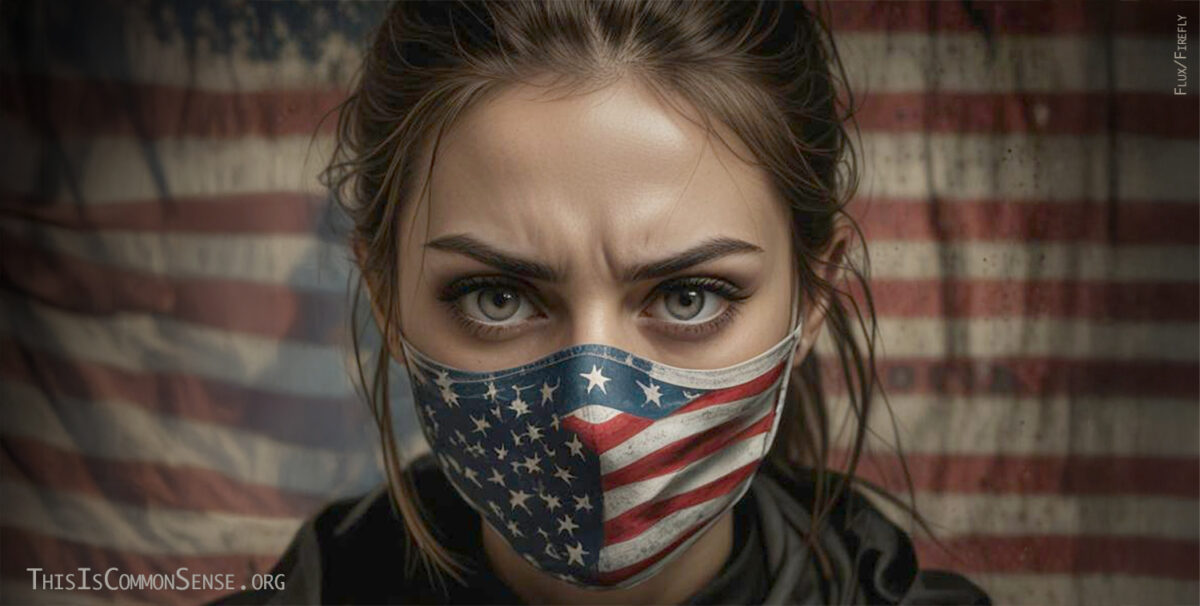
We knew (because we had been making the distinction for years) that when companies and private parties engaged in discrimination on the basis of opinion, including “de-platforming” of opinion-mongers, these weren’t, at least on the face of it, First Amendment violations. The First Amendment’s guarantees of free speech apply to the federal government and, by the stretch of the 14th Amendment, to state and local governments.
These were corporations.
Sure, corporations thriving under government liability rules, and with sometimes-cushy contracts with government.
And social media companies’ actions were clearly partisan, obviously opposing Donald Trump. The dreaded Orange Man had used social media to get elected in 2016, running rings around the gatekeepers of Accepted Opinion; the ultra-partisan censorship a reaction.
Only with the release of the Twitter Files, after Elon Musk bought Twitter, did we get the crucial facts in the case: Agents of the U.S. government (many of them eerily in the Deep State nexus) pushed the censorship.
Now, with Mark Zuckerberg’s very recent and very public pulling back from the excesses of DEI as well as government-coerced content moderation, we’ve learned more of the manner of the duress in which his companies caved to censorship demands. Government agents called up Facebook managers and content moderators and screamed at them to suppress certain stories and “memes.”
The sharing of visual memes really, really bugged the Deep State, which was hell bent on delivering to everybody a jab in the muscle with gene therapeutics allegedly to “vaccinate” us against a disease that . . . well, their buddies in the Deep State helped China, it just so happened, create.
Worldwide, millions died in a pandemic whose origin was actively covered up through violations of the First Amendment in America.
Defend free speech to defend life itself.
This is Common Sense. I’m Paul Jacob.
Illustration created with Flux and Firefly
See all recent commentary
(simplified and organized)
See recent popular posts
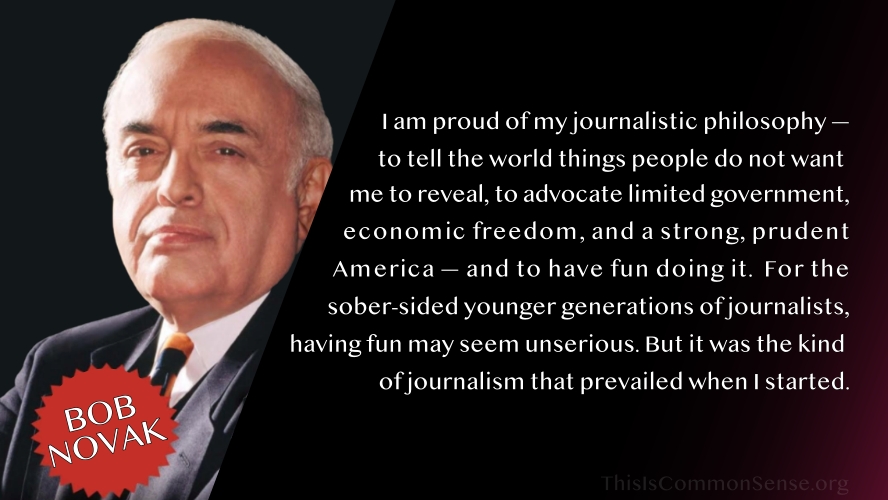
I am proud of my journalistic philosophy — to tell the world things people do not want me to reveal, to advocate limited government, economic freedom, and a strong, prudent America — and to have fun doing it. For the sober-sided younger generations of journalists, having fun may seem unserious. But it was the kind of journalism that prevailed when I started.
Robert D. Novak, The Prince of Darkness (2007), p. 14.
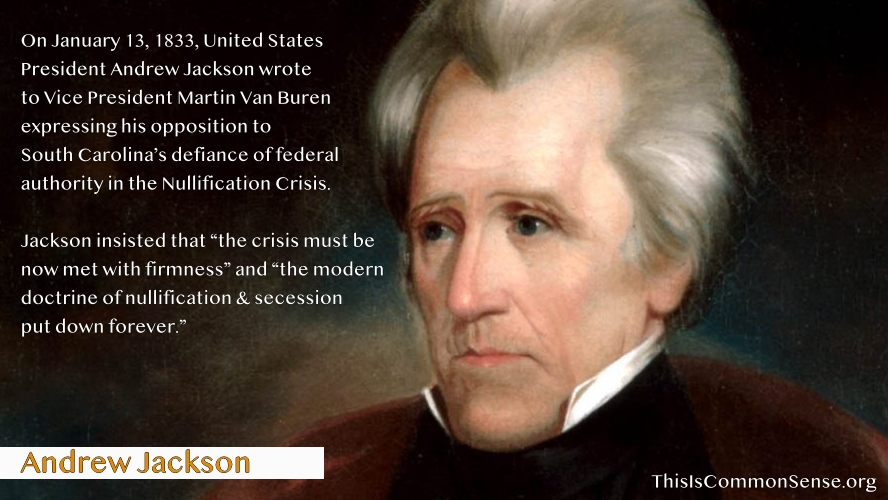
On January 13, 1833, United States President Andrew Jackson wrote to Vice President Martin Van Buren expressing his opposition to South Carolina’s defiance of federal authority in the Nullification Crisis. Jackson insisted that “the crisis must be now met with firmness” and “the modern doctrine of nullification & secession put down forever.”
South Carolina had blamed protectionist high tariffs for the severity of the economic slump of the time, and Andrew Jackson’s compromise Tariff of 1832 was still too much special-interest “protectionism” for South Carolina, which threatened to nullify the law as unconstitutional. Jackson, though he agreed that the tariffs were too high, was still a nationalist at heart, having no sympathy for dissidents in the southern states. (The tariffs were designed by northern politicians to encourage the growth of industry. The belief among most economists of that time was that such high “protective” tariffs favored certain businesses at the expense of the general consumer as well as businesses not under the “protection,” particularly farmers and agricultural producers.) After the crisis subsided, tariffs were further reduced from the 1832 level, much lower than of 1828’s “Tariff of Abominations,” which had been signed into law by President John Quincy Adams — and written mainly by Martin Van Buren as a way to precipitate the election of Jackson.
Since the somewhat ambiguous end to the Nullification Crisis, the doctrine of state prerogatives — “states’ rights” — has been asserted by opponents of the Fugitive Slave Act of 1850, proponents of California’s Specific Contract Act of 1863 (which nullified the Legal Tender Act of 1862), opponents of Federal acts prohibiting the sale and possession of marijuana in the first decade of the 21st century, and opponents of implementation of laws and regulations pertaining to firearms from the late 1900s up to 2013. State opposition to ObamaCare has also recently conjured up the issue.
On January 13, 1898, Émile Zola’s J’accuse exposed the Dreyfus affair.
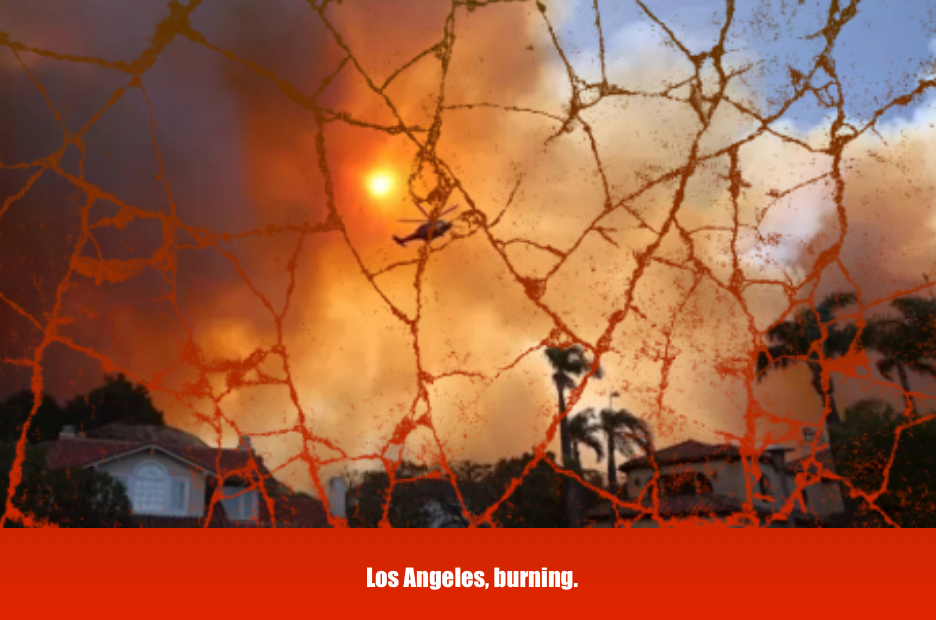
“Though many factors contributed to the devastation (such as fire hydrants without water, too few controlled burns, and insurance price controls),” explains Jack Nicastro at Reason, “it was also exacerbated by land-use policies that pushed homes and residents away from the city center and closer to the wildland-urban interface (WUI). The U.S. Fire Administration defines the WUI as ‘the zone of transition between unoccupied land and human development . . . where structures . . . intermingle with undeveloped wildland or vegetative fuels.’”
President Trump has talked about California’s environmentalist hegemony, preventing the routing of huge amounts of water in the north of the state to the desertified south. Trump, and many people online, blame protection of a specific small fish, the delta smelt. Some or all of Trump’s claims have been “fact-checked” by news media outlets, such as CNN.
Meanwhile, to those keeping their eyes peeled to major media coverage, global warming started out as the chief cause of the fires. This seems shaky at best, however, and has been repeatedly been debunked, such as by the Heartland Institute. California has a long, long history of forest fires, and the Santa Anas blow fires into conflagrations, and have been doing so for ages.
Since wildfires are a continual problem for California, governments can hardly be exonerated on account of being “surprised.” And if governments exist to provide the most basic of services — as many argue — surely fire protection would be high on the priority list.
But it wasn’t on Los Angeles’s mayor’s list, apparently. She scuttled off to Ghana to celebrate the continent’s first woman president. But her glorying in a feminist moment was marred by pestering questions about fire protection, and why so much money had been [allegedly] cut from fire-fighting budgets.
And then there has been the talk of arson. January is not the usual time of year for out-of-control fires, so one naturally wonders what ignited the holocaust. And there has been more than one arrest for arson.
Unlike in the fires that raged farther north, in 2020 (after the George Floyd riots), there does not seem to be a blanket denial in the media of arson, and even celebrities are spreading rumors about widespread firebug activity.
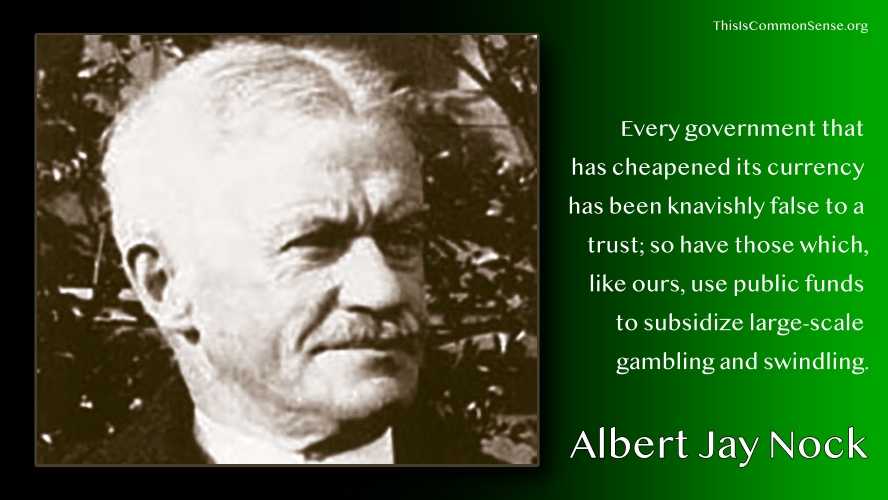
Every government that has cheapened its currency has been knavishly false to a trust; so have those which, like ours, use public funds to subsidize large-scale gambling and swindling.
Albert Jay Nock, as quoted in Robert M. Thornton, editor, Cogitations from Albert Jay Nock (The Nockian Society, 1970).