Categories
Update

The Ulbricht Countdown

Life in prison — two life sentences! Plus 40 years. That’s a long time incarcerated . . . for anyone. Especially for one so young as Ross Ulbricht, who, after all, did not kill anybody, or defraud anybody, or steal from anybody.

The operatives of the federal government, on the other hand, wanted to send a message.

Last year, Donald Trump sent a message to members of the Libertarian Party: support me and I’ll free Ross Ulbricht.

Paul Jacob, in these pages, has written about both Mr. Ulbricht and Mr. Trump. Now Mr. Trump is hours away from returning to office, the only public office he’s ever had. Will he exercise his pardon power in favor of Ulbricht?

A week ago, Bitcoin Magazine wondered about the possibility of a pardon. “Although most Bitcoiners admit that Ulbricht was probably aware of his legal violations while profiting from Silk Road transactions, many believe that his asset forfeiture and 11-year-and-counting prison stay have become a sufficient penalty.”

The next day, Nick Gillespie of Reason brought up the possibility: “Reminder: Donald Trump Promised To Free Ross Ulbricht on ‘Day One.’

Protos figures the odds: “Polymarket, the world’s largest prediction market, hosts bets on a list of people Trump could pardon in his first 100 days in office. Unfortunately, no major prediction market lists binary options odds on a ‘day one’ pardon or commutation.”

An article today, in the Prescott eNews, quotes actor Keanu Reaves in Ulbricht’s favor: “The Silk Road and trial of Ross Ulbricht involve many important and complex issues that impact the life of Mr. Ulbricht and us all.” It may be a politically vague statement, but it is nevertheless true.

For his part, Ross Ulbricht insists upon his good intentions, not ill or evil ones: “I was trying to help us move forward.”

Donald Trump is scheduled to be sworn into office as the 47th President of the United States on Monday the 20th of January. We will see what Mr. Trump truly seeks to move forward, soon after.

Categories
Thought

Benjamin Franklin

Sell not virtue to purchase wealth, nor Liberty to purchase power.

Poor Richard’s Almanack, 1738.
Categories
Today

Montesquieu

On January 18, 1689, Charles-Louis de Secondat, Baron de La Brède et de Montesquieu, French satirist and philosopher, was born.

His treatise The Spirit of the Laws was a major influence upon America’s founding generation. He is famous for his articulation of the theory of separation of powers, which is implemented in many constitutions throughout the world. He did more than any other author to secure the place of the word despotism in the political lexicon.

In 1811, former U.S. President Thomas Jefferson translated and published Destutt de Tracy’s Commentary and Review of Montesquieu’s ‘Spirit of Laws,’ a very popular review of republican principles — which helps demonstrate how important these French writers were to the American form of government.

Montesquieu died on February 10, 1755.

Categories
insider corruption national politics & policies

Oligarchy Malarkey

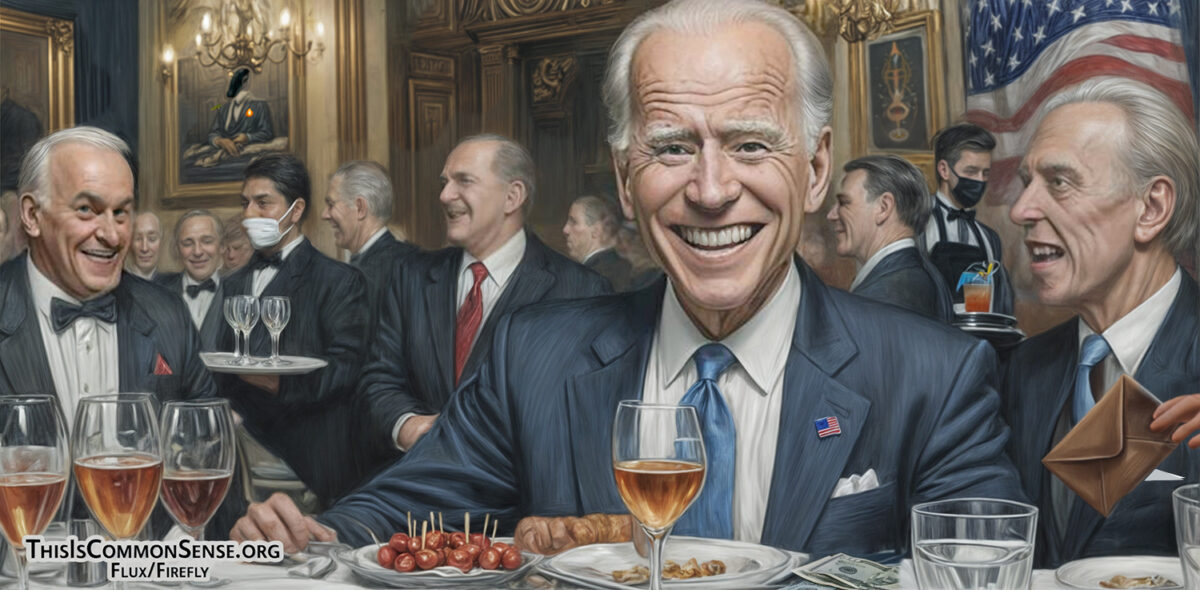
“Today, an oligarchy is taking shape, in America, of extreme wealth, power and influence that literally threatens our entire democracy, our basic rights and freedoms and a fair shot for everyone to get ahead,” President Biden warned the nation Wednesday night. 

“We see the consequences all across America.”

Yes, we do, but what specific consequence brought on the president’s sudden awareness of the “O” word: The Democrats’ political defeat? His own? Harris’s?

Billionaire Mark Zuckerberg was a swell fellow back in 2020, when he and his wife, Priscilla Chan, tossed in $400 million to goose Democratic Party turnout. But when the Meta CEO admitted that Facebook was bullied by the Biden administration into censoring content, he becomes a terrible oligarch.      

As for “extreme wealth,” Democrats outspent Republicans. By a lot.

Biden compared his swan song to President Eisenhower’s famous 1960 farewell address, in which World War II’s Supreme Allied Commander sounded the alarm about a military-industrial complex with dangerous levels of power. Says Biden: “I’m equally concerned about the potential rise of a tech-industrial complex that could pose real dangers for our country as well.”

“Potential”? “Could”? 

I guess he means that, say, some day Big Tech might censor discussion of information about a candidate’s drug-addicted, gun-toting son’s international influence-peddling operationjust weeks before an election. 

Or perhaps squelch news on the origin of a pandemic killing millions. 

“Americans are being buried under an avalanche of misinformation and disinformation enabling the abuse of power,” argued the president.

He’s got a point. Look at the elaborate ruse run by Democrats at the White House, in Congress, at the DNC, in the media, pretending for those of us in TV Land that our commander-in-chief, the most powerful man in the world, was fully competent to execute the duties of the office even while knowing he most certainly was not. 

Joe Biden is a charter member of the “oligarchy” about which I’m most concerned. 

This is Common Sense. 


PDF for printing

Illustration created with Flux and Firefly

See all recent commentary
(simplified and organized)
See recent popular posts

Categories
Thought

Hector Berlioz

Le temps est un grand maître, dit-on;
le malheur est qu’il soit un maître inhumain qui tue ses élèves.

Time is a great teacher, but unfortunately it kills all its pupils.

From a letter by Hector Berlioz, November 1856, published in Pierre Citron (ed.) Correspondance générale (Paris: Flammarion, 1989) vol. 5, p. 390.
Categories
Today

George Stigler

On the 17th of January, 1918, the first serious battles took place between the Red Guards and the White Guard in the Finnish Civil War.

On January 17, 1937, Chicago School economist George Stigler was born. Awarded a Nobel Memorial Prize for his work on regulatory capture, oligopoly, information theory, and the history of ideas, Stigler memorialized his own history in Memoirs of an Unregulated Economist.

Other January 17th birthdays include Benjamin Franklin (1706), David Lloyd George (1863), and Nevil Shute (1899).

Categories
Internet controversy regulation

Net Neutrality: Dead Again

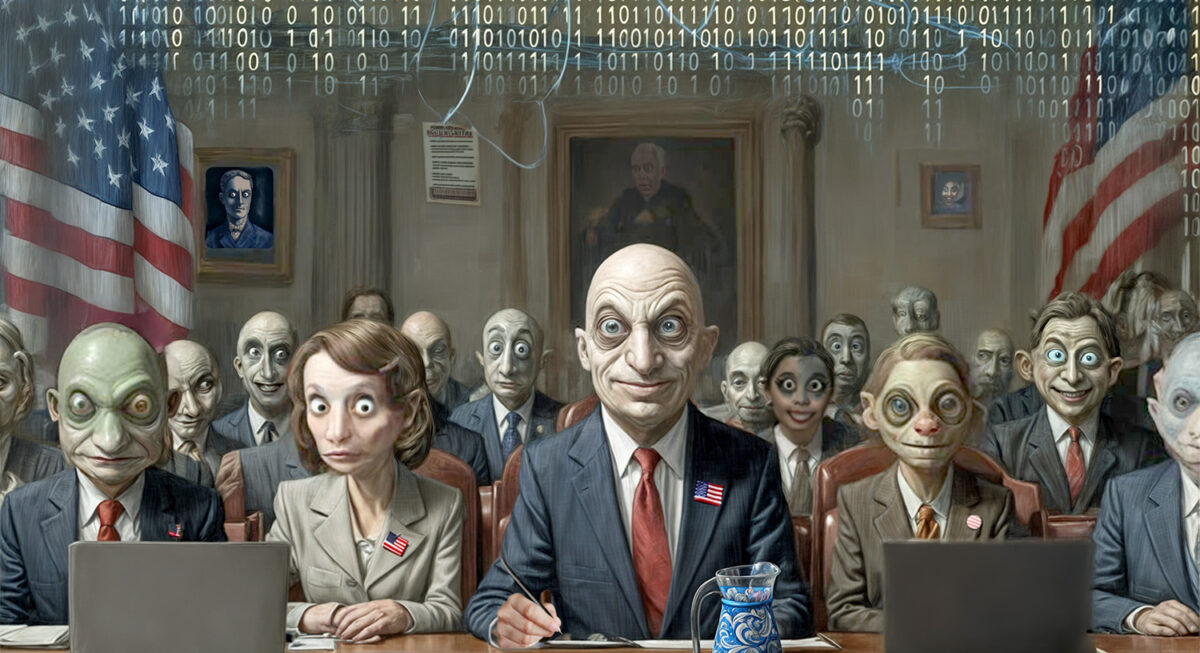
Net neutrality, a scheme to centrally plan the provision of broadband Internet access by private companies, is dead.

At least for now. 

No harebrained scheme is ever definitely dead for sure and forever in politics. Not on this planet.

Net neutrality had been killed before. But last year, Democrats on the FCC in favor of micromanaging how broadband Internet access is priced and how broadband companies may invest their resources revived the misnamed doctrine, a confection of the Obama era.

Fortunately, the Sixth Circuit Court of Appeals has put the kibosh on this recrudescence of out-of-control power-grabbing. The court explicitly noted a recent Supreme Court ruling that deference need no longer be accorded to regulators who make the law say whatever they want it to say.

The Sixth Circuit ruled 3-0 that the FCC had overstepped its authority under the law. 

And it cited the Supreme Court’s 6-3 decision last year in Loper Bright Enterprises v. Raimondo. This was the decision that overturned the Chevron doctrine (according to which judges must defer to bureaucratic misinterpretation and hijacking of law if such hijacking can be somehow construed as “reasonable”).

The Wall Street Journal points out that “ending Chevron will make it harder for regulators to exceed their authority. . . . This is a victory for self-government and the private economy over the willful administrative state.”

That, and the more basic truth that net neutrality is itself an incoherent, unworkable policy, is more than enough reason to celebrate this revenant notion’s reiterated demise.

This is Common Sense. I’m Paul Jacob.


PDF for printing

Illustration created with Flux and Firefly

See all recent commentary
(simplified and organized)
See recent popular posts

Categories
Thought

Charles Ives

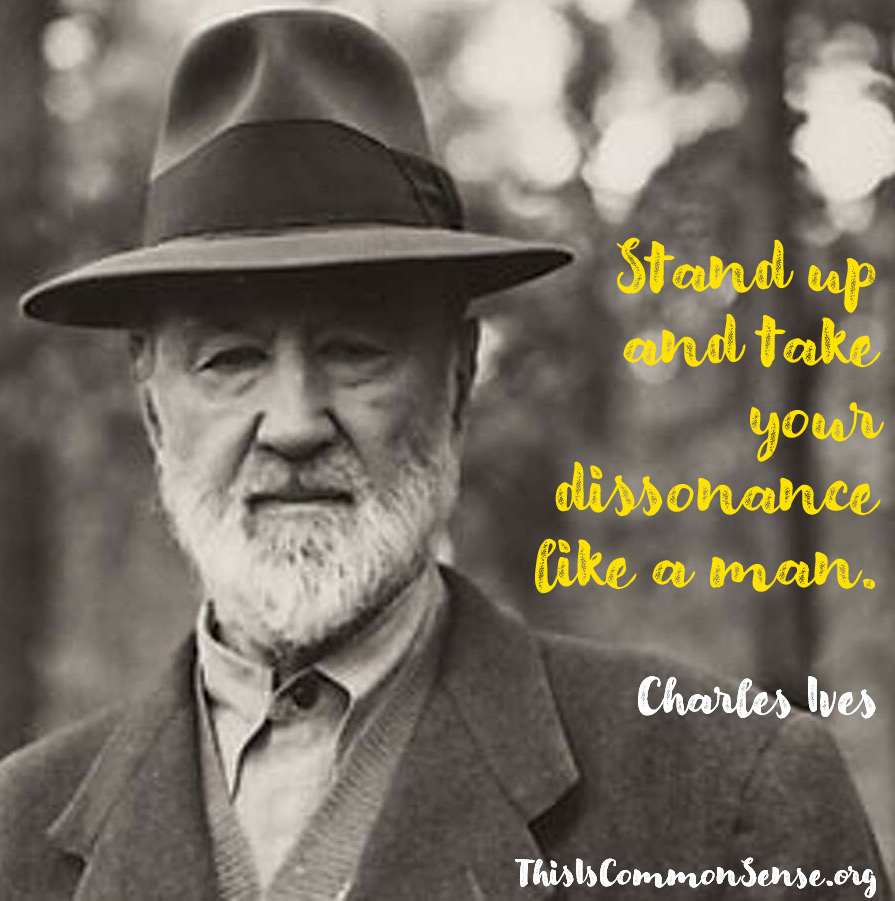
Stand up and take your dissonance like a man.

American composer and insurance innovator Charles Ives, as quoted in “Charles Ives’ Rambunctious ‘Fourth Of July,’ NPR Music (July 3, 2008).

Categories
Today

Religious Freedom

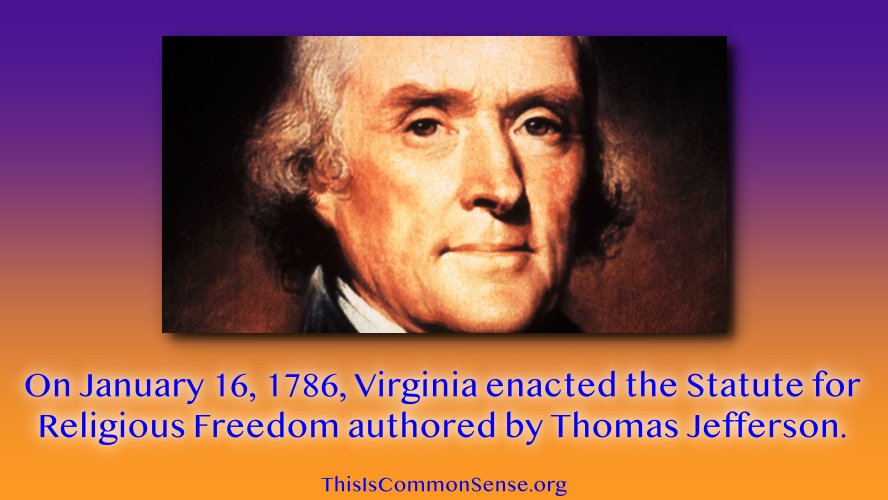
On January 16, 1786, Virginia enacted the Statute for Religious Freedom authored by Thomas Jefferson.

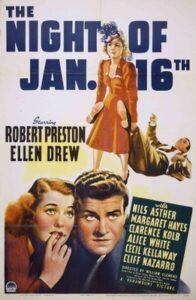
The day is also noted in the title of Ayn Rand’s hit play, Night of January 16th. First performed in 1934 as Woman on Trial, it continued on over the next few years under the title with which it is now famous, and (with the addition of the definite article before “Night”) under which it was filmed in 1941.

Categories
First Amendment rights Internet controversy social media too much government

When Is Censorship Not Censorship?

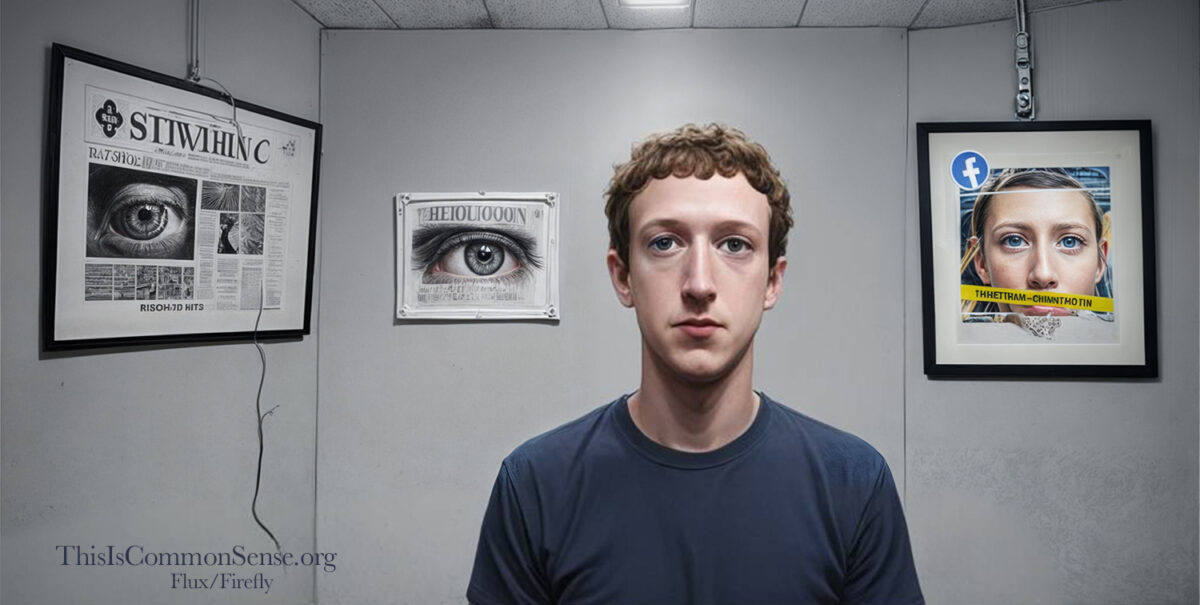
Mark Zuckerberg says Facebook is returning to its free speech roots.

Can we believe him?

While the restrictions on what you can talk about on Facebook are still pretty extensive, Zuckerberg’s outfit, Meta, is apparently ending the reign of “fact-checkers” on Facebook and Instagram, as well as the platforms’ collusion with federal government “fact-checkers.”

On Monday, I discussed the federal government’s screaming fits that led Facebook to ramp up “content moderation,” which I identified with a less euphemistic c-word. But that word choice remains controversial. For example, a “global network of fact-checking organizations,” the International Fact-Checking Network, which includes Agence France Presse, objects to Zuckerberg’s assumption that Meta helped impose censorship.

“This is false, and we want to set the record straight, both for today’s context and for the historical record,” announced IFCN. The Network then “warned of the potentially devastating impact if the group were to end its worldwide programs. . . .”

If censoring in obedience to government demands is not censorship, what could be? The article doesn’t explain. AFP and IFCN are simply saying that they don’t want freedom of speech; it’s dangerous.

Of course, free speech can have costs. 

But censorship does too: suppression of truth and impeding the means of learning truth. 

The article doesn’t report on the costs of suppressing facts about, say, COVID-19, vaccines, U.S. policy, UFOs, or Hunter Biden’s laptop.

AFP and IFCN simply assume that gatekeepers like themselves, with a vested interest in excluding divergent reports and viewpoints, must be allowed to keep excluding differing views and inconvenient facts from the “safe spaces” that apparently include all the very biggest spaces on the Internet.

This is Common Sense. I’m Paul Jacob.


PDF for printing

Illustration created with Flux and Fireflly

See all recent commentary
(simplified and organized)
See recent popular posts