Categories
free trade & free markets national politics & policies too much government U.S. Constitution

The Post Office’s Future?

At some point approaching catastrophe, one has to stop offering googly sounds of uplift and hope, and just speak the truth.

Postmaster General Patrick Donahoe may understand that. The U.S. Post Office, he recently told the National Press Club, is “in a deep financial crisis because we have a business model that is tied to the past.” Deep ties to the past, indeed. Setting up a postal system was written into the Constitution.

Early in the system’s history, postal positions served as rewards to friends of successful politicians. This put a lot of bad apples into the cider; the business soured. Postage skyrocketed.

This sorry situation brought entrepreneurs into the market, delivering letters at a fraction of the government system’s prices. The politicians fought back, took the competitors to court, and won — on dubious Constitutional grounds.

But they did overhaul the system, reducing prices.

That was a long time ago. Today’s situation may be worse. As Donahoe put it, “We are expected to operate like a business but we do not have the flexibility to do so. Our business model is fundamentally inflexible.”

No surprise, Congress is inflexible. But there are competing bills rumbling around to allegedly fix the financial woes of the institution Donahoe calls “a national treasure.”

Well, if it’s a treasure, sell it off: The federal government could use the money. (Though likely not well.)

And the people could use a good privatized mail service. Or two. Or more.

This is Common Sense. I’m Paul Jacob.
Categories
Thought

Thomas Jefferson

“Timid men prefer the calm of despotism to the tempestuous sea of Liberty.”

Categories
Today

Orange Revolution

On Nov. 22, 2004, in what became known as the Orange Revolution, massive protests erupted across the Ukraine after charges that the Nov. 21 presidential run-off election between candidates Viktor Yushchenko and Viktor Yanukovych was rigged by the authorities in favor of the latter. Ultimately, Ukraine’s highest court annulled the election and a new vote reversed the result.

Categories
national politics & policies too much government

The Un-Super Committee

Surprise, surprise — the so-called Super Committee isn’t very super.

It appears that the august micro-body of solons will fail to come to an agreement to reduce the federal deficit by $1.2 trillion over the next ten years, not in any combination of new revenue or spending “cuts” by today’s effective deadline.

On the bright side, given the nature of the likeliest possible agreement this committee would conceive, its failure sounds like the best possible result.

We’re now over $15 trillion in debt, running a deficit of $1.5 trillion this year alone. Still, the Super Committee couldn’t sop up even 80 percent of the red ink they’re spilling just this year. Not even spread out over the decade.

It gets worse. “I think we need to be honest about it,” Kentucky Senator Rand Paul pointed out yesterday on CNN. “Spending is still rising under any of these plans. We’re only cutting proposed increases in spending.”

“The curve of spending in our country is going up at about 7.5 percent a year,” Sen. Paul went on to explain. “If you were to freeze spending for ten years, no cuts . . . they would call that a $9 trillion cut.”

So, as we face a debt crisis, the Super Committee couldn’t even manage to lessen their planned massive increases in spending.

Or talk straight with the American people.

Why? Perhaps because official Washington knows that spending is the real source of their power.

This is Common Sense. I’m Paul Jacob.

Categories
Today

Suffragettes storm Parliment

On Nov. 21, 1911, British suffragettes stormed Parliament in London. Two hundred and twenty women and three men were arrested and received prison sentences.

Categories
Thought

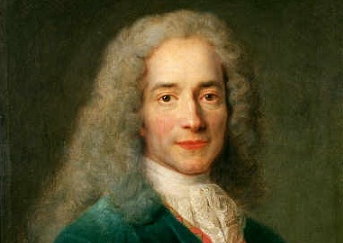
Voltaire

The true character of liberty is independence, maintained by force.

Categories
Thought

Patrick Henry

“Show me that age and country where the rights and liberties of the people were placed on the sole chance of their rulers being good men without a consequent loss of liberty! I say that the loss of that dearest privilege has ever followed, with absolute certainty, every such mad attempt.”

Categories
Today

New Jersey Bill of Rights

On Nov. 20 1789, New Jersey became the first state to ratify the Bill of Rights. New Jersey’s action was followed by the other states making the first 10 amendments to the Constitution the law of the land and completing the revolutionary reforms begun by the Declaration of Independence.

Categories
video

Video: You’re not the boss of me

The first in a series, “Common Sense Principles”:

Categories
Today

Gettysburg Adress

On Nov. 19, 1863, President Abraham Lincoln delivered a 272 word speech to dedicate a military cemetery at Gettysburg, Pennsylvania. His “Gettysburg Address” ended with the hopeful appeal “that government of the people, by the people, for the people, shall not perish from the earth.”