War has ceased to be productive of security, but the masses, whose existence depends upon the industries of production, are compelled to pay its costs and suffer its losses without either receiving compensation or possessing means to end the contradiction. Governments do possess this power, but if the interests of governments ultimately coincide with the interests of the governed they are, in the first instance, opposed to them.
Governments are enterprises — in commercial language, “concerns” — which produce certain services, the chief of which are internal and external security. The directors of these enterprises — the civil and military chiefs and their staffs — are naturally interested in their aggrandizement on account of the material and moral benefits which such aggrandizement secures to themselves. Their home policy is therefore to augment their own functions within the State by arrogating ground properly belonging to other enterprises; abroad they enlarge their domination by a policy of territorial expansion. It is nothing to them if these undertakings do not prove remunerative, since all costs, whether of their services or of their conquests, are borne by the nations which they direct.
Gustave de Molinari, The Society of To-morrow (1899)
Categories
Gustave de Molinari
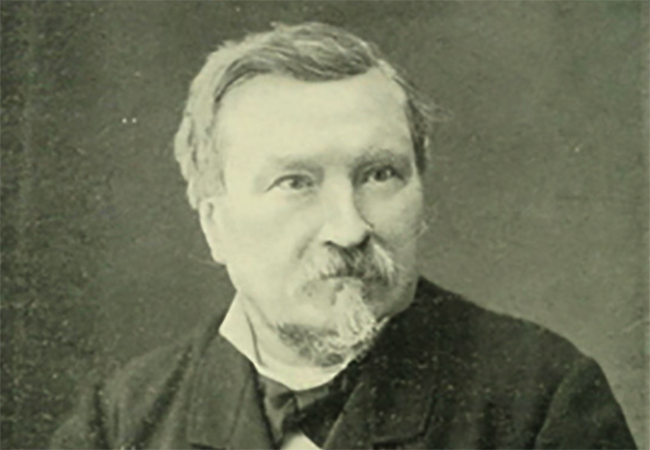


 In this character of the Americans, a love of freedom is the predominating feature which marks and distinguishes the whole: and as an ardent is always a jealous affection, your colonies become suspicious, restive, and untractable, whenever they see the least attempt to wrest from them by force, or shuffle from them by chicane, what they think the only advantage worth living for. This fierce spirit of liberty is stronger in the English colonies probably than in any other people of the earth. . . .
 The first official move towards secession from the British Empire occurs on June 7, 1776, when Richard Henry Lee presents a resolution to the Continental Congress, which is seconded by John Adams.
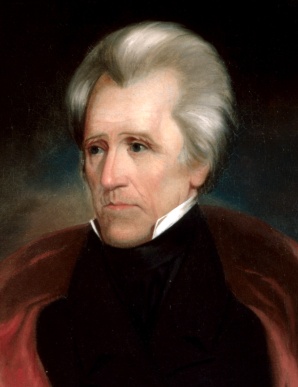 In 1883, Andy Jackson becomes the first U.S. president to ride on a train.
  [E]very individual spontaneously tries to find the place and the trade in which he can best increase National gain, if laws do not prevent him from doing so.
 The problem with socialism is that you eventually run out of other people’s money.
 Harriett Beecher Stowe’s “Uncle Tom’s Cabin” begins its ten-month serialization in the National Era, an abolitionist publication, on this date in 1851.