As scientists spend grant money attempting to bring into modern times the extinct Woolly Mammoth, conscientious citizens should be concerned about a more pressing matter: cloning our few good leaders before they go extinct. Ron Paul in particular.
The mammoth is a hard thing to clone: DNA breaks down over time.
Leadership requires candidates of good character combined with the right ideas.
The ideas are the DNA. Ron Paul’s have been nicely identified by Nassim Taleb as “The Big Four”: opposition to (1) deficits and metastatic government, (2) Federal Reserve flirting with hyperinflation, (3) self-feeding militarism, and (4) bailouts that undermine economic resilience (“what is fragile should break early and not too late”).
Such notions have been available to Americans since the Founding.
But folks with the right character?
That’s more difficult, because each of us is embedded in the institutions we grow up in, and accepting those institutions is natural. This isn’t a problem for leadership to maintain the current system. It is, however, a bit of a snag for producing leaders to help greatly alter the system. The rewards for bucking the system are less immediate than for supporting it.
Ron Paul has been running for the presidency largely to promote real, substantial change. His son, Rand Paul, has taken his ideas and added some successful and politic twists.
There are other, younger leaders emerging in the Ron Paul mode. A few are discussed in the current book, Ron Paul’s Revolution, by Brian Doherty.
But consider: Maybe we don’t want to “send in the clones” — maybe you want to take up the mission. Don’t dismiss the idea out of hand.
Or laugh in a friend’s face if he or she indicates interest, a calling.
This is Common Sense. I’m Paul Jacob.
 [T]he most important change which extensive government control produces is a psychological change, an alteration of the character of the people. This is necessarily a slow affair, a process which extends not over a few years but perhaps one or two generations. The important point is that the political ideals of a people and its attitude toward authority are as much the effect as the cause of the political institutions under which it lives. This means that . . . even a strong tradition of political liberty is no safeguard if the danger is precisely that new institutions and policies will gradually undermine and destroy that spirit.
 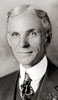 Henry Ford puts his first “quadricycle” through a test run on June 4, 1896. Ford would go on to transform transportation by applying the principles of the assembly line to automobile production, which would transform American life . . . and the world.
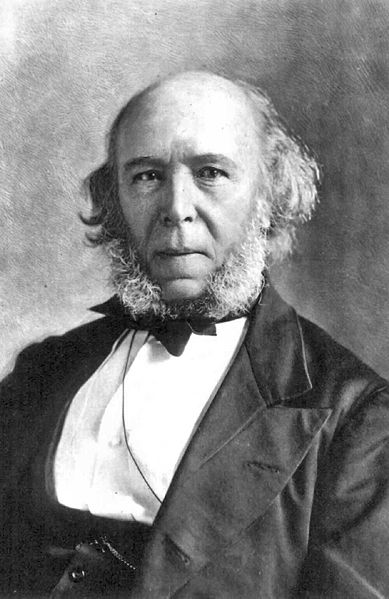 The essential trait in the moral consciousness, is the control of some feeling or feelings by some other feeling or feelings.
 Born on this date in 1821, Edward Livingston Youmans, American science writer and editor. In 1871 he started publication of the International Scientific Series of then-modern classics of scientific literature (published simultaneously first in New York, London, Paris, and Leipzig, later also in St. Petersburg and Milan), and the next year started the magazine Popular Science Monthly. In these and other venues he promoted the work of British philosopher Herbert Spencer, instigating Spencer to write the popular “The Study of Sociology,” and arranging publication of all of Spencer’s books with D. Appleton & Co., as well as many other international authors – with royalties on the sales (which in Spencer’s case reached 132,000 copies by 1890) going to the authors, despite the lack of an international copyright.
 On June 2, 1774, the Quartering Acts were passed by British Parliament, part of a package of punitive acts devised as a response to colonial unrest. The acts did not have the desired effect; they did not quell resistence. Instead, they became known as the “Intolerable Acts,” and helped fuel the fires of secession, leading to the American Revolution.
 The only guarantee of the Bill of Rights which continues to have any force and effect is the one prohibiting quartering troops on citizens in time of peace. All the rest have been disposed of by judicial interpretation and legislative whittling. Probably the worst thing that has happened in America in my time is the decay of confidence in the courts. No one can be sure any more that in a given case they will uphold the plainest mandate of the Constitution. On the contrary, everyone begins to be more or less convinced in advance that they won’t. Judges are chosen not because they know the Constitution and are in favor of it, but precisely because they appear to be against it.