 A person is a person because he recognizes others as persons.
Categories
A person is a person because he recognizes others as persons.
The Dutch have just voted, and Geert Wilders’s Freedom Party took a big hit. The more centrist VVD and Labor parties increased seats, indicating that a solid Dutch majority is resolved to back both “austerity and the recent eurozone bailouts.”
Which, in its own way, is astounding, as another BBC report, on the same day, makes clear. The “fizz seems to have gone right out of the euro project, even here in Maastsricht,” writes Manuela Saragosa for the BBC, quoting one businessman insisting that “We have one Europe with totally different excise duties and taxes in each country. It doesn’t work. . . First work on harmonizing all that and then create a single currency. They did it the wrong way round.”
A common political problem.
But righting something done wrong is not easy.
Just ask Wilders. He was the one who started this political round, when his party gave a vote of no-confidence to the government, necessitating a new election. During the campaign, Wilders repeatedly denounced the heavy burden of the EU bailouts on a hypothetical Dutch couple named Henk and Ingrid. The illustration “backfired when a real-life Henk with a wife called Ingrid attacked and killed an immigrant.”
The Socialist Party also lost seats. Perhaps the party’s leader’s response to the very idea of austerity struck the Dutch as also unworthy: “Over my dead body” to spending cuts is not a very reasonable program for fending off the financial collapse of the Dutch pension and healthcare systems.
This is Common Sense. I’m Paul Jacob.
“Ideas are forces: the existence of one determines our reception of others.”
This is more than just a statement of associationist psychology.
Take the politics of “welfare.” The modern project has placed government at the heart of society, construing its basic mission as that of “rescuing” people who make mistakes or suffer ill fortune. Taking over where self-help, mutual aid, and charity left off — and at the risk of squelching self-help, mutual aid, and charity — government steps in and provides assistance. Often permanent assistance, and within the context of vast bureaucracies and inescapable institutions.
The socialists who most insist on this messianic government seem to be mostly driven by a concern for the poor . . . and a hatred for the rich. (Sometimes both, sometimes just one or the other.) But the Progressives and New Dealers who actually established the institutions of “welfare” didn’t stop with just the poor. Once the Rescue Mission mentality stuck, there was no class that “shouldn’t” receive benefits.
The result? We watch anti-corporate leftists squirm as they defend corporate bailouts.
But not all left-leaning folks buy the whole package. In America and Europe high-level panic led to vast fortunes squandered to bail out banks, etc. But in Iceland, the people let the creditors take their lumps and the banks fail while drastically cutting back on government deficits (though not targeting assistance for the poor).
That is, they behaved more like laissez faire economists than messianic technocrats.
And Iceland’s thriving, bounced back.
Of course, true believers in the awesome powers of government will resist any notion that bailouts aren’t necessary . . . ideas being forces and all.
This is Common Sense. I’m Paul Jacob.
As the campaign for the presidency heats up, we’re going to hear the words “taxes” and “deficit” and “spending” repeated ad nauseam. And this number: $716,000,000,000.
That’s the amount of future Medicare spending that President Obama and the Democrats in Congress (exclusively, without a single Republican vote) cut, slashed, ripped, hacked out of the hands of elderly Americans over the next ten years.
And I thought Democrats loved Medicare, believed in it, wanted to keep it like it is against the bitter schemes of GOP Scrooges!
Now, as Republicans attack the Democrats’ attack on Medicare, Dems have counter-attacked by charging that in his plan GOP VP nominee Paul Ryan cuts Medicare this exact same $716 billion. Ryan explains that his approach simply took the status quo as the baseline, and, sadly, tragically, that includes Obamacare’s nearly trillion dollar malpractice in gutting Medicare funds.
With older citizens constituting a huge voting block, this fall’s election may hinge on this $716 billion being taken from Medicare. Funny thing is, the number is a mirage. Meaningless. Not real. Medicare will not be cut $716 billion. Not really. Instead, it will grow in leaps and bounds over the next decade.
Nothing in Obamacare stops Congress from spending that $716 billion and more in coming years. In fact, they already plan for Medicare spending to grow by far more.
That’s the problem more broadly with the cuts Democrats offer in exchange for higher taxes. The cuts are illusory because the spending continues to grow. Therefore, any tax increases to plug deficit spending would be pouring water into a bucket full of holes.
This is Common Sense. I’m Paul Jacob.
 There is a scale in the meaning of the word socialist. In France it means about the same thing as a communist, when one uses plain language. When one uses the language of Monsieur Drumont, it means a Jew. In England a socialist is equal to a French conservative republican. In America it means a thief. In Germany it means an ingenious individual of restricted financial resources, who generally fails to blow up some important personage with wet dynamite. In Italy a socialist is an anarchist pure and simple, who wishes to destroy everything existing for the sake of dividing a wealth which does not exist at all. It also means a young man who orders a glass of water and a toothpick at a cafe, and is able to talk politics for a considerable time on this slender nourishment.
A living dog is better than a dead lion.
Regulation. It’s a tough job.
Just as regulators think they’ve got it figured out — i.e., this is what folks must do in such-and-such circumstance, and this is what they mustn’t do in such-and-such other circumstance — somebody invents something that makes things way too easy for buyer and seller alike . . . despite all the alternative-strangling regulations.
It’s so frustrating!
This can get out of hand pretty quickly when one industry (say, computer hardware and software and networking) is by historical quirk much freer than another industry (say, New York City taxicabs). You guessed it, this isn’t a hypothetical: A company called Uber has created a smartphone app that lets cabbies and customers find each other more easily. Now Uber is testing its service in New York City.
But — uh oh! — rotten Big Apple taxi regulations prohibit yellow cabs from pre-arranging rides, that is, by methods other than hailing a cab on the street. Cabbies may not use electronic devices, for example. And cabbies usually aren’t allowed to refuse a fare unless another passenger is already sitting pretty and watching the running meter.
Officials say they are “looking at” Uber’s app, and the New York Times reports that both sides are working to “resolve regulatory concerns.” Well, there are only three ways to resolve them:
Solving regulatory problems is so hard!
This is Common Sense. I’m Paul Jacob.
On September 9, 1739, the largest slave uprising in Britain’s mainland North American colonies prior to the American Revolution erupted near Charleston, South Carolina. Jemmy, a literate slave — also called “Cato” — led 20 other enslaved Kongolese men to the Stono River, for which the event is named, the Stono Rebellion. (It is also sometimes called Cato’s Rebellion and Cato’s Conspiracy.) Several confrontations occurred, with less than a hundred deaths all told, before the rebellion was quelled.
The South Carolina legislature passed, as a response, the Negro Act of 1740, which restricted slave assembly, education and movement. It also enacted a 10-year moratorium against importing African slaves, and established penalties against slaveholders’ harsh treatment of slaves. The legislature also began regulating manumission.
It’s the silly season in politics, that special time when politicians pretend they like us better than the special interests that fund their campaigns. They bombard us with bold and expansive promises of their incredible abilities; they pledge their future fidelity to principle. From bitter experience, oft repeated, we know those promises tend to evaporate faster than warm spit on an August sidewalk.
Regardless of what happens in the presidential race or in the pitched battle for control of the U.S. Senate (and possibly even the U.S. House of Representatives), voters will also be deciding 157 ballot issues in 34 states this November. As Grover G. Norquist, president of Americans for Tax Reform, once quipped, “One big difference between initiatives and elected representatives is that initiatives do not change their minds once you vote them in.”
Here are this year’s top ten ballot measures most critical to … [read the rest of the column on Townhall]
NOTE: For a run-down off all 157 ballot issues in 34 states, consult Ballotpedia.
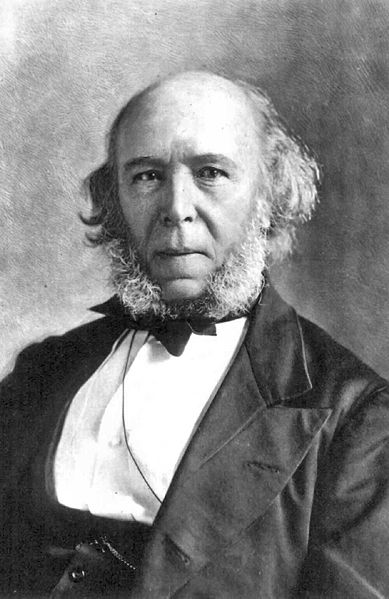 The ultimate result of shielding men from the effects of folly, is to fill the world with fools.