Muncie’s Traci Markcum remembers when the news was free. The Indiana citizen wants a return to those carefree days.
“I think it is pretty bad The Star Press is trying to charge people to read the paper online,” she wrote in a letter to the editor. “Whatever happened to being able to see the news on the Web for free?”
Free? Well, you can find plenty of news on the internet for free, sorta, once you’ve bought a computer and Internet access — and paid the electric bill, of course. In the really olden days, before cable TV, network news was free once you had a TV set. (Why computer and television manufacturers, internet providers and electric companies dare to charge us money, when we’re simply being good citizens and keeping up on current affairs, I’ll never know.)
Ms. Markcum “used to buy the Sunday paper and would read the news at work or on the go on [her] phone, but not now.” Not now, because The Star Press has “stooped to a new low by having to charge Muncie citizens who live and work in the city a fee to read something. Your paper prices have increased and people cannot afford to get the paper.”
In fact, Markcum became so desperate, she asked, “Are we supposed to start stealing the news you are supposed to be providing?”
Paperboys beware!
“Go back to the way it used to be, or lose a lot more customers,” she concluded.
Customers? A customer “purchases a commodity or service.”
For its part, The Star Press tells online visitors to “Enjoy a limited number of articles over the next 30 days” offering a button to “Subscribe today for full access.”
Oh, the humanity!
This is Common Sense. I’m Paul Jacob.
 How can protection, think you, add to the wealth of a country? Can you by legislation add one farthing to the wealth of the country? You may, by legislation, in one evening, destroy the fruits and accumulation of a century of labour; but I defy you to show me how, by the legislation of this House, you can add one farthing to the wealth of the country. That springs from the industry and intelligence; you cannot do better than leave it to its own instincts. If you attempt by legislation to give any direction to trade or industry, it is a thousand to one that you are doing wrong; and if you happen to be right, it is work of supererogation, for the parties for whom you legislate would go right without you, and better than with you.
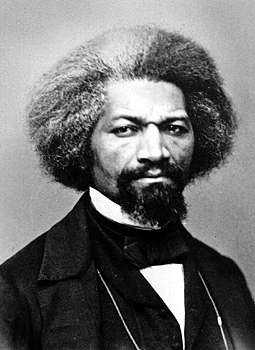 I didn’t know I was a slave until I found out I couldn’t do the things I wanted.
 I am credited with being one of the hardest workers and perhaps I am, if thought is the equivalent of labour, for I have devoted to it almost all of my waking hours. But if work is interpreted to be a definite performance in a specified time according to a rigid rule, then I may be the worst of idlers. Every effort under compulsion demands a sacrifice of life-energy. I never paid such a price. On the contrary, I have thrived on my thoughts.
 Nobody would work for starvation wages if he were not in a situation in which he preferred such wages to not working at all.
 If you are neutral in situations of injustice, you have chosen the side of the oppressor. If an elephant has its foot on the tail of a mouse and you say that you are neutral, the mouse will not appreciate your neutrality.