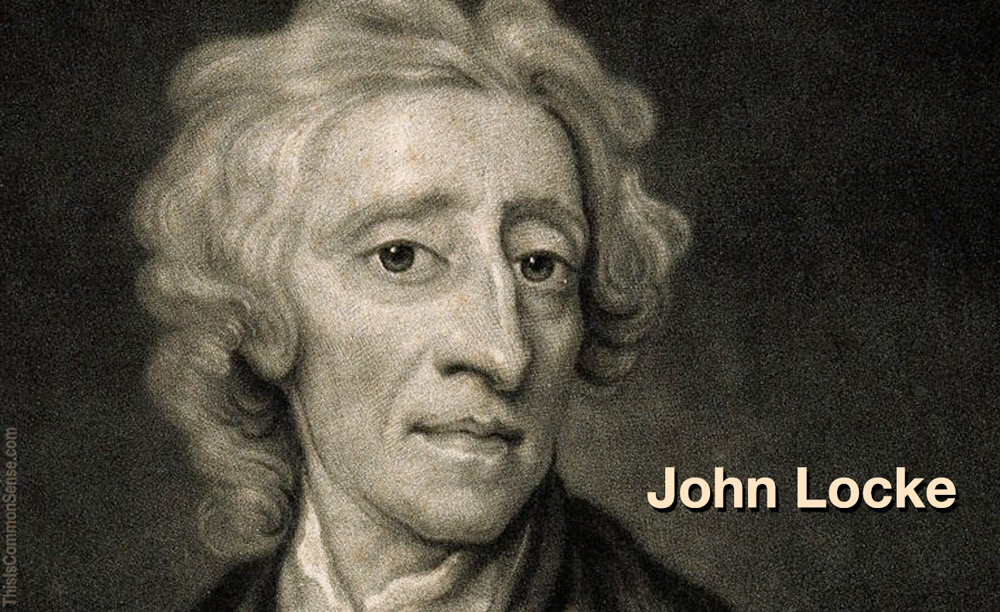
A free people [claim] their rights, as derived from the laws of nature, and not as the gift of their chief magistrate
Author: Redactor
This weekend’s Common Sense Townhall.com column goes deep into our nation’s capital, where the city council mimics the folly of Congress, passing legislation that cannot possibly have the results council members say they hope for. Click on over, and come back here for more reading:
- “D.C. Council approves ‘living wage’ bill over Wal-Mart ultimatum,” Washington Post
- “Action on D.C. ‘living wage’ bill puts Wal-Mart plans in doubt,” Washington Post
- “‘Living wage’ impact could stretch beyond Wal-Mart, D.C. deputy mayor warns,” Washington Post
- “Barack Obama and the Teachable Wage,” Townhall.com, Paul Jacob
- “Marion Barry censured, fined for accepting gifts from contractors,” Washington Post
- “‘Fully loaded’ SUV puts D.C. Council Chairman Kwame Brown on the spot,” Washington Post
- “D.C. Councilman Harry Thomas Jr. is charged with theft,” Washington Post
- DC Government “In the Money,” Common Sense, Paul Jacob
- Corruption in Taxi Regulation: “A Regulatory Assault Taxis Into Law,” Common Sense, Paul Jacob
- Early last week: “D.C. Protectionism,” Common Sense, Paul Jacob
- Wal-Mart Stores, Inc. Corporate page
- Washington, D.C., City Council page
Henry David Thoreau
We do not live for idle amusement. I would not run round a corner to see the world blow up.
The organization setting up the “health care exchange” in Oregon is spending a lot of money on advertising, to help make Obamacare more palatable to skeptics in the Beaver State . . . or at least help proponents feel better about it.
http://youtu.be/xVUJNEDpEkg
Does this song do anything for you?
For more background, consult Northwest Watchdog.
Three hundred seventy-eight years of service — that’s a long time. And yet, after that epoch, Great Britain’s Royal Mail is headed for privatization. Times have changed.
News stories can’t help but mention that this is the biggest British privatization move since the unloading of British Rail back in Margaret Thatcher’s day.
Privatization details are notoriously hard to get right. It’s not obvious what to do. But the details are important. And so is the necessity for the privatization: the mail service has shown a profit in recent years, but is prevented from further profitable avenues by capital limitations.
Only as a private company can Royal Mail avail itself of private capital markets.
Were Congress to completely untether the U.S. Postal Service in similar fashion, there would still be the live issue of protection: several classes of mail are still only allowed to the USPS. But the Royal Mail lost its monopoly back in 2006, in part to comply with EU rules. The legislation enabling its privatization was passed two years ago.
The details?
The plan is to give mail employees “10 percent of shares as part of a stock market flotation” in what Business Secretary Vince Cable swears is “the biggest employee share scheme for nearly 30 years.” Might nice — almost as generous as the Oregon owner of Bob’s Red Mill, who gave his company to his employees. It has to “go to someone,” right?
But even with Royal Mail workers being handed a 10 percent stake in the soon-to-be private enterprise, the union for the currently government workers is adamantly opposed to the move.
Who’s surprised?
This is Common Sense. I’m Paul Jacob.
Henry David Thoreau
Read not the Times. Read the Eternities. Conventionalities are at length as bad as impurities. Even the facts of science may dust the mind by their dryness, unless they are in a sense effaced each morning, or rather rendered fertile by the dews of fresh and living truth. Knowledge does not come to us by details, but in flashes of light from heaven.
A national park on the Moon seems like lunacy.
The news that Reps. Donna Edwards (D-MD) and Eddie Bernice Johnson (D-TX) had introduced a bill, H.R. 2617, to create a National Historic Park at the Apollo landing sites immediately turned up on RedEye and similar sardonic news programs, no doubt, because the wording of the bill does not choose “Monument” but “Park.” And a park is something we drive to, park and visit.
At present, visiting the Moon isn’t a live option for anyone, much less a bookable destination for bus tourists, motorists, and motorcycle gangs.
And yet, let’s not roll on the floor, or even LOL: the bill’s fifth “whereas” has a point:
[A]s commercial enterprises and foreign nations acquire the ability to land on the Moon it is necessary to protect the Apollo lunar landing sites for posterity. . . .
A plausible case could be made for this, and congratulations to the legislators for thinking ahead!
But an even more common-sensible case could be made for the opposite policy, allowing private businesses to reclaim the sites for their own benefit, to promote more tourism. Let them preserve the historic sites on their nickel, rather than on the taxpayers’.
Besides, one could look at those landing sites as containing the detritus of previous holiday excursions. Whereas, (a) leaving litter behind on the beach doesn’t make the beach yours; or (b) discarding one’s car on the freeway for a week constitutes abandonment — just so, Apollo’s lunar sites and debris aren’t really U.S. government property any longer.
The abandoned artifacts are junk. Let them belong to the first enterprises that prove otherwise.
This is Common Sense. I’m Paul Jacob.
Henry David Thoreau
Do we call this the land of the free? What is it to be free from King George and continue the slaves of King Prejudice? What is it to be born free and not to live free? What is the value of any political freedom, but as a means to moral freedom? Is it a freedom to be slaves, or a freedom to be free, of which we boast? We are a nation of politicians, concerned about the outmost defences only of freedom. It is our children’s children who may perchance be really free.
Henry David Thoreau
Where there is a lull of truth, an institution springs up. But the truth blows right on over it, nevertheless, and at length blows it down.
It turns out it’s not so easy to buy Afghani politicians.
You might think they’d come cheaper than American pols, but you might be wrong.
Seems the most you can “buy” is access to a politician. The very quiddity of a politician, the difference that makes a difference, is the politician’s ability to change his mind. That precludes out-and-out purchase. It’s more like what Dick Armey called it: renting.
The United States taxpayer has poured nearly two-thirds of a trillion dollars into the Afghanistan war, and there’s also $10 billion in official annual aid and who knows how many “millions of dollars in monthly payments delivered in suitcases, backpacks and plastic shopping bags” by the CIA in hopes of securing the election and continued cooperation of the Karzai government.
But that cooperation didn’t last. It didn’t buy the U.S. permanent immunity status — apparently Obama administration higher ups wanted permanent war status in Afghanistan, protected from negative fallout like court suits.
The CIA-supplied suitcases of U.S. taxpayer money had a special name in the Karzai inner circle: Ghost money. What came in secret left in secret.
That’s why the “bought” — er, “rented” — don’t stay on the take for long. Why should they? What money? What payment?
You mean ghost money?
We don’t see no ghosts.
Sadly, there appears to be a lot of truth to the quip of one American official, quoted in the New York Times: “The biggest source of corruption in Afghanistan was the United States.”
On the bright side, this may mean that American forces will be withdrawn, perhaps even in toto, within the year.
This is Common Sense. I’m Paul Jacob.