[T]o destroy an error is to build up the truth that stands opposed to it.
Categories
Frédéric Bastiat
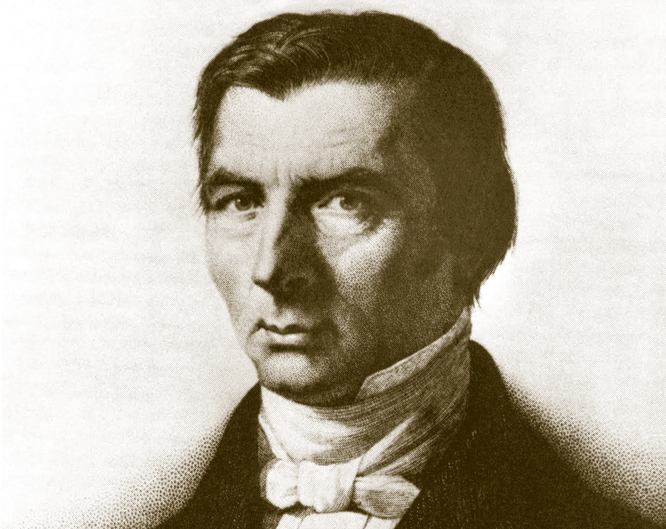
[T]o destroy an error is to build up the truth that stands opposed to it.
The United States Supreme Court has accepted a legal petition presented in an unusual manner: in handwritten form, without the benefit of any lawyer.
The case comes from a convict in the Arkansas State prison system, one Gregory Holt, “aka Abdul Malik Muhammad,” who wants to wear a beard while incarcerated, in accordance with his religion. The prison rules prohibit beards on hygiene and security grounds. Muhammad’s case is interesting. Questions include (and I quote)
How will the Supreme Court rule? On the face of it (no beard pun intended), prisoners’ appeals for court intervention in how they are incarcerated, on the basis of their rights, may seem odd to some. After all, the whole point of imprisonment is to deny the most basic right to liberty, because, presumably, a criminal has denied someone else’s rights.
But in our society, even those guilty of serious crimes and having lost much of their freedom retain certain rights. This stems mostly from our fear of what becomes of us — not the criminals — should we stop respecting every person’s humanity.
It’s also heartening to see a petition rise to the highest court in the land from the very lowest perch without aid of a lawyer … or even a computer or typewriter.
This is Common Sense. I’m Paul Jacob.
The results are in: Actor Philip Seymour Hoffman died from acute mixed drug intoxication. He had combined heroin with benzodiazepines. That combination did him in.
It wasn’t a “heroin overdose” as such.
Indeed, according to Jacob Sullum writing at reason.com,
Drug combinations like this are typical of deaths attributed to heroin or other narcotics. Data from the Drug Abuse Warning Network (DAWN) indicate that “multi-drug deaths” accounted for most fatalities involving opiates or opioids in 2010: 72 percent in suburban New York, 83 percent in Los Angeles, and 56 percent in Chicago, for example. Back in the early 1990s, the share of heroin-related deaths reported by DAWN that involved other drugs was even higher, 90 percent or more.
We hear about “overdoses” of illegal drugs for the simple reason that this plays into the hands of those who run the War on Drugs. It’s an inconvenient truth, for them, that the most deadly problem with most narcotics (illegal or prescription-legal) is with what other drugs (illegal or prescription-legal or over-the-counter) they interact.
One might argue that drug warriors, by focusing on targeted illegal drugs, are killing Americans by distracting us from the biggest danger, mixing drugs.
This over-focus on a hated thing to the detriment of good diagnosis is not limited to pharmacology.
Consider economic policy. I know many people who blame the 2008 financial implosion (as well as its lingering effects, even) entirely on the 1990s (bipartisan) repeal of the Glass-Steagall Act. They focus on one bit of deregulation. Other enforced regulations leading to the debacle, not to mention Federal Reserve inflationism, housing market subsidies, anti-discrimination programs, and a whole mortgage after-market created by government creatures, Fannie and Freddie?
Blankout.
This is Common Sense. I’m Paul Jacob.
Among the new arrangements that feeble mortals are invited to make trial of, there is one that is presented to us in terms worthy of attention. Its formula is: Association, voluntary and progressive.
Van Jones, the president’s controversial former green jobs czar, must have been struck by lightning yesterday en route to taping ABC’s “This Week with George Stephanopoulos.”
Discussing President Obama’s new “My Brother’s Keeper” program to “build pathways to success” for at-risk “children of color,” Van Jones embraced a notion of corporate personhood far beyond anything previously expressed . . . well, by anyone.
First, Jones advanced the new Obama initiative as just another bailout: “Listen, everybody else . . . got in trouble in America. Wall Street got in trouble; we were there for them. The auto industry got in trouble; we were there for the auto industry. You got a whole generation of young kids who are clearly in trouble.”
A bailout isn’t a dad, though.
And functioning fathers are “essential,” argued Manhattan Institute scholar Heather MacDonald. Noting that fatherless kids are 20 times more likely to go to prison and nine times more likely to drop out of school, she applauded the president’s statement that “nothing keeps a young man out of trouble like a father who takes an active role in his son’s life.”
MacDonald also highlighted that a whopping 73 percent of black children are now born to single mothers, and that three decades of social programs “haven’t made much difference.”
“Do you think you need anybody to tell us how terrible this is?” Van Jones, who is black, pointedly asked Mac Donald. “We work on it every day. We need corporate America to step up.”
Jones wants corporations to be fathers to our children? That’s taking personhood for corporations too far.
And asking too little of men.
This is Common Sense. I’m Paul Jacob.
 Rousseau’s SOCIAL CONTRACT … appears to me well fitted to exhibit the characteristics of these artificial social organizations. The inventors of such systems set out with the idea that society is a state contrary to nature, and they seek to subject humanity to different combinations. They forget that its motive power, its spring of action, is in itself. They regard men as base materials, and aspire to impart to them movement and will, sentiment and life; placing themselves at an immeasurable height above the whole human race. These are features common to all the inventors of social organizations. The inventions are different—the inventors are alike.
The Sacramento stadium subsidy scandal, touched upon on Thursday, should be a bigger story in the news and with the commentariat. So click on over to Townhall, and share. Then come back here for some more reading:
This weekend’s Townhall column is, of course, an expansion of Thursday’s Common Sense. There was one small error in that outing, so the column sets the record straight.
Finally, on the matter of the immorality of subsidy, where to begin? Probably with “The Law” by Frédéric Bastiat. There are many inexpensive editions about, and, on the Net, many free sources as well. For the past few weeks This is Common Sense has included a lot of “Thoughts,” to the right of each daily post, that are from Bastiat. Those will likely continue for at least another week. He was a great writer.
The term Bastiat used for what is happening in Sacramento, and which forms the basis for many a politician’s “ideology,” is LEGAL PLUNDER.
A fascinating ReasonTV interview:
“A co-founder of Greenpeace told a Senate panel on Tuesday that there is no scientific evidence to back claims that humans are the ‘dominant cause’ of climate change,” the Washington Times reported yesterday.
But what about that grand consensus — “97 percent” — of scientists saying the exact opposite?
Well, economist and legal theoretician David D. Friedman wrote, this week, that one of the most famous citations about the climate change consensus is the result of some, uh, data fudging.
Friedman chased down the origin of that infamous and oft-repeated 97 percent figure through three papers, all available online. Despite the high tone of certainty, the scientists who collated information from surveys of other scientists did not find that “over 97% endorsed the view that the Earth is warming up and human emissions of greenhouse gases are the main cause.” At best, a huge cohort of these scientists agreed that humans merely contributed to global warming. Very different.
Friedman concluded that the main author responsible for the strong interpretation of weak findings, John Cook, told “a deliberate lie.”
This scientist’s misrepresentation of “the result of his own research” doesn’t prove that Anthropogenic Global Warming is true or untrue, of course. But it does suggest that the “consensus” so much talked about is shaky indeed.
I began the week talking about our reliance upon experts to gather, analyze and report on information honestly and reliably.
And how horrible it is when they let us down.
The climate change we need is in the culture of academic responsibility.
This is Common Sense. I’m Paul Jacob.
Estonian physicist, politician, and analyst of democracy, Rein Taagepera, was born on February 28, 1933. He is the author of “Predicting Party Sizes: The Logic of Simple Electoral Systems.”