Categories
Thought

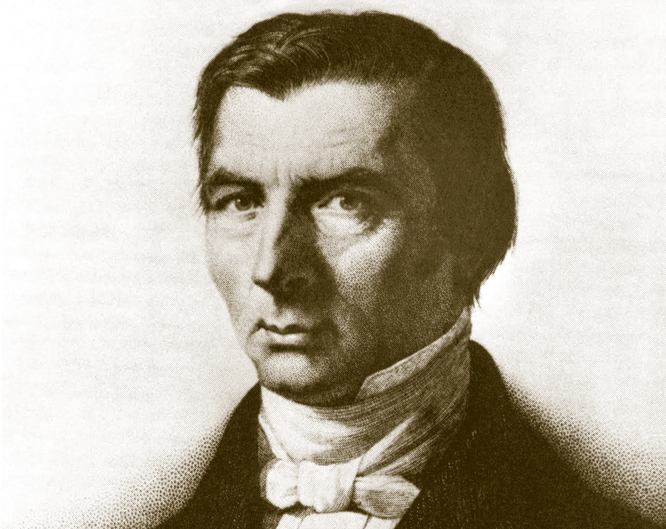
Frédéric Bastiat

Force . . . is what the organizers need who would subject humanity to their experiments. When they shall have gained over to their cause the Russian autocrat, the shah of Persia, the khan of Tartary, and all the other tyrants of the world, they will find that they still lack the power to distribute mankind into groups and classes, and to annihilate the general laws of property, exchange, inheritance, and family; for even in Russia, in Persia, and in Tartary, it is necessary to a certain extent to consult the feelings, habits, and prejudices of the people.

Categories
ballot access free trade & free markets insider corruption too much government

King Kevin and Company

Oh, how the other half lives!

And lies.

By “other half,” I don’t mean “the wealthy.” They’re as honest as any other group. No, I’m talking about those with their hands on the levers of government power . . . along with their subsidy-seeking cronies.

Mayor Kevin Johnson, an all-star in the National Basketball Association before becoming a politician, is splurging nearly $300 million tax dollars — roughly the city’s entire yearly budget — to build the owners of the NBA’s Sacramento Kings a brand new arena.

People objected, with 23,000 citizens signing petitions to put this lavish subsidy to a vote. Yesterday, a judge ruled that the measure would be kept off the ballot: errors in the wording of the petition “disqualified” it.

In a prepared sore-winner statement, Mayor Johnson called the petitioners “outsiders” who “have tried to undermine the right of Sacramento to control the destiny of our Kings, our downtown and our future.”

Johnson doesn’t mean the right “of the people” to control. He means his right to dictate for Sacramento even against the will of the majority.

The leader of one group working against a public vote on the arena giveaway attacked local businessman Chris Rufer, charging that “Rufer’s funding . . . is supporting STOP’s effort to steal 4,000 jobs, steal a once-in-a-generation opportunity to transform downtown and makes him an accomplice in Seattle’s attempt to steal the Kings.”

Who’s stealing? Those spending their own money so people can vote? Or those blocking a vote so they can spend other people’s money?

“I’m against subsidy, period. It’s simply a moral argument,” Rufer explains. “If it was a subsidy for a fish pond, I’d be against it.”

This is Common Sense. I’m Paul Jacob.

Categories
Thought

Frédéric Bastiat

The social mechanism . . . must be very ingenious and very powerful, since it leads to this singular result, that each man, even he whose lot is cast in the humblest condition, has more enjoyment in one day than he could himself produce in many ages.

Categories
Today

Reichstag burns, 22nd Amendment ratified for prez term limits

On Feb. 27, 1933, Germany’s parliament building in Berlin, the Reichstag, was set on fire. The event was pivotal in the establishment of Nazi Germany, as the Nazis used the fire as evidence that the Communists were plotting against the German government, and promptly suspended civil liberties and arrested Communists in mass, including members of the parliament, leading to a gain in seats for the National Socialists.

On Feb. 27, 1951, the Twenty-second Amendment to the U.S. Constitution, limiting Presidents to two terms, was ratified.

Categories
Today

First World Trade Tower bombing (’93), Herbert Henry Dow born in 1866

On Feb. 26, 1993, a truck bomb parked below the North Tower of the World Trade Center in New York City was detonated, killing six and injuring over a thousand people.

On Feb. 26, 1866, Herbert Henry Dow was born in Canada. He was a prolific inventor and a successful businessman, who founded the Dow Chemical Company in 1897.

Categories
Today

22nd Amendment

The Twenty-second Amendment to the United States Constitution, limiting Presidents to two terms, was ratified on February 27, 1951.

February 27 marks the Dominican Republic’s Independence Day.

Categories
Thought

Frédéric Bastiat

The economists do not say that a man may kill, sack, burn, and that society has only to be quiescent — laissez faire. They say that even in the absence of all law, society would resist such acts; and that consequently such resistance is a general law of humanity. They say that civil and penal laws must regulate, and not counteract, those general laws the existence of which they presuppose. There is a wide difference between a social organization founded on the general laws of human nature, and an artificial organization, invented, imagined — that takes no account of these laws, or repudiates and despises them — such an organization, in short, as many modern schools would impose upon us.

Categories
incumbents

A Dingell of a Century

Let’s celebrate longevity. But should we specifically cheer one solitary person holding a seat of power for 60 years? Or rejoice over a single family maintaining a vise grip on a political position for a whopping 81 cycles around the Sun?

And . . . should that federal office continue to be filled by hereditary succession via the advantages of incumbency?

For 100 years? More?

Rep. John Dingell (D-Mich.), 87, just announced his retirement after occupying a congressional perch for 59 years, the longest in history. He won a special election back in 1955, when the seat’s previous occupant, his father, passed away.

This “master legislator,” as an always-objective Washington Post news story called him, stated he was leaving because Congress had become “obnoxious.”

Trust me, we feel your pain, Mr. Dingell.

The Natural Resources Defense Council’s David Goldston told the New York Times that the “truly distressing thing” about Dingell and several multi-decade career politicians departing Congress “is that they’re the ones who know how to negotiate, know how to legislate, know how to get things done.”

Really? Then, why didn’t he help prevent the nation from sinking 5,600 percent deeper into debt, from $318 billion to almost $18 trillion during those last six decades?

Deadline Detroit notes that in response to praise from “fellow politicians, friends and media outlets . . . online commentators are having a field day ripping Dingell, his legacy, and even his wife, Debbie, who is widely expected to replace him.”

It turns out that Mrs. Dingell, occupation lobbyist, has indeed officially announced she will run for her husband’s seat, obnoxious as it no doubt is.

Can America survive a century of rule by Dingells?

This is Common Sense. I’m Paul Jacob.
Categories
insider corruption media and media people

Guerrilla Video Strikes Again

Even as many in mainstream media repeatedly insist that there’s nothing to see here, so let’s move on, cheeky activists like James O’Keefe continue to use new technologies to expose dubious doings (and worse) on the political left.

O’Keefe first earned notoriety by recording employees of Planned Parenthood seeming to endorse a racist agenda, and, later, ACORN workers seeming to endorse a criminal one. Planned Parenthood didn’t suffer much of a cost from the ensuing controversies. But ACORN lost congressional funding and eventually shut its doors.

Not entirely, however. Some elements of the organization continued under different guise. O’Keefe’s Project Veritas recently recorded admissions by a field organizer, Jennifer Longoria, for Battleground Texas (BT), an ACORN successor outfit. According to Longoria, BT routinely scrapes voter information from voter registration rolls on behalf of the gubernatorial campaign of Democrat Wendy Davis.

Longoria confesses the chicanery even though BT staff have been warned not to fall prey to O’Keefe-style inquiries about values and practices.

“[E]very time we register somebody to vote, we keep their name, number. . . .”

“And that’s from the voter registration form?” asks an O’Keefe associate.

“Right, from the form. That data collection is the key.”

The Texas Secretary of State makes clear that voter registrars are prohibited from copying telephone numbers from registration forms. It’s against the law.

A “news gathering” outfit like the Texas Tribune may downplay the revelations, but the cat’s out of the bag. As they say, data collection — and distribution — is the key.

This is Common Sense. I’m Paul Jacob.

Categories
Thought

Frédéric Bastiat

In the economy, an act, a habit, an institution, a law, gives birth not only to an effect, but to a series of effects. Of these effects, the first only is immediate; it manifests itself simultaneously with its cause—it is seen. The others unfold in succession—they are not seen: it is well for us if they are foreseen. Between a good and a bad economist this constitutes the whole difference—the one takes account of the visible effect; the other takes account both of the effects which are seen and also of those which it is necessary to foresee.