In Law #46 of February 25, 1947, the Allied Control Council formally proclaimed the dissolution of Prussia.
Categories
A professor in the John Hopkins University School of Nursing published, a decade ago, an alleged statistical finding of a rather shocking nature: “the leading cause of death in the United States among African American women aged 15 to 45 years,” she and her colleagues wrote, was “femicide, the homicide of women,” clarified as “intimate partner violence.” Domestic homicide.
Attorney General Eric Holder passed along the statistic. It got a lot of attention. You’ll find the claim on government websites and on YouTube.
Thankfully, it is not true.
Christina Hoff Sommers first blew the lid off the bad statistic in 2011. More recently, writes Wendy McElroy at Reason,
the Washington Post fact checker, Glenn Kessler investigated Holder’s statement and published his results. Kessler wrote that CDC “data show that, for the year 2008 (the year before Holder’s speeches), cancer, heart disease, unintentional injury and HIV/AIDS all topped homicide. Then if you break out intimate-partner homicide, that ends up being seventh or eighth on the list (depending on whether you also include all homicides.)” As a basis of comparison, in 2008, cancer killed 1,871 black females; heart disease, 1,629; all homicides, 326.
You can see the motive to up the numbers. One instance of domestic violence ending in death is horrific, but thousands would carry more political weight.
Wendy McElroy, upon whose reportage I am entirely and confidently reliant, asks if the truth would have the “same media appeal as sensationalized falsehoods.” She concludes, sadly, with “Perhaps the media can be shamed into valuing the truth.”
We depend upon the honesty and good will of our fellow citizens — scientists, journalists, bureaucrats and politicians the most. Inaccuracies are bad; lies are worse. The truth can set us free. But falsehood is mainly useful to hoodwink us.
This is Common Sense. I’m Paul Jacob.
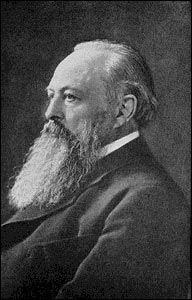 After the fourth century the declarations against slavery are earnest and continual. And in a theological but yet pregnant sense, divines of the second century insist on liberty, and divines of the fourth century on equality. There was one essential and inevitable transformation in politics. Popular governments had existed, and also mixed and federal governments, but there had been no limited government, no State the circumference of whose authority had been defined by a force external to its own.
On February 24 1803, the Supreme Court, in Marbury v. Madison, established the principle of judicial review.
February 14 marks Estonia’s Declaration of Independence, in 1918.
On February 23, 1898, Émile Zola was imprisoned in France after writing “J’accuse,” a letter accusing the French government of anti-Semitism and wrongfully imprisoning Captain Alfred Dreyfus.
Fifty-eight years earlier, Austrian economist Carl Menger was born.
Menger would go on to contribute to the development of the theory of marginal utility, which supplanted cost-of-production theories of value in economics, in his first book, translated into English as “Principles of Economics.” Though expert in mathematics (he served as tutor in economics and statistics to Archduke Rudolf von Habsburg, the Crown Prince of Austria not long after the publication of the Principles), his approach to marginal theory was the least mathematical of his famous “co-discovers” of the principle, William Stanley Jevons and Leon Walras. Rooted in a subjective theory of value, it was the most realistic and least model-based of the marginalist revolutionaries, and he was most interested in price formation, not “price determination,” which focused almost exclusively on equilibrium conditions. He developed an evolutionary theory of money, as well.
Menger’s second book was a defense of a particular kind of general theory in social science, and an explanation of the importance of “invisible hand” processes in the social world. The first theme caused a firestorm of debate in the German-speaking world, where “socialists of the chair” and other opponents of laissez faire went ballistic regarding the possibility of permanence of finding laws in the social world that were not of their own constructing. The second theme developed ideas found in Adam Smith, and extended them.
Menger inspired two major followers, Friedrich Freiherr von Wieser and Eugen von Böhm-Bawerk. The former named “marginal utility” and developed the first rigorous view of cost as opportunities foregone; the second advanced a time-preference theory of interest and theory of the structure of production. Later followers of this “Austrian School” included Ludwig von Mises and F.A. Hayek.
Government is very efficient at taking from some and giving to others. So, no wonder that when politicians aim to create a better “business environment,” they hurt most businesses in the process. Standard operating procedure.
This weekend’s columnar outing for Common Sense is over at Townhall. Go there. Read. Come back. Read more:
And do a little viewing:
 A right, such as a right to free speech, imposes no obligation on another, except that of non-interference. The so-called right to health care, food or housing, whether a person can afford it or not, is something entirely different; it does impose an obligation on another. If one person has a right to something he didn’t produce, simultaneously and of necessity it means that some other person does not have right to something he did produce. That’s because, since there’s no Santa Claus or Tooth Fairy, in order for government to give one American a dollar, it must, through intimidation, threats and coercion, confiscate that dollar from some other American.
Scary, funny, incoherent, dumb, foolish, and a very, very bad idea.
There is an argument for taxing the poor. Net beneficiaries of taxation can think about government in a different way than net payers. They might begin to think like children, not like adult supporters of a shared enterprise in defense of the basic institutional framework that in turn supports civilization.
If Americans still took seriously the old republican idea of “no taxation without representation,” some might scandalously invert the mantra as “no franchise without net tax payment,” thus excluding all net tax consumers (politicians, subsidized poor and subsidized business folk) from voting. But that does seem outrageous.
It’s also unworkable. At some point of complexity, calculating net winners and net losers becomes impossible.
Democrats have happily added to that complexity. One odd wrinkle? They’ve so indiscriminately increased the number of taxes in Obamacare (twenty-one!) that they have seemingly taken up the cause of taxing the poor. “Even the lowest income families (earning less than about $19,000 in 2012) will be on the hook,” writes Chris Connover in Forbes, “for nearly $7,000 in Obamacare taxes over the decade that started last year.”
Of course, the poor aren’t the only to pay more under Obamacare. Connover estimates that those in the “top 2 percent” will “end up paying $177,000 over the same decade.”
None of this suggests to me that the net effect of Obamacare will be positive. It’s basically just another hyper-intrusive, reality-distorting government program that will make services more expensive in toto, providing a huge drag on medicinal progress as well.
Impoverishing most of us, along with “the poor.”
This is Common Sense. I’m Paul Jacob.
Every religious party, however exclusive or servile its theory may be, if it is in contradiction with a system generally accepted and protected by law, must necessarily, at its first appearance, assume the protection of the idea that the conscience is free. Before a new authority can be set up in the place of one that exists, there is an interval when the right of dissent must be proclaimed.