“I promise you that we hold everybody up and down the line accountable,” President Barack Obama told Bill O’Reilly of Fox News during last Sunday’s Super Bowl interview.
When studies show one in 20 food stamp transactions to be fraudulent; when the GAO finds $120 million a year spent paying federal workers who are deceased; when, well, “name your own favorite absurdly wasteful program here,” how does the word “accountable” pass through the president’s lips without a respondent clap of thunder followed by the sizzle and pop of a lightning bolt?
Yet, Obama claims — no, promises! — that this omnipresent accountability reaches absolutely “everybody” in the federal government.
President O was responding specifically to O’Reilly’s charge that Health and Human Services Secretary Kathleen Sebelius, the official responsible for the disastrous Obamacare rollout, has faced no consequences.
She’s not alone. Only by replacing the word “everybody” with the phrase “virtually no one” would Mr. Obama’s statement be made accurate.
Yesterday, I detailed several different ways the IRS has violated people’s most important and basic political rights — from blocking citizens trying to form non-profit groups for communicating their ideas to trashing privacy rights by handing personal tax information to one’s political opponents to harassing donors to “the other” candidate with multiple unwarranted audits. No one in any of these scandals has been disciplined, let go or in any meaningful way held accountable.
“Political language is designed,” as George Orwell warned, “to make lies sound truthful and murder respectable, and to give an appearance of solidity to pure wind.”
Up and down the line.
This is Common Sense. I’m Paul Jacob.
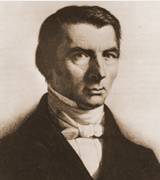 I often seriously ask myself how anything so whimsical could ever have entered into the human brain, as first of all to lay out many millions for the purpose of removing the natural obstacles that lie between France and other countries, and then to lay out many more millions for the purpose of substituting artificial obstacles, which have exactly the same effect; so much so, indeed, that the obstacle created and the obstacle removed neutralize each other, and leave things as they were before, the residue of the operation being a double expense.
 On February 6, 1756, Aaron Burr was born. Burr was an American politician who served as third Vice President of the United States, a man with a deeply ambiguous record. His popularity in his home state of New York, combined with the Slave Power vote, allowed for Thomas Jefferson’s victory in 1800 — and yet, another constitutional quirk, in addition to his apparent calculating ambition, precipitated a constitutional crisis in that election. He found a strong opponent in Federalist politician Alexander Hamilton, whom he killed in a duel during his vice presidency. Later, Burr gathered an army west of the Appalachians, ostensibly to conquer Mexico. The army was captured, and Burr was put on trial for treason, with Thomas Jefferson moving heaven and earth to see a conviction. Burr was found not guilty, traveled to Europe, and then returned to America for a long life in the private sector.
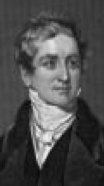 On February 5, 1788, Robert Peel was born. He would become one of the most important of the United Kingdom’s prime ministers, ushering in some reforms that led to the liberalization of England in the 19th century.