On January 19, 1808, Lysander Spooner was born. Spooner’s achievements in American life, law, and political philosophy, are among the most colorful of the 19th century. Studying law privately, he sued to practice without joining the bar, and won the suit. He set up a postal service that directly competed with the United States Postal Service, delivering mail at a fraction of the cost. He wrote “The Unconstitutionality of Slavery,” and convinced noted Garrisonian abolitionist Frederick Douglass of his argument. (The book became the centerpiece of intellectual ammunition for the Free Soil Party.) Later in life Spooner turned against constiutionalism itself, and penned some of the most radical political works of his day, including “Vices Are Not Crimes” and “The Constitution of No Authority.” Spooner also clearly articulated a “jury nullification” position in his classic treatise “Trial by Jury.”
Author: Redactor
Lysander Spooner
Those who are capable of tyranny are capable of perjury to sustain it.

Montesquieu, Jan 18
On January 18, 1689, Montesquieu, French satirist and philosopher, was born. His treatise “The Spirit of the Laws” was a major influence upon America’s founding generation.
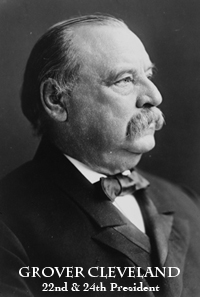
Grover Cleveland
What is the use of being elected or re-elected unless you stand for something?
Townhall: Pardon My French
This week over at Townhall, your Common Sense columnist offers a perspective on what has been called the biggest mass protest in human history.
Click on over, then come back here for more reading.
- AP: France Arrests 54 For Defending Terrorism, Announces Crack Down
- Independent Business Times: Who Is Dieudonné? Controversial French Comic Arrested For Charlie Hebdo Facebook Post
- The New Yorker: Why French Law Treats Dieudonné and Charlie Hebdo Differently
- Huffington Post: “Limiting Hate Speech Is Important, Even After Charlie Hebdo” by Erik Bleich, Professor of Political Science, Middlebury College
- The Independent: French police arrest 54 people for ‘defending or glorifying terrorism’
- Common Dreams: Days After Free Speech Rally, France Arrests 54 People for Offensive Speech
Video: A Capitalist Peace?
Please, please, don’t be a pessimist. Steven Pinker interviewed by Caleb Brown, courtesy of Cato Institute:
Instead of a Tax Hike
The new Congress is in session and already there’s a push for a tax hike. Republican Senator Inhofe of Oklahoma says, “nothing is off the table.”
Of course the Democrats are chomping at the bit to raise . . . the gas tax. With gas prices having plunged so low, they see a green flag. But then, high prices at the pump are something they like. You know, to “save the planet.”
And across the aisle in the Senate, anyway, it’s not just Inhofe who’s sending up smoke signals to indicate a willingness to “bargain”; Senators Hatch (R-Utah) and Thune (R-SD) seem onboard. (Thankfully, House Republicans appear less enthused.)
To aid the cause, Inhofe calls the gas tax a “user fee.” Euphemistically. He has the tiniest of points: the modern “deal” has been to tax fuel and then use that revenue to pay for new roads and upkeep.
But recent congresses have been spendthrift, misusing the revenues on idiotic projects (hiking trails, bike paths, museums) and not so much on repair. In that context, the call for higher taxes almost looks responsible.
There’s a problem, though. Several.
You cannot go on rewarding government when government fails. They waste money? Why, give them more! Sheer folly.
Further, lower gas prices have meant an effective increase in incomes for regular people. Taxing that away, after so many bad years, is just cruel — to both the middle class and the poor.
Only a politician could call that “responsible”!
I have a modest alternative proposal: Devolve all federal roadways to the states; abolish all federal taxes on fuel. Let the separate states figure best how to fix “our crumbling infrastructure.”
Congress, after all, has failed. Miserably.
This is Common Sense. I’m Paul Jacob.
Poddy, Jan 16
On January 16, 1930, conservative writer Norman Podhoretz was born.
Washington Irving
The tongue is the only tool that gets sharper with use.
One day last year, Slate Star Codex blogger Scott Alexander “woke up” to discover that “they had politicized Ebola.”
How?
It was, he explains, more than just a series of partisan cheap shots. Though there were plenty of those. It was something more startling, and in its own perverse way impressive. Everybody seemed awfully certain about what should be done, immediately, and along ideological lines, red and blue:
How did both major political tribes decide, within a month of the virus becoming widely known in the States, not only exactly what their position should be but what insults they should call the other tribe for not agreeing with their position?
The answer to the question?
Each tribe has its myths, er, “narratives,” and members of each concentrate on those stories that seem to demonstrate the truth of their . . . narratives. How you cover Ebola depends on other beliefs you already hold.
“Ideas are forces,” 19th century writer G. H. Lewes put it. “Our acceptance of one determines our reception of others.”
The result of sticking to one’s in-group mythos can have negative consequences, however. You can end up in Silly Putty Country, “saying ISIS is not as bad as Fox News, or donating hundreds of thousands of dollars to the officer who shot Michael Brown.”
Conservative journalists see everything through red-tinted glasses, liberal journalists refuse to look at the world through anything but blue-tinted one. And too many people follow their lead.
Occasionally, we could try on lenses of different colors.
But perhaps I speak so confidently because I come from another tribe. Green? Orange? Purple?
What color is liberty?
This is Common Sense. I’m Paul Jacob.