Categories
Accountability education and schooling folly responsibility

Only Make Believe

Problems can be solved. But for those lacking the merest clue how to solve a given problem . . . alternatives exist.

Books can be cooked to pretend the problem no longer exists. And perhaps to fool others.

A series of articles in the Washington Post highlights the effort to reduce the rate by which city schools suspend students for misbehavior. The good news? “D.C. Public Schools has reported a dramatic decline in suspensions at a time when school systems around the country have been under pressure to take a less punitive approach to discipline.”

Results? A whopping 40-percent decline.

The bad news?

A Post investigation found that “at least seven of the city’s 18 high schools have kicked students out of school for misbehaving without calling it a suspension and in some cases even marked them present.” In those schools, “most suspensions were not reported.”*

The Post further uncovered documentation showing that “DCPS officials knew students were being sent home without documentation at least as early as 2010.”

It brings to mind the recent scandal in Prince George’s County (Maryland) Public Schools, where a dramatic announcement that the county increased its student graduation rate faster than any other county . . . was followed by an investigation into grade tampering by school administration officials, which numerous teachers have alleged.

It is also reminscent of the systematic cheating on standardized tests in Atlanta — and across the nation.

Hiding the truth, cheating on tests, lying about results . . . not the actions of a system teaching kids a love of truth.

This is Common Sense. I’m Paul Jacob.


* Seven schools’ emails show that students spent a total of 406 days in suspension in January 2016. Officially recorded? Only 15 percent.


Printable PDF


Illustration based on a photo by Tod Baker

Categories
crime and punishment folly general freedom moral hazard nannyism too much government

Big Libertarian Questions

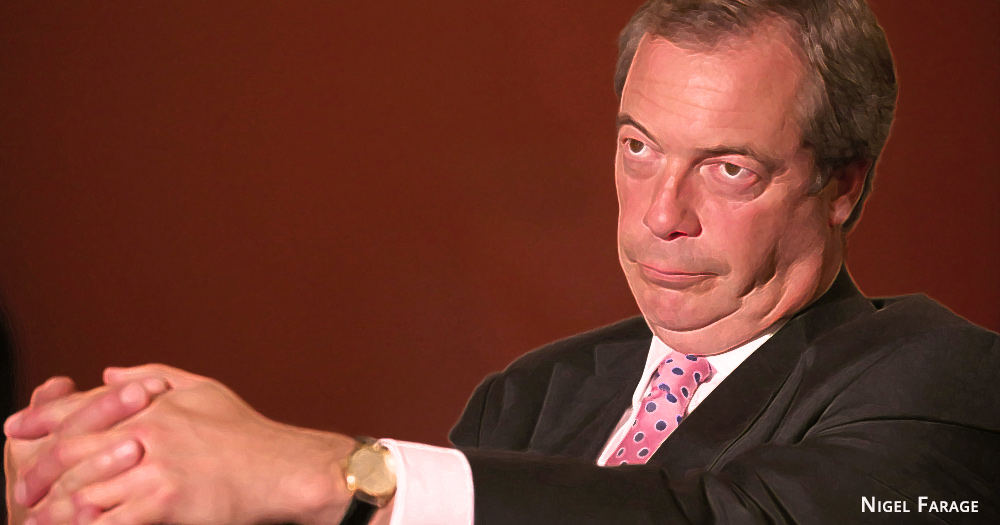
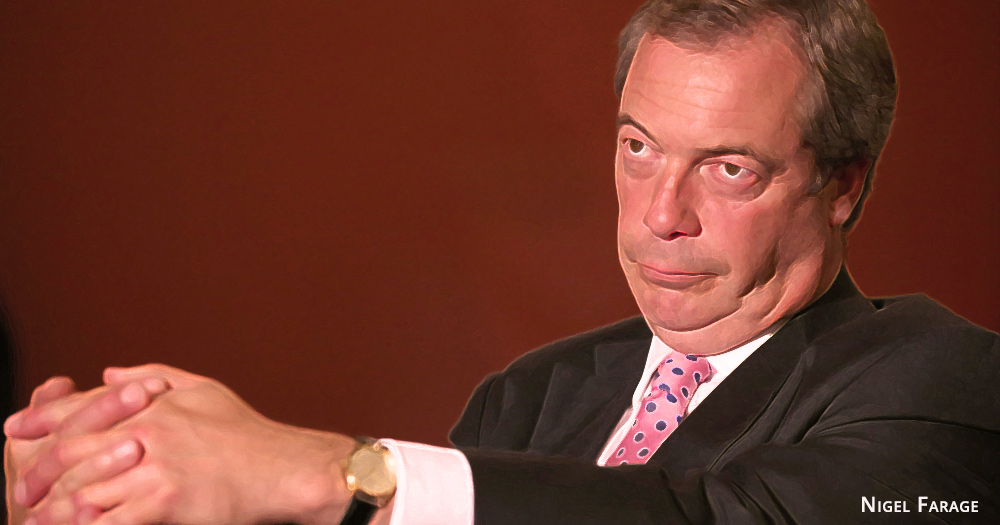
“This raises some very big libertarian questions,” said Nigel Farage yesterday.

About what?

The “rights of parents against the state.”

The outspoken Brexit supporter and former leader of the UK Independence Party was referring to Charlie Gard, the sick, dying 11-month old British baby, whose parents sought to take to the United States for an experimental medical treatment. But the hospital and the British government pooh-poohed any likelihood of success and said, “No.”

That’s when Charlie’s parents went to court, fighting for seven months for the right to simply try to save their child’s life. Now, after those months of delay, even that remote medical hope has faded away.

“Even today,” explained Farage, “the hospital and the state are saying to these poor parents, ‘Oh, no, no, Charlie can’t die at home. He’ll have to die in our hospital.’”

The judge in the case called it “absurd” to suggest that little Charlie was a “prisoner of the National Health Service.” But not free to leave the country or even the hospital, that’s precisely what this poor child has become.

“There was a case four years ago of a little kid, Ashya King, who had a brain cancer,” Farage noted. “His parents wanted him to go to Prague for a revolutionary new treatment that the doctors here said wouldn’t work. The boy went. It worked. He’s now cancer free.”

Those parents were briefly imprisoned . . . for saving their child’s life.

It appears that single-payer makes the government the single-decider.

This is Common Sense. I’m Paul Jacob.


Printable PDF


Categories
folly general freedom local leaders moral hazard national politics & policies responsibility

Syria & Sanity

President Trump has decided to end the CIA’s covert* program to arm and train moderate Syrian rebels battling the government of Bashar al-Assad,” the Washington Post first reported last week, immediately adding that it was “a move long sought by Russia.”

This insinuation that the policy change was simply a concession to Russia belies the recent history of U.S. involvement — and failure — in Syria.

President Barack Obama had intervened.

Very ineffectively.

“Calling” for regime change.

In 2012, Reuters disclosed that the president had signed “a secret* order authorizing U.S. support for rebels seeking to depose Syrian President Bashar al-Assad and his government.” In 2013, after accusing the Assad regime of using chemical weapons, Obama announced the U.S. would provide direct military aid to rebel groups.

But Obama’s execution seemed more designed to make it look like the U.S. was trying really hard than actually toppling Mr. Assad.**

This may have been a good thing, though, seeing that some of the best-organized rebel groups in Syria are aligned with al-Qaeda and ISIS.

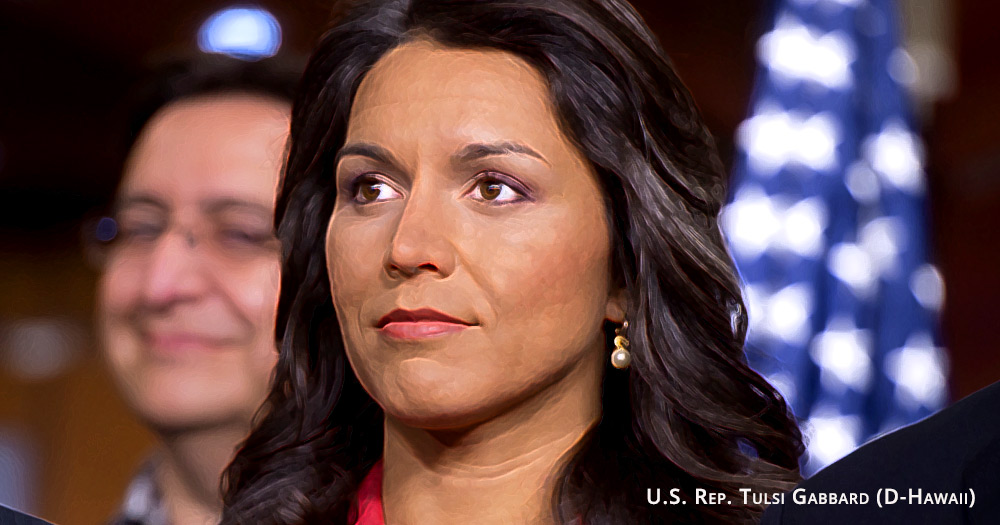
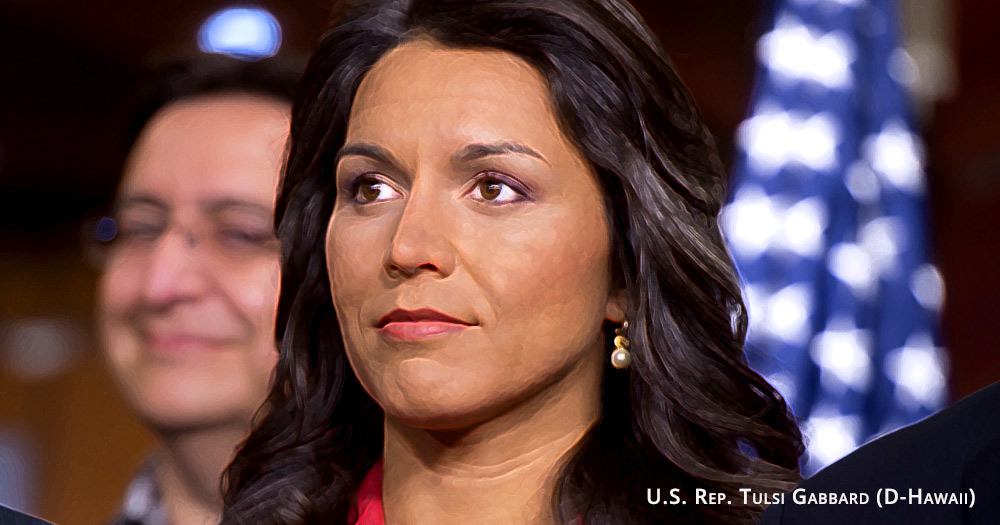
U.S. Rep. Tulsi Gabbard (D-Hawaii) has introduced “The Stop Arming Terrorists Act”*** to prevent American weaponry and material from being handed to terrorists. She cheered Trump’s move, explaining to Tucker Carlson on Fox News that “providing direct and indirect” aid to the “very same terrorist group that attacked us on 9/11” made no sense.

Also lacking in sense is the Obama Administrations claim that the congressional Authorization for the Use of Military Force, which specifically authorizes action against al-Qaeda, also covered the attack upon Assad’s regime. Surely arming rebel groups aligned with al-Qaeda couldn’t be justified under such an AUMF.

This is Common Sense. I’m Paul Jacob.


* It was not very covert. And not secret.

** In 2015, the Administration abandoned a separate $500 million program to put together a moderate rebel force opposed to both ISIS and the Syrian Government of Basher al-Assad after training only 4 or 5 soldiers. The BBC suggested much of the problem was indecisiveness, observing that, “US President Barack Obama never seemed to want a train-and-equip programme for Syrian rebels.”

*** The Senate bill is SB 532, introduced by Sen. Rand Paul (R-Ky).


Printable PDF


Categories
Accountability crime and punishment folly free trade & free markets general freedom moral hazard nannyism too much government

Pardon Him, Mr. President

Presidents tend to issue pardons as their tenures draw to a close. But many victims of our government should be pardoned right now. Until the culpable agencies can be dismantled and/or sundry bad laws repealed, a steady flow of presidential pardons would provide the swiftest justice.

An Amish man in Kentucky, Samuel Girod, has been convicted of selling herbal remedies and such crimes as “failing to appear.” It doesn’t add up to one day in prison, let alone the six years of his sentence.

Girod created a salve from natural ingredients for treating skin disorders. After the state health department demanded that he stopped making certain claims for the product, he changed its name to Healing Chickweed. Told that the word “healing” was prohibited, he changed the name to Original Chickweed. The Food and Drug Administration also hounded him for selling various herbal remedies, which they called “drugs” because of his medical claims.

The man’s worst sin in all this seems to be failure to cooperate with the harassment. When FDA agents tried to examine his “manufacturing process,” he refused entry to his home. When Girod missed a hearing about his case, the government dubbed him a “fugitive.” The local sheriff can’t understand why the government is “victimizing such peaceful and law-abiding citizens.”

Yes, it’s a puzzle. Many historical, political, institutional, ideological and psychological factors would help explain it. More than answers, though, Samuel Girod needs his freedom.

How about it, Mr. President?

This is Common Sense. I’m Paul Jacob.


Printable PDF


Categories
education and schooling free trade & free markets general freedom ideological culture media and media people national politics & policies privacy property rights responsibility too much government U.S. Constitution

According to Economics

“Everywhere you look, economics is despised,” writes Tom Woods in his Tuesday email letter.

You know what isn’t despised? A daily email letter.*

But I digress; back to economics.

“The gimme-free-stuff people hate it because they don’t like being told that there might be undesirable side effects from seizing other people’s things.”

Well, true enough. But turn it around: many people demand free stuff at least in part because they do not understand the bigger picture . . . which Mr. Woods ably provides in his daily podcast and on his weekly Contra Krugman podcast with economist Bob Murphy.

“Politicians hate it, because it imposes logical constraints on what political activity can accomplish.”

True, but, like many in the general public (from whence they come), politicians’ prior lack of economic knowledge also leads, in part, to their hubris.

“Even some folks in the business world hate it, because (1) they’d rather agitate for special privileges than hear the case for free markets, and (2) they’d rather have low interest rates than be warned about the causes of the business cycle.”

Yes, too true. But, again, business people are generally just people, most of whom haven’t even been exposed to something beyond boring and misleading textbook econ, if that. Mr. Woods knows that, since that’s what his mission is, exposing more folks to ideas beyond what he calls “the index card of allowable opinion.”

Well, I’m all about allowing the unallowable — if it’s right!

This is Common Sense. I’m Paul Jacob.


* Historian Woods is now doing what I’ve been doing since 1999, providing a daily common-sense thought that is short and easy-to-read and dropped into your email box every weekday. Mine goes up online at ThisIsCommonSense.com; I don’t see his on his website . . . but I do see a lot of books and podcasts!


Printable PDF


Categories
Accountability folly free trade & free markets general freedom moral hazard nannyism national politics & policies responsibility too much government U.S. Constitution

According to Logic

“Polling on every possible option confounds all logic,” or so writes Tiana Lowe about ObamaCare and its repeal, at National Review.

“Americans overwhelmingly dislike the individual mandate and prioritize lowering the cost of health care over all other health problems in the country,” Ms. Lowe elaborates, “but a majority of Americans do not want to roll back Obamacare’s guaranteed coverage of pre-existing conditions. Just a quarter of Americans are happy with Obamacare as-is, but a mere 12 percent favor the now-dead Senate health-care bill.”

Perceptively, she notes that the situation is as bad or worse for politicians, who want to “have their cake and eat it too.” The problem with politicians is pretty obvious: they lie because they are afraid of confronting the truth.

But it seems to me, on the evidence Lowe herself provides, Americans mostly have it right.

We want to lower costs of health care. Well, that should be the first priority. It should’ve been government’s highest priority, since government caused our predicament.

A huge supermajority is unhappy with ObamaCare, which makes sense. The Affordable Care Act is not affordable. But the Senate health-care bill was worse than ObamaCare, so folks were right to oppose it.

The only real issue? Many Americans don’t seem to understand that the “pre-existing coverage” mandate necessarily raises costs. Forcing insurance companies to pay for non-eventualities* requires them to pass those extras onto customers in general. Here is where leadership would be of help.

And where it has failed, our President most of all.

Lowe criticizes Trump for not pushing the Senate’s bill more effectively. I’m thankful for that.

This is Common Sense. I’m Paul Jacob.


* Insurers wager against unpredictable future illness or accident, not the sucker’s bet of paying for an existing predicament.


Printable PDF


Categories
Accountability crime and punishment government transparency initiative, referendum, and recall

Left Wondering Why

In Minneapolis’s Fulton neighborhood a makeshift memorial has sprung up. Amidst flowers, a handwritten sign reads, “Why did you shoot and kill our neighbor?”

Police have yet to offer public comment on the police shooting of Justine Damond, the Australian woman killed in the alley behind her home last Saturday night.

“Sadly, her family and I have been provided with almost no additional information from law enforcement,” Justine’s fiancé, Don Damond,* told reporters, “regarding what happened after police arrived.”

The Minnesota Bureau of Criminal Apprehension has launched an investigation, but not yet interviewed the two officers at the scene, the only known witnesses. The officers had been responding to Justine’s 911 call reporting what sounded like a sexual assault.

No gun was found on Justine; a woman in her pajamas otherwise doesn’t seem very threatening.

Local media identified Mohammed Noor, a Somali-American, as the police officer who fired the bullet that killed Damond. Noor has been on the force since March 2015 and has two previous complaints pending.

Most frustrating, the Washington Post reports that “the officers’ body cameras were not turned on” and . . . “It’s not clear why . . .”

Cameras do not work when turned off; public anger and angst are not ameliorated when we cannot see the body cam footage.

That’s why, back in April, we worked to pass a ballot initiative in Ferguson, Missouri: (a) mandating that police must actually turn on the body cameras they were “using” (after similar incidents, wherein Ferguson police claimed their cameras hadn’t been activated) and (b) setting rules for public access to the video.

The people of Minneapolis, likewise, deserve a more professional police force. Making that happen means taking the initiative: citizens reforming criminal justice policies at the ballot box.

This is Common Sense. I’m Paul Jacob.


* Justine had already taken her fiancé’s last name, even though they were set to marry next month. Her legal name remains Justine Ruszczyk.


Printable PDF


Categories
Accountability crime and punishment government transparency moral hazard national politics & policies property rights responsibility too much government U.S. Constitution

The Police State Is in Sessions

U.S. Attorney General Jeff Sessions threatens to make himself one of the biggest threats to your liberty.*

President Donald Trump’s pick for Attorney General just promised to encourage police departments to seize the personal property (cars, houses, cash) of criminal suspects.

The practice is called asset forfeiture. It comes in two forms, criminal and civil. Compelling objections have been raised against civil forfeiture, which accounts for nearly 90 percent of all forfeitures. Abuse is rampant in cities, counties and states around the country, routinely used against people who have not even been charged, much less prosecuted and convicted. (Often not really even suspected of criminality.)

“No criminal should be allowed to keep the proceeds of their crime,” he told conference attendees in Minneapolis, Minnesota, on Monday.** But how can our top federal law enforcement officer ignore the profound difference between a suspect and a criminal?

No one is a criminal, before the law, until proved in court. Taking away property to make it harder for suspects to defend themselves — which is what RICO laws and other Drug War reforms intended to do — is obviously contrary to the letter of the Fourth and Fifth Amendments as well as the spirit of the U.S. Constitution.

Sessions announced he’ll soon offer a “new directive on asset forfeiture — especially for drug traffickers.” Unless he clearly indicates that it will only be used against the property of persons legally convicted of crimes, Sessions will be merely making charges of an “American Police State” stick.

America’s top lawman argues completely contrary to American principles of justice.

This is Common Sense. I’m Paul Jacob.


* Bigger than Eric Holder was. Bigger than Loretta Lynch.

** Sessions also went on to say that “sharing with our partners” — local police departments around the nation — is a good thing. This is, systemically, the most dangerous aspect of it all, for it encourages police departments to take things for their own benefit.


Printable PDF


Categories
Accountability folly general freedom ideological culture moral hazard nannyism national politics & policies property rights responsibility too much government

The Worst Is the Enemy of the Cure

You’ve heard the adage: “the perfect is the enemy of the good.” This can be true in politics, where opposing an ameliorating reform because it is not ideal means, sometimes, getting stuck with unmitigated policy disasters.

But there’s a corollary: in politics the worst is likely to emerge . . . when practiced compromisers succumb to fearing the best, because unpalatable, or perhaps not in line with political interests.* Trying to avoid the “best is the enemy of the good,” we’re left with the outrageously awful.

Cures worse than the disease are not uncommon. The Democrats’ “Affordable Care Act” (ObamaCare) was a clumsy, badly drafted hodgepodge designed to fix problems by doing the opposite of what made sense.

And it immediately started having ill effects, pushing up costs for many, many health-care and medical insurance consumers.

No wonder Republicans ran year after year promising repeal.

But now that Republicans have the chance for a real cure, they’re chickening out. The Senate just debuted their ObamaCare replacement. And Senator Rand Paul (R-Ky) calls it “worse than ObamaCare.”

Why worse?

Because Republican politicians are better at promising than delivering. Fearing how those who directly benefited from ObamaCare might squawk, and how badly the GOP would be treated in the media because of this, moderates went with what they know: snake oil.

Fortunately, Rand Paul’s opposition may kill the bill. If one other senator joins Dr. Paul — and Sen. Susan Collins (R-Maine) who announced her opposition for other reasons — in not voting for the monster, it will not pass.

Which is great, because going for a cure worse than the previous cure leaves us all with the worst possible outcome.

This is Common Sense. I’m Paul Jacob.


* Like many cures. Politicians these days no longer have the knack for the necessary “spoonful of sugar” to help medicine go down. They prefer distributing just sugar pills.


Printable PDF


Categories
Accountability crime and punishment folly free trade & free markets local leaders nannyism national politics & policies too much government

Messed Up State

After lamenting Illinois’s fiscal decline into America’s “most messed up” state yesterday, lo and behold, today we find the State of Nevada messed up, too.

On marijuana.*

Question 2, passed by voters last November, legalized recreational use of what we used to call “weed” by those 21 years of age and older. The measure also stipulated that — for the first 18 months only — alcohol distributers are solely permitted to carry marijuana from wholesalers to the new retail dispensaries.

Why provide a monopoly to alcohol distributors?

“[T]he state’s powerful alcohol lobby worried that legalized weed would cut into liquor store sales,” explained the Los Angeles Times. Proponents added that provision as “a concession.”

But still not a single alcohol distributor has been approved to distribute marijuana.

So, with pot now flying off the shelves of Nevada’s 47 marijuana dispensaries, there is no lawful way to replenish those shelves. Nevada’s DOT (which requested from the governor an official declaration of a state of emergency) warns: “this nascent industry could grind to a halt.”

That’s not just a bummer for pot smokers; it has the governor and the DOT in a state, too. “A 10% tax on sales of recreational pot — along with a 15% tax on growers — is expected to generate tens of millions of dollars a year for schools and the state’s general fund reserves,” notes the Times.

Legalize marijuana, sure. And realize that the politics of it can be more toxic than the drug itself.

This is Common Sense. I’m Paul Jacob.


*Is that why the slogan “A World Within, A State Apart” is now featured on the state’s website?


Printable PDF