Categories
Accountability free trade & free markets general freedom national politics & policies property rights Regulating Protest

Union Dues, Don’ts

You may soon be able to shred your union card — if you are careful.

By “you” I mean You, the reluctant union member.

If you’re not one, though, perhaps you know somebody who is, someone who’d be happy to learn that the Supreme Court is on the verge of dealing a huge setback to coercive unionism.

John Hinderaker explains at Power Line. The Supreme Court is expected to soon decide a major case in a way that “bar[s] public employees from being forced into unions, or from being required to support unions via the fiction of ‘fair share contributions.’ ” (Much of that money goes straight to Democratic Party coffers.) With Neil Gorsuch now on the bench, a 4-4 holding pattern is expected to become a 5-4 decision in favor of plaintiffs suing for freedom from mandatory union membership.

Sounds good.

Problem is, though, that union officials are working to trick members into paying dues in perpetuity. For example, Education Minnesota is trying to con its 86,000 teachers into signing “Membership Renewal” forms assenting to automatic renewal of fees – unless the signatory makes a special effort to opt out.

The union hopes members will sign the cards and forget about them, continuing to fund the unions, and Democratic politics, indefinitely — even if the high court rescues everyone from mandatory membership.

So, if you happen to be trapped in a union at the moment — watch what you sign. And watch the news.

This is Common Sense. I’m Paul Jacob.


PDF for printing


Categories
Accountability crime and punishment folly general freedom ideological culture local leaders media and media people moral hazard national politics & policies political challengers property rights Regulating Protest responsibility

Alt-Comparisons

“There is no comparison,” concluded Washington Post columnist Margaret Sullivan, after spending her entire column doing just that, i.e. comparing Antifa, the so-called “alt-left,” with Nazis and white supremacists, the so-called “alt-right.” 

When Trump spoke about Charlottesville violence on both sides, Sullivan argued, “He was comparing things that aren’t the least bit equal, neither in scale nor in intent.”

Sullivan trumpeted statistics compiled by the Anti-Defamation League. The U.S. had 372 politically motivated murders between 2007 and 2016, with 74 percent committed by right-wing extremists and only 2 percent by left-wing extremists.*

Yet, those perpetrating 2 percent of such slayings can legitimately be compared to those perpetrating 74 percent — and also likened to thugs who beat down opponents in the street (thankfully without murdering them).  

All of the above use violence to achieve political goals.** Some are more deadly than others, but the violent actions of all should be condemned. 

Sullivan acknowledged that “it’s safe to say that most news consumers, if they know anything about antifa, know what the president has told them, and what they’ve gleaned from the club-wielding protesters shown endlessly on TV . . .”

Are citizens not supposed to take note of the violence in living color right before their eyes?

And why are folks uninformed? Could the mainstream media’s failure adequately to cover, say, previous Antifa rioting at Berkeley and elsewhere have something to do with it?

Lastly, Sullivan called on the media “to resist conflating [Antifa] with liberal groups.” Agreed. And let’s have the same fairness in not conflating Nazis and the KKK with conservatives.   

This is Common Sense. I’m Paul Jacob. 

 

*  By the process of elimination, “moderate extremists” are apparently committing close to a quarter of all political killings.

** I’ve not drilled down into these stats, or figured out what, precisely, qualifies as “political.”


PDF for printing


Categories
free trade & free markets general freedom ideological culture national politics & policies

Workers’ Days

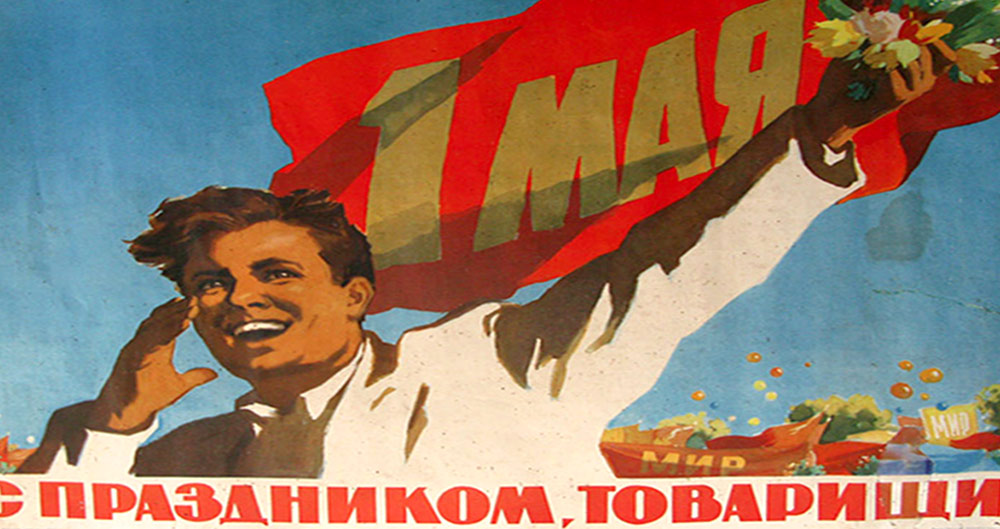
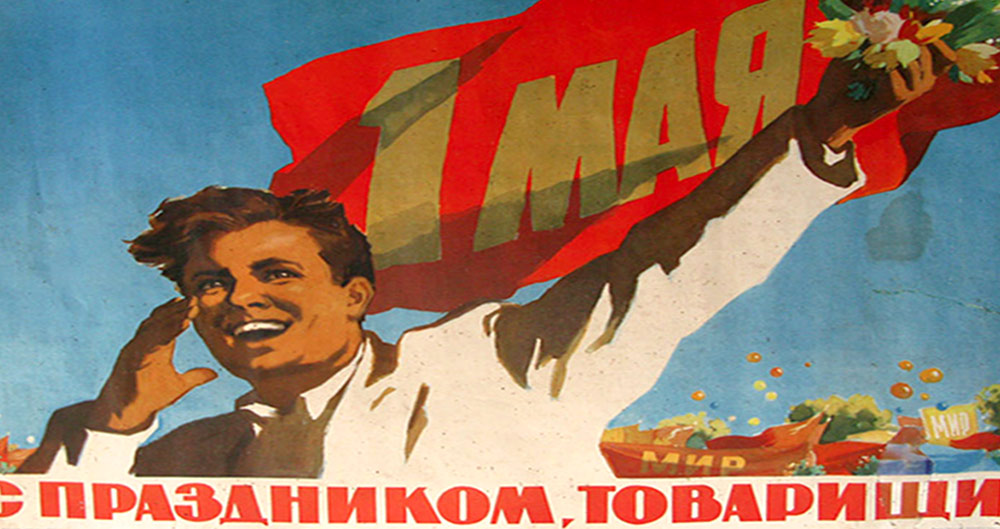
Today is Labor Day. But it is worth remembering, “Labor Day” in most other countries is May 1 — also called “International Workers’ Day.”

One thing to be thankful for on our American Labor Day is that we can celebrate labor — perhaps, like me, you will celebrate it by working! — and not have it serve as a celebration of communism.

For yes, it was the socialists and communists who cooked up the original May Day labor celebration, in part to commemorate 1886’s workers’ protest gone horribly wrong, the Haymarket debacle. In the 19th century, much of the impetus for collectivism came from workers themselves, under the impression that they could do better if they rebelled and expropriated the capitalists’ holdings and “worked for themselves.”

For some reason these activists rarely struck out on their own, becoming entrepreneurs.

Nowadays, alas, many top-level entrepreneurs lean toward socialism, and it is the non-government working people who resist more government, and thereby the socialist program. Indeed, the most enthusiastic clade of socialists in America today seem to be in the ranks of the unemployed.*

Oregon was the first of these United States to make an early September celebration an official Labor holiday, in 1887. Seven years later, the federal government got on board. President Grover Cleveland signed it into law soon after the disastrous Pullman strike, to promote a more rule-of-law friendly celebration of workers, and avoid thinking about rioting and murder and police violence.

So, even folks like me, who labor in the vineyards of the people’s politics while still supporting private property and freedom of contract, can celebrate.

Or take a last summer nap.

Without any communists hiding under the hammock.

This is Common Sense. I’m Paul Jacob.
 

* In less than two centuries, socialism went from proletarian to Lumpenproletarian. Karl Marx? Rolling over in his grave.


PDF for printing


Categories
Accountability general freedom initiative, referendum, and recall local leaders political challengers Regulating Protest too much government

Know Your BS

“Help me get my B.S. in the voters pamphlet,” read the subject-line of Tim Eyman’s email

Eyman is a practitioner of the art of the voter initiative, foremost in his state, Washington, and one of the most effective nationwide.*

This particular call to action concerns the voter pamphlet statements about a tax increase placed on Washington State’s November ballot by the mayor and city council in Tim’s hometown of Mukilteo.

“In the pro statement,” Eyman explained, “they wrote that the need for the tax increase was ‘indisputable.’” Which his rebuttal countered with: “Politicians always say the need for higher taxes is ‘indisputable.’ We call B.S. on that.”

It is rather to the point.

But soon he received word from the city that, “The Auditor feels the language is inappropriate and would like you to choose different wording.” Rather than “We call B.S. on that,” it was suggested that he might use: “We call foul.”

Eyman objected. He pointed out that B.S. is used ubiquitously; he sent the city examples.

“I called the ACLU,” his email noted, and “they thought it was B.S. for the government to say you can’t say B.S.”

Eyman’s own attorney, Stephen Pidgeon, sent the city a detailed letter pointing out that this is exactly the speech protected under the First Amendment.**

The City of Mukilteo has yet to announce a final decision. Tim Eyman invites all of us to send an email to encourage the city to Let Eyman Keep his B.S. in the Voters Pamphlet.

This is Common Sense. I’m Paul Jacob.
 

* He was once even dubbed “America’s No. 1 freedom fighter” — by me.

** Pidgeon also offered, “While the pious may construe the inference of these two alphabetic avatars as meaning something crude, my client may very well have been referencing an ancient Latin phrase ‘Bubulum Stercus’ which no average voter would ever find inappropriate.”


PDF for printing


Categories
Accountability folly free trade & free markets general freedom ideological culture media and media people nannyism national politics & policies too much government

Political Regroupings

What’s true for hurricanes is true for the Democratic Party.

After a disaster, it takes a while to regroup, really get a handle on what went wrong. Men and women take some time to absorb new realities.

A few interesting think pieces have come out of the left and center-left, recently, trying to digest what is wrong with the Democrats that they lost so much ground last year — even to someone like Donald Trump. To serious people, the “Russians did it” and “the Deplorables!” are not exactly winners.

Hillary Clinton may be stuck in that mode, but the Democratic Party needn’t be.

The more radical response came from John B. Judis, whose name was big in lefty magazines when I was young. His article “The Socialism America Needs Now,” in his old stomping grounds, The New Republic, tried to make the case for a vague leftism that could be called socialism, if you stretch the term, emphasizing bigger government without seeming too . . . Marxist.

Meanwhile, Mark Lilla has a new book of a somewhat more perceptive nature. Interviewed in Salon, Lilla makes much of the fact that while “smack in the middle” of the GOP’s website “is a list of 11 principles” . . . the Democratic Party could sport “no such statement.” Just a bunch of interest groups.

Interesting. Because, today, I went to GOP.com and saw no such principles list. But I did find a lot of Trump stuff . . . and a bunch of links to “identity groups.”

Talk about regrouping!

This is Common Sense. I’m Paul Jacob.


PDF for printing


Categories
Accountability ideological culture local leaders media and media people moral hazard nannyism national politics & policies

The Eye of the Storm

Hurricane Harvey has been amazing in its devastation. All that rain, all that flooding — what  a frightening time it must be for those caught within it.

While Harvey’s winds brought in waves and rain and floods, for most of us, far away and snug in our homes, it brought an occasion to donate, and . . . nostalgia.

Nostalgia? It’s not the disaster element so much as an old-time exhibition . . . of journalism. For more than just a few hours, we watched reporters actually report. We saw them stand waist-deep in water. We saw them cover actual events.

And we read them deal in facts . . . like the heroic efforts of the “Cajun Navy.”

Of course, this opinion-free window of media coverage did not last long. The talking heads and Twitter-journos and partisan hacks came flooding back not long after the worst.

Did Trump do enough? Or the right thing?

Did Houston’s no-zoning policy lead to the disaster?

Doesn’t “price gouging” really suck?

Did . . . Enough. It was and is too early for finger-pointing and “Brownie, you’re doing a heckuva job.”

Of course, the Houston zoning discussion is interesting. It is worth noting that there are building rules and governments in Houston, as well a national rules that made homes and businesses there less safe. And economists have already come to their usual defenses of “price gouging” and criticisms of disastrous government programs.

Still, the enormous relief efforts remain the biggest human interest story — thousands of individuals taking the initiative and their boats to join first responders and the National Guard in rescuing thousands trapped by flooding.

So, before we explain it all, let’s luxuriate in what remains of the fact-based reporting.

And help.

This is Common Sense. I’m Paul Jacob.


PDF for printing


Categories
Accountability ideological culture media and media people national politics & policies political challengers Popular responsibility

The Law of Unintended Trump Support

Last week, when President Donald Trump abandoned his previous policy position on getting U.S. troops out of Afghanistan in favor of continuing the establishment-supported policy of keeping those troops there, he was very well-received in our nation’s capital.

NeverTrumper/neo-con Sen. Lindsay Graham (R-S.C.) spoke of Mr. Trump’s “smarts” and “moral courage.”

The #NeverPraiseTrump Washington Post applauded the president’s valiant “self-correction.”

Yet when Trump holds a view contrary to the Washington consensus his wisdom and moral bravery elicit less celebration.

Instead, we hear that The Donald is unfit to command.

“I really question his ability to be — his fitness to be — in this office,” says James Clapper, the former Director of National Intelligence.

“The president has not yet been able to demonstrate the stability,” Sen. Bob Corker (R-Tenn.) concurred, “that he needs to demonstrate in order to be successful.”

And from the usual suspect list of television talking heads we get clinical diagnoses, talk of “erratic behavior and mental instability that place the country in grave danger.”

Mr. Trump combines every bad personality trait imaginable, the litany runs.

But all this is for nought.

Donald Trump has been able to withstand media negativity as well as the lack of support from his own party’s insiders for one simple reason: it validates him.

Every insider attack, every media-fueled outrage campaign, just proves him as the ultimate outsider to a system that the long-frustrated, increasingly angered electorate wants turned upside down.*

This is Common Sense. I’m Paul Jacob.
*This episode of Common Sense condenses my regular weekend remarks at Townhall.


PDF for printing


Categories
Accountability crime and punishment First Amendment rights general freedom media and media people moral hazard nannyism national politics & policies property rights responsibility too much government

Google: Disagreement

Once upon a time, Google penned a stern note to self: “Don’t be evil.”

What you regard as avoiding evil, though, depends on what you regard as doing good.

Does Google think it’s “good” to fire someone for offering reasoned objections to vapid pieties about why there are more men than women working as programmers, and about how to fix the problem? Assuming it is a problem.

If the answer is yes, then it’s up to more reasonable people to say, “No, Google, stomping on candid internal discussion of your (bad) politics and policies is not ‘doing good.’”

Alas, some Google critics push for a “remedy” worse than the problem: government force. They want government to impose new prohibitions and mandates on large private firms that help people to spread their opinions.

I don’t necessarily agree when a firm — Google, Twitter, PayPal or anybody else — stops providing services to persons expressing views that managers and HR departments disdain. Yet I may agree. No one is morally obligated — and no one should be legally compelled — to help spread the views of others.

I certainly refuse to distribute any installment of “Common Sense” guest-authored by The Anti-Paul-Jacob Club.

When market actors make bad decisions without violating anyone’s rights, others have many powerful and peaceful means of opposing those decisions. Criticism. Boycott. Competition.

But we shouldn’t seek to outlaw the decision-making.

The right to freedom includes no guarantee that one will always do the right thing as others see it.

This is Common Sense. I’m Paul Jacob.

PDF for printing


Categories
Common Sense ideological culture media and media people national politics & policies too much government

The Underground Amphibian

A new species of frog has been discovered, and I’m just happy it has nothing to do with online japes and jibes about Trump, social justice, or an ancient Egyptian deity. But before you can say “Praise Kek,” please note:

Sometimes a frog is just a frog.

But this frog is special, living most of its life underground. It is purple. And though this is not stressed in the reports, it’s markedly gelatinous.

In an article entitled “New Purple Pig-Nose Frog Found in Remote Mountains,” Jason Bittel explains that the frog comes above ground only when it rains — which in the Western Ghats mountain range in India is during monsoon season.

Named after the discovers’ late colleague, Dr. Subramaniam Bhupathy, it is dubbed Bhupathy’s purple frog (Nasikabatrachus bhupathi). I have to tip my hat to them, so to speak, for the herpetologist’s first name seems more fitting for a submerged-in-earth amphibian: “Subramaniam purple frog” would almost qualify as a pun. And, as readers of these Common Sense squibs will confirm, I am not always so valiant in resisting the art of the pun.

But you don’t read these commentaries for science news.

So, a moral.

Around the world, amphibians are disturbingly under threat. As Alex Jones hyperbolizes, “they’re turning the frogs gay!” But be that as it may (or, more likely, may not), even under greater threat is political common sense.

Let’s hope it, too, will emerge with the coming monsoon.

In India? Your neighborhood? Kekistan?

Probably not in Washington, D.C. But it’s Friday, we can at least hope.

This is Common Sense. I’m Paul Jacob.

Printable PDF


Categories
ideological culture media and media people moral hazard

Is This Even Funny?

Stand-up comic Amy Schumer made headlines in Variety, this week, for her re-negotiations with Netflix over her recent comedy special, The Leather Special.

It initially garnered her a “mere” $11 million, while, Variety reported, comedians “Chris Rock and Dave Chappelle were given $20 million per special as part of their deals with Netflix,” according to a summary at Vulture.com.* “Schumer then went back and negotiated for ‘significantly more compensation,’” scuttlebutt has it.

After-the-contract negotiations seem weird to me . . . almost . . . indecent.

But then, this might be apt, considering Schumer’s characteristic form of humor, which is almost relentlessly of an intimate sexual nature. Like many another Netflix watcher, I could not finish her special. “Indecent” is the nice word for it.**

The special was so relentlessly panned that Netflix created a new feedback system to discourage viewers from leaving severely negative criticisms and evaluations. It was a big deal months back.

So why did she think she could get more? Though she now denies it, the early reports said she demanded some sort of parity with Rock and Chappelle. And that “equal pay” for “equal work” ethic does seem to be behind the very idea of her ex post negotiating strategy.

The thing is, Rock and Chappelle got more money, obviously, because their ability to make money for their venues is amply proven. Schumer, though she is not without talent and definitely has her partisans, is not as big an audience draw.

Like wages in the normal labor market, it’s about productivity.

And you’d have to pay me to watch The Leather Special in its entirety.

This is Common Sense. I’m Paul Jacob.
 

* Variety is behind a paywall. I’m quoting Vulture because, like any good scavenger, I’m not paying for Variety.

** No idea whether I would have made it through a special with Chris Rock or Dave Chappelle. I get the impression I’m not in the target audience.


PDF for printing