Categories
Thought

F. A. Hayek

The curious task of economics is to demonstrate to men how little they really know about what they imagine they can design. To the naive mind that can conceive of order only as the product of deliberate arrangement, it may seem absurd that in complex conditions order, and adaptation to the unknown, can be achieved more effectively by decentralizing decisions and that a division of authority will actually extend the possibility of overall order. Yet that decentralization actually leads to more information being taken into account.

Categories
Today

Three Horrors

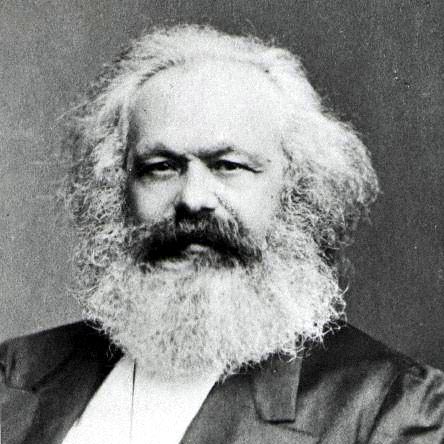
On Feb. 21, 1848, Karl Marx and Friedrich Engels published The Communist Manifesto.

On Feb. 21, 1916, the Battle of Verdun began with German bombardment of the city of Verdun, France.  For ten months, the longest single engagement of the First World War, German forces attacked the French along a 20-kilometer front crossing the Meuse River. When the battle ended, with no change in the strategic position of either army, the combined death toll was over 300,000 (out of over 700,000 casualties).

On Feb. 21, 1965, Malcolm X was gunned down by rival Black Muslims while addressing his Organization of Afro-American Unity in New York City.

Categories
audio podcast

Listen: They’re Ba-ack!

This Week in Common Sense, February 19, 2021.
Categories
Today

Enver Hoxha

On February 20, 1991, in the Albanian capital Tirana, a gigantic statue of Albania’s long-time leader, Enver Hoxha, was brought down by mobs of angry protesters.

Categories
insider corruption partisanship

Member-Directed Funding

“Congress is about to bring back its secret weapon,” CNN headlined a column yesterday.

Congress? Weapon

Be afraid. 

Be very afraid. 

“Earmarks are back,” Chris Cillizza immediately informs readers . . . you know, “what is technically known as ‘member-directed funding.’” 

Before you can say “terrible idea,” the cable channel’s editor-at-large does admit that “members securing money for pet projects in their districts could go wrong.”

Yeah. Right. Has gone wrong. Will go wrong. Is wrong.

“This is a sneaky big deal,” offers Cillizza nonetheless. “And a massive win for party leaders of both parties.”

Cillizza argues that it was a big mistake for Speaker John Boehner and the GOP leadership in Congress to take away their ability to reward individual congresspeople by stuffing a couple multi-million-dollar pet projects into the budget. What’s not to like for an incumbent politician? They get to hand out money right in their districts, with their name attached to it. 

As long as a member of Congress plays ball.

The way the party bosses say.

In return, that incumbent can likely stay in this nation’s heralded leadership for years, decades.

When “you realize that in taking away earmarks,” explains Cillizza, “Boehner robbed party leaders of their most potent weapon to keep their rank-and-file in line on key votes.”

Is it even plausible for the functioning of our democratic republic that “party leaders” — nowhere mentioned or given any power in our Constitution — leverage our tax dollars to essentially buy off our representatives in order to keep our representatives “in line” on other important votes?

No.

This is Common Sense. I’m Paul Jacob.


PDF for printing

See all recent commentary
(simplified and organized)
See recent popular posts
Categories
Thought

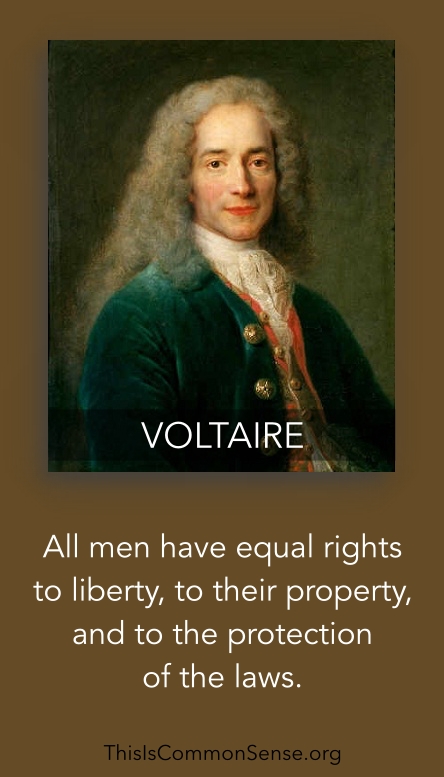
Voltaire

All men have equal rights to liberty, to their property, and to the protection of the laws.

Categories
Today

U. S. Military Zones

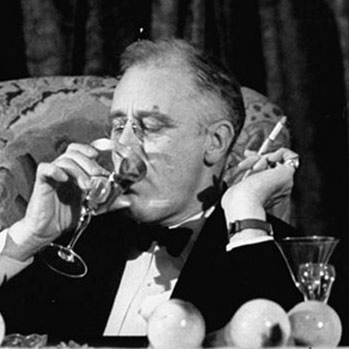
February 19, 1942, was a sad day for constitutional rights, with President Franklin D. Roosevelt signing Executive Order 9066, authorizing the Secretary of War to prescribe certain areas of the country as military zones. These zones were used to incarcerate Japanese Americans in internment camps.

Categories
Thought

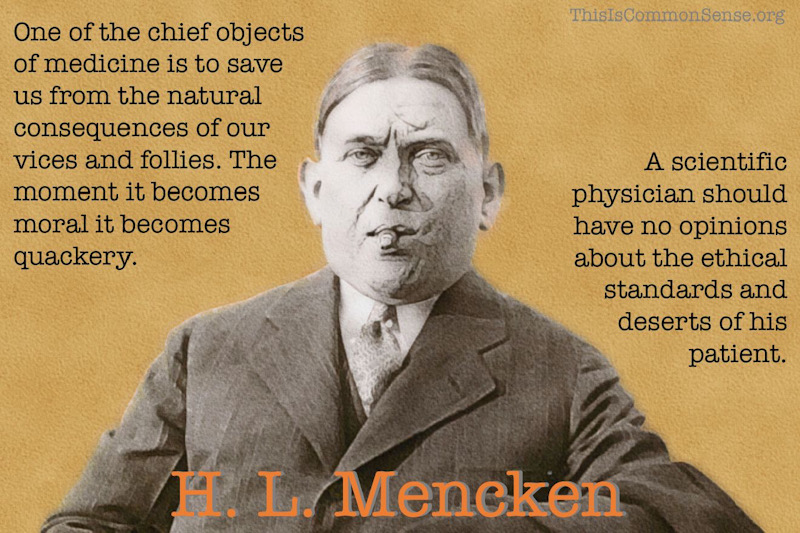
H. L. Mencken

One of the chief objects of medicine is to save us from the natural consequences of our vices and follies. The moment it becomes moral it becomes quackery. A scientific physician should have no opinions about the ethical standards and deserts of his patient.

H. L. Mencken, Minority Report: H. L. Mencken’s Notebooks (1956), p. 7.
Categories
Today White Rose

White Rose

On Feb. 18, 1943, Hans and Sophie Scholl, a brother and sister, were arrested at the University of Munich for secretly (or not so secretly) putting out leaflets calling on Germans to revolt against Adolf Hitler and the Nazi regime.

In the previous year Hans had founded a group of students, who called themselves “The White Rose.” The group wrote and distributed six leaflets aimed at educated Germans. The leaflets made their way across Germany and to several other occupied countries. The Allies later dropped them all over the Third Reich.

Categories
Thought

Thomas Mackay

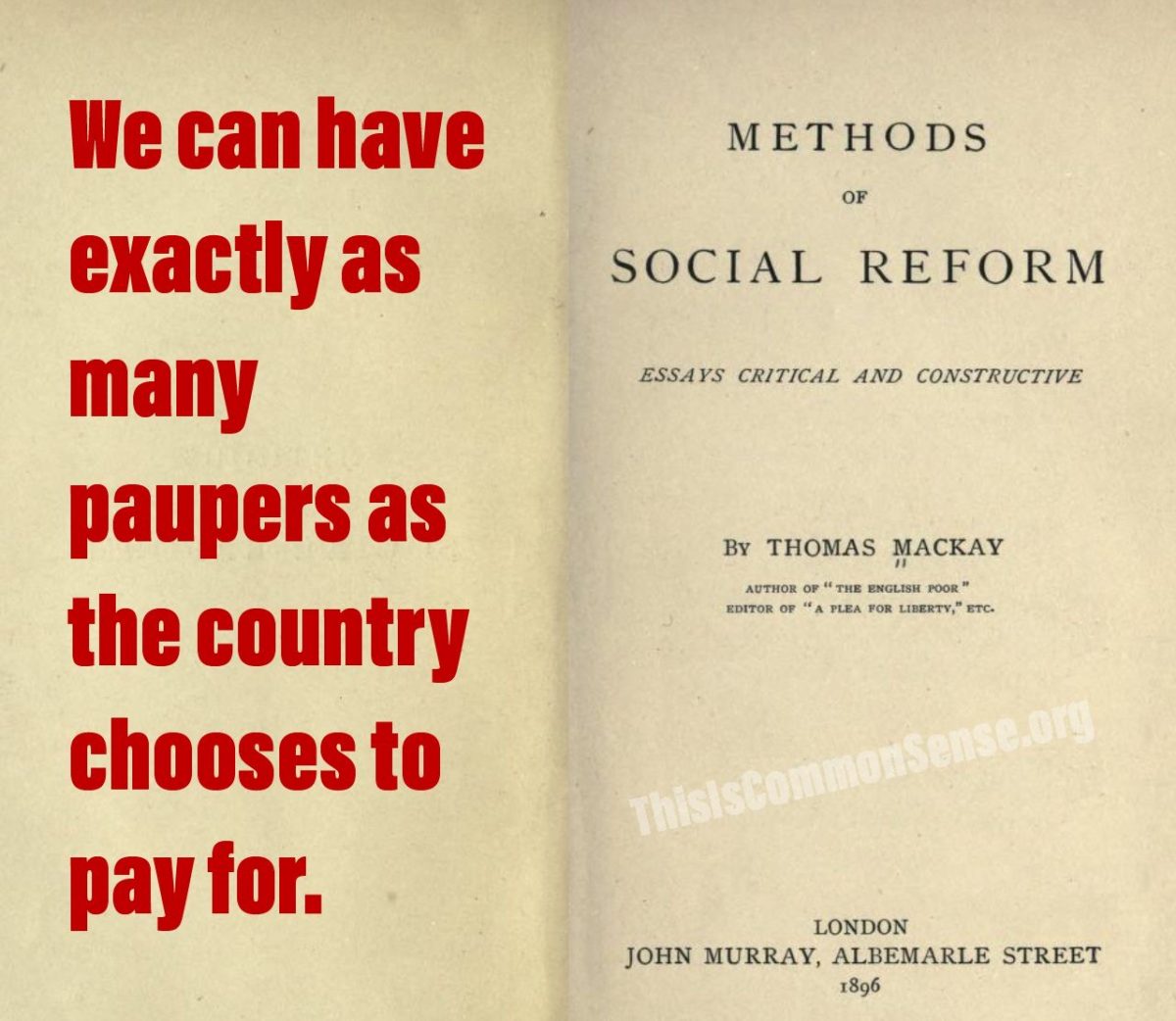
We can have exactly as many paupers as the country chooses to pay for.

Thomas Mackay, Methods of Social Reform (London: John Murray, 1896), p. 210.