Categories
Today

President Jefferson

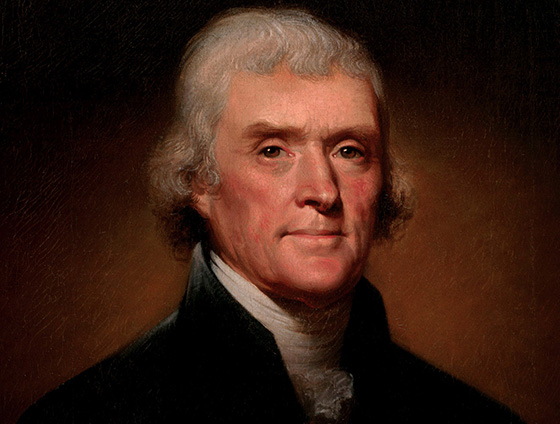
On Feb. 17, 1801, Thomas Jefferson was elected by the U.S. House of Representatives to be the third president of the United States, after an arduous election process that ended only 15 days prior to inauguration.

The fracas included a tie vote in the Electoral College followed by 35 indecisive ballots in the House. At that time, votes were cast for president, with the second place candidate becoming Vice-President. But in the Electoral College, Jefferson tied with his vice-presidential running mate, Aaron Burr. When that sent the balloting to the House of Representatives, the Federalists opposing Jefferson initially threw their support to Burr.


On Feb. 17, 1933, a constitutional amendment to repeal the Eighteenth Amendment to the U.S. Constitution, which had established the national prohibition of alcohol, was passed by the U.S. Senate. Known as the Blaine Act, the prime author was Wisconsin Senator John J. Blaine. By the end of 1933, the repeal of prohibition was adopted as the 21st Amendment to the Constitution.
Categories
Today

Silver Coinage

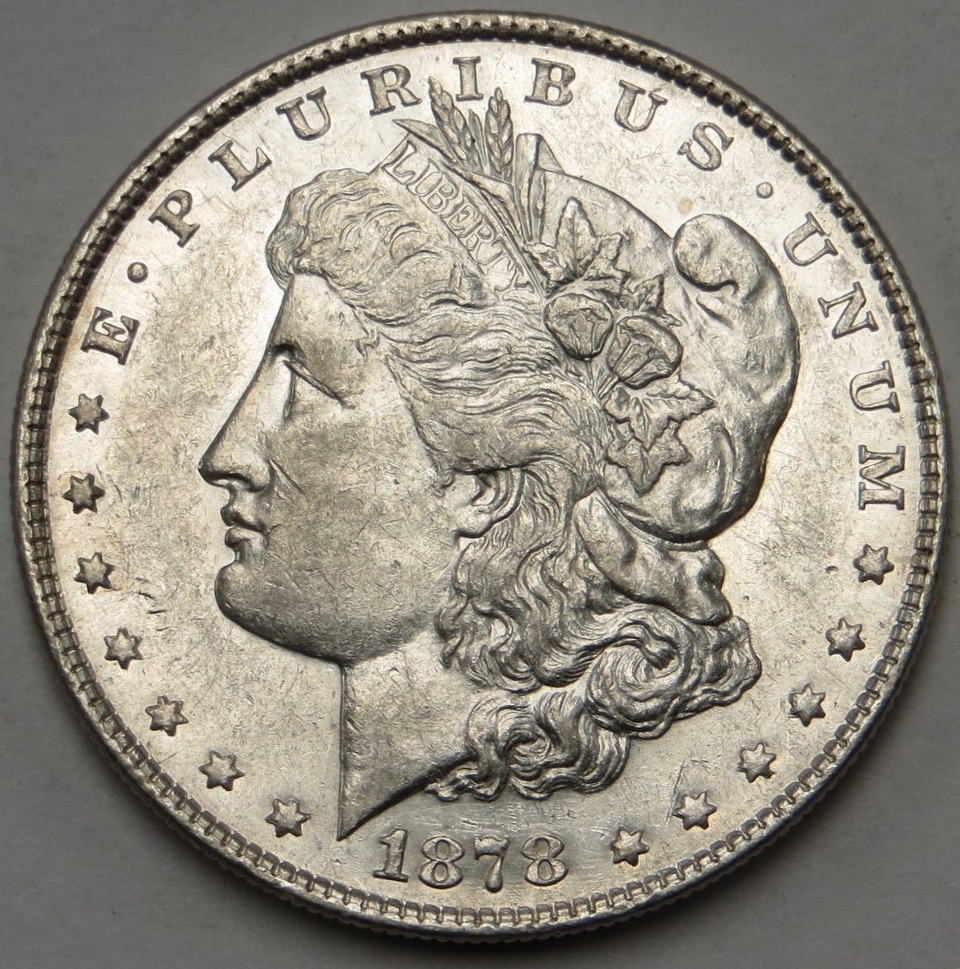
On Feb. 16, 1878, the Bland-Allison Act, which provided for a return to the minting of silver coins, became U.S. law. Today, the value of American money is secured only by public faith in the stability of the government, but during the 19th Century, money was backed by actual deposits of silver and gold.

That is, money was silver and gold. But that did not mean that all was right with the monetary system.

Five years earlier, when Congress had stopped buying silver and minting silver coins — following the lead of European nations — a financial panic ensued. Reasons for the suspension lay in the fact that the exchange value of silver and gold had retained an old, out-moded fixed ratio that favored silver producers. Had the United States Treasury let the two standards freely float, making a distinction between silver dollars and gold dollars, none of the political strife over bimetallism would have occurred.

As it was, with silver over-valued, the silver coins increasingly “drove” gold out of circulation, as well as out of the Treasury and into private hands.

In 1893, in the midst of another financial panic, this time as a result of depletion of gold reserves in the U.S. Treasury, President Grover Cleveland called a special session of Congress to repeal the bimetallic standard. He was successful, though agrarian inflationists took over the Democratic Party and offered up, for the next election, William Jennings “Cross of Gold” Bryan as a counter to Cleveland’s old-fashioned fiscal conservative/social liberalism.

Categories
education and schooling too much government

Where the Rubber Room Meets the Road

The “rubber room” neatly symbolizes, I think, the institution of the American public school. That is a room where New York’s bad teachers are sent to keep them away from students . . . all the while still receiving full paychecks. 

You see, unions have made it mighty hard to fire a teacher.

But rubber rooms sadly have competition in the category of outstanding tax-dollar waste and bureaucratic madness. 

Welcome to the roads of Fairfax, Virginia.

“Fairfax County, Va., wants to keep paying its school-bus drivers even though its schools are operating online. The solution?  Send the drivers out to drive anyway,” wrote Kyle Smith at National Review. “Food-service workers in schools are also not needed as long as the online-only schooling model continues. So what has happened to them? Zero layoffs. Not even any furloughs. Everybody is still getting their regular paycheck.”

But that was from last Fall. Now, teachers in Fairfax have moved to the front of the line in receiving the coronavirus vaccine, but still refuse to teach until all kids are vaccinated. Since kids have proven not to be a vector for the disease’s transmission, and are themselves the least at risk age group from the advanced respiratory illness associated with it, this seems a tad rubber-roomy.

It gets weirder. Virginia’s House Bill 2118 would replace diesel buses with electric buses. 

Quite an “investment.” Especially while no students are riding school buses.

The much-vaunted “new normal” is apparently to spend more on so-called legacy services that are no longer being used at all.

This is Common Sense. I’m Paul Jacob.


PDF for printing

See all recent commentary
(simplified and organized)
See recent popular posts

Categories
Today

Remember the Maine

On Feb. 15, 1898, the USS Maine, a battleship, exploded in the Cuba’s Havana harbor, killing 260 American sailors. An official U.S. Naval Court of Inquiry ruled in March 1898 that the ship was blown up by a mine, without directly blaming Spain. Nonetheless, Congress declared war and, within three months, the U.S. had decisively defeated Spanish forces. On December 12, 1898, the Treaty of Paris was signed between the U.S. and Spain, granting the United States its first overseas empire with the ceding of such former Spanish possessions as Puerto Rico, Guam, and the Philippines.

In 1976, a team of American naval investigators concluded that the Maine explosion was likely caused by a fire that ignited its ammunition stocks, not by a Spanish mine or act of sabotage.

Categories
by Paul Jacob podcast

Watch; Listen

This Week in Common Sense, Paul Jacob’s weekend podcast, has been publishing for well over a year now. This weekend’s, alas, did not occur. The weather intervened. There will be no episode covering this last week of Common Sense with Paul Jacob. Until next weekend, that is.

But hey, have you missed a recent episode?

January 24, 2021: audio on SoundCloud.
January 31, 2021: audio on SoundCloud.
February 7, 2021: audio on SoundCloud.

Please subscribe to Paul’s channel on YouTube — and click the bell. If you access it on SoundCloud, subscribe there — and comment on exactly the soundbite you want (it is a handy feature). And of course you can subscribe using a variety of podcatchers, including Apple’s and Google’s, Pocket Cast and Stitcher.

Categories
Today

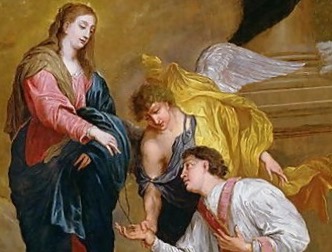
St. Valentine’s Day

On Feb. 14, 278 A.D., Valentine, a priest in Rome during the reign of Emperor Claudius II, was executed. In order to facilitate the raising of an army for his unpopular military campaigns, the emperor outlawed all marriages and engagements. Valentine defied Claudius’s order and continued to perform marriages for young lovers in secret. Once discovered, Valentine was arrested and condemned by the Prefect of Rome to be beaten to death with clubs and to have his head cut off. The sentence was carried out on February 14. Valentine was named a saint by the Roman Catholic Church after his death.

Though February 14th is celebrated as “St. Valentine’s Day,” in today’s vernacular, the 14th of February, 278, was, ahem, “not his day.”

Categories
Today

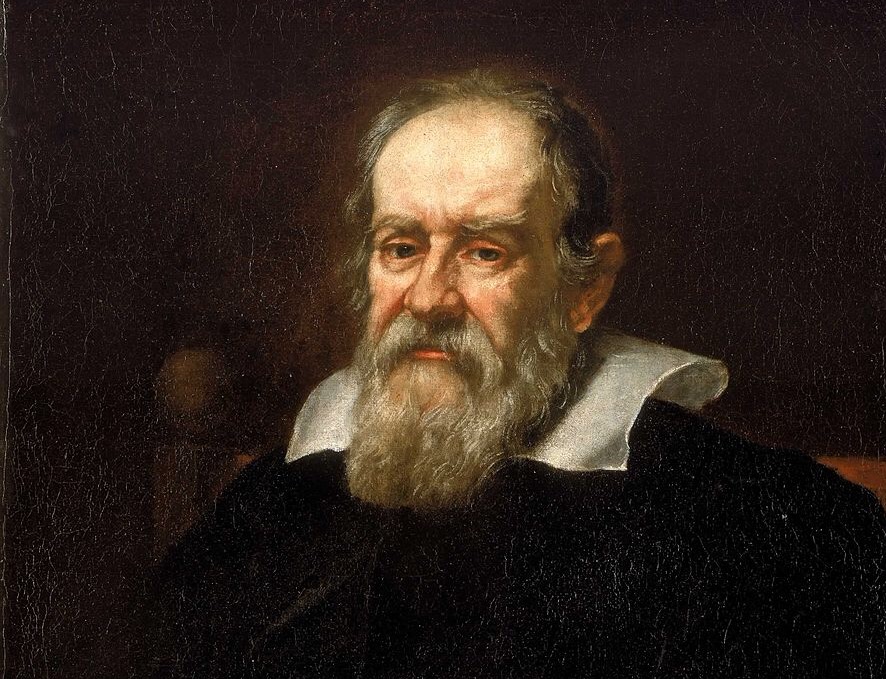
Galileo’s Heresy

On Feb. 13, 1633, Italian philosopher, astronomer and mathematician Galileo Galilei arrived in Rome to face charges of heresy for advocating Polish astronomer Nicolaus Copernicus’s theory that the Earth revolves around the Sun. In April, Galileo pled guilty before the Roman Inquisition in exchange for a lighter sentence. Put under house arrest indefinitely by Pope Urban VIII, Galileo spent the rest of his life at his villa in Arcetri, near Florence, dying in 1642.

Categories
Thought

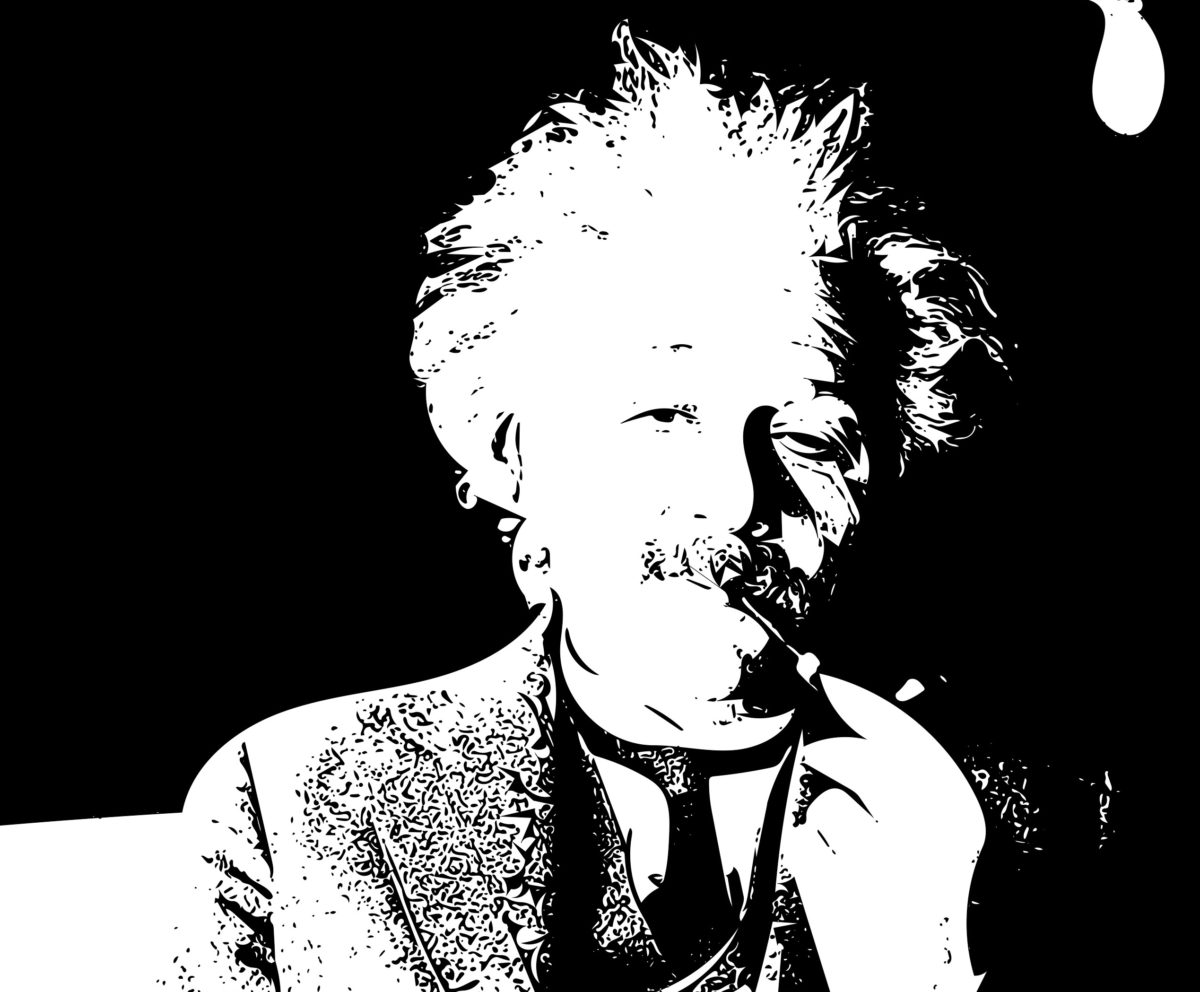
Albert Einstein

Ethical axioms are found and tested not very differently from the axioms of science. Truth is what stands the test of experience.

Categories
Today

Mandela Released

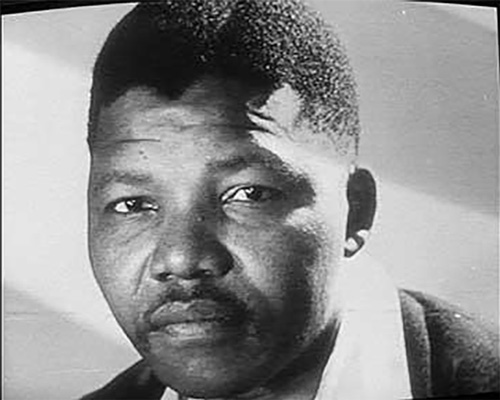
On Feb. 11, 1990, after 27 years in prison, Nelson Mandela was released by South African authorities.

Mandela had joined the African National Congress (ANC) in 1944, becoming deputy national president of the group in 1952. Arrested for treason in 1961, he was acquitted — but then arrested again in 1962 for illegally leaving the country. Convicted and sentenced to five years at Robben Island Prison, he was put on trial again in 1964 on charges of sabotage. He was convicted and sentenced to life in prison along with several other ANC leaders.

In 1989, F.W. de Klerk became South African president and began dismantling apartheid. De Klerk lifted the ban on the ANC, suspended executions, and in February 1990 ordered the release of Nelson Mandela.

Mandela subsequently led the ANC in negotiating an end to apartheid and the establishment of a multiracial government. In 1993, Mandela and de Klerk were jointly awarded the Nobel Peace Prize. One year later, the ANC won the country’s first free elections, and Mandela was elected South Africa’s president.

Categories
Thought

Carl von Clausewitz

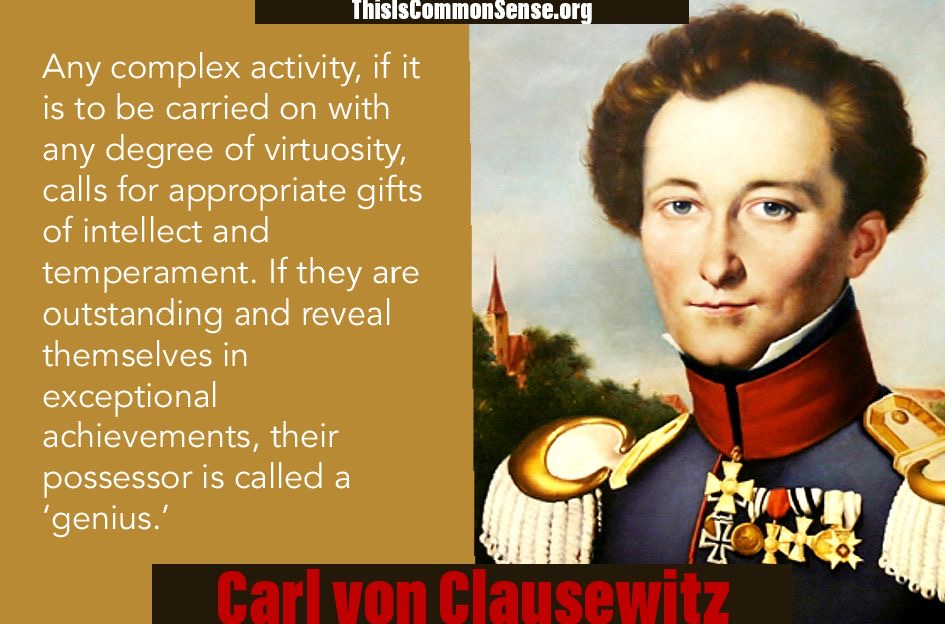
Any complex activity, if it is to be carried on with any degree of virtuosity, calls for appropriate gifts of intellect and temperament. If they are outstanding and reveal themselves in exceptional achievements, their possessor is called a ‘genius.’

Carl von Clausewitz, On War (1832), Book One.