Categories
Today

Prescott, Tiananmen, and the Freedom Riders

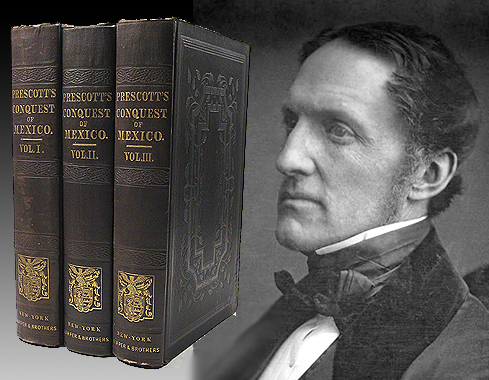
On May 4, 1796, American historian William H. Prescott was born. Prescott’s History of the Conquest of Mexico and his Conquest of Peru remain classic works of well-researched, “scientific history.” Prescott, Arizona, was named in his honor.

The May Fourth Movement began on May 4, in 1919: Student demonstrations took place in Tiananmen Square in Beijing, China, protesting the Treaty of Versailles, which transferred Chinese territory to Japan.

In 1961 on May 4, the “Freedom Riders” began a bus trip through the South.

Categories
social media

Reddit Redacts the Internet

The watchdog group Judicial Watch has obtained evidence that the government of California and the Biden camp violated the First Amendment rights of Americans during the 2020 presidential campaign. 

In at least a couple dozen cases, social media companies complied with governmental requests to delete posts containing “misinformation,” the new code word for “stuff that I don’t want people to see or discuss.” 

But hey: were all materials containing “misinformation” deleted from the annals of humankind, historians would be left with maybe ten or twelve pages and scrolls of primary documents. Into the trash? Herodotus, Josephus, Gibbon!

On the other hand, the social-media giants often curtail online discourse without any apparent urging by government censors.

Example? The popular discussion group Reddit has taken upon itself to block users from viewing the videos hosted by certain popular alternatives to YouTube like Rumble and BitChute. Reddit has China-walled links to the videos regardless of content. The problem, it seems, is that Rumble and BitChute are too much in favor of free speech.

Now, it may be that Reddit does its redactions in eager pursuit of its own ideological agenda rather than in obedience to some politician(s), but questions remain. When it comes to suppressing voices that socialist social media moguls find politically uncongenial, how much is reluctant submission to government pressure and how much is spontaneous voluntary initiative?

I’d like to know. 

Barring any likelihood of a certain answer, we citizens must vigilantly watch governments — along with the tech firms receiving lucrative government contracts.

This is Common Sense. I’m Paul Jacob.


PDF for printing

See all recent commentary
(simplified and organized)
See recent popular posts
Categories
Thought

Lieutenant Colonel John McCrae

In Flanders fields the poppies blow
Between the crosses, row on row,
That mark our place; and in the sky
The larks, still bravely singing, fly
Scarce heard amid the guns below.
We are the Dead. Short days ago
We lived, felt dawn, saw sunset glow,
Loved and were loved, and now we lie
In Flanders fields.
Take up our quarrel with the foe:
To you from failing hands we throw
The torch; be yours to hold it high.
If ye break faith with us who die
We shall not sleep, though poppies grow
In Flanders fields.


Categories
Today

Between the crosses

In 1791, the Constitution of May 3, the first modern constitution in Europe, was proclaimed by the Sejm of the Polish–Lithuanian Commonwealth.

On May 3 in 1915, Lieutenant Colonel John McCrae composed the poem “In Flanders Fields,” the most famous poem of World War I. The Canadian physician wrote it after presiding over the funeral of friend and fellow soldier Lieutenant Alexis Helmer, who died in the Second Battle of Ypres. It is in the form of a rondeau.

Categories
by Paul Jacob video

Watch: Anti-Racism with a Touch of Meanness

Paul Jacob laughs through today’s horrors:

This Week in Common Sense, May 2, 2021.

Categories
Thought

Vannevar Bush

Mendel’s concept of the laws of genetics was lost to the world for a generation because his publication did not reach the few who were capable of grasping and extending it; and this sort of catastrophe is undoubtedly being repeated all about us, as truly significant attainments become lost in the mass of the inconsequential.

Categories
Today

Run for the Border

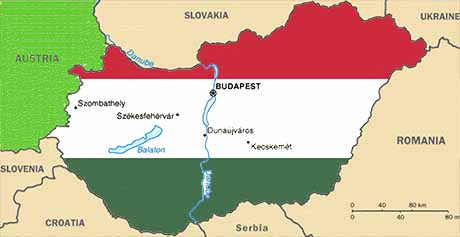
On May 2, 1989, Hungary began dismantling its border fence with Austria, allowing a number of East Germans to defect.

Categories
audio podcast

Listen: A Twist of Mean

Paul Jacob goes over the big stories of the week, three of which feature anti-racism gone bad, very bad:

This Week in Common Sense, May 1, 2021.

Categories
Today

Truly Antifascist

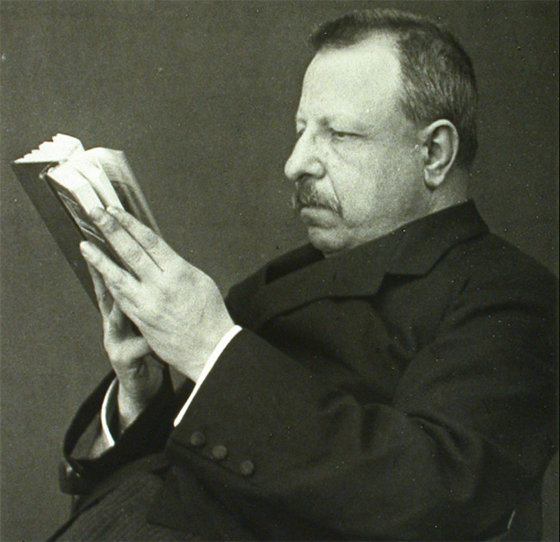
The Manifesto of the Anti-Fascist Intellectuals, written by philosopher Benedetto Croce [pictured, above] in response to the Manifesto of the Fascist Intellectuals by Giovanni Gentile, sanctioned the unreconcilable split between the philosopher and the Fascist government of Benito Mussolini, to which he had previously given a vote of confidence on October 31, 1922. 

The manifesto was published by Il Mondo on May 1, 1925, which was Workers’ Day, symbolically responding to the publication of the Fascist manifesto on the Natale di Roma, the founding of Rome (celebrated on April 21). The Fascist press claimed that the Crocian manifesto was “more authoritarian” than its Fascist counterpart — a typical leftist dismissal of what used to be called “liberalism” — in Italian, liberismo — but which Croce dubbed liberism, to distinguish it from the dirigiste quasi-socialisms of self-described “liberals” of the time.

Categories
social media

The Cats’ Pajamas

In all the talk of “social media” — their psychological effects on us; their political power; their abusive treatment of our privacy and our loyalty — one thing does not get talked about enough: that social media’s chief utility for many of us is not social at all.

Facebook, YouTube, SoundCloud, Twitter, Gab, Instagram, Quora — these are personal databases. 

Databases on the Cloud, sure; databases open to the public and open to paying advertisers, surely (that’s how the media giants make money while providing us with a free service). 

But they remain databases. And, as such, they allow us to log our interactions with both online and physical worlds, storing our photos, videos, audios, links, thoughts, questions & answers, and more, so we may retrieve them later for whatever projects we may be engaged in.

This is no small thing if you are in a “business” like ThisIsCommonSense.org, where mining what I read two weeks ago can turn into something I need tomorrow. 

Trouble is, the search features of most social media services . . . well . . . don’t find much. It is often devilishly hard to find that article one linked to last April, or November, or . . . was it December? The search features to one’s own entries (as well as others’) should be much more robust. Inventive. Useful. 

It would be nice if the social media companies that mine our data for their pecuniary advantage would also allow us to mine our data . . . for our more humble purposes.

So, take this as advice to alternative social media developers, like the Flote app: if you are literally providing a database for clients (and not true P2P functionality), then give search features more serious attention.

So that we can quickly find and re-share our most sublime cat photos.

This is Common Sense. I’m Paul Jacob.


PDF for printing

Image from _DJ_

See all recent commentary
(simplified and organized)
See recent popular posts