Categories
insider corruption media and media people

Major Media’s Cricket Chorus

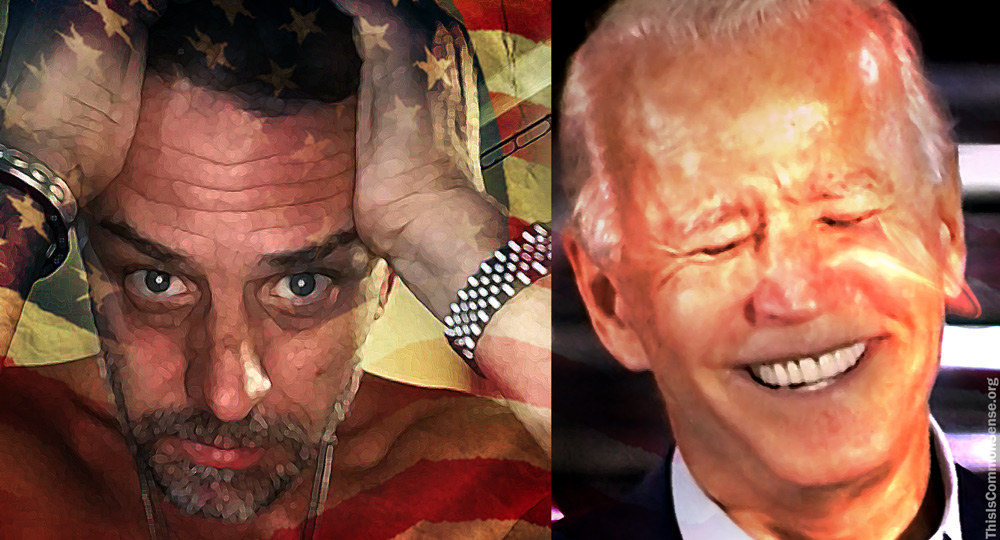
“How is this not a subject of bigger concern in the country?” Emily Jashinsky asked last week on The Hill’s morning TV program, Rising.

Hunter Biden’s “addiction and dysfunction are the public’s problems, too,” explained Jashinsky, culture editor at The Federalist, “given that Hunter was wrapped up in an influence-peddling operation in which he traded on his father’s name to carry out lucrative business deals.”*

“That makes the sad work of reading his personal correspondence crucial,” she added, “given that his father is, you know, the president of the United States.”

Jashinsky pointed to items gleaned from Hunter’s bountiful laptop, which reinforce a narrative — first advanced during last fall’s presidential campaign and corroborated by a former business partner, but then and now ignored by most media — that Hunter not only profited off his father’s position, but also provided kickbacks to “Pop.” 

In a text Hunter sent his daughter, complaining that he doesn’t “receive any respect,” he elaborated: “I Hope you all can do what I did and pay for everything for this entire family Fro 30 years. It’s really hard. But don’t worry unlike Pop I won’t make you give me half your salary.”

Now the New York Post’s Miranda Devine informs, “[W]hat we do know is that, while Joe was vice president, Hunter routinely paid at least some of his father’s household expenses” . . . which the headline dubbed “daddy pay care.”

“In a healthy country, our free press would be highlighting the Biden family as the very picture of elite corruption,” offered Jashinsky. “They would be pushing relentlessly for answers to the questions these emails continue raising.”**

“Instead, it’s mostly crickets,” in what she sadly called “this era of media corruption.”

This is Common Sense. I’m Paul Jacob.


* “The Justice Department is investigating the finances of President-elect Joe Biden’s son [Hunter], including scrutinizing some of his Chinese business dealings and other transactions,” the Associated Press reported last December. 

** In May, The Guardian disclosed: “Former FBI director Louis Freeh gave $100,000 to a private trust for Joe Biden’s grandchildren and met with the then-Vice President in 2016 ‘to explore with him some future work options,’ emails reveal.”

PDF for printing

See all recent commentary
(simplified and organized)
See recent popular posts
Categories
Thought

Abraham Maslow

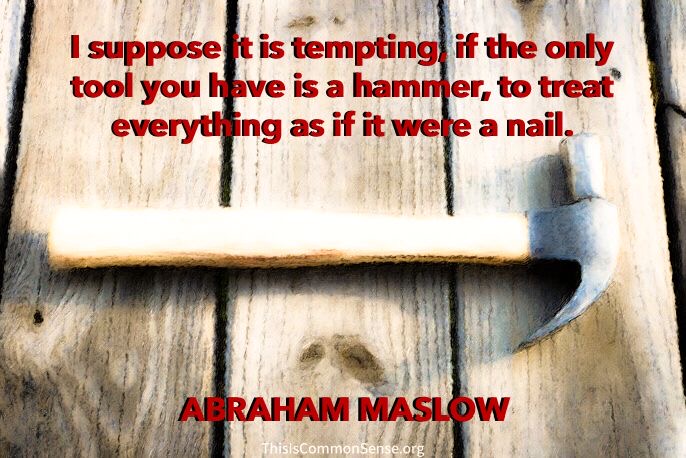
I suppose it is tempting, if the only tool you have is a hammer, to treat everything as if it were a nail.

Abraham Maslow, The Psychology of Science: A Reconnaissance (1966).
Categories
Today

“Malaise”

On July 15, 1976, Jimmy Carter accepted the nomination of the Democratic Party to run for the presidency.

Three years later, as president, he gave his infamous “malaise” speech, in which he focused on energy but did not mention the one thing that actually helped turn the 1970s’ energy crisis around: the phased deregulation of oil prices that had started three months earlier, under his own directive. Instead of touting this deregulatory effort, Carter did the usual politic thing and promised a number of new government programs, extensively ground home a “crisis of confidence” message, and vaguely talked of a spiritual challenge.

The deregulation was startlingly effective, in the long run — though the immediate effect was a rocketing of prices. These high prices presented profit opportunities, and (lo and behold!) domestic production greatly increased, allowing for many, many years of lower prices. Those high prices would have worked better as market signals had not Carter and Congress also established “windfall profits” taxes, to take away those temporary gains to existing business.

Had Carter deregulated prices earlier, he would probably have been re-elected president. Had he emphasized deregulation, he probably would have beat back Ronald Reagan’s free market rhetoric — with actual action.

The price controls had been put in place earlier in the decade by the Republican president at the time, Richard M. Nixon, with the great help of his aides Dick Cheney and Donald Rumsfeld.

Categories
ballot access initiative, referendum, and recall

Initiative-Crippling Law Clobbered

The right of citizen initiative is the right of voters to petition to get a measure on the ballot; then, if that happens, to vote on it and pass it. 

Many politicians hate this right and work to weaken it.

A few years ago, Florida’s Constitution Revision Commission considered sending a measure to the state ballot to treat voters who abstain from voting on a ballot question as having voted No. The proposal died on the vine, thankfully. But this is the kind of encroachment politicians fantasize about.

The latest attack on Floridians’ right of citizen initiative — a law to cap donations to such campaigns at $3,000 during the signature-gathering phase — has just suffered a less definitive setback.

Federal Judge Allen Winsor in the Northern District of Florida halted the new law from going into effect on the very day it was scheduled to do so. (Cutting it a little close, aren’t you, judge?) He ruled that contributions to an initiative campaign are obviously a form of political expression and that the law would inflict irreparable harm if even briefly in force.

True. 

If petition organizers can’t raise the funds needed to collect the required 891,589 signatures, it becomes enormously harder to get a measure on the ballot and let voters have their say. A say that foes of citizen initiative rights certainly do not want voters to have.

The ruling blocks the law only until the court reaches a final resolution on its constitutionality, so this legal battle isn’t over yet. 

What is most certainly determined, however, is that Florida legislators don’t care about the Constitution. 

This is Common Sense. I’m Paul Jacob.


PDF for printing

speech

See all recent commentary
(simplified and organized)
See recent popular posts

Categories
Thought

Richard Branson

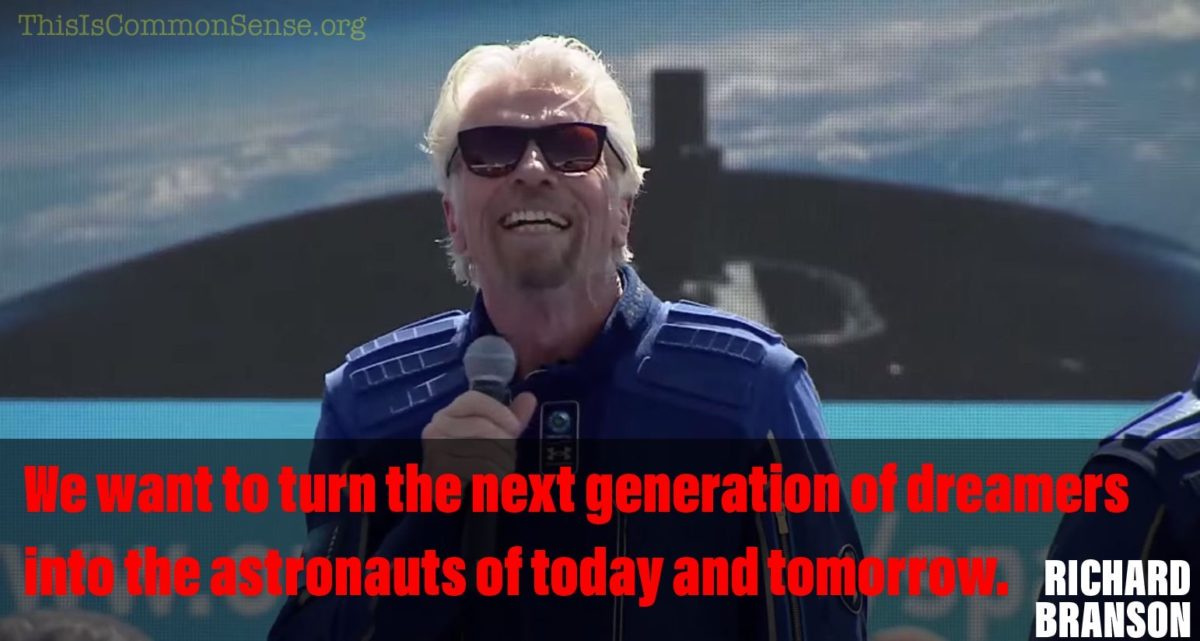
We’re here to make space more accessible to all. We want to turn the next generation of dreamers into the astronauts of today and tomorrow. We’ve all us on this stage have had the most extraordinary experience, and we’d love it if a number of you can have it, too. . . . If you ever had a dream, now is the time to make it come true — and I’d like to end by saying welcome to the dawn of a new space age.

Sir Richard Charles Nicholas Branson (born July 18, 1950), upon returning from his “first billionaire in space” flight on his Virgin Galactic VSS Unity, July 11, 2021.
Categories
Today

The Nixon Tapes

On July 13, 1973, the minority (Republican) counsel on the Senate Watergate investigative committee, Donald Sanders, asked Nixon aide Alexander Butterfield if he knew of any recordings made in the Nixon White House, and Butterfield responded, “everything was taped” at least while Nixon was in attendance, and that “there was not so much as a hint that something should not be taped.”

This revelation of the Nixon Tapes transformed the Watergate scandal into a major legal as well as political event, and proved to be one of the most astounding examples of “government transparency” in modern times — indeed, it helped demystify and desanctify the Office of the Presidency, a very republican (if not pro-Republican Party) development.

Categories
Thought

Michael Avenatti

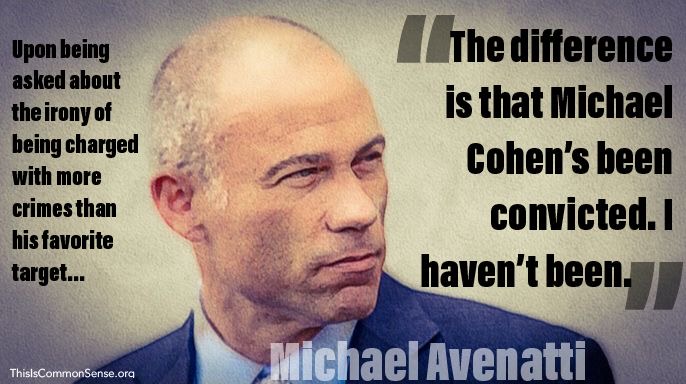
The difference is Michael Cohen’s been convicted. I haven’t been.

Michael Avenatti, upon being asked about being charged with more crimes than his favorite target in his harassment campaign against President Trump, for which Avenatti became a darling of the mainstream media. Avenatti was sentenced, last week, to two and one half years in prison for extortion. Other cases are pending.
Categories
Thought

King John of England

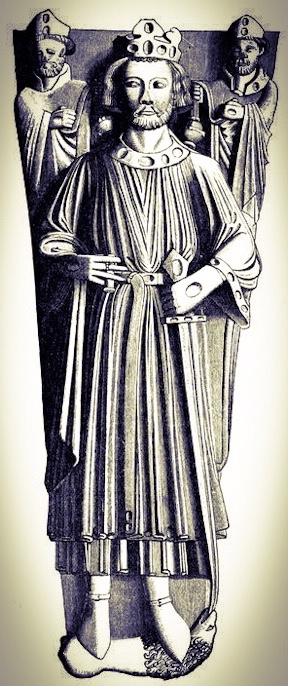
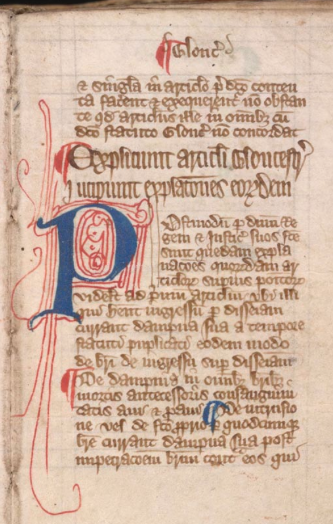
For a trivial offence, a free man shall be fined only in proportion to the degree of his offence, and for a serious offence correspondingly, but not so heavily as to deprive him of his livelihood.
Magna Carta Libertatum (“Great Charter of Freedoms”), commonly called Magna Carta (also Magna Charta; “Great Charter”), Clause 20, as signed by King John of England at Runnymede, first drafted by Stephen Langton, Archbishop of Canterbury.
Categories
audio podcast

Listen: Nothing to Sneeze At

Paul Jacob has allergies. The world is troubled. Put the two together and you have the latest episode of This Week in Common Sense:

Categories
Thought

George Reisman

Socialism cannot be ruled for very long except by terror. As soon as the terror is relaxed, resentment and hostility logically begin to well up against the rulers. The stage is thus set for a revolution or civil war. In fact, in the absence of terror, or, more correctly, a sufficient degree of terror, socialism would be characterized by an endless series of revolutions and civil wars, as each new group of rulers proved as incapable of making socialism function successfully as its predecessors before it. The inescapable inference to be drawn is that the terror actually experienced in the socialist countries was not simply the work of evil men, such as Stalin, but springs from the nature of the socialist system. Stalin could come to the fore because his unusual willingness and cunning in the use of terror were the specific characteristics most required by a ruler of socialism in order to remain in power. He rose to the top by a process of socialist natural selection: the selection of the worst.

George Reisman, “Why Nazism Was Socialism and Why Socialism Is Totalitarian,” Mises Institute, 11/11/2005.