Categories
national politics & policies privacy

The State vs. Our Privacy

The policies of the new Trump administration have given us only partial reprieves from the war on freedom of speech.

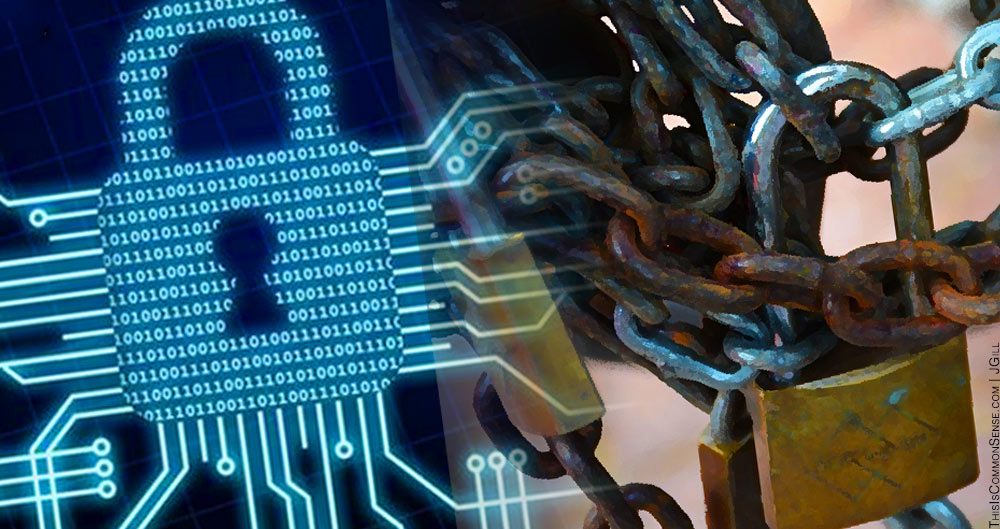
The war is still chugging along. It extends even to our most private communications, including those now hidden from prying eyes by encryption. Revived legislation in the U.S. Senate threatens the providers of such encryption.

Reclaim the Net’s Dan Frieth observes that under the STOP CSAM Act of 2025 (S. 1829), which targets “child sexual abuse material,” providing a “secure, privacy-​focused service could be interpreted as ‘facilitating’ illegal activity, regardless of whether the provider can access or verify the content being transmitted.”

The legislation stipulates that providers may defend themselves from charges of “facilitating” illegal activity by showing that it is “technologically impossible” to remove CSAM without disabling their encryption. But firms would still often have to go to court to make this case, and “many platforms may adopt invasive scanning out of fear, not necessity, just to avoid liability, with real consequences for privacy and user trust.”

Defaulting to routine invasive scanning means an end to providing users with encryption, including users threatened by despotic regimes.

Current law already requires platforms to report known examples of material that entails the sexual abuse of children.

Any good or service that can be put to good use can also be put to evil use. Just as we shouldn’t penalize the makers of knives, forks, mail, curtains, roads, and guns for their use by criminals, the makers of encryption services should also not be so punished.

Nor should we grant to government bodies such a frightening dystopian power, accumulated to override our basic freedoms.

This is Common Sense. I’m Paul Jacob.


PDF for printing

Illustration created with Krea and Firefly

See all recent commentary
(simplified and organized)
See recent popular posts
Categories
crime and punishment First Amendment rights general freedom government transparency ideological culture media and media people moral hazard nannyism national politics & policies too much government

No Joking Matter

He thought he was just horsing around.

Using the popular app WeChat, a Chinese construction worker supervisor Chen Sho Uli made a gossipy joke about government officials while chatting in a chat group. But being too casual about what you say — and where — can be dangerous in China. For his sin Chen was incarcerated for several days. 

Picking quarrels” is another no-​no in the country.

In lieu of Orwell’s telescreen in every room, modern Internet technology enables repressive governments to punish citizens for thoughtcrime that becomes app-​speech crime. If the Chinese government can spy on you, it will. And penalize you for remarks it deems offensive to the dignity of the state.

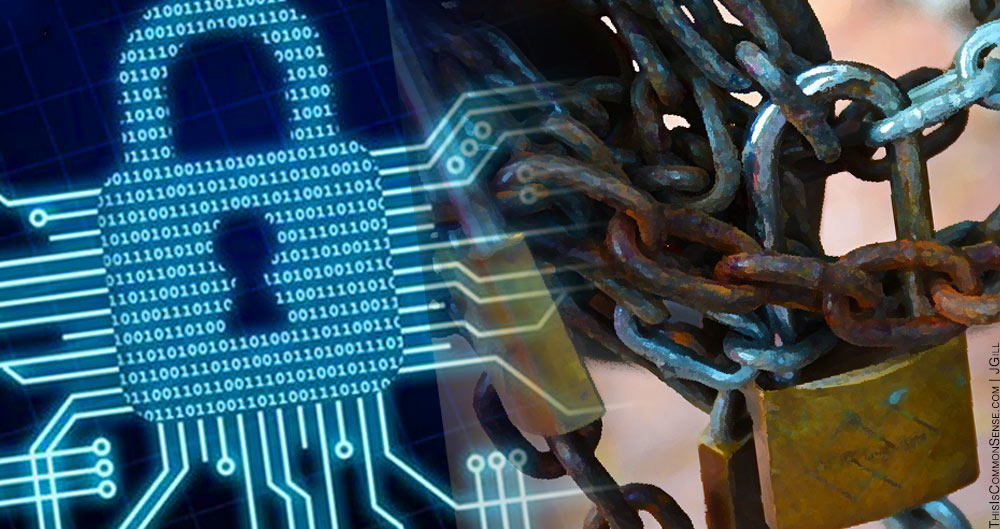
Because of such repression, blogger Stephen Green observes that “strong encryption is everybody’s friend — except the tyrant’s.”

Agreed. Encryption is an important line of defense. 

But some societies require this more than others, because harmless, incidental communications are not equally attacked by government, from country to country. Which means that encryption is actually a second line of defense. 

The first is a cultural and political tradition respecting individual rights.

For one thing, robust encryption helps only those who engage in hyper-​careful private discourse, or hyper-​careful anonymous public discourse. Encryption won’t help thinkers of controversial thoughts who wish to express those thoughts publicly and under their own name. Everywhere we can, then, we must strengthen both the technological and cultural defenses of open discourse — recognizing that the latter is the more crucial and fundamental.

This is Common Sense. I’m Paul Jacob.


PDF for printing