“Now is the time for all good men to come to the aid of their country” — or so typing manuals back in the 1970s had students peck out. Thankfully, the typewriter has been replaced, but that sentiment is ever so relevant today.
America is sick. Almost everyone agrees . . . still, we point our fingers in different directions.
This year, 2026, marks the 250th anniversary of the Declaration of Independence, the greatest political words ever written and the birth of this very consequential country in which we live.
“The American Revolution is the most important event since the birth of Christ,” documentary filmmaker Ken Burns contends, adding, “in all of world history.”
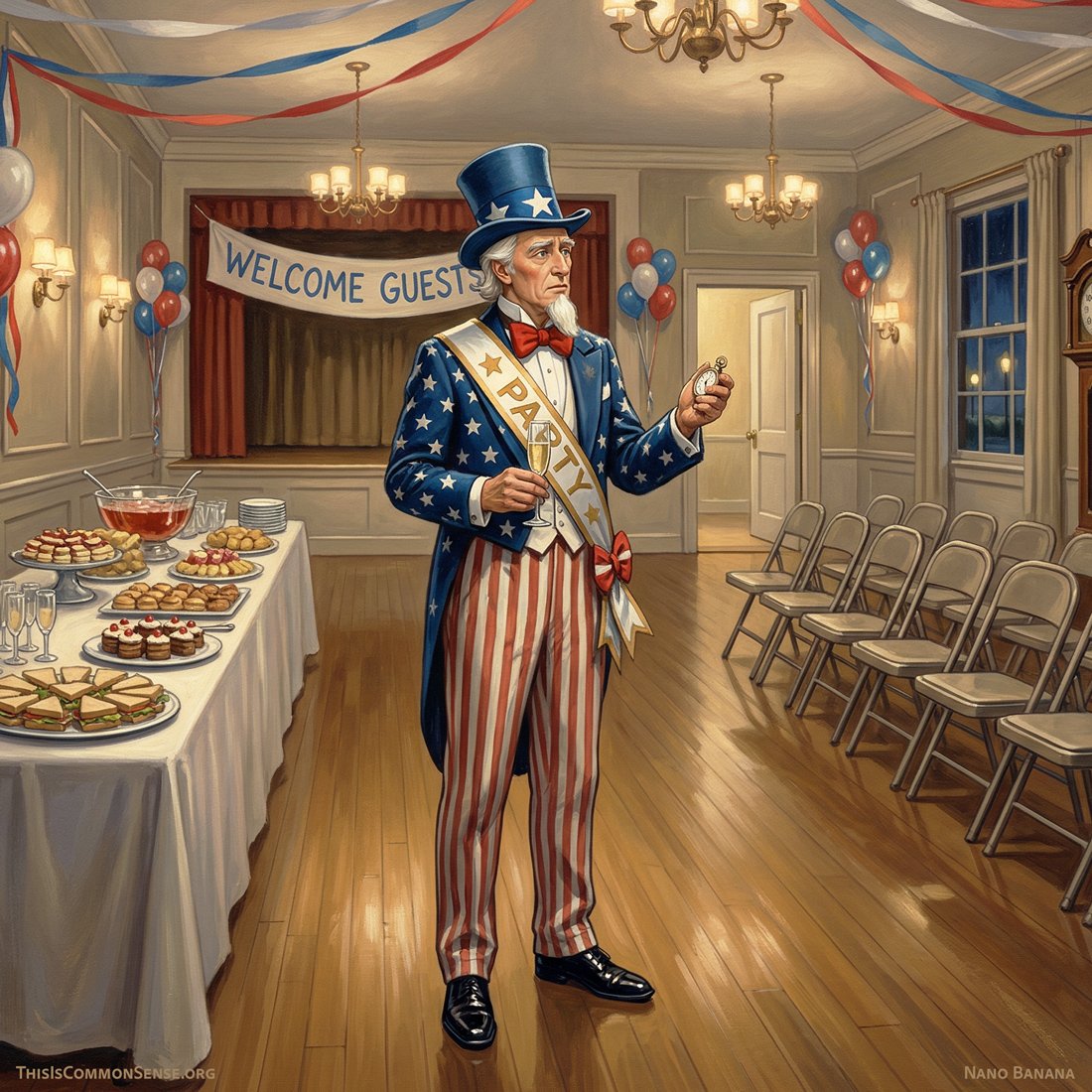
Yet, where’s the celebration? I mean, I see ads for “America 250” t-shirts on Facebook, but . . . the country is not coming together as one for a big event to honor and appreciate the United States of America, this experiment gone largely very, very right.
For us and the world.
Old-timers like me remember the bicentennial in 1976, fifty years ago. It was YUGE!
The whole country seemed to celebrate. Not because the nation was perfect and everyone agreed on everything — the civil rights movement was in progress, the Vietnam War barely over, a myriad of other festering issues divided us — but because folks perceived they had the ability to change it.
And that America was worth the effort.
Let’s find ways to commemorate year 250 of this grand experiment. As corrupt and partisan as our politics has become, we still have the ability to make change. Peacefully. Democratically.
And America is still very much worth the effort.
This is Common Sense. I’m Paul Jacob.
Illustration created with Nano Banana
See all recent commentary
(simplified and organized)
See recent popular posts