Categories
folly general freedom ideological culture media and media people moral hazard nannyism national politics & policies Popular Regulating Protest U.S. Constitution

Force Over Persuasion

Today’s campus radicals assert that free speech is bad because it “gives voice” to people with hateful, dangerous views.

Does that argument seem at all familiar? It is the old RightThink rationale for censorship.

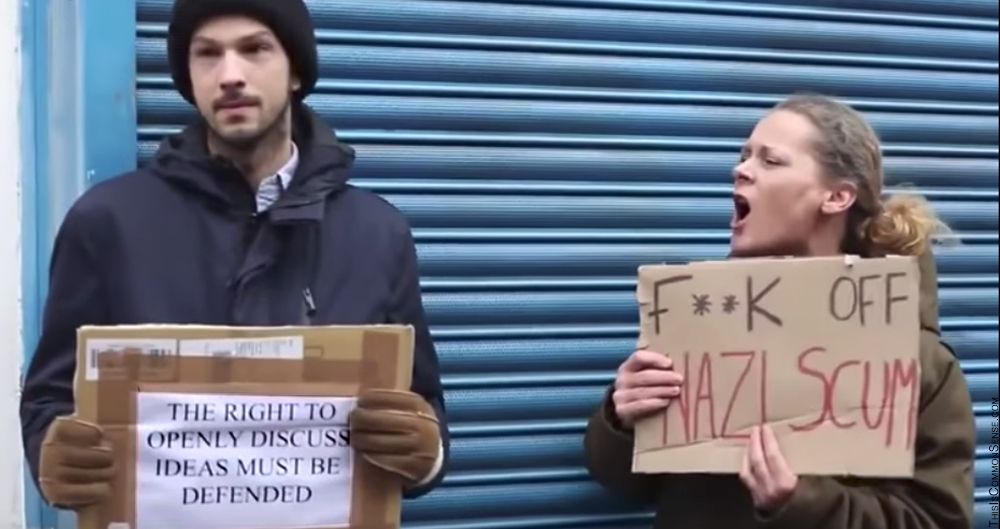
A recent Spiked “Unsafe Spaces” event at Rutgers (“Identity Politics: the New Racialism”) was interrupted by now-too-famiar shouts and out-of-turn questions and invective. Kmele Foster, one of the panelists, had been explaining how important free speech rights were to the civil rights protesters in the 1960s, and to Martin Luther King in particular.

At “that precise moment,” as Reason’s Matt Welch puts it, the shouts of “Black lives matter!” began. And continued.

But more interesting than this bullying? Some of the more coherent theses articulated by the interrupters. One woman, CampusReform relates,

yelled in response to the panelists that she doesn’t “need statistics,” later complaining that “the system” controls facts.

“It’s the system. It’s the institution,” she said. “Don’t tell me about facts. I don’t need no facts.”

Well, the moment you prove immune to any fact is the exact point in time that you’ve given up on rationality, free inquiry, and maybe even civilization itself.

It’s so 1984-ish.

And it demonstrates the old idea that, when you can no longer reason or allow others to express different opinions . . . or even discuss the factuality of this or that contention, you have only one other option: force.

Become bully.

Or tyrant.

Civilization is the triumph of persuasion over force. Being against free speech is to reverse that.

The acme of barbarism.

This is Common Sense. I’m Paul Jacob.

PDF for printing


Categories
First Amendment rights general freedom media and media people moral hazard national politics & policies Regulating Protest too much government

Crossing the Twitter Rubicon

No sooner had I upbraided media folks for overreacting to various presidential peccadillos regarding Puerto Rico, when Donald J. Trump, in his running media battle, crossed a line with this week’s most notorious tweet.

He first complained, perhaps correctly, that, “Fake @NBCNews made up a story that I wanted a ‘tenfold’ increase in our U.S. nuclear arsenal. Pure fiction, made up to demean.” But then the chief executive officer of the United States of America tweeted this: “With all of the Fake News coming out of NBC and the Networks, at what point is it appropriate to challenge their License?”

The answer to his question is: never.

The Federal Communications Commission licenses the network affiliates of ABC, NBC and CBS across the country — not the networks themselves — to broadcast their television signals using public airwaves. Still, through those affiliates a tyrannical FCC could no doubt damage the networks.

Government licensing of media outlets is anathema to the First Amendment. And the thought of the POTUS actively threatening the ability of NBC or other networks to report the news as they freely decide is . . . well, unthinkable.

I don’t buy the accusations that Trump is undermining freedom of the press by criticizing the press — even arguing by tweet, “The FAKE NEWS media (failing @nytimes, @CNN, @NBCNews and many more) . . . is the enemy of the American People!” The president is as free to criticize the media as the media is free to criticize the president.

It might be his duty.

But considering the use of official government power to potentially “shut down NBC and other American networks,” as UK’s Independent reported, or just to temper their coverage?

Despotism.

This is Common Sense. I’m Paul Jacob. 

PDF for printing


Categories
Accountability crime and punishment First Amendment rights general freedom media and media people moral hazard nannyism national politics & policies property rights responsibility too much government

Google: Disagreement

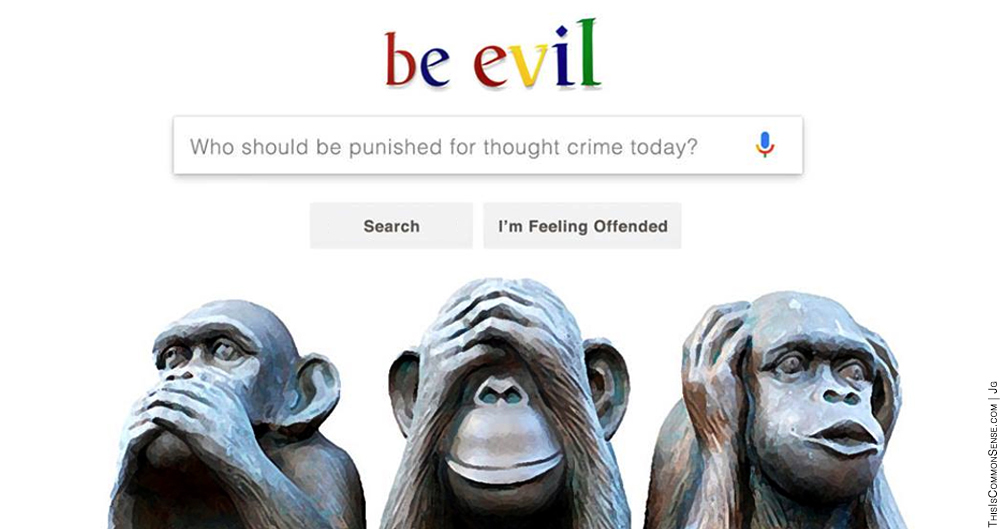
Once upon a time, Google penned a stern note to self: “Don’t be evil.”

What you regard as avoiding evil, though, depends on what you regard as doing good.

Does Google think it’s “good” to fire someone for offering reasoned objections to vapid pieties about why there are more men than women working as programmers, and about how to fix the problem? Assuming it is a problem.

If the answer is yes, then it’s up to more reasonable people to say, “No, Google, stomping on candid internal discussion of your (bad) politics and policies is not ‘doing good.’”

Alas, some Google critics push for a “remedy” worse than the problem: government force. They want government to impose new prohibitions and mandates on large private firms that help people to spread their opinions.

I don’t necessarily agree when a firm — Google, Twitter, PayPal or anybody else — stops providing services to persons expressing views that managers and HR departments disdain. Yet I may agree. No one is morally obligated — and no one should be legally compelled — to help spread the views of others.

I certainly refuse to distribute any installment of “Common Sense” guest-authored by The Anti-Paul-Jacob Club.

When market actors make bad decisions without violating anyone’s rights, others have many powerful and peaceful means of opposing those decisions. Criticism. Boycott. Competition.

But we shouldn’t seek to outlaw the decision-making.

The right to freedom includes no guarantee that one will always do the right thing as others see it.

This is Common Sense. I’m Paul Jacob.

PDF for printing


Categories
Accountability general freedom ideological culture media and media people moral hazard national politics & policies Regulating Protest

Gatekeeping 2.0

There once was opinion hegemony, almost a monopoly. Official gatekeepers kept unwanted ideas — including some of mine, including many I strongly oppose — out of public consideration.

Then came the online media revolution, which switched influence from corporate, academic-approved media outlets to truly new media, like Facebook, Twitter and YouTube.

And now? The counter-revolution.

We saw it obviously in the downgrade and then banning of Milo Yiannopoulis’s Twitter, last year. Since then, new measures surface on a regular basis.

We helots, we commonfolk, must not be allowed actually to affect an election!

Or the hearts and inquiring minds of Americans, Europeans, and others worldwide.

Unless that opinion has received the imprimatur of the Center-Left.

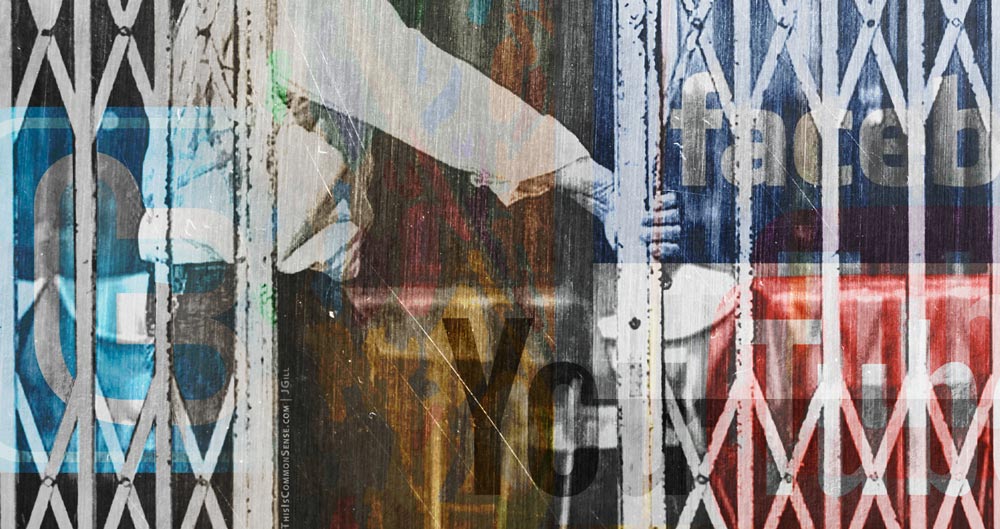
I’ve written about this return of the Gatekeeper mentality before. The latest malefactor is YouTube, which locked Dr. Jordan Peterson out of his account this week* as well as put in place new policies to hobble the social sharing elements of YouTube.**

A week or so earlier, Patreon, an online crowdfunding patronage web service I’ve been thinking about trying out, cancelled independent journalist Lauren Southern’s account. Patreon managers charged that her most recent endeavor might cause “loss of life,” but, tellingly, “showed no evidence or proof, are allowing no appeal and have acted as judge, jury and executioner” — as one concerned netizen not inaccurately summarized.

The company’s CEO calmly explained himself to Dave Rubin on YouTube. Does he convince you?

I catch a whiff of panic.

This is Common Sense. I’m Paul Jacob.
 

* Dr. Peterson’s account has since been reinstated, no explanation given.

** You can learn all this and more on YouTube itself — so the platform hasn’t been shut down as such. Instead, a new Artificial Intelligence will restrict videos that do not even break YouTube terms of service, removing Likes, Comments, and Search features.


PDF for printing


Categories
Accountability crime and punishment folly general freedom media and media people moral hazard nannyism responsibility too much government

Another Push for Censorship

It’s almost as if politicians are hell-bent on expanding government at the expense of our freedoms . . . and grandstanding to ‘look like they are doing something.’

The two proclivities are not unrelated.

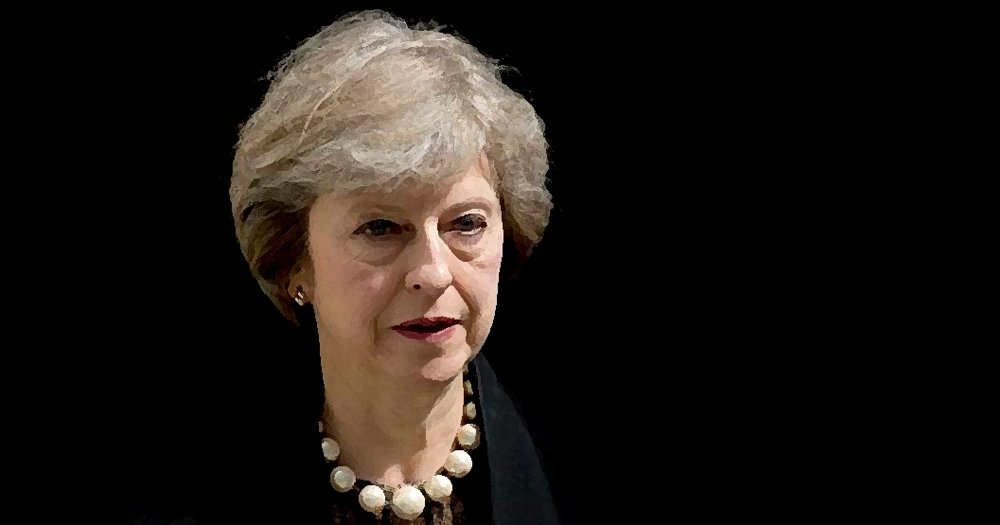
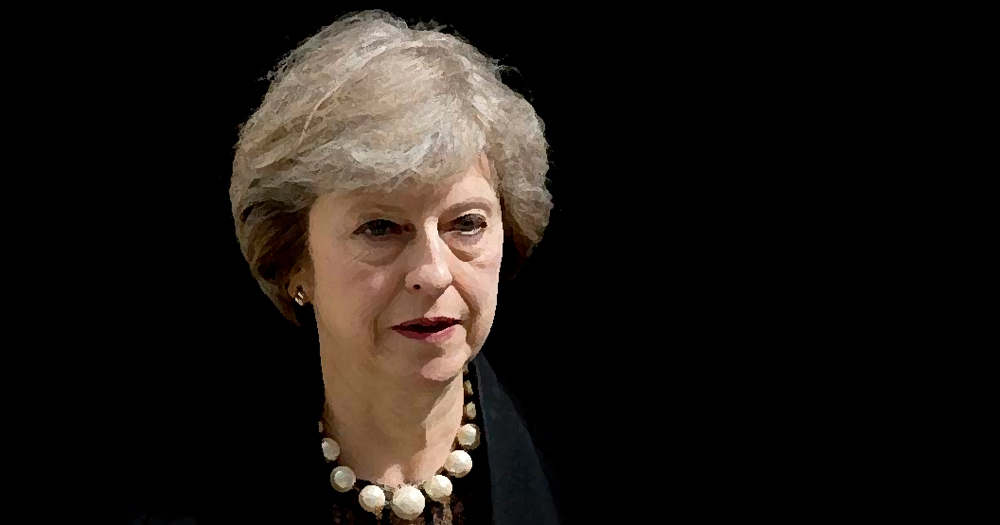
Take Theresa May, Great Britain’s Tory Prime Minister. After yet another terrorist attack in her country, this time on the London Bridge, she re-iterated her party’s intent to censor the Internet.

“We cannot allow this ideology the safe space it needs to breed,” May said on Sunday. But this “safe space,” she went on, “is precisely what the Internet, and the big companies that provide Internet-based services, provide.”

Now, blaming ISPs and social platforms is a crude form of business scapegoating—something I would expect from her opponent in the upcoming elections, Jeremy Corbyn, the much-loathed (but inching ahead in the polls) top banana of Labour.

As a conservative, May should understand markets and the limitations of government interventionism a bit better than a nearcommunist. She might recall that previous attempts to regulate the means of communication almost never to work, and, in those few cases when they do, never stay scaled to the original target issue.

They expand. To cover more than just terrorism, as in this case.

What’s more, Jim Killock of the Open Rights Group makes the case that such a move would likely “push these vile networks into even darker corners of the web, where they will be even harder to observe” — scuttling the alleged purpose of the Conservative Party’s longed-for censorship.

May knows this. But she is a politician. She has power, and she wants to keep it.

It’s almost as if power corrupts or something.

This is Common Sense. I’m Paul Jacob.


Printable PDF


Categories
crime and punishment First Amendment rights general freedom ideological culture moral hazard national politics & policies Regulating Protest U.S. Constitution

Thorns in the Parade

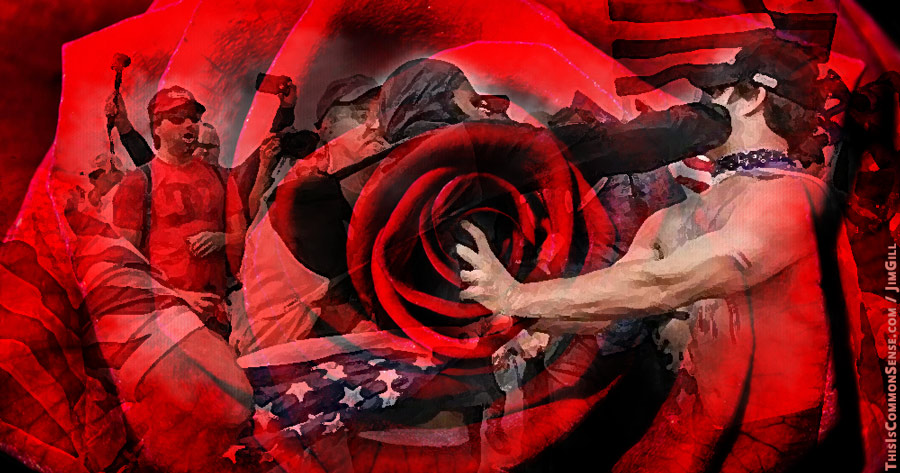
Portland, Oregon, styles itself as “The City of Roses.” For over a century, this Pacific Northwest city has held an annual Rose Festival, complete with multiple parades.

This year, there will be at least one parade less.

“The annual 82nd Avenue Rose Parade and Carnival scheduled for Saturday have been canceled because of threats against the Multnomah County Republican Party, a longtime participant in the parade,” we learn from the Portland Tribune. “In a Tuesday afternoon email, the 82 Avenue Business Association, which sponsors the Rose Festival-sanctioned event, said it canceled the entire event because [it] could not guarantee the safety of the community.”

KOIN-6 News reported that the threats came from the Direct Action Alliance, an “antifa”-styled group that “created a Facebook event called ‘Defend Portland from Fascists at the Avenue of Roses Parade.’ The group wanted to disrupt the march because of ‘Nazis and fascists’ participating.”

Now, what you regard as “white supremacist” and what young pseudo-antifascists think of as “white supremacy” are probably very different. I doubt that many real Nazis and fascists would have marched on Saturday.

But the identification issue is irrelevant. If fascists want to peacefully parade, let them.

What is objectionable? Those who engage in violence to suppress views of which they disapprove.

Also objectionable? The organizers and the City of Roses police, who, by caving in, let free speech and assembly be squelched.

Spontaneous marches did occur on parade day, corralled to the left and right sides of the street. Literally and figuratively. Three violent activists were arrested but not identified by affiliation.

Portlanders used to worry that the clouds would rain on their parades. Now, it is ideological violence casting a dark shadow.

This is Common Sense. I’m Paul Jacob.

Printable PDF


Categories
general freedom Regulating Protest too much government

Democracy More Dead

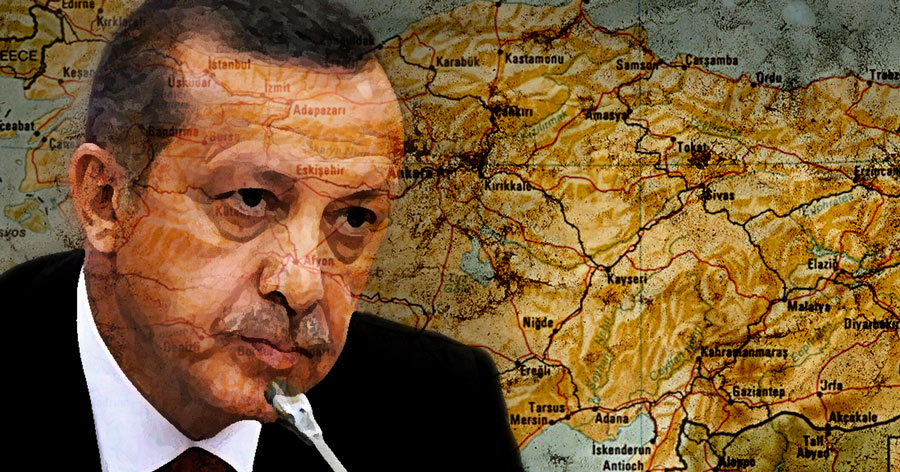
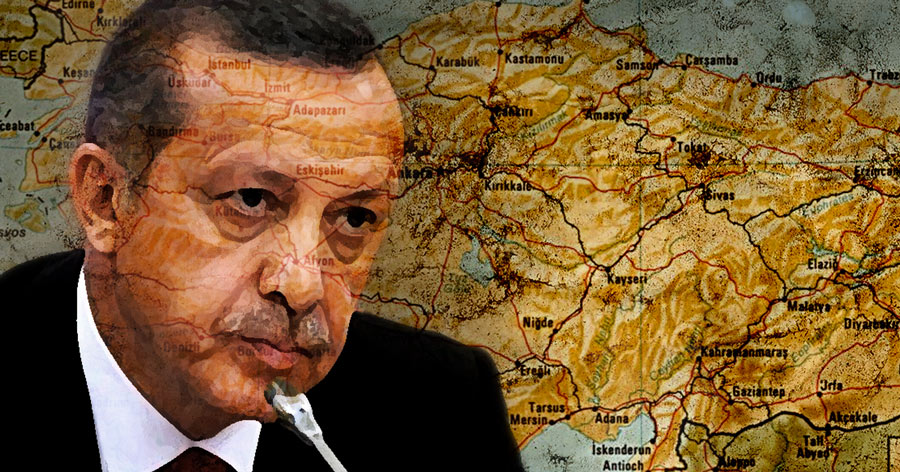
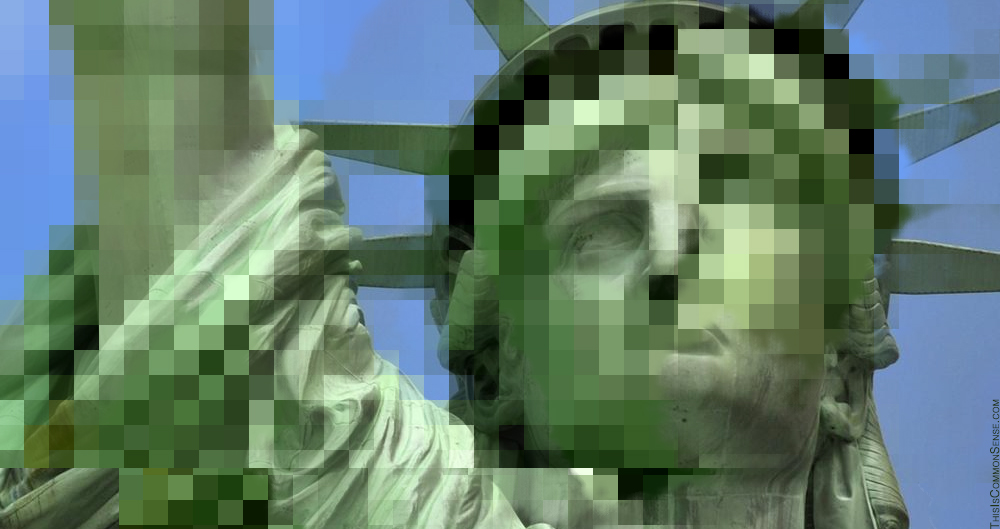
“Turkey’s democracy died today,” CNN headlined its report on yesterday’s national constitutional referendum. The measure contained 18 significant changes designed to further empower the country’s already seemingly all-powerful President Recep Tayyip Erdogan.

CNN is behind the times. Turkey hasn’t been a real democracy for some time.

Even before last summer’s coup attempt, as Newsweek informed, President Erdogan launched “attacks on Turkish demonstrators, the press, the Turkish judiciary and police officials launching corruption investigation against him.”

Post-coup, the gloves really came off. Erdogan declared a state of emergency, firing or suspending over 125,000 government workers and arresting more than 40,000 citizens, including more than 100 journalists.

Freedom of the press no longer exists.

Considering the tight media controls, the barring of many opposition events and violent attacks on those campaigning against the change, “Many analysts were surprised by the close result,” noted the New York Times. The referendum passed only 51 to 49 percent, losing in the three largest cities: Istanbul, Ankara and Izmir.

Authorities changed the rules after voting had begun, sparking demands for a partial recount; accusations of election fraud abound. Nonetheless, President Erdogan has declared victory. The outcome is unlikely to be overturned.

Now, he’ll be able to appoint (without any legislative branch check) a majority of the nation’s highest court. He will also be able to issue decrees, previously forbidden.

Another huge change is re-setting the term limits clock. Now Erdogan may remain in power until 2029.

Before our eyes, Turkey has become an authoritarian nightmare. Such a regime cannot be counted as an ally. Yet, with the close vote, don’t count the Turkish people out.

This is Common Sense. I’m Paul Jacob.

Printable PDF


Categories
crime and punishment First Amendment rights ideological culture moral hazard national politics & policies responsibility

Wolves Crying Wolf

People have a right to defend themselves. Right? Especially against rape and murder.

“This is not about free speech,” Yvette Felarca yelled to the crowd at the University of California-Berkeley, gathered weeks ago to “shut down” a scheduled speech by Milo Yiannopoulos, the controversial Breitbart editor.

Felarca, a national organizer for By Any Means Necessary (BAMN)*, the militant group with the incendiary name, argued that Milo wasn’t “interested in any genuine debate.”

She continued, “But what they’re really trying to do is they’re trying to assert their power, threaten us, intimidate us, rape us, kill us! This is real. This is life and death.”

Given such sentiments, it is hardly surprising that the protest turned violent — leaving people beaten, bloody on the pavement, and racking up $100,000 in property damage.

Not to mention causing the cancellation of the talk sponsored by the Berkeley College Republicans. Felarca called this a smashing success. Asked by reporters how she could justify violence to squelch speech, Felarca simply dubbed Milo “a fascist.”

Yesterday, in my Townhall column, “Hate Is Our Business,” I addressed the Southern Poverty Law Center’s just-released report, “The Year in Hate and Extremism.” The report continued the SPLC’s habit of calling entirely peaceful conservative and religious organizations “hate groups.”

The man who shot a security guard at the Family Research Council in 2012, but was thankfully blocked from further mayhem, used the SPLC’s “Hate Map” to target their office.

In its reports, the “progressive” SPLC completely ignores BAMN and violent left-wing groups. And by crying wolf in mislabeling non-violent organizations as “hate groups,” it provides the unhinged — BAMN, Antifa, and lone-wolf lunatics — very dangerous ammunition.

This is Common Sense. I’m Paul Jacob.
 

* Ms. Felarca also has a day job, as a public school teacher at Martin Luther King, Jr. Middle School in the Berkeley Unified School District. That has generated some controversy.


Printable PDF


Categories
Common Sense

Effrontery Propaganda?

Buried within another, more innocuous-sounding piece of legislation*, the Countering Disinformation and Propaganda Act passed the U.S. Senate last week. Introduced in March, the corresponding House bill is still in committee.

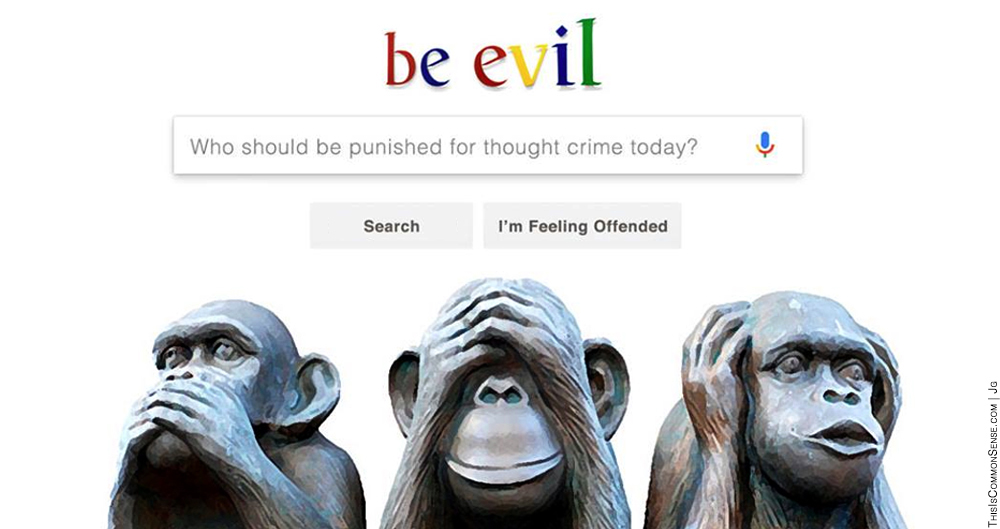
Designed to “counter foreign disinformation and propaganda,” especially but not limited to Russia’s, the law, if enacted, would set up what amounts to the ultimate fact-checking outfit. But since, in politics, Nietzsche’s Law of Hermeneutics** holds — “there are no facts, only interpretations” — what it really would be is an anti-propaganda propaganda house, described by critics as a “Ministry of Truth.”

From Senate sponsors Rob Portman (R-OH) and Chris Murphy (D-CT), however, it sounds a lot more noble. It seeks to develop “a whole-of-government strategy for countering foreign propaganda and disinformation” as well as “leverage expertise from outside government to create more adaptive and responsive U.S. strategy options.”***

You can see why government insiders would be concerned. After all, information (mis- and dis- and even correct) travels fast these days.

That is the way of memes — “mind viruses,” popularly called**** — in this age of the Internet.

One related meme is the phrase “effrontery propaganda,” repeated in Internet postings, which characterizes the Countering Disinformation and Propaganda Act’s mission as that of developing and disseminating “‘fact-based narratives” to counter effrontery propaganda.”

Insiders in government and major media do see as “effrontery” the memes that so strongly captured our imaginations in 2016. But is it fakery that really bothers them? Or mere effectiveness?

In any case, effrontery is precisely the right word for any centralized, government-run propaganda outfit.

This is Common Sense. I’m Paul Jacob.
 

* Titled a “report”!

** This being about propaganda, I hone my philosophical chops and chutzpah by dubbing the infamous F. A. Nietzsche saying as a “law.” On the order of Murphy’s and Parkinson’s so-called laws. Why not? Maybe it’ll catch on.

*** Specifically, the Senate version of the bill would expand “the authority, resources, and mandate of the Global Engagement Center” — an existing institution — to handle state actors (Russia, Russia, Russia, and China) as well as “help train local journalists” and seek to influence (and fund) NGOs and think tanks.

**** Richard Dawkins, in The Selfish Gene (1976; 40th Anniversary Edition, 2016), proposed a new science, memetics. Which has since been developed. See The Meme Machine, for example, by Susan Blackmore (Oxford University Press, 1999).


Printable PDF

fake news, congress, ministry of truth, censorship, illustration


Categories
Accountability ballot access First Amendment rights general freedom government transparency initiative, referendum, and recall media and media people moral hazard nannyism Regulating Protest too much government U.S. Constitution

Four Measures for Rogue Government

Rule of thumb: don’t enact today laws that, had they been obeyed by folks in the original 13 states of our union, would have prevented independence.

Voters in Missouri, South Dakota, and Washington have the “opportunity” to enact such laws this November.

In “Beware of Anti-Speech Ballot Measures,” Tracy Sharp and Darcy Olsen, presidents of the State Policy Center and the Goldwater Institute, respectively, offer a warning. Focusing on Measure 22, the South Dakota Government Accountability and Anti-Corruption Act, they show how dangerous notions like forcing “nonprofit organizations to report the names and addresses of their donors to the state government” can be.

Such disclosure would subject non-profits “to possible investigation by an unelected ethics board that is given the power to subpoena private documents and overrule decisions made by the state attorney general. . . .” Rogue, star-chamber government.

Fever dream?

No. Sharp and Olsen highlight a famous U.S. Supreme Court case that protected the NAACP from the state’s demand for the group’s funding sources. Both women also offer personal tales of how nasty the opposition (in government and out) can become when big issues are on the line.

I can personally attest.

These measures fly in the face of what really matters — encouraging robust public debate. Democracy doesn’t work when people dread participation. As our authors challenge, “[d]o we want America to be a country where government keeps public lists of law-abiding citizens because they dare to support causes they believe in?”

Especially when, without the secret (unreported!) activities of the Committees of Correspondence, the USA would not have become united states in the first place.

This is Common Sense. I’m Paul Jacob.

Printable PDF

speech, anti-speech, NAACP, Supreme Court, First Amendment, Free Speech,


Original (cc) photo by Michael Tracey on Flickr